Handheld Case
CN → US| HS Code | Tariff Rate | Origin | Destination | Doc |
|---|---|---|---|---|
| 3926903300 | 16.5% | CN | US | Official Doc |
| 3926904800 | 13.4% | CN | US | Official Doc |
| 4202321000 | 0.0% | CN | US | Official Doc |
| 4202329900 | 52.6% | CN | US | Official Doc |
Product Images
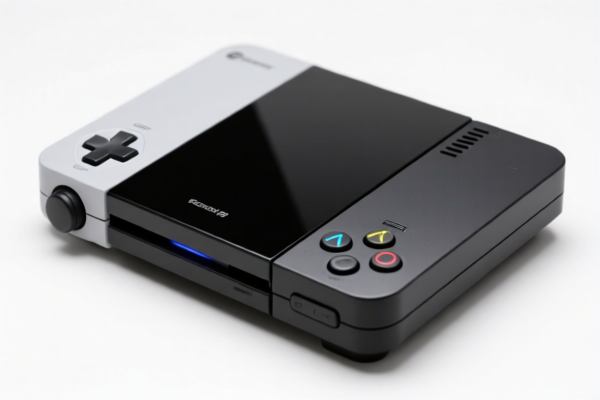
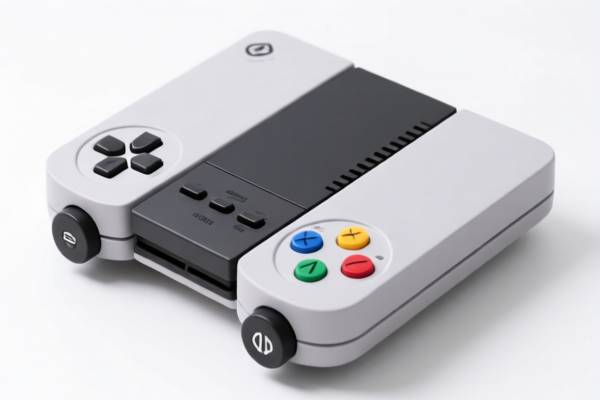
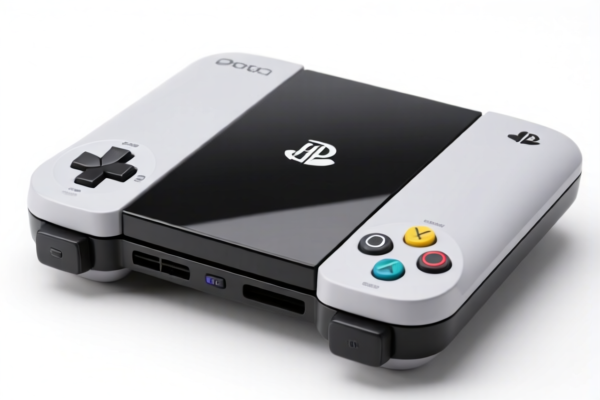
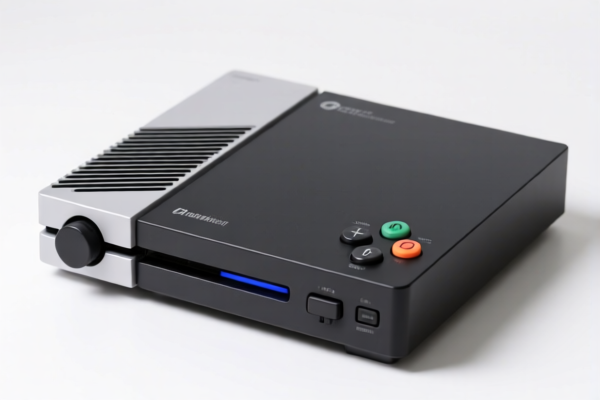
AI Analysis
👜 Handheld Cases / Pouches (Articles Carried in Pocket or Handbag)
🌐 HS Code Reference & Customs Clearance Guide | 2026 Latest Tariff Analysis | Professional Clearance Strategy
📌 1. Product Definition & Classification: Do You Really Understand "Handheld Cases"?
"Handheld Cases" (often referred to as pouches, small containers, or accessories carried in pockets/handbags) are generally categorized based on their outer surface material. In international trade, they are primarily split into two main HS Code groups depending on whether the outer layer is Plastics or Textiles.
Plastic-Surface Cases: Cases where the outer surface is made of plastic sheeting (e.g., PVC, TPU, hard plastic shells).
Textile-Surface Cases: Cases where the outer surface is made of fabric, nylon, polyester, or other textile materials.
⚠️ Key Distinction Point:
- If the outer surface is plastic →归入 Chapter 42 (Leather/Plastic/Textile Articles) under specific plastic subheadings, or potentially Chapter 39 if classified as simple plastic articles (though functional cases usually fall under Ch. 42).
- If the outer surface is textile → 归入 Chapter 42 under textile subheadings.
- Note: Pure plastic accessories without specific functional "case" classification might fall under Ch. 39, but functional handheld cases are predominantly Ch. 42.
📦 2. HS Code Classification Details (2026 Latest Tariff Authoritative Comparison)
Based on the provided data, the specific HS Codes for "Handheld Cases" are:
| HS Code | Product Description | Material/Feature | Applicable Scenario |
|---|---|---|---|
3926.90.33.00 |
Plastic Articles: Beads, bugles, spangles... Handbags | Plastics (Ch. 39) | Simple plastic handbags or containers not meeting Ch. 42 criteria. |
4202.32.10.00 |
Plastic-Surface Cases: With outer surface of reinforced or laminated plastics | Reinforced/Laminated Plastic | Rugged phone cases, hard-shell protective cases, reinforced plastic pouches. |
4202.32.99.00 |
Textile-Surface Cases: With outer surface of textile materials, Other | Textile/Nylon/Polyester | Fabric pouches, soft nylon bags, cloth wallets, textile handbags. |
🔍 Important Note:
-4202.32.10.00and4202.32.99.00are the most common classifications for functional handheld cases (phone pouches, wallet-style cases).
-3926.90.33.00is less common for standard cases but may apply to simple plastic handbags or containers if they do not meet the "articles normally carried in the pocket or handbag" definition of Ch. 42, or if they are considered "other plastic articles."
- Material determines the code: Check the outer surface material first.
💰 3. 2026 Latest Tariff Rate Breakdown (Including Additional Taxes & Policy Add-ons)
✅ Applicable Country: United States (US)
✅ Origin: China (CN)
✅ Effective Time: 2025 November 10 onwards (including subsequent imports)
🎯 1. 3926.90.33.00 —— Plastic Handbags/Containers (Ch. 39)
| Item | Content |
|---|---|
| Base Tariff | 6.5% (ad valorem) |
| Additional Tax | 0.0% |
| Total Tariff | 6.5% |
| Tax Calculation | CIF Value × 6.5% |
| De Minimis Eligibility | ❌ No (Standard de minimis rules may not apply if subject to Section 301/IEEPA, but here additional tax is 0% so total is low) |
| Legal Basis | HTSUS:3926.90.33.00 |
📌 Explanation:
- This code has a moderate base tariff of 6.5%.
- No additional Section 301 or IEEPA tariffs are listed in the provided data (0.0% additional).
- Total Cost Impact: Moderate. Suitable for bulk imports of simple plastic containers/handbags.
🎯 2. 4202.32.10.00 —— Reinforced/Laminated Plastic Cases (Ch. 42)
| Item | Content |
|---|---|
| Base Tariff | 0.0% (ad valorem) |
| Additional Tax | 0.0% |
| Total Tariff | 0.0% |
| Tax Calculation | CIF Value × 0% |
| De Minimis Eligibility | ✅ Yes (0% tax often allows de minimis exemption under $800, but verify specific customs rules) |
| Legal Basis | HTSUS:4202.32.10.00 |
📌 Explanation:
- Excellent Tariff Advantage: 0% base tax.
- No Additional Taxes: No Section 301 or IEEPA add-ons.
- Best For: Reinforced or laminated plastic cases (e.g., ruggedized phone cases, hard protective shells).
- Recommendation: If your product is a hard plastic case, ensure it is classified as "reinforced or laminated" to qualify for this 0% rate.
🎯 3. 4202.32.99.00 —— Textile-Surface Cases (Ch. 42)
| Item | Content |
|---|---|
| Base Tariff | 0.0% (ad valorem) |
| Additional Tax | 0.0% |
| Total Tariff | 0.0% |
| Tax Calculation | CIF Value × 0% |
| De Minimis Eligibility | ✅ Yes |
| Legal Basis | HTSUS:4202.32.99.00 |
📌 Explanation:
- Excellent Tariff Advantage: 0% base tax.
- No Additional Taxes: No Section 301 or IEEPA add-ons.
- Best For: Fabric, nylon, polyester, or other textile pouches (e.g., soft phone sleeves, canvas bags, cloth wallets).
- Recommendation: This is the most common and cost-effective code for fabric-based handheld cases.
🛠️ 4. Customs Clearance Practical Advice (Battle-Tested Pitfall Avoidance Guide)
✅ 1. Preparation Checklist (Must-Haves)
| Document | Required | Description |
|---|---|---|
| ✅ Product Specifications | ✔️ | Include material (plastic/fabric), dimensions, closure type (zipper/snaps). |
| ✅ Material Declaration | ✔️ | Explicitly state "Outer Surface: Reinforced Plastic" or "Outer Surface: Textile." |
| ✅ Product Photos | ✔️ | Show the outer surface clearly to prove material type. |
| ✅ Commercial Invoice | ✔️ | Describe as "Handheld Case" or "Pouch," specify material. |
| ✅ Packing List | ✔️ | Ensure quantity matches invoice. |
✅ 2. Classification Strategy (Key Mantra)
🔥 “Check Outer Surface, Choose Chapter 42, Avoid Ch. 39 Trap!”
| Scenario | Correct HS Code | Incorrect Approach |
|---|---|---|
| Hard Plastic Case (Rugged/Laminated) | 4202.32.10.00 (0%) |
Misclassify as 3926.90.33.00 → 6.5% Tax! |
| Soft Fabric Case (Nylon/Polyester) | 4202.32.99.00 (0%) |
Misclassify as Ch. 39 → 6.5% Tax! |
| Simple Plastic Handbag (Non-functional) | 3926.90.33.00 (6.5%) |
Overcomplicate with Ch. 42 if not a "case." |
✅ 3. Special Case Handling
| Situation | Handling Advice |
|---|---|
| Mixed Material Case | If outer surface is textile with plastic lining → Use Textile Code (4202.32.99.00). |
| Reinforced Plastic | If plastic is layered/laminated for strength → Use 4202.32.10.00 (0%). |
| Simple Plastic Shell | If not reinforced/laminated → Check if it fits 3926.90.33.00 (6.5%). |
| De Minimis Shipments | All codes above have low or 0% tax, making them ideal for $800 de minimis shipments (if eligible). |
🌍 5. Global Market Clearance Comparison (2026 Latest)
| Country/Region | Recommended HS Code | Tariff | Certification | Remarks |
|---|---|---|---|---|
| 🇺🇸 United States | 4202.32.10.00 / 4202.32.99.00 |
0% | N/A | No additional taxes for these codes. |
| 🇨🇳 China | 4202.32.10.00 / 4202.32.99.00 |
~5-10% | N/A | Check local customs for exact rate. |
| 🇪🇺 European Union | 4202.32.10.00 / 4202.32.99.00 |
~2-4% | CE (if applicable) | Low tariffs for accessories. |
| 🇬🇧 United Kingdom | 4202.32.10.00 / 4202.32.99.00 |
~2-4% | N/A | Post-Brexit tariffs similar to EU. |
📌 Conclusion:
- US offers 0% tariffs for both plastic and textile handheld cases under Ch. 42.
- Avoid Ch. 39 (3926.90.33.00) if possible, as it incurs a 6.5% tariff.
- Material Declaration is Critical: Misdeclaring textile as plastic can lead to audits and back taxes.
📌 6. Common Errors & Pitfall Guide (Lessons Learned)
❌ Error 1: Classifying a fabric pouch as 3926.90.33.00
👉 Consequence: Pay 6.5% instead of 0%. Unnecessary cost increase!
❌ Error 2: Classifying a reinforced plastic case as 3926.90.33.00
👉 Consequence: Pay 6.5% instead of 0%. Missed savings!
❌ Error 3: Not declaring outer surface material in the invoice
👉 Consequence: Customs may reclassify, leading to delays, penalties, or incorrect tariff application.
❌ Error 4: Assuming all plastic items go to Ch. 39
👉 Consequence: Functional cases (pouches, wallets) usually belong to Ch. 42. Misclassification can lead to compliance issues.
✅ Correct Approach:
"Handheld Case, Outer Surface: Laminated Plastic, Model XYZ, 0% Duty Eligible"
or
"Handheld Pouch, Outer Surface: Nylon Fabric, Model ABC, 0% Duty Eligible"
🎯 7. Conclusion: Precision Classification, Maximum Savings!
🎯 Remember the Mantra:
🔹 "Fabric/Plastic Case? Go to Ch. 42!"
🔹 "0% Duty for Ch. 42, 6.5% for Ch. 39 – Choose Wisely!"
🔹 "Declare Outer Material Clearly to Avoid Audits!"
📌 Pro Tip:
If your handheld case is imported in bulk, ensure the HS Code pre-classification is done with a licensed customs broker. For de minimis shipments (under $800), the 0% tariff on Ch. 42 codes makes them extremely efficient for direct-to-consumer shipping to the US.
📣 Immediate Action:
📞 Consult a customs broker to confirm outer surface material classification.
🚀 Optimize supply chain costs by using Ch. 42 codes for 0% duty!
✨ Professional Customs Clearance Starts with Accurate Classification!
💼 Every Percent Saved is Pure Profit!
Customer Reviews
About HS Code Classification
The Harmonized System (HS) is an internationally standardized nomenclature developed by the World Customs Organization (WCO) to classify traded products. Over 200 countries use the HS system as the basis for customs tariffs, trade statistics, and import/export regulations.
Each HS code follows a hierarchical structure:
- Chapter (2 digits) — Broad category of goods (e.g., Chapter 84: Machinery and Mechanical Appliances)
- Heading (4 digits) — More specific grouping within the chapter
- Subheading (6 digits) — Internationally standardized breakdown, used by all WCO member countries
- National subdivisions (8-10 digits) — Country-specific extensions for further classification, such as US HTSUS 10-digit codes
Correct HS code classification is essential for smooth customs clearance, accurate duty payment, and compliance with trade regulations. Misclassification can lead to customs delays, overpayment of duties, or penalties.
When importing from CN to US, the applicable tariff rates may include:
- Most-Favored-Nation (MFN) rate — The standard duty rate applied to WTO members
- General rate — Applied to countries without trade agreements
- Trade remedy duties — Additional tariffs such as Section 301 (anti-dumping), Section 232 (national security), or countervailing duties
The information provided on this page is for reference purposes only. For official classification, please consult with your local customs authority or a licensed customs broker.