Handheld Flag
CN → US| HS Code | Tariff Rate | Origin | Destination | Doc |
|---|---|---|---|---|
| 6307909835 | 24.5% | CN | US | Official Doc |
| 6307909825 | 24.5% | CN | US | Official Doc |
Product Images
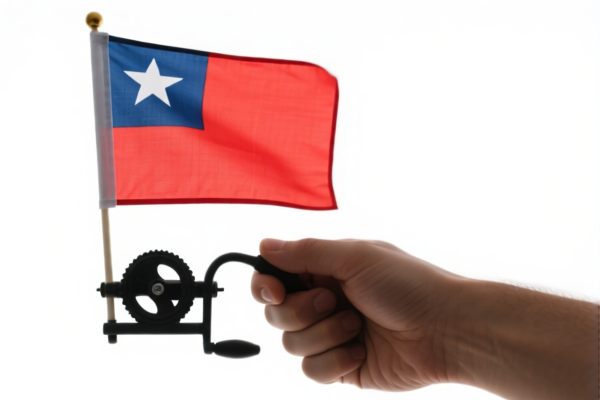
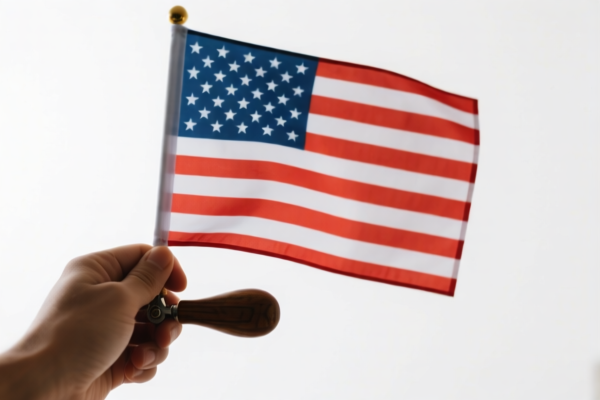
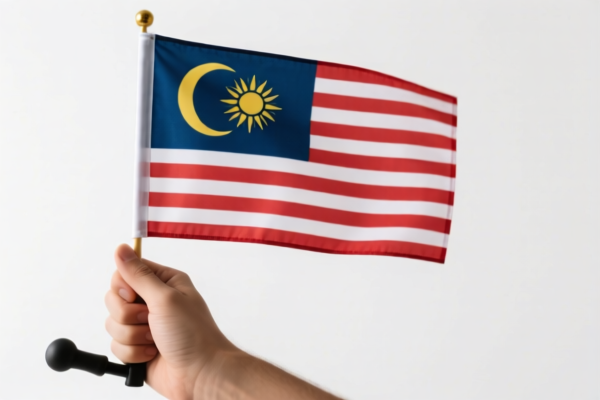
AI Analysis
🚩 Handheld Flag (National Flags)
🌐 HS Code Reference & Customs Clearance Guide | 2026 Latest Tariff Analysis | Professional Compliance Strategy
📌 I. Product Definition & Classification: Do You Really Understand "Handheld Flags"?
A Handheld Flag is a small flag mounted on a stick, pole, or handle, designed for individual use by consumers at events, parades, sports games, or protests. In international trade, these items are classified under Chapter 63: Other Made Up Textile Articles. They are NOT considered "textile products" in the general sense (like clothing) but rather "made up articles."
The critical distinction lies in the country of origin depicted and the specific material/construction, which determines whether it falls under the general "Other National Flags" category or the specific "Of the United States" category.
⚠️ Key Distinction Point:
- If the flag depicts any country OTHER than the USA → It is classified as "Of other nations".
- If the flag depicts the United States → It is classified as "Of the United States".
- Note: Even if the flag is manufactured in the USA, if it depicts a foreign nation, it may still fall under "Other nations" depending on specific USITC rulings, but typically, the subject of the flag determines the sub-heading for tariff purposes in this specific HS structure provided.
📦 II. HS Code Classification Details (2026 Latest Tariff Authority Comparison)
Based on the provided data, there are two specific HS Codes for Handheld Flags. Both fall under HS Code 6307.90.98 (Other made up articles, including dress patterns: Other: Other: Other National flags).
| HS Code | Product Description | Applicable Scenario | Country Depicted |
|---|---|---|---|
6307.90.98.35 |
Other National Flags: Of other nations | Flags of countries like Japan, Germany, Brazil, etc. | 🌍 Non-US Nations |
6307.90.98.25 |
Other National Flags: Of the United States | American flags, US state flags, US military flags | 🇺🇸 United States |
🔍 Critical Reminder:
- Do NOT merge these two codes. The tax difference is significant (0% vs. 14.5%).
- Misclassifying a US Flag as "Other Nation" (6307.90.98.35) can lead to customs penalties, seizures, and back-taxes.
- Misclassifying a Foreign Flag as "US Flag" (6307.90.98.25) will result in overpayment of duties but is less severe legally.
💰 III. 2026 Latest Tariff Rate Breakdown (Detailed Tax Clauses)
✅ Applicable Country: United States (US)
✅ Origin: China (CN)
✅ Effective Time: Current (2026)
🎯 1. 6307.90.98.35 —— National Flags: Of Other Nations
| Item | Content |
|---|---|
| Base Tariff Rate | 0.0% |
| Section 301 Additional Tariff | 0.0% |
| Total Tax Rate | 0.0% |
| Tax Calculation | CIF Value × 0.0% = $0.00 |
| De Minimis Eligibility | ✅ Yes (Generally eligible if under $800, subject to general rules) |
| Legal Basis Path | HTSUS: 6307.90.98.35 |
📌 Explanation:
- Handheld flags of non-US nations enjoy zero duty entry into the US.
- This is a strategic advantage for importers selling foreign-themed merchandise, party supplies, or international event gear.
- No additional tariffs are applied under current Section 301 or other specific trade remedy orders for this specific subheading.
🎯 2. 6307.90.98.25 —— National Flags: Of the United States
| Item | Content |
|---|---|
| Base Tariff Rate | 7.0% (ad valorem) |
| Section 301 Additional Tariff | 7.5% |
| Total Tax Rate | 14.5% |
| Tax Calculation | CIF Value × 14.5% |
| De Minimis Eligibility | ❌ No (Section 301 goods are generally excluded from de minimis treatment for certain categories, or may be subject to scrutiny. Note: Always verify current CBP de minimis enforcement on Section 301 goods.) |
| Legal Basis Path | HTSUS: 6307.90.98.25 → Section 301 Footnote 9903.01.25 (if applicable) |
📌 Explanation:
- US Flags are considered sensitive patriotic items and are subject to a higher base tariff (7.0%).
- An additional 7.5% tariff is applied, bringing the total to 14.5%.
- This is likely due to trade protection measures or specific bilateral agreements affecting textile-made-up articles of patriotic significance.
- Cost Impact: For a $10,000 shipment, you pay $1,450 in duties alone.
🛠️ IV. Customs Clearance Practical Advice (Real-World Pitfall Avoidance Guide)
✅ 1. Required Documentation Checklist (Mandatory)
| Document | Must Provide | Description |
|---|---|---|
| ✅ Commercial Invoice | ✔️ | Must clearly state: "Handheld Flag" + Specific Country Depicted (e.g., "Flag of Japan", "US Flag"). Never just write "Flag". |
| ✅ Product Photos | ✔️ | Clear images showing the design (emblem/stripes) and the stick/handle. |
| ✅ Material Composition | ✔️ | Specify fabric type (e.g., 100% Polyester Nylon, Silk, Cotton). This affects Chapter 63 classification. |
| ✅ Country of Origin | ✔️ | Where was it manufactured? (e.g., "Made in China"). |
| ✅ Marking Label | ✔️ | Does the flag itself say "Made in China"? Required for US entry. |
✅ 2. Declaration Tips (Key Mnemonic)
🔥 “Identify the Nation, Pick the Right Code, Avoid the 14.5% Trap!”
| Scenario | Correct HS Code | Error Risk |
|---|---|---|
| Selling Japanese flags to US buyers | 6307.90.98.35 |
0% Duty. Best for profit. |
| Selling American flags to US buyers | 6307.90.98.25 |
14.5% Duty. Higher cost. |
| Selling Mixed Bundle (US + Foreign Flags) | Split Declaration! | Do NOT average! Declare each type separately. |
| Flag on a plastic stick | Still 6307.90.98.x5 |
The textile part dominates classification. |
✅ 3. Special Handling Cases
| Situation | Advice |
|---|---|
| Custom Print Flags | If printing a non-standard flag (e.g., a corporate logo that looks like a flag), consult a customs broker. It might fall under "Other made up articles" (6307.90.98.90) which may have different rates. |
| Large Bunting or Banners | If it's not a "handheld" size, it may fall under 6307.90.98.10 (Other made up articles). Check specific subheadings for "Bunting". |
| De Minimis (Section 321) | For shipments under $800, US Flags (6307.90.98.25) are often exempt from duties and taxes via Section 321 de minimis entry, provided the importer meets all other criteria. Non-US Flags (6307.90.98.35) are always 0% duty, so de minimis is less critical for duty savings, but still simplifies clearance. Always verify current CBP de minimis exclusions. |
🌍 V. Global Market Comparison (2026 Latest)
| Country/Region | Recommended HS Code | Tariff | Certification | Notes |
|---|---|---|---|---|
| 🇺🇸 USA | 6307.90.98.35 (Other) |
0% | None | Zero duty advantage. |
| 🇺🇸 USA | 6307.90.98.25 (US Flag) |
14.5% | None | High tariff for patriotic items. |
| 🇬🇧 UK | Similar to 6307 | Varies (0-6%) | CE/RoHS (if plastic parts) | Post-Brexit rules apply. |
| 🇪🇺 EU | 6307.90.99 | 0% | CE | Generally low duty for flags. |
| 🇨🇳 China | 6307.90.99 | 0% | CCC (if electrical) | Import duty 0% for flags. |
📌 Conclusion:
- Importing Foreign Flags to the US is highly cost-effective (0% duty).
- Importing US Flags to the US carries a 14.5% tariff, but this may be negligible for high-volume, low-cost items.
- De Minimis ($800) is your best friend for both categories, as it simplifies entry and may eliminate formal brokerage fees.
📌 VI. Common Mistakes & Pitfalls (Blood & Tears Lessons)
❌ Mistake 1: Declaring a US Flag as "Other Flag" (6307.90.98.35)
👉 Consequence: Customs audit, back-taxes of 14.5%, penalties, and potential seizure. Do not do this.
❌ Mistake 2: Not specifying the Country on the Invoice
👉 Consequence: Customs cannot determine the correct subheading. Shipment delayed until documentation is clarified.
❌ Mistake 3: Assuming All Flags are 0% Duty
👉 Consequence: For US flags, you underestimate landed cost by 14.5%. This eats into your profit margin.
❌ Mistake 4: Using "Textile Flag" as a generic description
👉 Consequence: Insufficient detail. Customs may assess under "Other Made Up Articles" (6307.90.98.90) which could have a different duty rate.
✅ Correct Approach:
"Handheld Flag, 12x18 inch, Polyester, Flag of Japan, Plastic Stick, Made in China. HS Code: 6307.90.98.35"
🎯 VII. Conclusion: Strategic Sourcing & Compliance
🎯 Remember the Mnemonic:
🔹 "Other Nation Flag = 0% Duty. US Flag = 14.5% Duty."
🔹 "HS Code 6307.90.98.35 is your profit booster. 6307.90.98.25 is your cost center."
🔹 "De Minimis under $800? Easy clearance for both, but tax differs for formal entries."
📌 Pro Tip:
If you are a US retailer buying flags from China:
- Sourcing Strategy: Prioritize importing Foreign National Flags (0% duty) for higher margins.
- US Flag Strategy: If you must import US flags, factor in the 14.5% tariff into your pricing. Alternatively, consider sourcing US flags from Vietnam, Thailand, or Mexico (if rules of origin are met) to potentially avoid Section 301 tariffs, though base tariffs may still apply.
📣 Immediate Action:
📞 Contact your customs broker to verify the specific "Made In" marking requirements for flags.
🚀 Optimize your supply chain: Lean into 0%-duty foreign flags for better competitiveness in the US market!
✨ Professional Clearance Starts with Accurate Classification!
💼 Every Percent of Duty Saved is Pure Profit!
Customer Reviews
About HS Code Classification
The Harmonized System (HS) is an internationally standardized nomenclature developed by the World Customs Organization (WCO) to classify traded products. Over 200 countries use the HS system as the basis for customs tariffs, trade statistics, and import/export regulations.
Each HS code follows a hierarchical structure:
- Chapter (2 digits) — Broad category of goods (e.g., Chapter 84: Machinery and Mechanical Appliances)
- Heading (4 digits) — More specific grouping within the chapter
- Subheading (6 digits) — Internationally standardized breakdown, used by all WCO member countries
- National subdivisions (8-10 digits) — Country-specific extensions for further classification, such as US HTSUS 10-digit codes
Correct HS code classification is essential for smooth customs clearance, accurate duty payment, and compliance with trade regulations. Misclassification can lead to customs delays, overpayment of duties, or penalties.
When importing from CN to US, the applicable tariff rates may include:
- Most-Favored-Nation (MFN) rate — The standard duty rate applied to WTO members
- General rate — Applied to countries without trade agreements
- Trade remedy duties — Additional tariffs such as Section 301 (anti-dumping), Section 232 (national security), or countervailing duties
The information provided on this page is for reference purposes only. For official classification, please consult with your local customs authority or a licensed customs broker.