Handheld Inkjet Printer
CN → US| HS Code | Tariff Rate | Origin | Destination | Doc |
|---|---|---|---|---|
| 8471900000 | 35.0% | CN | US | Official Doc |
| 8471809000 | 35.0% | CN | US | Official Doc |
| 8443321090 | 17.5% | CN | US | Official Doc |
| 8443321020 | 17.5% | CN | US | Official Doc |
| 8443321040 | 17.5% | CN | US | Official Doc |
Product Images
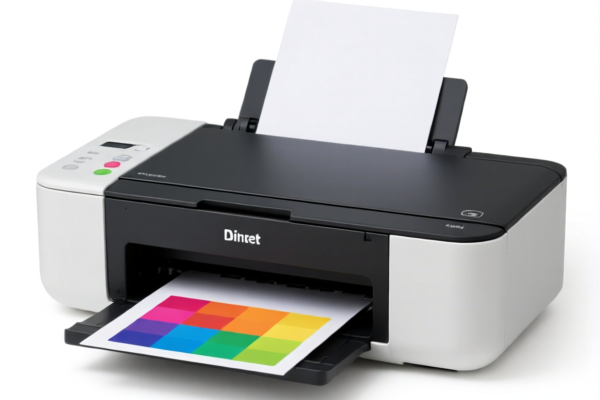
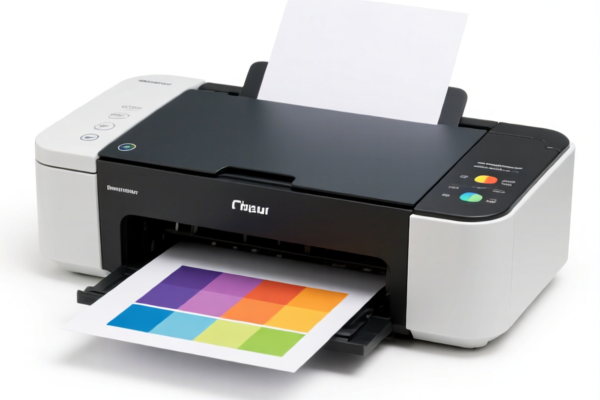
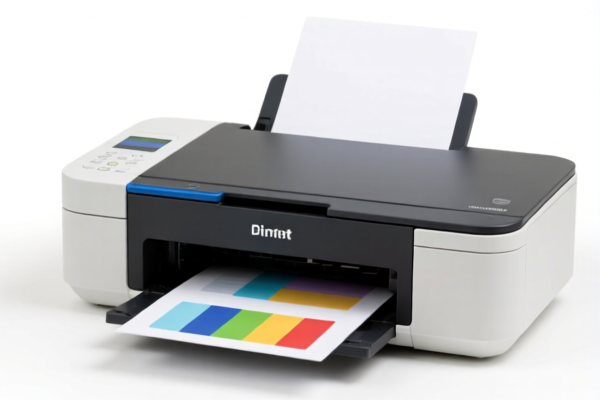
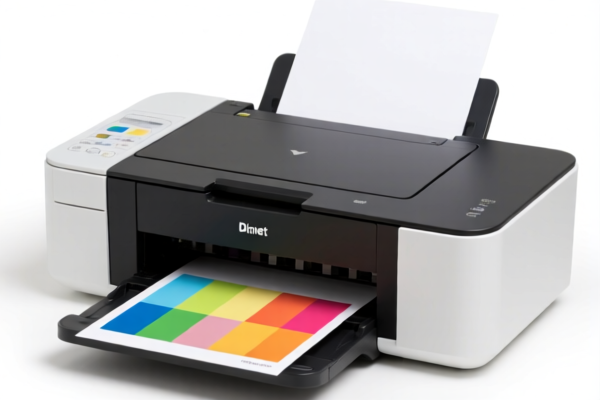
AI Analysis
🖨️ Handheld Inkjet Printer (Portable Printer)
🌐 HS Code Reference & Customs Clearance Guide | 2026 Latest Tariff Analysis | Professional Clearance Strategy
📌 Part 1: Product Definition & Classification: What Exactly is a "Handheld Inkjet Printer"?
A Handheld Inkjet Printer (often referred to as a Portable Printer or Portable Inkjet Printer) is a compact, battery-operated device used primarily for coding, marking, or printing information directly onto various surfaces (cardboard, metal, plastic, wood, etc.).
In international trade, its classification is complex because it straddles the line between Information Processing Machines (Data Processing Equipment) and Printing Machinery. The core question is: Is it a peripheral device for a computer, or is it an independent printing unit?
⚠️ Key Distinction Point:
- If it functions as a peripheral to an Automatic Data Processing (ADP) machine (like a laptop) and cannot operate independently as a standalone printing unit → Chapter 8471 (ADP Peripherals).
- If it is a standalone printing unit with its own internal processing/logic capable of printing codes/barcodes independently → Chapter 8443 (Printing Machinery).
📦 Part 2: HS Code Classification Details (2026 Latest Tariff Authority)
Below are the 5 specific HS Codes derived from the provided data, categorized by their functional logic.
| HS Code | Product Description & Logic | Tax Rate (Total) | Key Tax Components |
|---|---|---|---|
8471.90.00.00 |
ADP Equipment Peripheral: Classified as "Other" units for ADP machines. No material conflict. Assumes it connects to/data-processes for a computer. | 35.0% | Base: 0% Section 301: 25% IEEPA (122): 10% |
8471.80.90.00 |
ADP Peripheral: Fits the scope of "Other ADP Machine Units." Treated as a standard peripheral device. | 35.0% | Base: 0% Section 301: 25% IEEPA (122): 10% |
8443.32.10.90 |
Printing Unit (Other): Classified as a "Printer Unit" under Chapter 8443. Fits the "Other" category after excluding specific types. | 17.5% | Base: 0% Section 301: 7.5% IEEPA (122): 10% |
8443.32.10.20 |
Printing Unit: Based on common sense, it fits the "Printer" purpose. No material or form conflict. | 17.5% | Base: 0% Section 301: 7.5% IEEPA (122): 10% |
8443.32.10.40 |
Inkjet Printer: Directly matches Inkjet technology characteristics. Best fit if the device is purely inkjet-based. | 17.5% | Base: 0% Section 301: 7.5% IEEPA (122): 10% |
🔍 Critical Insight:
- Chapter 8471 Codes (8471.90.00.00&8471.80.90.00) incur a 35% total tax rate. This is significantly higher. - Chapter 8443 Codes (8443.32.10.90/20/40) incur a 17.5% total tax rate. This is the preferred classification for standalone handheld printers, as it saves 17.5% in duty.
💰 Part 3: 2026 Latest Tariff Rate Details (Including Surcharges)
✅ Applicable Country: United States (US)
✅ Origin: China (CN)
✅ Effective Time: 2025 November 10 onwards (including subsequent imports)
🎯 1. The High-Cost Route: 8471.90.00.00 & 8471.80.90.00 (ADP Peripherals)
| Item | Detail |
|---|---|
| Base Tariff | 0% (ad valorem) |
| USITC Surcharge (Sec 301) | +25% (Footnote 9903.88.01) |
| IEEPA Surcharge (122 Clause) | +10% (Targeting China/HK products, effective Nov 10, 2025) |
| Total Tax Rate | 35.0% |
| Tax Calculation | CIF Value × 35% |
| De Minimis Exemption? | ❌ NO (Not eligible for de minimis relief) |
| Legal Path | IEEPA:9903.01.25 → USITC:8471.90.00.00 → FOOTNOTE:9903.88.01 |
📌 Explanation:
- These codes are treated as general ADP accessories.
- The 25% Section 301 tariff is aggressive.
- The 10% IEEPA tariff is added on top.
- Total Burden: 35%. This is a heavy cost for high-volume logistics.
🎯 2. The Optimized Route: 8443.32.10.90, .20, .40 (Printing Machinery)
| Item | Detail |
|---|---|
| Base Tariff | 0% (ad valorem) |
| USITC Surcharge (Sec 301) | +7.5% (Reduced rate for printing machinery vs. ADP peripherals) |
| IEEPA Surcharge (122 Clause) | +10% (Same as above) |
| Total Tax Rate | 17.5% |
| Tax Calculation | CIF Value × 17.5% |
| De Minimis Exemption? | ❌ NO |
| Legal Path | IEEPA:9903.01.25 → USITC:8443.32.10.40 (for Inkjet) → FOOTNOTE:9903.88.01 |
📌 Explanation:
- These codes classify the device as dedicated printing equipment.
- The Section 301 tariff is only 7.5% (vs 25% for ADP codes).
- The 10% IEEPA tariff remains.
- Total Burden: 17.5%. This is the strategic choice for cost-saving.
🛠️ Part 4: Customs Clearance Practical Advice (Battle-Tested Pitfall Avoidance)
✅ 1. Preparation Checklist (Non-negotiable)
| Document | Required? | Notes |
|---|---|---|
| ✅ Product Specifications | ✔️ | Must state: "Handheld/Portable," "Inkjet Technology," "Battery Powered," "Standalone Operation." |
| ✅ Photos (Clear & Detailed) | ✔️ | Show the device printing on a box. Show the ink cartridge. Show the LCD screen/interface. |
| ✅ Declaration Statement | ✔️ | Explicitly state: "Standalone Printing Unit, NOT a peripheral to a computer." |
| ✅ Commercial Invoice | ✔️ | Description: "Portable Inkjet Printer, Standalone Code Marking Device." |
| ✅ Packing List | ✔️ | Include ink cartridges, chargers, and no extra computer cables if possible. |
✅ 2. Declaration Strategy (Key Mantra)
🔥 "Standalone = Printer (17.5%); Peripheral = ADP (35%). Choose Wisely!"
| Scenario | Correct HS Code | Wrong Action | Consequence |
|---|---|---|---|
| Device has its own CPU/Screen, prints directly on goods | 8443.32.10.40 |
Report as "USB Printer Peripheral" | Tax jumps to 35% |
| Device connects ONLY via USB to PC to print | 8471.90.00.00 |
Report as "Printer" | Risk of re-classification, but tax is still 35% |
| Mixed shipment (Printer + Ink + Cable) | Main Item: 8443.32.10.40 |
Split invoice | High risk of audit & penalty |
✅ 3. Special Circumstances
| Situation | Handling Advice |
|---|---|
| OEM Branded Printers | Provide OEM agreement. Ensure description emphasizes "Printing Function," not "Data Input." |
| Device with Wi-Fi/Bluetooth | Still eligible for 8443 if the core function is printing. Don't over-emphasize "Connectivity" in the description. |
| Inkjet vs. Thermal | If it uses Ink (liquid/pigment), it is strictly 8443.32. If it is Thermal Transfer (ribbon), it may fall under 8443.21. Stick to the provided data for Inkjet. |
| Kit with Computer | If sold WITH a laptop, the printer might be seen as a bundle. Isolate the printer for separate clearance if possible. |
🌍 Part 5: Global Market Comparison (2026 Latest)
| Country/Region | Recommended HS Code | Tax Rate (CN Origin) | Certifications | Notes |
|---|---|---|---|---|
| 🇺🇸 USA | 8443.32.10.40 |
17.5% | FCC + RoHS | Lowest US Rate. Avoid 8471 (35%). |
| 🇨🇳 China | 8443.32.10.40 |
5% (Est.) | CCC (if applicable) | No Section 301/IEEPA. |
| 🇪🇺 EU | 8443.32 |
0-4% | CE + RoHS | Low duty. Focus on EPR (Packaging) compliance. |
| 🇬🇧 UK | 8443.32 |
0-4% | UKCA + RoHS | Post-Brexit rules apply. |
| 🇦🇺 Australia | 8443.32 |
5% | RCM | No high surcharges. |
📌 Conclusion:
- USA is the ONLY market with high surcharges.
- Accurate classification under Chapter 8443 saves 17.5% in duty in the US.
- Do not treat handheld inkjet printers as "Computer Accessories." Treat them as Independent Printing Machinery.
📌 Part 6: Common Mistakes & Pitfall Guide (Lessons Learned)
❌ Mistake 1: Calling it a "Portable Computer Periphery" in the invoice.
👉 Result: Customs assigns 8471 → 35% Tax.
✅ Fix: Use "Handheld Inkjet Printer" or "Standalone Marking Device."
❌ Mistake 2: Ignoring the IEEPA 10% Clause.
👉 Result: Surprise tax bill upon arrival.
✅ Fix: Factor in 10% IEEPA regardless of HS Code (301 is 7.5% or 25%).
❌ Mistake 3: Shipping Ink Cartridges Separately without proper HS.
👉 Result: Ink may be classified under 3215 (Inks) with different surcharges.
✅ Fix: If shipped as a kit, declare as a set under the printer code 8443.32.10.40 if possible, or declare ink separately with correct HS.
❌ Mistake 4: Assuming "De Minimis" (Section 321) applies.
👉 Result: Rejected. Industrial/Commercial printers are not eligible for $800 de minimis entry when from China.
✅ Fix: File full formal entry. Prepare for duty payment.
🎯 Part 7: Conclusion: Professional Declaration Saves Money!
🎯 Remember the Mantra:
🔹 "Standalone = 8443 (17.5%); Peripheral = 8471 (35%)."
🔹 "IEEPA 10% is Always On. Choose 8443 to Minimize 301."
🔹 "Inkjet is King:8443.32.10.40is your best friend."
📌 Pro Tip:
If your product is OEM/ODM, ensure the supplier provides a "Functionality Declaration" stating the device has independent processing capability and is not dependent on an external ADP machine for its core printing function. This document is crucial for claiming the 17.5% rate.
📣 Immediate Action:
📞 Verify Product Specs: Does it have its own screen/buttons? If YES, go with
8443.32.10.40.
🚀 Prepare for 17.5% Duty, not 35%.
💼 Precision in Classification = Profit in Your Pocket.
✨ Professional Customs Clearance Starts with Accurate HS Codes!
💼 Every 1% of Duty Saved is 1% of Profit Gained!
Customer Reviews
About HS Code Classification
The Harmonized System (HS) is an internationally standardized nomenclature developed by the World Customs Organization (WCO) to classify traded products. Over 200 countries use the HS system as the basis for customs tariffs, trade statistics, and import/export regulations.
Each HS code follows a hierarchical structure:
- Chapter (2 digits) — Broad category of goods (e.g., Chapter 84: Machinery and Mechanical Appliances)
- Heading (4 digits) — More specific grouping within the chapter
- Subheading (6 digits) — Internationally standardized breakdown, used by all WCO member countries
- National subdivisions (8-10 digits) — Country-specific extensions for further classification, such as US HTSUS 10-digit codes
Correct HS code classification is essential for smooth customs clearance, accurate duty payment, and compliance with trade regulations. Misclassification can lead to customs delays, overpayment of duties, or penalties.
When importing from CN to US, the applicable tariff rates may include:
- Most-Favored-Nation (MFN) rate — The standard duty rate applied to WTO members
- General rate — Applied to countries without trade agreements
- Trade remedy duties — Additional tariffs such as Section 301 (anti-dumping), Section 232 (national security), or countervailing duties
The information provided on this page is for reference purposes only. For official classification, please consult with your local customs authority or a licensed customs broker.