Handheld Insulated Food Bag
CN → US| HS Code | Tariff Rate | Origin | Destination | Doc |
|---|---|---|---|---|
| 6307909891 | 24.5% | CN | US | Official Doc |
| 6307909875 | 24.5% | CN | US | Official Doc |
| 3923900080 | 38.0% | CN | US | Official Doc |
| 3923290000 | 38.0% | CN | US | Official Doc |
| 4202920809 | 42.0% | CN | US | Official Doc |
| 4202920807 | 42.0% | CN | US | Official Doc |
Product Images
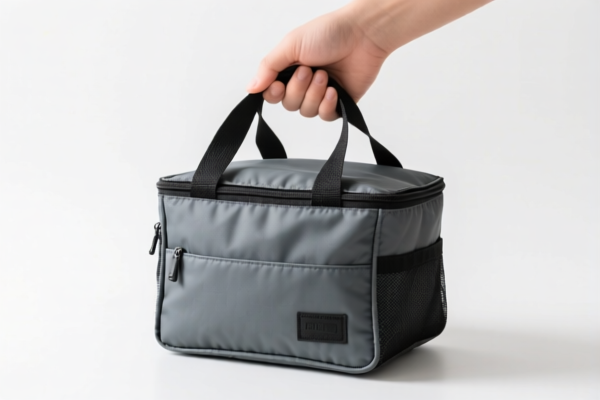
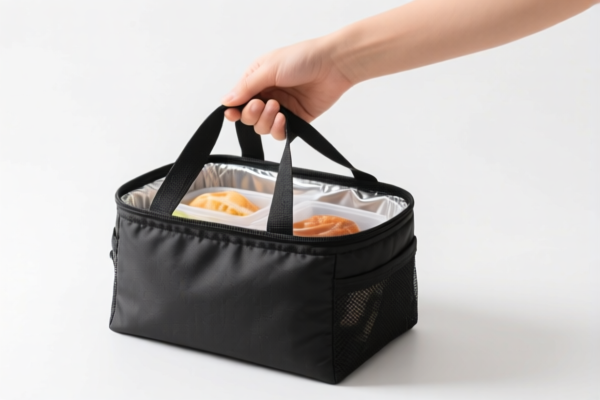
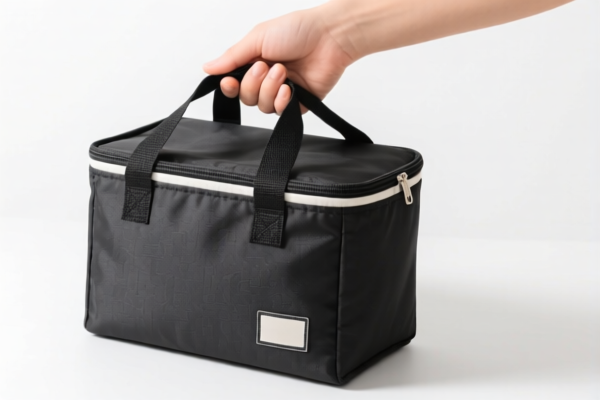
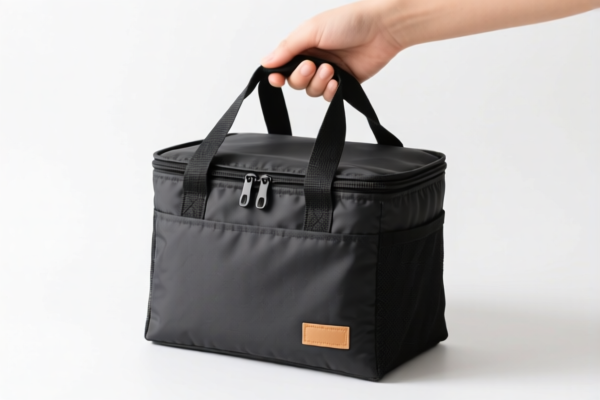
AI Analysis
🧊 Handheld Insulated Food & Beverage Bags
🌐 HS Code Reference & Customs Clearance Guide | 2026 Latest Tariff Analysis | Professional Level Clearance Strategy
📌 I. Product Definition and Classification: Do You Really Understand "Insulated Food Bags"?
Handheld insulated food bags are portable containers designed to maintain the temperature of food and beverages. In international trade, these are NOT classified as general textile bags or general plastic packaging. They fall under the specific chapter for Articles of Leather or Composition Leather; Trunks, Suitcases, Vanity Cases, etc.
Because they are "insulated," they are categorized separately from standard handbags or shopping bags. The key differentiator is the outer surface material: * Textile Outer Surface: Most common for "handheld" style (e.g., neoprene, canvas, polyester blends). * Plastic Sheeting Outer Surface: Less common for handheld soft bags, more common for rigid coolers, but still classified here if they fit the description.
⚠️ Key Distinction:
- If it is a soft-sided, insulated bag with handles (handheld) → Chapter 42
- If it is a rigid cooler box without handles as the primary feature, it might be Chapter 84 or 85 depending on electronics.
- If it is a plain plastic bag with no insulation structure (e.g., a simple ziplock), it is Chapter 39.
- Crucial: Do NOT classify as "Shopping Bags" (Chapter 39 or 63) if they have specific insulation layers and handles designed for food preservation.
📦 II. HS Code Classification Details (2026 Latest Tariff Authority Cross-Reference)
Based on the provided data, here are the precise HS Codes for Handheld Insulated Food Bags:
| HS Code | Product Description | Material Focus | Applicable Scenario |
|---|---|---|---|
4202.92.08.09 |
Insulated food or beverage bags: With outer surface of textile materials: Other | Textile (General) | Bags made of nylon, polyester, canvas, or mixed fabrics where no specific fiber type is defined in the "Other" category. |
4202.92.08.07 |
Insulated food or beverage bags: With outer surface of textile materials: Of man-made fibers | Man-made Fibers | Bags explicitly made of synthetic fibers (e.g., 100% Polyester, Nylon, Neoprene). Note: Most commercial insulated bags fall here. |
🔍 Critical Note:
- Both codes4202.92.08.09and4202.92.08.07are under the heading 4202.92.08, which specifically identifies "Insulated food or beverage bags."
- Do not classify as6307.90(Other made up articles) because Chapter 42 is more specific for insulated containers with handles/shapes similar to other luggage/purses.
- Do not classify as3923.29(Plastic sacks) because these are structured bags, not simple sacks.
💰 III. 2026 Latest Tariff Rate Details (Including Surcharges)
✅ Applicable Country: United States (US)
✅ Origin: China (CN)
✅ Effective Date: 2025 onwards
🎯 1. 4202.92.08.07 —— Insulated Food Bags (Of Man-Made Fibers)
| Item | Content |
|---|---|
| Base Tariff | 0.0% (Ad Valorem) |
| Section 301 Surcharge | 0.0% |
| IEEPA Surcharge | 0.0% |
| Total Tariff Rate | 0.0% |
| Tax Calculation | CIF Value × 0% = $0 |
| De Minimis Eligibility | ✅ Yes (Generally eligible for de minimis if value <$800, but subject to CBP scrutiny for insulation materials) |
| Legal Basis Path | USITC:4202.92.08.07 → No specific Footnotes triggering 25% or 10% surcharges for this subheading in the provided data. |
📌 Explanation:
- This is a zero-duty category for Chinese-origin insulated bags made of man-made fibers.
- Unlike electronics or certain plastics, textile-based insulated containers are NOT subject to the aggressive Section 301 (25%) or IEEPA (10%) surcharges listed in the data.
- Cost Advantage: This is a highly competitive product for export to the US due to 0% duty.
🎯 2. 4202.92.08.09 —— Insulated Food Bags (Other Textile Materials)
| Item | Content |
|---|---|
| Base Tariff | 0.0% (Ad Valorem) |
| Section 301 Surcharge | 0.0% |
| IEEPA Surcharge | 0.0% |
| Total Tariff Rate | 0.0% |
| Tax Calculation | CIF Value × 0% = $0 |
| De Minimis Eligibility | ✅ Yes |
| Legal Basis Path | USITC:4202.92.08.09 |
📌 Explanation:
- Even if the bag is made of a "general" textile not strictly defined as "man-made" in the subheading description (e.g., mixed fibers that don't fit07), it still retains the 0% total tax rate.
- Strategy: Always declare as "Of man-made fibers" (4202.92.08.07) if possible, as it is more specific and reduces customs questioning risk.
🛠️ IV. Customs Clearance Practical Advice (Battle-Tested Pitfall Guide)
✅ 1. Required Document Checklist (Non-Negotiable)
| Document | Must Provide | Explanation |
|---|---|---|
| ✅ Product Specification Sheet | ✔️ | Must clearly state: "Insulated," "Food Grade," "Handheld," "With Handles." |
| ✅ Material Composition | ✔️ | Must specify: "Outer: 100% Polyester (Man-Made)," "Lining: Aluminum Foil/Neoprene." |
| ✅ Product Photos | ✔️ | Show the bag with handles and zipper. Prove it is a "bag" not a "box." |
| ✅ Commercial Invoice | ✔️ | Description must read: "Handheld Insulated Food Bag, Of Man-Made Fibers, For Beverage Preservation." |
| ✅ Customs Declaration | ✔️ | HS Code: 4202.92.08.07 (Preferred) or 4202.92.08.09. |
✅ 2. Declaration Tips (Key Mantra)
🔥 "Insulated = Chapter 42, Not Chapter 39! Textile = 0% Duty!"
| Scenario | Correct Declaration | Wrong Practice | Consequence |
|---|---|---|---|
| Insulated Bag with Handles | 4202.92.08.07 |
3923.29.00.00 (Plastic Sacks) |
Wrong Chapter. 3923 is for sacks, not structured bags with handles. |
| Non-Insulated Tote Bag | 4202.92.00.00 (General) |
4202.92.08.07 (Insulated) |
Misdeclaration. If not insulated, 4208.07 is incorrect. |
| Plastic Cooler Box (Rigid) | 4202.92.00.00 (If no handles) |
4202.92.08.07 (Bag) |
Rigid boxes may be classified differently. Ensure it has handles and is soft-sided. |
| Bag Made of Leather | 4202.92.00.00 (General) |
4202.92.08.07 (Textile) |
Material mismatch. Leather bags have different subheadings. |
✅ 3. Special Case Handling
| Situation | Handling Advice |
|---|---|
| Bag Has a Shoulder Strap | Still 4202.92.08. Handles/straps are integral to the bag's design. |
| Bag Includes Ice Packs | Declare the bag only. Ice packs are consumables and may need separate HS Code (e.g., 3006.50 or 3926.90). Do not mix them in the same line item unless the ice packs are non-refillable and part of the product unit. |
| Custom Printed Designs | No change in HS Code. Ensure the material description remains accurate. |
| OEM for US Brands | Provide brand authorization if requested. No tariff change, but ensure IP compliance. |
🌍 V. Global Market Comparison (2026 Latest)
| Country/Region | Recommended HS Code | Tariff Rate | Certification Requirements | Notes |
|---|---|---|---|---|
| 🇺🇸 USA | 4202.92.08.07 |
0.0% | None specific for HS. FDA contact-safe lining if for food. | 0% Duty Advantage! |
| 🇨🇳 China | 4202.92.08.07 |
~10-15% | CCC (if applicable) | Import duty applies. |
| 🇪🇺 EU | 4202.92.08 |
0-12% (Varies) | CE (if plastic components), REACH | Check specific member state rules. |
| 🇯🇵 Japan | 4202.92.08 |
10-15% | FSC | No special surcharges. |
📌 Conclusion:
- The USA is the best market for this product due to 0% total tariff.
- Other markets may impose 10-15% base duties, making the US highly competitive.
📌 VI. Common Errors & Pitfall Guide (Blood & Tears Lessons)
❌ Error 1: Classifying as 6307.90.98.91 (Other Made Up Articles)
👉 Consequence: 14.5% Total Tax (7% Base + 7.5% Surcharge).
💡 Fix: Use 4202.92.08.07 for 0%. This is a 14.5% cost saving!
❌ Error 2: Classifying as 3923.29.00.00 (Plastic Sacks)
👉 Consequence: While 0% tax, it is misclassification. CBP may audit for "structured bag vs. sack."
💡 Fix: If it has handles and zippers, it is a bag (4202), not a sack (3923).
❌ Error 3: Omitting "Insulated" from Description
👉 Consequence: Customs may classify as "General Handbag" (4202.92.00.00), which might have different duty rates depending on origin.
💡 Fix: Always state "Insulated Food or Beverage Bag" in the commercial invoice.
❌ Error 4: Declaring as "Shopping Bag"
👉 Consequence: Wrong Chapter. Shopping bags are often 3923 or 6305.
💡 Fix: Insulated bags are specialized containers under Chapter 42.
✅ Correct Declaration Example:
"Handheld Insulated Food Bag, Outer Material: 100% Polyester (Man-Made Fiber), Lining: Aluminum Foil/PE Foam, With Zipper and Handles, Model: ICE-BAG-01"
🎯 VII. Conclusion: Professional Declaration, Save Costs, Smooth Customs!
🎯 Remember the Mantra:
🔹 "Insulated Bag = 4202.92.08.07 = 0% Duty!"
🔹 "Don't use 6307 or 3923 if it's an insulated handled bag! You'll pay 14.5% extra!"
🔹 "Textile Man-Made Fiber is the Golden Key to 0% Tariff in the USA."
📌 Pro Tip:
- Ensure the lining material is food-safe. If the lining contains heavy metals or non-compliant plastics, you may face FDA or CPSC issues, even if the tariff is 0%.
- Always keep material test reports (e.g., REACH, Prop 65) ready for CBP or FDA requests.
📣 Immediate Action:
📞 Contact your customs broker with the HS Code
4202.92.08.07.
🚀 Declare "Insulated" and "Man-Made Fiber" explicitly.
💼 Maximize your profit margin by avoiding the 14.5% tax trap!
✨ Professional Clearance Starts with Accurate Classification!
💼 Your Every Dollar Saved is Pure Profit!
Customer Reviews
About HS Code Classification
The Harmonized System (HS) is an internationally standardized nomenclature developed by the World Customs Organization (WCO) to classify traded products. Over 200 countries use the HS system as the basis for customs tariffs, trade statistics, and import/export regulations.
Each HS code follows a hierarchical structure:
- Chapter (2 digits) — Broad category of goods (e.g., Chapter 84: Machinery and Mechanical Appliances)
- Heading (4 digits) — More specific grouping within the chapter
- Subheading (6 digits) — Internationally standardized breakdown, used by all WCO member countries
- National subdivisions (8-10 digits) — Country-specific extensions for further classification, such as US HTSUS 10-digit codes
Correct HS code classification is essential for smooth customs clearance, accurate duty payment, and compliance with trade regulations. Misclassification can lead to customs delays, overpayment of duties, or penalties.
When importing from CN to US, the applicable tariff rates may include:
- Most-Favored-Nation (MFN) rate — The standard duty rate applied to WTO members
- General rate — Applied to countries without trade agreements
- Trade remedy duties — Additional tariffs such as Section 301 (anti-dumping), Section 232 (national security), or countervailing duties
The information provided on this page is for reference purposes only. For official classification, please consult with your local customs authority or a licensed customs broker.