Handheld Scale
CN → US| HS Code | Tariff Rate | Origin | Destination | Doc |
|---|---|---|---|---|
| 8423100030 | 10.0% | CN | US | Official Doc |
| 8423810010 | 35.0% | CN | US | Official Doc |
Product Images
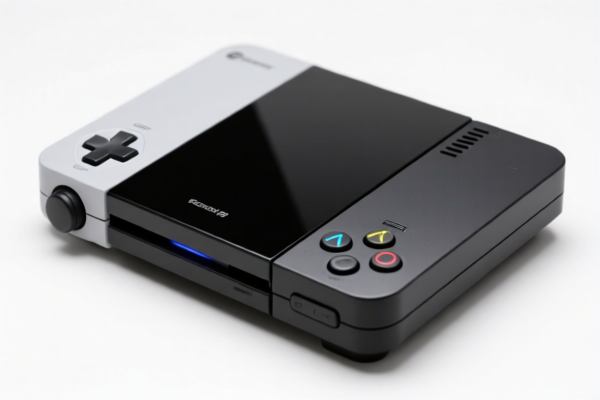
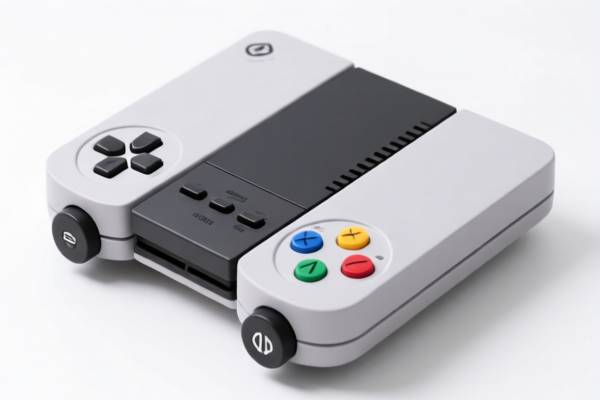
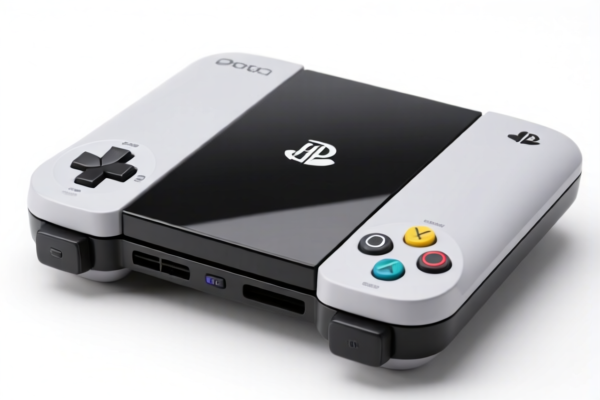
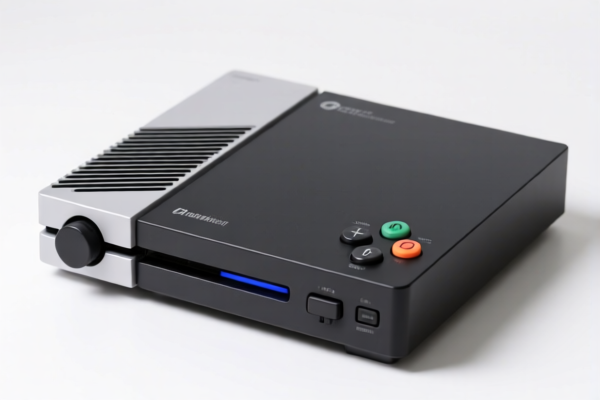
AI Analysis
⚖️ Handheld Scale (Portable & Personal Weighing Devices)
🌐 HS Code Reference & Customs Clearance Guide | 2024/2025 Latest Tariff Analysis | Professional Strategy
📌 I. Product Definition & Classification: What is a "Handheld Scale"?
In international trade, "Handheld Scales" are not a single unified category but are split based on function and maximum weighing capacity. The critical distinction lies in whether the device is a personal wearable or a general-purpose digital counter/checker.
1. Personal Weighing Machines (8423.10.00.30)
These are scales designed specifically for carrying on the person (e.g., pedometer-style scales, smart waist-band scales, or baby scales). They are lightweight, portable, and often feature Bluetooth connectivity for personal health monitoring.
2. Other Weighing Machinery (8423.81.00.10)
These are general-purpose weighing devices, including Digital Electronic Counting Scales. While they may be small and handheld in design, their primary function is industrial, commercial, or laboratory counting/checking (e.g., counting small parts, verifying weights in logistics). They are not designed primarily for "carrying on the person" as a wearable.
⚠️ Key Distinction Point:
- If the scale is specifically suitable for carrying on the person (wearable, personal health) →归入 8423.10.00.30
- If the scale is a general-purpose digital counting/checking machine (even if handheld/small) → 归入 8423.81.00.10
📦 II. HS Code Classification Details (Based on Provided Data)
| HS Code | Product Description | Applicable Scenario | Key Feature |
|---|---|---|---|
8423.10.00.30 |
Personal weighing machines, including baby scales; household scales; Of a kind suitable for carrying on the person | Smart wearable scales, baby scales, personal body weight scales | ✅ Designed for personal wear/carry |
8423.81.00.10 |
Other weighing machinery: Having max capacity ≤ 30kg; Digital electronic type: Counting scales | Industrial counting scales, digital part checkers, portable commercial scales | ✅ General-purpose counting/checking |
🔍 Important Note:
- 8423.10.00.30 captures the "personal/wearable" nature.
- 8423.81.00.10 captures the "digital counting/checking" functionality, regardless of size, as long as capacity ≤ 30kg.
- Do not assume all small scales are "personal." A small digital scale used for counting screws in a factory is 8423.81.00.10, not personal.
💰 III. Tariff Rate Breakdown (Detailed Tax Clauses)
✅ Applicable Market: United States (US)
✅ Origin: China (CN)
✅ Status: Based on provided tax data
🎯 1. 8423.10.00.30 —— Personal/Wearable Scales
| Item | Content |
|---|---|
| Base Tariff | 0.0% |
| Additional Tariff | 0.0% |
| Total Tax Rate | 0.0% |
| Tax Detail | Base: 0.0%, Additional: 0.0% |
| Exemption Status | ✅ Fully Exempt |
📌 Explanation:
- Personal wearable scales enjoy zero tariff impact under the provided data.
- This is the most cost-effective classification for portable personal health devices.
- No Section 301 or IEEPA additional tariffs apply to this specific subheading in this dataset.
🎯 2. 8423.81.00.10 —— Digital Counting/Checking Scales (≤ 30kg)
| Item | Content |
|---|---|
| Base Tariff | 0.0% |
| Additional Tariff | +25.0% |
| Total Tax Rate | 25.0% |
| Tax Detail | Base: 0.0%, Additional: 25.0% |
| Exemption Status | ❌ Not Exempt (Subject to Additional Tariff) |
📌 Explanation:
- Although the base tariff is 0%, these scales are subject to a 25% additional tariff.
- This typically reflects Section 301 tariffs on certain electronic/mechanical weighing equipment from China.
- Critical Impact: For high-value industrial counting scales, this 25% adds significant cost.
🛠️ IV. Customs Clearance Practical Advice
✅ 1. Documentation Checklist (Must-Haves)
| Document | Required | Notes |
|---|---|---|
| ✅ Product Specification Sheet | ✔️ | Clearly state: Max capacity, accuracy, power source, intended use (personal vs. industrial). |
| ✅ Product Photos | ✔️ | Show size, wearability (e.g., clip, strap), interface, and display. |
| ✅ User Manual | ✔️ | If the manual states "for personal health monitoring," it supports 8423.10.00.30. If it states "for inventory counting," it supports 8423.81.00.10. |
| ✅ Commercial Invoice | ✔️ | Describe accurately: "Personal Smart Scale" vs. "Digital Counting Scale." |
| ✅ CE/FCC Certification | ✔️ | Required for electronic devices. |
✅ 2. Classification Strategy & Risk Mitigation
🔥 "Wearable vs. Worker: Define Your Purpose!"
| Scenario | Recommended HS Code | Tariff | Risk Level |
|---|---|---|---|
| Smart Waistband/Pedometer Scale | 8423.10.00.30 |
0% | 🟢 Low (Low tax, but ensure it's truly "wearable") |
| Baby Weighing Scale | 8423.10.00.30 |
0% | 🟢 Low (Household/personal use) |
| Small Digital Counting Scale (≤30kg) | 8423.81.00.10 |
25% | 🟡 Medium (High tax, but accurate) |
| Misclassified Industrial Scale as Personal | 8423.10.00.30 |
0% | 🔴 High (Customs may reclassify & penalize) |
⚠️ Critical Warning:
- If you ship a digital counting scale but declare it as "Personal Scale" (8423.10.00.30) to avoid the 25% tariff, customs may reject this, leading to back taxes, penalties, and shipment delays.
- Proof is key: Provide user manuals, marketing materials, and product designs that prove the "personal/wearable" nature for8423.10.00.30.
✅ 3. Special Cases
| Case | Handling Advice |
|---|---|
| Hybrid Devices (e.g., Scale + Fitness Tracker) | If it measures weight and tracks steps, argue for 8423.10.00.30 if the weight measurement is secondary to personal fitness. Provide evidence. |
| Large Handheld Industrial Scales (>30kg) | Not covered in this data. May fall under different subheadings (e.g., 8423.89). |
| Non-Digital Mechanical Handheld Scales | Not covered in this data. May fall under 8423.89 or 9031. |
🌍 V. Global Market Comparison (2024/2025)
| Country/Region | Recommended HS Code | Tariff (China Origin) | Notes |
|---|---|---|---|
| 🇺🇸 United States | 8423.10.00.30 |
0% | Best for personal scales |
| 🇺🇸 United States | 8423.81.00.10 |
25% | Industrial/counting scales |
| 🇨🇳 China | 8423.10.00.30 |
~5% | Import duty varies |
| 🇪🇺 European Union | 8423.10.00.30 |
0% (if eligible) | Check CE marking requirements |
| 🇪🇺 European Union | 8423.81.00.10 |
0% | Standard machinery rate |
📌 Conclusion:
- US Tariff Arbitrage: The difference between 0% and 25% is massive. Accurate classification is vital.
- EU/Other Markets: Often have lower or zero base rates for weighing machinery, but ensure compliance with local safety standards (CE, UKCA, etc.).
📌 VI. Common Mistakes & Pitfalls
❌ Mistake 1: Declaring all small scales as "Personal" to avoid tariffs.
👉 Result: Customs audits may reject this if the scale is clearly for industrial counting. Penalty + Back Tax.
❌ Mistake 2: Ignoring the "Max Capacity" clause in 8423.81.00.10.
👉 Result: If the scale exceeds 30kg, it may fall under a different, potentially higher-tariff subheading.
❌ Mistake 3: Vague Product Descriptions (e.g., "Scale").
👉 Result: Customs will assign the worst-case scenario or hold the shipment for clarification.
✅ Best Practice:
"Smart Personal Body Weight Scale, Bluetooth, Wearable, Max Capacity 180kg, Model XYZ" → Supports
8423.10.00.30
"Digital Electronic Counting Scale, Max Capacity 30kg, Precision 0.1g, Model ABC" → Supports8423.81.00.10
🎯 VII. Conclusion: Professional Classification Saves 25%!
🎯 Key Takeaway:
🔹 "Personal/Wearable = 0% Tax"
🔹 "Industrial Counting = 25% Tax"
🔹 "Clarify Your Use Case to Save Costs!"
📌 Pro Tip:
If you are exporting digital counting scales to the US, consider:
1. Supply Chain Diversification: Manufacture in Vietnam/Mexico to avoid China-specific tariffs.
2. Product Redesign: If possible, add "personal fitness" features (heart rate, step count) to justify 8423.10.00.30.
3. Advance Ruling: Request a pre-classification ruling from US Customs (CBP) to mitigate risk.
📣 Action Required:
📞 Contact a Customs Broker + Provide Product Manual & Photos + Confirm Intended Use
🚀 Avoid 25% Surprises, Ensure Smooth Clearance!
✨ Accurate Classification is the Key to Profitability!
💼 Every Percent Saved is Pure Profit!
Customer Reviews
About HS Code Classification
The Harmonized System (HS) is an internationally standardized nomenclature developed by the World Customs Organization (WCO) to classify traded products. Over 200 countries use the HS system as the basis for customs tariffs, trade statistics, and import/export regulations.
Each HS code follows a hierarchical structure:
- Chapter (2 digits) — Broad category of goods (e.g., Chapter 84: Machinery and Mechanical Appliances)
- Heading (4 digits) — More specific grouping within the chapter
- Subheading (6 digits) — Internationally standardized breakdown, used by all WCO member countries
- National subdivisions (8-10 digits) — Country-specific extensions for further classification, such as US HTSUS 10-digit codes
Correct HS code classification is essential for smooth customs clearance, accurate duty payment, and compliance with trade regulations. Misclassification can lead to customs delays, overpayment of duties, or penalties.
When importing from CN to US, the applicable tariff rates may include:
- Most-Favored-Nation (MFN) rate — The standard duty rate applied to WTO members
- General rate — Applied to countries without trade agreements
- Trade remedy duties — Additional tariffs such as Section 301 (anti-dumping), Section 232 (national security), or countervailing duties
The information provided on this page is for reference purposes only. For official classification, please consult with your local customs authority or a licensed customs broker.