Handheld Steam Cleaner
CN → US| HS Code | Tariff Rate | Origin | Destination | Doc |
|---|---|---|---|---|
| 8509805095 | 14.2% | CN | US | Official Doc |
| 8509801000 | 10.0% | CN | US | Official Doc |
| 8421390115 | 35.0% | CN | US | Official Doc |
| 8479896500 | 20.3% | CN | US | Official Doc |
| 8516790000 | 12.7% | CN | US | Official Doc |
Product Images
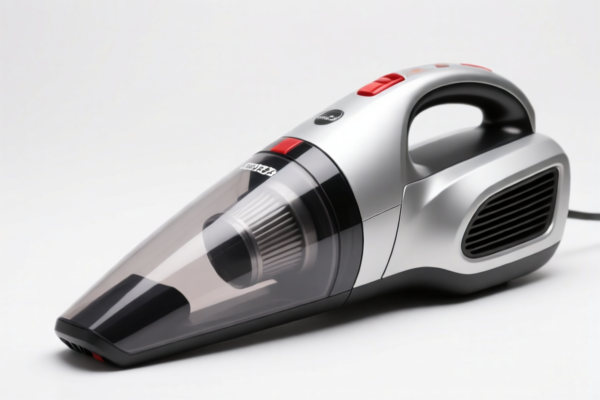
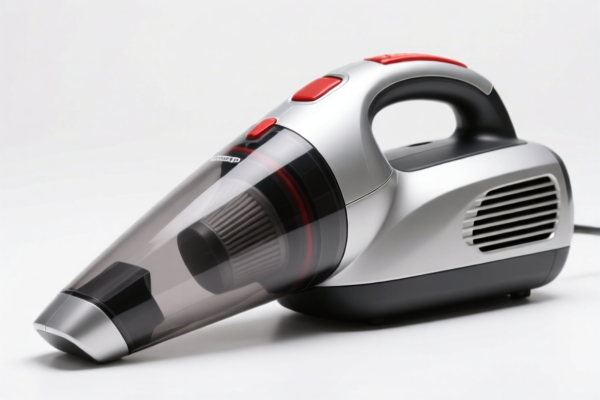
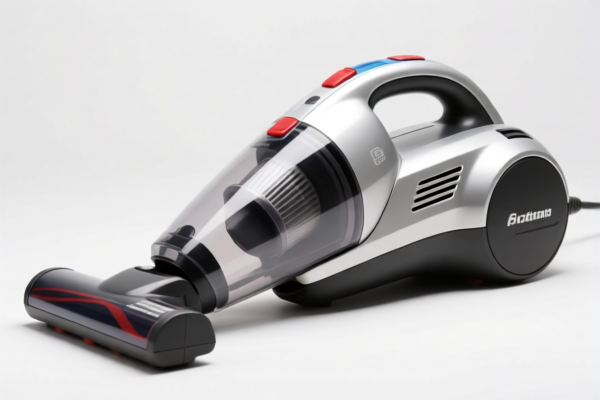
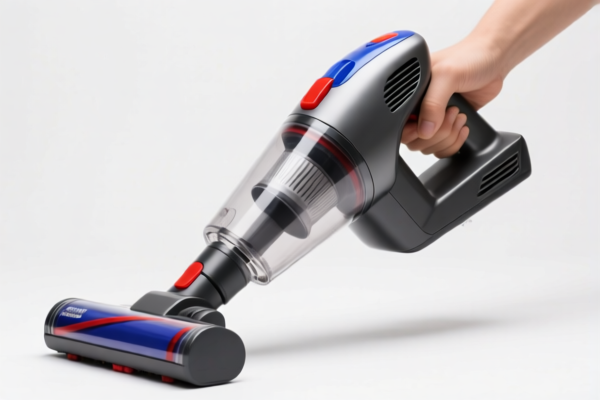
AI Analysis
🌊 Handheld Steam Cleaner (蒸汽清洁机)
🌐 HS Code Reference & Customs Clearance Guide | 2026 Latest Tariff Analysis | Professional Clearance Strategy
📌 I. Product Definition & Classification: Do You Really Know "Handheld Steam Cleaner"?
A Handheld Steam Cleaner is a household electrical appliance that uses self-contained electric motors to generate steam for cleaning purposes. In international trade, its classification can be tricky because it overlaps with several categories depending on the primary function, construction, and intended use.
There are 5 Potential HS Codes identified for this product. The choice determines the total tax burden, which ranges from 10.0% to 35.0% due to differing base tariffs and Section 301/IEEPA surcharges.
⚠️ Key Classification Logic:
- Home Appliance Route (8509/8516): If viewed primarily as a household electrical tool or electric heater.
- Mechanical Cleaning Route (8421/8479): If viewed as a mechanical device for dust removal or independent mechanical function.
- Material/Conflict Check: No material conflicts exist; classification depends on functional interpretation.
📦 II. HS Code Classification Details (2026 Latest Tariff Authority Comparison)
| HS Code | Product Description Summary | Primary Logic / Application | Total Tax Rate |
|---|---|---|---|
8509.80.50.95 |
Other electro-domestic appliances with self-contained electric motor | Falls under the "catch-all" definition for other household electrical appliances. Not excluded from this category. | 14.2% |
8509.80.10.00 |
Electro-mechanical domestic appliances with self-contained electric motor | Consistent with electro-mechanical household devices in other headings. No material conflict. | 10.0% |
8421.39.01.15 |
Dust and other solid particles removing apparatus (Air cleaning machines) | Interpreted as cleaning/air purification equipment using steam. No material or form conflict. | 35.0% |
8479.89.65.00 |
Other machines and mechanical appliances with self-contained electric motor | Independent mechanical appliance, usually containing a self-contained motor. Fits logic of other electro-mechanical appliances. | 20.3% |
8516.79.00.00 |
Other electro-thermic appliances | Steam cleaner uses electric heating to generate steam. Fits logic of household electric heating equipment. | 12.7% |
🔍 Critical Distinction:
- Lowest Risk/Cost:8509.80.10.00(10.0%) and8516.79.00.00(12.7%) are the most favorable if the product can be argued as a standard home appliance/heater.
- Highest Risk/Cost:8421.39.01.15(35.0%) carries a heavy 25% additional tariff, posing a significant cost penalty.
💰 III. 2026 Latest Tariff Rate Breakdown (Including Additional Duties & Policy Surcharges)
✅ Applicable Country: United States (US)
✅ Origin: China (CN)
✅ Effective Date: From November 10, 2025 (and subsequent imports)
🎯 1. 8509.80.10.00 — Electro-mechanical Domestic Appliance (Best Option)
| Item | Detail |
|---|---|
| Base Tariff | 0.0% |
| Section 301 Additional Tariff | 0.0% |
| IEEPA Additional Tariff (122 Clause) | +10% |
| Total Tax Rate | 10.0% |
| Tax Calculation | CIF Value × 10% |
| De Minimis Eligibility | ❌ Not Eligible (Subject to IEEPA restrictions) |
| Legal Basis Path | IEEPA:9903.01.25 → USITC:8509.80.10.00 |
📌 Explanation:
- This is the most cost-effective classification.
- The 10% rate is solely due to the IEEPA 122 Clause (China-specific surcharge).
- No Section 301 (25%) or other hidden fees apply.
- Strategy: Argue the product is a standard "electro-mechanical domestic appliance" similar to vacuums or irons.
🎯 2. 8516.79.00.00 — Other Electro-Thermic Appliances (Second Best)
| Item | Detail |
|---|---|
| Base Tariff | 2.7% |
| Section 301 Additional Tariff | 0.0% |
| IEEPA Additional Tariff (122 Clause) | +10% |
| Total Tax Rate | 12.7% |
| Tax Calculation | CIF Value × 12.7% |
| De Minimis Eligibility | ❌ Not Eligible |
| Legal Basis Path | IEEPA:9903.01.24 → USITC:8516.79.00.00 |
📌 Explanation:
- Slightly higher than 8509 due to the 2.7% base tariff.
- Classifies the steam cleaner as an electric heating device.
- Strategy: Focus on the "electric heating element generating steam" aspect rather than the mechanical cleaning aspect.
🎯 3. 8509.80.50.95 — Other Electro-Domestic Appliances
| Item | Detail |
|---|---|
| Base Tariff | 4.2% |
| Section 301 Additional Tariff | 0.0% |
| IEEPA Additional Tariff (122 Clause) | +10% |
| Total Tax Rate | 14.2% |
| Tax Calculation | CIF Value × 14.2% |
| De Minimis Eligibility | ❌ Not Eligible |
| Legal Basis Path | IEEPA:9903.01.25 → USITC:8509.80.50.95 |
📌 Explanation:
- This is the "catch-all" for household appliances not specifically listed elsewhere.
- Cost: $4.2\% + 10\% = 14.2\%$.
- Strategy: Use this if the product has unique features that don’t fit neatly into "heating" or "electro-mechanical" definitions.
🎯 4. 8479.89.65.00 — Other Mechanical Appliances (With Motor)
| Item | Detail |
|---|---|
| Base Tariff | 2.8% |
| Section 301 Additional Tariff | +7.5% |
| IEEPA Additional Tariff (122 Clause) | +10% |
| Total Tax Rate | 20.3% |
| Tax Calculation | CIF Value × 20.3% |
| De Minimis Eligibility | ❌ Not Eligible |
| Legal Basis Path | IEEPA:9903.01.24 → USITC:8479.89.65.00 |
📌 Explanation:
- This classification treats the device as an independent mechanical appliance.
- Surprise Cost: Includes a 7.5% Section 301-like surcharge (distinct from the 25% tier but still present).
- Strategy: Generally less favorable than 8509/8516 unless mechanical function is dominant.
🎯 5. 8421.39.01.15 — Dust/Particle Removing Apparatus (Highest Risk)
| Item | Detail |
|---|---|
| Base Tariff | 0.0% |
| Section 301 Additional Tariff | +25.0% |
| IEEPA Additional Tariff (122 Clause) | +10% |
| Total Tax Rate | 35.0% |
| Tax Calculation | CIF Value × 35.0% |
| De Minimis Eligibility | ❌ Not Eligible |
| Legal Basis Path | IEEPA:9903.01.25 → USITC:8421.39.01.15 → FOOTNOTE:9903.88.01 |
📌 Explanation:
- AVOID IF POSSIBLE.
- This classifies the cleaner as an air cleaning/dust removing machine.
- Heavy Penalty: The 25% Section 301 tariff applies here, plus the 10% IEEPA surcharge.
- Risk: High risk of customs audit because steam cleaning is not primarily "air purification." Misclassification here leads to significant overpayment.
🛠️ IV. Customs Clearance Practical Advice (Battle-Tested Pitfall Guide)
✅ 1. Document Checklist (Non-Negotiable)
| Document | Required? | Description |
|---|---|---|
| ✅ Product Specifications | ✔️ | Must highlight: Electric motor presence, heating element, steam output, voltage. |
| ✅ Function Description | ✔️ | Explicitly state: "For household surface cleaning using heated steam." Avoid terms like "Air Purifier" or "Dust Extractor" to avoid 8421. |
| ✅ Product Photos | ✔️ | Clear images of the unit, power cord, and heating tank. |
| ✅ Commercial Invoice | ✔️ | Must describe as "Handheld Steam Cleaner for Household Use." |
| ✅ Origin Certificate | ✔️ | Confirm Country of Origin (China) to apply correct IEEPA/Section 301 rates. |
| ✅ Safety Certifications | ✔️ | UL, ETL, or CE marks to prove compliance with electrical standards. |
✅ 2. Declaration Tips (Key Mnemonics)
🔥 “Appliance First, Heater Second, Mechanical Last, Never Air Clean!”
| Situation | Correct Declaration | Incorrect Action |
|---|---|---|
| Standard Home Steam Cleaner | 8509.80.10.00 (10%) |
Declaring as "Air Cleaner" → 35% |
| Focus on Heating Element | 8516.79.00.00 (12.7%) |
Declaring as "Mechanical Tool" → 20.3% |
| Unique Household Gadget | 8509.80.50.95 (14.2%) |
Declaring as "Industrial Machine" → 20.3% |
| Avoid Air Purification Terms | N/A | Using words like "Filter," "Dust Removal," "Air Clean" → Triggers 8421 (35%) |
✅ 3. Special Case Handling
| Scenario | Handling Advice |
|---|---|
| Commercial vs. Household | If marketed for professional/industrial use, it may fall under 8479 (20.3%). Stick to "Household" language for 8509/8516 rates. |
| Accessory-Only Imports | Nozzles, hoses, and tanks should be declared as parts of the cleaner or bundled in the same HS code to avoid separate classification headaches. |
| Dual-Use Claims | If the device also claims to "purify air," emphasize steam cleaning in the description. Do not lead with air purification. |
| Pre-Ruling Request | If the shipment is high-value, submit an Advance Ruling Request to CBP for 8509.80.10.00 or 8516.79.00.00 to lock in the lower tax rate. |
🌍 V. Global Market Comparison (2026 Latest)
| Country/Region | Recommended HS Code | Estimated Duty | Key Certification | Note |
|---|---|---|---|---|
| 🇺🇸 USA | 8509.80.10.00 |
10.0% | UL/ETL + IEEPA Compliance | Lowest rate. Avoid 8421 (35%). |
| 🇨🇳 China | 8509.80.10.00 |
5% - 10% | CCC | No additional US surcharges. |
| 🇪🇺 EU | 8509.80.10.00 |
0% - 4% | CE + RoHS | Generally low duties for small appliances. |
| 🇬🇧 UK | 8509.80.10.00 |
0% - 4% | UKCA | Post-Brexit rules similar to EU. |
| 🇨🇦 Canada | 8509.80.10.00 |
0% - 6% | CSA | FTA benefits may apply if originating in NA. |
📌 Conclusion:
- The USA is the most complex market due to IEEPA and Section 301 tariffs.
- Correct classification is critical: Moving from8421(35%) to8509(10%) saves 25% in taxes.
- China-origin goods face specific surcharges, so accurate HS coding is essential to avoid double penalties.
📌 VI. Common Mistakes & Pitfall Guide (Lessons from the Field)
❌ Mistake 1: Using the word "Air Purifier" or "Dust Remover" in the product description
👉 Consequence: Customs may reclassify under 8421.39.01.15 → 35% Tax instead of 10%.
❌ Mistake 2: Declaring as "Mechanical Cleaning Device" without emphasizing electric home use
👉 Consequence: Reclassification under 8479.89.65.00 → 20.3% Tax (higher due to 7.5% surcharge).
❌ Mistake 3: Ignoring the "Self-Contained Electric Motor" requirement
👉 Consequence: If the motor is external, it may fall under 8479 or other machinery codes, increasing complexity and cost.
❌ Mistake 4: Assuming all steam cleaners are "Household Appliances" automatically
👉 Consequence: If the product is heavy-duty/commercial, it may be scrutinized. Ensure marketing materials emphasize household/residential use for the 10-14% rates.
✅ Correct Approach:
"Handheld Steam Cleaner, Household Use, Electric, 1500W, with Self-Contained Motor and Boiler, Model XYZ, UL Certified"
🎯 VII. Conclusion: Precise Classification Saves Money!
🎯 Remember the Mnemonic:
🔹 “Appliance 10%, Heater 12.7%, Catch-all 14.2%, Mechanical 20.3%, Air Clean 35%!”
🔹 “Don’t say ‘Air Clean’ unless you want to pay 35%! Say ‘Household Appliance’ to pay 10%!”
📌 Pro Tip:
If your steam cleaner is originating from Vietnam, Mexico, or Thailand, you may be eligible for IEEPA exemptions or lower tariffs. However, for China-origin goods, the 10% rate under 8509.80.10.00 is the best achievable outcome.
Recommendation: Submit an Advance Ruling to CBP to secure the 10% or 12.7% rate.
📣 Take Action Now:
📞 Contact a licensed customs broker + Provide Product Specs + Request HS Code Advance Ruling
🚀 Ensure smooth clearance, avoid costly audits, and maximize your profit margin!
✨ Professional Clearance Starts with Accurate Classification!
💼 Every percent of tax saved is pure profit earned!
Customer Reviews
About HS Code Classification
The Harmonized System (HS) is an internationally standardized nomenclature developed by the World Customs Organization (WCO) to classify traded products. Over 200 countries use the HS system as the basis for customs tariffs, trade statistics, and import/export regulations.
Each HS code follows a hierarchical structure:
- Chapter (2 digits) — Broad category of goods (e.g., Chapter 84: Machinery and Mechanical Appliances)
- Heading (4 digits) — More specific grouping within the chapter
- Subheading (6 digits) — Internationally standardized breakdown, used by all WCO member countries
- National subdivisions (8-10 digits) — Country-specific extensions for further classification, such as US HTSUS 10-digit codes
Correct HS code classification is essential for smooth customs clearance, accurate duty payment, and compliance with trade regulations. Misclassification can lead to customs delays, overpayment of duties, or penalties.
When importing from CN to US, the applicable tariff rates may include:
- Most-Favored-Nation (MFN) rate — The standard duty rate applied to WTO members
- General rate — Applied to countries without trade agreements
- Trade remedy duties — Additional tariffs such as Section 301 (anti-dumping), Section 232 (national security), or countervailing duties
The information provided on this page is for reference purposes only. For official classification, please consult with your local customs authority or a licensed customs broker.