Handle Roller Brush
CN → US| HS Code | Tariff Rate | Origin | Destination | Doc |
|---|---|---|---|---|
| 4417004000 | 17.5% | CN | US | Official Doc |
| 9603402000 | 17.5% | CN | US | Official Doc |
| 9603404020 | 14.0% | CN | US | Official Doc |
| 4417008090 | 40.1% | CN | US | Official Doc |
Product Images

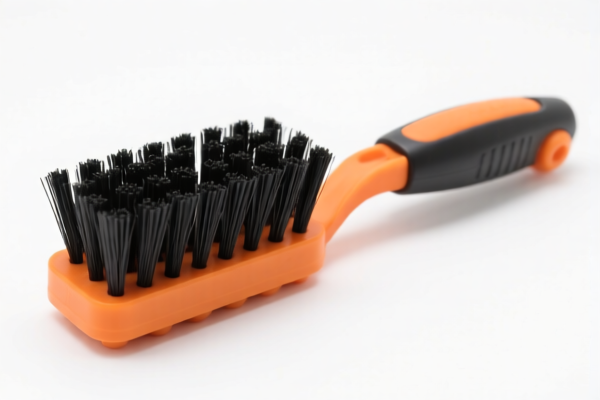


AI Analysis
🖌️ Handle Roller Brush (Paint Roller Sleeves & Handles)
🌐 HS Code Reference & Customs Clearance Guide | 2026 Latest Tariff Analysis | Professional Clearance Strategy
📌 I. Product Definition & Classification: What Exactly is a "Handle Roller Brush"?
A "Handle Roller Brush" typically refers to the complete assembly used for applying paint, varnish, or stains. In international trade, it is categorized based on its material composition and functionality. There are two primary interpretations:
- The Roller Sleeve Only (The "Brush" Part): The cylindrical fabric/plastic part that holds the paint. This is classified under Chapter 96 (Brooms, Brushes...).
- The Handle + Sleeve (The "Tool" Part): The complete kit including the wooden/metal handle and the roller cover. If the handle is wooden, parts of it may fall under Chapter 44 (Wood), while the roller sleeve remains a brush.
⚠️ Critical Distinction:
- If the item is just the roller sleeve (fabric/plastic/cork) → HS Code 9603.40.xxxxxx
- If the item is a complete kit with a wooden handle where the handle is the dominant structural component → HS Code 4417.00.xxxxxx (Wooden Tools/Parts)
- If the item is just the wooden handle → HS Code 4417.00.80.90 (Other Wooden Articles)
📦 II. HS Code Classification Details (2026 Latest Tariff Alignment)
Based on the provided data, here are the four specific HS Codes and their rationales:
| HS Code | Product Description | Classification Rationale | Total Tax Rate |
|---|---|---|---|
4417.00.40.00 |
Wooden Handle/Part for Roller Brush | Matches the form (handle/parts) and material (inferred wooden). Fits the description of paint roller accessories with a wooden structure. | 17.5% |
9603.40.20.00 |
Paint/Varnish Roller Brush (Sleeve Only) | The item is a "roller brush" used for painting. It fits the core definition in the classification notes as a painting implement. | 17.5% |
9603.40.40.20 |
Other Paint/Varnish Roller Brushes | Specifically categorized as a "roller-type" brush. Fully consistent with the use and form of painting rollers. | 14.0% |
4417.00.80.90 |
Other Wooden Articles (Handle/Body) | Inferred as a wooden brush body/handle. Classified under "Other" wooden articles, excluding specific tool handles if not defined otherwise. | 40.1% |
🔍 Key Insight:
- Chapters 96 vs. 44: The biggest decision is whether to classify the brushing element (Ch 96) or the wooden handle (Ch 44).
- Tax Impact: Misclassification can lead to a 26.1% difference in tax burden (14.0% vs. 40.1%).
- Component vs. Whole: If imported as a set (Handle + Sleeve), customs may classify the whole set under the heading that gives the set its essential character (usually the brush function, i.e., Ch 96), unless the wooden handle is significantly more valuable/dominant.
💰 III. 2026 Latest Tariff Rate Breakdown (Including Surtaxes)
✅ Applicable Country: United States (US)
✅ Origin: China (CN)
✅ Effective Date: 2025 November 10 Onwards
🎯 1. 4417.00.40.00 —— Wooden Handle/Part for Roller Brush
| Item | Detail |
|---|---|
| Base Duty | 0.0% |
| Section 301 Surcharge | 7.5% |
| Section 122 (IEEPA) Surcharge | 10.0% |
| Total Rate | 17.5% |
| Calculation Basis | CIF Value × 17.5% |
| De Minimis Exemption | ❌ Not Eligible (Likely restricted under Section 301/122) |
| Legal Pathway | IEEPA:122 + USITC:4417.00.40.00 + Section 301 |
📌 Note: Low base duty makes this attractive, but the 301 surcharge (7.5%) and IEEPA (10%) push it to nearly 18%.
🎯 2. 9603.40.20.00 —— Paint/Varnish Roller Brush (Sleeve)
| Item | Detail |
|---|---|
| Base Duty | 7.5% |
| Section 301 Surcharge | 0.0% |
| Section 122 (IEEPA) Surcharge | 10.0% |
| Total Rate | 17.5% |
| Calculation Basis | CIF Value × 17.5% |
| De Minimis Exemption | ❌ Not Eligible |
| Legal Pathway | IEEPA:122 + USITC:9603.40.20.00 |
📌 Note: Despite having a higher base duty (7.5%), it avoids the Section 301 surcharge, resulting in the same total as
4417.00.40.00.
🎯 3. 9603.40.40.20 —— Other Paint/Varnish Roller Brushes (Optimal Choice?)
| Item | Detail |
|---|---|
| Base Duty | 4.0% |
| Section 301 Surcharge | 0.0% |
| Section 122 (IEEPA) Surcharge | 10.0% |
| Total Rate | 14.0% |
| Calculation Basis | CIF Value × 14.0% |
| De Minimis Exemption | ❌ Not Eligible |
| Legal Pathway | IEEPA:122 + USITC:9603.40.40.20 |
📌 Advantage: This is the lowest tax rate (14.0%) among all options. It applies to "Other" rollers, which may include specific fabric types or sizes not covered under
9603.40.20.00. Verify if your product fits "Other" to save 3.5% compared to the others.
🎯 4. 4417.00.80.90 —— Other Wooden Articles (Handle Only)
| Item | Detail |
|---|---|
| Base Duty | 5.1% |
| Section 301 Surcharge | 25.0% |
| Section 122 (IEEPA) Surcharge | 10.0% |
| Total Rate | 40.1% |
| Calculation Basis | CIF Value × 40.1% |
| De Minimis Exemption | ❌ Not Eligible |
| Legal Pathway | IEEPA:122 + USITC:4417.00.80.90 + Section 301 |
⚠️ Warning: This rate is extremely high (40.1%). Only use this if the item is strictly a wooden handle sold separately and cannot be classified as a brush part (
4417.00.40.00) or brush (9603.40.xxxx). Avoid for complete roller kits.
🛠️ IV. Customs Clearance Practical Advice (Risk Mitigation Guide)
✅ 1. Documentation Checklist (Mandatory)
| Document | Required | Reason |
|---|---|---|
| Product Specification Sheet | ✔️ | Must clearly state: "Roller Brush" vs. "Wooden Handle Only". |
| Material Composition | ✔️ | Specify: "Polyester fiber roller" + "Pine wood handle". |
| Photos | ✔️ | Show the product as a complete set (Handle + Roller). |
| Commercial Invoice | ✔️ | Use precise description: "Paint Roller Set, Wooden Handle, Synthetic Fiber Cover". |
| HS Code Pre-Ruling | ✔️ | Highly recommended due to conflicting chapters (Ch 44 vs. Ch 96). |
✅ 2. Classification Strategy (Key Tips)
🔥 "Function Dominates: Brush is Brush, Handle is Handle!"
| Scenario | Recommended HS Code | Why? |
|---|---|---|
| Complete Kit (Handle + Roller) | 9603.40.20.00 or 9603.40.40.20 |
GRI 3(b): The roller (brush function) gives the set its essential character. Lower tax (14-17.5%) vs. 40.1%. |
| Roller Sleeve Only | 9603.40.20.00 |
It is a brush. No wood involved in the brushing part. |
| Handle Only (Sold Separately) | 4417.00.40.00 |
It is a part of a brush, made of wood. Lower tax (17.5%) than generic wooden articles (40.1%). |
| Generic Wooden Stick | 4417.00.80.90 |
If it has no specific "brush part" designation. Highest Tax Risk! |
✅ 3. Special Circumstances
| Situation | Advice |
|---|---|
| Set with Plastic Handle | Classify under 9603.40.xxxx (Brushes). Plastic handles don't trigger Chapter 44. |
| Set with Metal Handle | Classify under 9603.40.xxxx. Metal parts are accessories to the brush. |
| Custom/Decorative Roller | If it has artistic value beyond painting, consult a customs broker. May fall under 9603.90 (Parts) or even 9705 (Collectibles). |
🌍 V. Global Market Comparison (2026 Update)
| Country/Region | Recommended HS Code | Approx. Duty | Notes |
|---|---|---|---|
| 🇺🇸 USA | 9603.40.40.20 |
14.0% | Lowest rate. Avoid 4417.00.80.90 (40.1%). |
| 🇨🇳 China | 9603.40 |
~9% | Standard import duty + VAT. |
| 🇪🇺 EU | 9603.40 |
4% | No Section 301/122 surcharges. |
| 🇬🇧 UK | 9603.40 |
4% | Post-Brexit standard tariff. |
📌 Conclusion:
- USA is the most complex market due to the Section 301 (25%) and IEEPA (10%) layers.
- Classification is critical: Choosing9603.40.40.20(14%) over4417.00.80.90(40.1%) saves 26.1% in taxes.
- Do not classify wooden handles separately if they are sold with the roller sleeve; use the Brush classification.
📌 VI. Common Mistakes & Pitfalls (Lessons Learned)
❌ Mistake 1: Classifying the entire roller kit under 4417.00.80.90 because it has a wooden handle.
👉 Consequence: 40.1% tax instead of 14-17.5%. Overpayment of ~26%!
❌ Mistake 2: Using "Paint Tool" as a generic description on the invoice.
👉 Consequence: Customs may request additional info, leading to delays or manual classification at higher rates.
❌ Mistake 3: Assuming "Parts of Brushes" automatically get the same tax as "Brushes".
👉 Consequence: 4417.00.40.00 (17.5%) and 9603.40.20.00 (17.5%) have the same rate, but 9603.40.40.20 (14.0%) is cheaper. Be specific!
✅ Correct Approach:
"Paint Roller Brush Set, Wooden Handle, Polyester Fiber Cover, for Wall Painting, Model XYZ"
HS Code:9603.40.40.20(if it fits "Other") or9603.40.20.00.
🎯 VII. Conclusion: Precision Classification Saves Money!
🎯 Key Takeaway:
🔹 "Don't let the wood fool you: The Brush is the Star!"
🔹 "Use9603.40for kits,4417.00.40for wooden parts only, avoid4417.00.80.90!"
🔹 "14% vs 40%: The difference is 26 cents on every dollar!"
📌 Pro Tip:
If you are importing large quantities, consider applying for an Advance Ruling (APA) with US Customs and Border Protection (CBP) to lock in the 14.0% rate for 9603.40.40.20.
📣 Immediate Action:
📞 Contact your customs broker with product photos and material specs.
🚀 Clarify: Is it a kit or parts? Is the handle wood or plastic?
💡 Optimize your HS Code to save up to 26% in tariffs!
✨ Professional Clearance Starts with Accurate Classification!
💼 Every Percent Saved is Pure Profit!
Customer Reviews
About HS Code Classification
The Harmonized System (HS) is an internationally standardized nomenclature developed by the World Customs Organization (WCO) to classify traded products. Over 200 countries use the HS system as the basis for customs tariffs, trade statistics, and import/export regulations.
Each HS code follows a hierarchical structure:
- Chapter (2 digits) — Broad category of goods (e.g., Chapter 84: Machinery and Mechanical Appliances)
- Heading (4 digits) — More specific grouping within the chapter
- Subheading (6 digits) — Internationally standardized breakdown, used by all WCO member countries
- National subdivisions (8-10 digits) — Country-specific extensions for further classification, such as US HTSUS 10-digit codes
Correct HS code classification is essential for smooth customs clearance, accurate duty payment, and compliance with trade regulations. Misclassification can lead to customs delays, overpayment of duties, or penalties.
When importing from CN to US, the applicable tariff rates may include:
- Most-Favored-Nation (MFN) rate — The standard duty rate applied to WTO members
- General rate — Applied to countries without trade agreements
- Trade remedy duties — Additional tariffs such as Section 301 (anti-dumping), Section 232 (national security), or countervailing duties
The information provided on this page is for reference purposes only. For official classification, please consult with your local customs authority or a licensed customs broker.