Handmade Felt Product Set
CN → US| HS Code | Tariff Rate | Origin | Destination | Doc |
|---|---|---|---|---|
| 4823907000 | 35.0% | CN | US | Official Doc |
| 4823908620 | 35.0% | CN | US | Official Doc |
| 9503000073 | 10.0% | CN | US | Official Doc |
| 9503000071 | 10.0% | CN | US | Official Doc |
Product Images
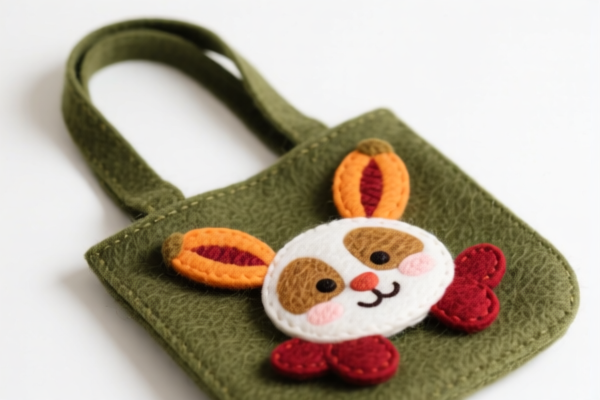
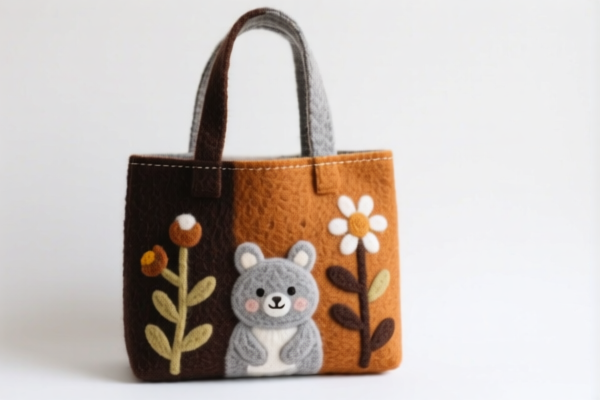
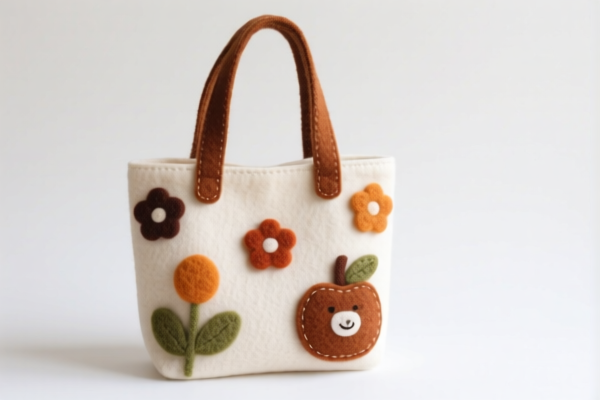
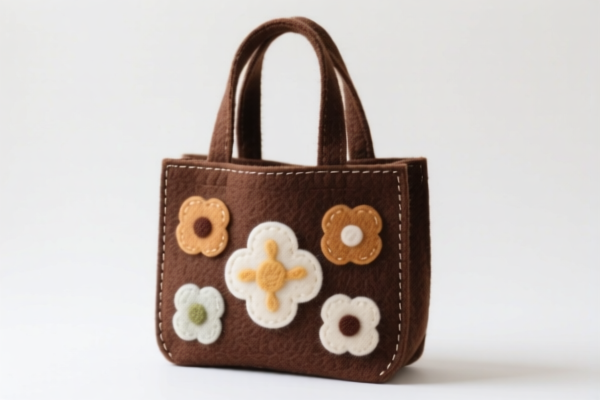
AI Analysis
🧶 Handmade Felt Product Set (手工毛毡制品套装)
🌐 HS Code Reference & Customs Clearance Guide | 2026 Latest Tariff Analysis | Professional Strategy for Cross-Border E-Commerce
📌 I. Product Definition & Classification: What Exactly is "Felt"?
"Handmade Felt Product Set" is a broad term in international trade. To classify it correctly under US Customs and Border Protection (CBP) standards, we must determine the material composition and the form of the product.
In the context of the provided data, the classification hinges on whether the product is recognized as "Cellulose Wadding" (a specific technical term for non-woven paper-like materials, often including certain types of dense felt or paper pulp mats in statistical notes) versus a general "Other Article."
⚠️ Critical Distinction:
- If the "felt" is made from wood pulp or cellulose fibers (often used in disposable hygiene products, shoe covers, or industrial wiping cloths), it may fall under Chapter 48 (Paper/Paperboard/Cellulose Wadding).
- If the "felt" is made from wool or synthetic fibers (textile-based), it typically falls under Chapter 56 or 63.⚠️ Important Note on Provided Data:
The provided<DATA>set only contains HS Codes for Children’s Toys (9503) and Cellulose/Paper Products (4823). It does not contain specific textile felt codes (e.g., 5602.99 or 6307.90). Therefore, based strictly on the provided data, we can only analyze scenarios where the product is either:
1. A Toy made of felt (Chapter 95).
2. A Non-woven/Celledose-based product that fits the statistical note for "Cellulose Wadding" (Chapter 48).If your product is a standard wool textile craft item, it is NOT covered by the provided HS Codes 4823.90 or 9503.00.00. Please verify material composition.
📦 II. HS Code Classification Details (Based on Provided Data)
Given the limited dataset, here are the only applicable classifications from <DATA> for a "Felt Product Set," assuming specific material or use-case conditions:
| HS Code | Product Description | Applicable Scenario | Material/Use Condition |
|---|---|---|---|
9503.00.00.73 |
Tricycles, scooters, pedal cars... dolls, other toys; parts... | Felt Toy Set | The set consists of dolls, play figures, or toy accessories made of felt. Labeled for ages 3-12. |
9503.00.00.71 |
Tricycles, scooters, pedal cars... dolls, other toys; parts... | Felt Toy Set | The set consists of dolls, play figures, or toy accessories made of felt. Labeled for ages Under 3. |
4823.90.70.00 |
Other paper, paperboard, cellulose wadding... | Cellulose-Based "Felt" | The product is made of cellulose wadding (not wool/synthetic). Examples: Industrial cleaning felts, disposable hygiene mats, or paper-based craft sheets classified as "cellulose wadding." |
4823.90.86.20 |
Other paper, paperboard... | Specific Paper Article | The "felt" product is actually a Shoe Cover (Bootie) made of the material described in statistical note 2 to Chapter 48 (e.g., non-woven paper/plastic sheeting). |
🔍 Key Insight for Importers:
- "Felt" is ambiguous. If it is wool, it is NOT in this data set.
- If it is paper-based cellulose, it falls under 4823.
- If it is a toy, it falls under 9503.
- Do not misclassify textile felt as cellulose wadding. CBP will scrutinize the material composition.
💰 III. 2026 Latest Tariff Rate Analysis (Based on Provided Data)
✅ Applicable Country: United States (US)
✅ Origin: China (CN) (Note: Tax details in<DATA>are provided, assumed to reflect current rates for these specific codes)
✅ Validity: As per provided data
🎯 1. 9503.00.00.73 & 9503.00.00.71 —— Toys (Felt Dolls/Accessories)
| Item | Content |
|---|---|
| Basic Tariff | 0.0% (ad valorem) |
| Section 301 / Additional Tariff | 0.0% |
| Total Tax Rate | 0.0% |
| Tax Calculation | CIF Value × 0% = $0 |
| De Minimis Eligibility | ✅ Yes (If ≤ $800, generally duty-free under Section 321) |
| Legal Basis | HTSUS 9503.00.00 |
📌 Explanation:
- Children’s products (toys) under HTS 9503 currently have a 0% basic rate and 0% additional tariff in the provided data.
- Compliance Note: Toys intended for children under 3 (9503.00.00.71) require CPSC certification (CPC) and strict labeling. Toys for 3-12 (9503.00.00.73) also require CPC but have different labeling requirements.
- Risk: Mislabeling age range leads to customs holds.
🎯 2. 4823.90.70.00 —— Cellulose Wadding Articles
| Item | Content |
|---|---|
| Basic Tariff | 0.0% (ad valorem) |
| Additional Tariff (Section 301) | +25.0% |
| Total Tax Rate | 25.0% |
| Tax Calculation | CIF Value × 25% |
| De Minimis Eligibility | ❌ Depends (Usually, goods subject to 301 tariffs may still qualify for de minimis if not explicitly excluded, but check latest USTR guidance) |
| Legal Basis | HTSUS 4823.90.70 |
📌 Explanation:
- This code applies to cellulose wadding products.
- Subject to a 25% additional tariff (likely under Section 301 for Chinese goods).
- Crucial: If your "felt" is wool, this code is incorrect. Misclassification here can lead to penalties and back-dated duties.
🎯 3. 4823.90.86.20 —— Shoe Covers (Booties)
| Item | Content |
|---|---|
| Basic Tariff | 0.0% (ad valorem) |
| Additional Tariff (Section 301) | +25.0% |
| Total Tax Rate | 25.0% |
| Tax Calculation | CIF Value × 25% |
| De Minimis Eligibility | ❌ Check Specific Exclusions |
| Legal Basis | HTSUS 4823.90.86.20 |
📌 Explanation:
- This code is very specific: "Other Shoe covers (booties) of a kind described in statistical note 2 to this chapter."
- Only apply if the product is explicitly shoe covers made of the specified non-woven paper/cellulose material.
- Do not use for general felt crafts, bags, or toys.
🛠️ IV. Customs Clearance Practical Advice (Pitfall Avoidance Guide)
✅ 1. Material Verification (Most Critical Step)
| Scenario | Correct Classification | Risk if Incorrect |
|---|---|---|
| Wool/Felt Craft Kit (e.g., embroidery, appliqué) | NOT IN DATA (Likely 6307.90 or 9503 if toy) | High Risk: Using 4823 or 9503 incorrectly leads to denial, seizure, or fines. |
| Felt Toy Dolls | 9503.00.00.71 (Under 3) or 73 (3-12) |
Ensure CPSC/CPC documentation is ready. |
| Disposable Paper/Cellose "Felt" Wipes | 4823.90.70.00 |
Must prove material is cellulose wadding, not textile. |
| Non-Woven Shoe Covers | 4823.90.86.20 |
Must be shoe covers, not general wipes. |
✅ 2. Documentation Requirements
| Document | Required For | Details |
|---|---|---|
| Product Description | All | Must specify material: "100% Wool Felt" vs. "Cellulose Wadding Non-Woven." |
| Age Labeling | 9503 Codes |
Clear label: "Warning: Not for children under 3 years" (for 3-12 code). |
| CPSC Certificate | 9503 Codes |
Mandatory for toys. Without it, goods will be detained. |
| Bill of Lading/Packing List | All | Clearly list items. If a "set," ensure all components are classified correctly. |
| Material Test Report | 4823 Codes |
For cellulose products, proof of composition may be requested to distinguish from textile felts. |
✅ 3. Special Handling for "Sets"
🔥 Rule: "The Character of the Set"
- If a "Handmade Felt Product Set" contains multiple types of items (e.g., felt dolls + felt shoe covers), US Customs may apply the "Essential Character" rule.
- Strategy:
- Option A: Declare as separate items on the commercial invoice with distinct HS Codes.
- Option B: If one item gives the set its essential character (e.g., the toy is the main item), declare the whole set under that HS Code (9503).
- Warning: Misdeclaring a set with mixed components as a single HS Code can lead to audits and penalties.
🌍 V. Global Market Comparison (Contextual)
| Market | Likely HS Code for Wool Felt | Duty Rate (China) | Notes |
|---|---|---|---|
| 🇺🇸 USA | 6307.90.9890 (if textile) | 6-10% + 25% (Section 301) | NOT in provided data. Provided data only covers Toys (9503) and Cellulose (4823). |
| 🇪🇺 EU | 6307.90.98 | 6% | No additional tariffs. |
| 🇨🇳 China | 6307.90.90 | 0-5% | Low duty. |
📌 Conclusion for US Importers:
- If your product is wool felt crafts, the provided data does not apply. You must use the correct textile HS Code (e.g., 6307.90.9890), which incurs 31% total duty (6% base + 25% Section 301).
- If your product is a toy, use 9503 (0% duty).
- If your product is cellulose-based, use 4823 (25% duty).
📌 VI. Common Mistakes & Pitfalls (Blood & Tears Lessons)
❌ Mistake 1: Calling wool felt "Cellulose Wadding" to avoid higher duties.
👉 Consequence: CBP will request material testing. If found false, fraud penalties and seizure.
❌ Mistake 2: Declaring a "Felt Toy Set" as "General Crafts" (6307) to avoid toy regulations.
👉 Consequence: CPSC violation. Heavy fines. Goods destroyed.
❌ Mistake 3: Ignoring Age Classification for 9503.00.00.71 vs 73.
👉 Consequence: Customs will hold shipment for lack of proper CPC/Labeling. Delays of 2-4 weeks.
✅ Correct Approach:
"100% Wool Felt Embroidery Kit (Textile Craft) → HS 6307.90.9890 (Subject to 31% Duty).
100% Wool Felt Doll Set (Toy) → HS 9503.00.00.73 (Subject to 0% Duty + CPC Req)."
🎯 VII. Conclusion: Precision Saves Money
🎯 Key Takeaway:
🔹 "Felt" is not one HS Code.
🔹 Toy Felt =9503(0% Tax in provided data).
🔹 Cellulose Felt =4823(25% Tax in provided data).
🔹 Wool Felt Crafts = NOT IN DATA (Likely 6307, subject to 31%+ duty).📌 Action Item:
1. Identify Material: Is it wool, synthetic, or cellulose?
2. Identify Use: Is it a toy, a craft, or an industrial cover?
3. Select HS Code: Match precisely. Do not guess.
4. Prepare Docs: CPC for toys, material proof for cellulose.
📣 Immediate Action:
📞 Contact a Licensed Customs Broker to verify your product’s material composition before shipping.
🚀 Avoid Costly Misclassification by using the correct HS Code based on actual material and use.
✨ Professional Clearance Starts with Accurate Classification!
💼 Don’t Let "Felt" Cost You 25% or More in Duties!
Customer Reviews
About HS Code Classification
The Harmonized System (HS) is an internationally standardized nomenclature developed by the World Customs Organization (WCO) to classify traded products. Over 200 countries use the HS system as the basis for customs tariffs, trade statistics, and import/export regulations.
Each HS code follows a hierarchical structure:
- Chapter (2 digits) — Broad category of goods (e.g., Chapter 84: Machinery and Mechanical Appliances)
- Heading (4 digits) — More specific grouping within the chapter
- Subheading (6 digits) — Internationally standardized breakdown, used by all WCO member countries
- National subdivisions (8-10 digits) — Country-specific extensions for further classification, such as US HTSUS 10-digit codes
Correct HS code classification is essential for smooth customs clearance, accurate duty payment, and compliance with trade regulations. Misclassification can lead to customs delays, overpayment of duties, or penalties.
When importing from CN to US, the applicable tariff rates may include:
- Most-Favored-Nation (MFN) rate — The standard duty rate applied to WTO members
- General rate — Applied to countries without trade agreements
- Trade remedy duties — Additional tariffs such as Section 301 (anti-dumping), Section 232 (national security), or countervailing duties
The information provided on this page is for reference purposes only. For official classification, please consult with your local customs authority or a licensed customs broker.