Handmade Jewelry
CN → US| HS Code | Tariff Rate | Origin | Destination | Doc |
|---|---|---|---|---|
| 7117909000 | 28.5% | CN | US | Official Doc |
| 9703900000 | 17.5% | CN | US | Official Doc |
| 9703100000 | 17.5% | CN | US | Official Doc |
| 4421919880 | 38.3% | CN | US | Official Doc |
| 4421999880 | 38.3% | CN | US | Official Doc |
Product Images
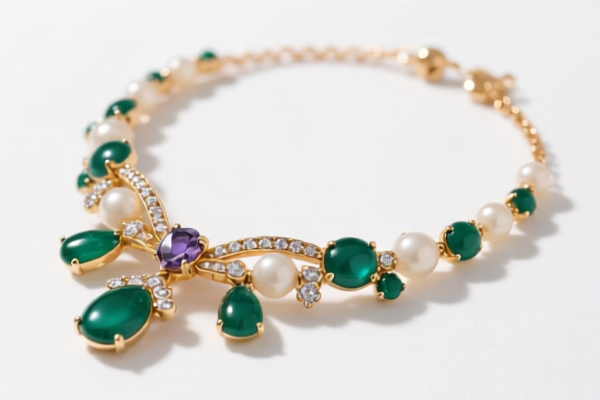
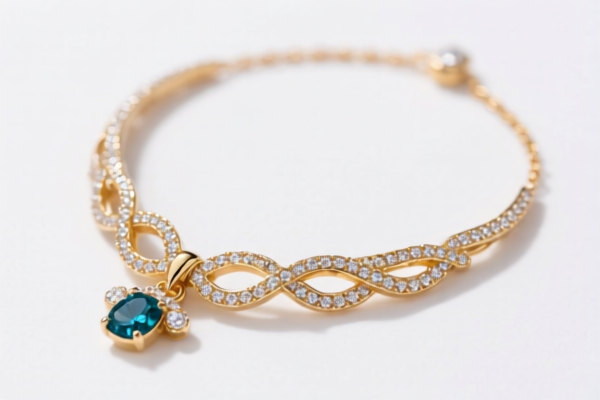


AI Analysis
🧵✨ Handmade Jewelry: The Ultimate 2026 HS Code & Tax Strategy Guide
🌐 HS Code Classification & Duty Breakdown | 2026 Trade Compliance | Strategic Import Guide
📌 I. Product Definition & Classification: Is it Art or Fake Jewelry?
Handmade Jewelry is a unique category in international trade where the material composition and functional intent dictate the classification. Since your input lacks a specific material declaration (e.g., "Silver," "Plastic," "Wood"), we must rely on Fallback Principles and Functional Attributes.
⚠️ Critical Distinction: - Is it "Art"? → If the piece is a unique sculptural creation (e.g., a wearable statue), it may fall under Chapter 97 (Art). - Is it "Wearable"? → If it functions as an accessory (necklace, bracelet), it falls under Chapter 71 (Noble Metals or Faux Jewelry). - Is it "Wooden"? → If the dominant material is wood, it falls under Chapter 44 (Wood).
📦 II. HS Code Classification Matrix (2026 Authorized Options)
Based on the "Unknown Material" scenario, here is the authoritative breakdown of the 5 most likely classifications derived from the data:
| HS Code | Product Description | Classification Logic | Tax Rate (Total) |
|---|---|---|---|
7117.90.90.00 |
Faux Jewelry (Other) | Fallback for "Imitation": Since material is unknown, it defaults to "Artificial Jewelry." It covers items that look like jewelry but are not made of precious metals/stones. | 28.5% |
9703.90.00.00 |
Other Original Sculptures | Fallback for "Art": If the item is judged as a unique sculptural work (not just an accessory), it fits "Other Works of Art." | 17.5% |
9703.10.00.00 |
Original Sculptures & Statuettes | Primary Art Category: Based on common sense, if it's an "Artistic Creation" with no material conflict, it fits this specific sculpture category. | 17.5% |
4421.91.98.80 |
Other Wood Products (Misc) | Fallback for "Wood": If the unknown material is actually wood, and no other specific wood category fits, it goes here. | 38.3% |
4421.99.98.80 |
Other Articles of Wood | Fallback for "Wood": Broad category for wooden articles. Reasonable inference if the item is likely wooden. | 38.3% |
🔍 Analysis of Ambiguity: - The 28.5% rate (
7117) assumes the item is "Faux Jewelry" (likely base metal/plastic). - The 17.5% rate (9703) assumes the item is "Art/Sculpture" (lower tax due to Art exemptions). - The 38.3% rate (4421) assumes the item is "Wooden" (high US tariffs).
💰 III. 2026 Tax Rate Deep Dive (Detailed Breakdown)
✅ Applicable Market: United States (US)
✅ Origin: China (CN)
✅ Context: 2026 Trade Landscape (Section 301 & 122 Tariffs Active)
🎯 Scenario A: The "Faux Jewelry" Route (7117.90.90.00)
High Risk, Moderate Cost
| Tax Component | Rate | Legal Basis / Description |
|---|---|---|
| Base Duty | 11.0% | Standard Most-Favored-Nation (MFN) rate for "Imitation Jewelry." |
| Add-on Tariff | 7.5% | Additional Section 301 Tariff (Section 301 List 4). |
| 122-Clause Tariff | 10.0% | Specific Section 122 Tariff on Certain Chinese Imports. |
| TOTAL DUTY | 28.5% | Calculated as: CIF Value × 28.5% |
| De Minimis? | ❌ No | Items over $800 (if applicable) are strictly taxed; no small parcel exemption. |
📌 Why this applies: If the item is a "handmade" bracelet that looks like metal but isn't, customs defaults to the "catch-all" for fake jewelry.
🎯 Scenario B: The "Art Sculpture" Route (9703.10.00.00 & 9703.90.00.00)
Lowest Cost, High Scrutiny
| Tax Component | Rate | Legal Basis / Description |
|---|---|---|
| Base Duty | 0.0% | Art items often enter duty-free if they meet specific "Art" criteria. |
| Add-on Tariff | 7.5% | Section 301 Tariff applies even to Art (unless specific exemptions exist). |
| 122-Clause Tariff | 10.0% | Section 122 Tariff applies. |
| TOTAL DUTY | 17.5% | Calculated as: CIF Value × 17.5% |
| De Minimis? | ❌ No | Even with 0% base duty, the 17.5% surcharge is significant. |
📌 Why this applies: If the "Handmade Jewelry" is actually a wearable art piece (e.g., a sculpture that happens to be wearable), it escapes the high jewelry tax but pays the 17.5% trade penalty.
🎯 Scenario C: The "Wooden" Route (4421.91.98.80 / 4421.99.98.80)
Highest Cost, Material Risk
| Tax Component | Rate | Legal Basis / Description |
|---|---|---|
| Base Duty | 3.3% | Standard MFN rate for miscellaneous wood products. |
| Add-on Tariff | 25.0% | CRITICAL: Section 301 Tariff on Wood Products is very high. |
| 122-Clause Tariff | 10.0% | Section 122 Tariff applies. |
| TOTAL DUTY | 38.3% | Calculated as: CIF Value × 38.3% |
| De Minimis? | ❌ No | Wood products face strict scrutiny on material content. |
📌 Why this applies: If the "handmade" aspect implies carved wood but you declared it as "unknown material," this is the fallback classification. Avoid this if possible!
🛠️ IV. Strategic Customs Clearance & Compliance (2026 Action Plan)
✅ 1. Material Declaration Strategy (Crucial!)
The biggest risk is the "Unknown Material" assumption.
- ❌ Risk: Declaring "Unknown" forces Customs to pick the highest tax category (e.g., Wood at 38.3% or Faux at 28.5%).
- ✅ Fix: Explicitly state the material on the Commercial Invoice.
- If Silver/Base Metal → Declare 7117 (28.5%).
- If Wood → Declare 4421 (38.3%) OR 9703 (if artistic).
- If Mixed/Sculpture → Declare 9703 (17.5%).
✅ 2. "Art vs. Jewelry" Classification Defense
To qualify for the 17.5% rate (9703), you must prove it is Art, not just jewelry.
- Evidence Required:
- Artist Statement (proving intent to create art).
- Unique Design Documentation (no mass production).
- Photos showing the "sculptural" nature (not just a chain/bead necklace).
- Why it matters: The difference between 28.5% (Jewelry) and 17.5% (Art) is 11% savings on every shipment.
✅ 3. Documentation Checklist
| Document | Requirement | Purpose |
|---|---|---|
| Detailed Commercial Invoice | Must list Material Composition (e.g., "Handmade, Silver-plated, Resin") | Prevents "Unknown" fallback to Wood/High Tax. |
| Product Photos | Clear shots of texture, clasp, and unique design features | Proves "Art" status for 9703 classification. |
| Bill of Materials (BOM) | Breakdown of components (Metal, Wood, Plastic) | Validates HS Code selection. |
| Certificate of Origin | Standard CO for China | Required for Section 301/122 calculations. |
🚀 V. Expert Customs Clearance Advice
💡 Pro Tip: The "Material First" Rule
Never enter "Handmade Jewelry" with a generic description. - If it's Wood: Pay 38.3% (unless you can prove it's Art). - If it's Base Metal: Pay 28.5% (Faux Jewelry). - If it's Art: Pay 17.5% (Sculpture).
Action: Re-classify your inventory. If your "Handmade Jewelry" is actually wooden carvings, declare it as Art (9703) to save 20% in duties!
💡 Pro Tip: The "122 Clause" Trap
All 5 HS Codes listed include a 10% "122 Clause" Tariff. This is a non-negotiable add-on for Chinese goods in 2026. - Strategy: You cannot avoid this. Focus your negotiation on Base Duty and Section 301 (7.5% vs 25%). - Target: The
9703(Art) category is your best bet because the Base Duty is 0%, saving you the 11% jewelry tax.
📉 VI. Summary & Decision Matrix
| If Your Product Is... | Recommended HS Code | Total Tax | Strategy |
|---|---|---|---|
| Generic Faux Jewelry (Metal/Plastic) | 7117.90.90.00 |
28.5% | Standard Declaration. |
| Wearable Art / Sculpture | 9703.10.00.00 or 9703.90.00.00 |
17.5% | BEST OPTION: Prove Art status to lower tax. |
| Wooden Carving / Ornament | 4421.91.98.80 / 4421.99.98.80 |
38.3% | AVOID: Unless Art, this is too expensive. |
🎯 VII. Final Conclusion
The "Handmade" label is a double-edged sword. - It can lower your tax to 17.5% if you classify it as Art. - It can raise your tax to 38.3% if it's assumed to be Wood due to lack of material detail. - It defaults to 28.5% if it's assumed to be Faux Jewelry.
Immediate Action:
1. Identify the Material: Is it wood? Metal? Plastic?
2. Prove Art Status: If it's a unique piece, use 9703 to save 11%.
3. Avoid Wood Fallback: Do not let customs guess your material; be specific on the invoice.
📢 Ready to Ship?
"Precision in Classification = Profit in Clearance." 🚀 Ship with confidence using the 17.5% Art Rate!
✨ Customs is an Art Form. Classify it correctly to save money.
Customer Reviews
About HS Code Classification
The Harmonized System (HS) is an internationally standardized nomenclature developed by the World Customs Organization (WCO) to classify traded products. Over 200 countries use the HS system as the basis for customs tariffs, trade statistics, and import/export regulations.
Each HS code follows a hierarchical structure:
- Chapter (2 digits) — Broad category of goods (e.g., Chapter 84: Machinery and Mechanical Appliances)
- Heading (4 digits) — More specific grouping within the chapter
- Subheading (6 digits) — Internationally standardized breakdown, used by all WCO member countries
- National subdivisions (8-10 digits) — Country-specific extensions for further classification, such as US HTSUS 10-digit codes
Correct HS code classification is essential for smooth customs clearance, accurate duty payment, and compliance with trade regulations. Misclassification can lead to customs delays, overpayment of duties, or penalties.
When importing from CN to US, the applicable tariff rates may include:
- Most-Favored-Nation (MFN) rate — The standard duty rate applied to WTO members
- General rate — Applied to countries without trade agreements
- Trade remedy duties — Additional tariffs such as Section 301 (anti-dumping), Section 232 (national security), or countervailing duties
The information provided on this page is for reference purposes only. For official classification, please consult with your local customs authority or a licensed customs broker.