Handmade Letter Paper
CN → US| HS Code | Tariff Rate | Origin | Destination | Doc |
|---|---|---|---|---|
| 4820104000 | 10.0% | CN | US | Official Doc |
| 4820102060 | 35.0% | CN | US | Official Doc |
Product Images

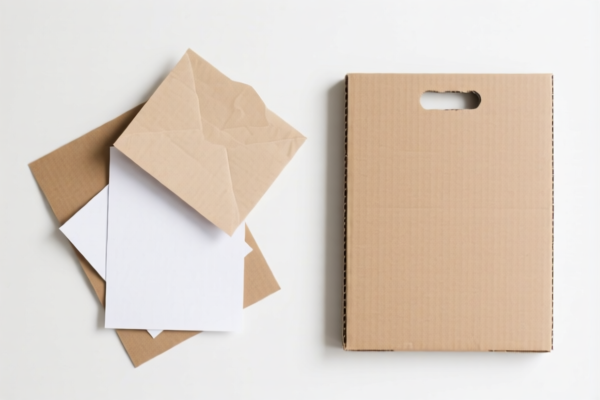
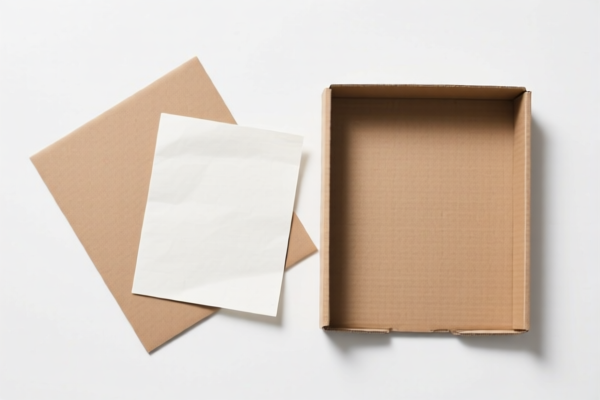
AI Analysis
✍️ Handmade Letter Paper (Custom Stationery)
🌐 HS Code Reference & Customs Clearance Guide | 2026 Latest Tariff Analysis | Professional Entry Strategy
📌 I. Product Definition & Classification: Do You Truly Understand "Handmade Letter Paper"?
Handmade letter paper falls under the broader category of stationery articles of paper or paperboard. In international trade, this is not just "paper"; it is a finished article designed for specific communication purposes. The classification hinges on whether the paper is part of a bound book/diary or a loose-leaf/letter pad format.
Key Distinctions in Classification: * Loose Sheets / Letter Pads / Memorandum Pads: These are typically classified under 4820.10.40.00 ("Other" registers/account books/letter pads). * Bound Diaries/Notebooks: If the paper is bound into a diary or notebook format, it may fall under 4820.10.20.60.
⚠️ Critical Distinction:
- If the product is loose sheets or attached in a letter pad (not bound as a book) → Go to 4820.10.40.00.
- If the product is a bound diary or notebook → Go to 4820.10.20.60.
- Note: Even if "handmade," the material is paper, so it remains in Chapter 48, not Chapter 49 (Printed Books) or Chapter 96 (Brooms/Art).
📦 II. HS Code Classification Details (2026 Latest Tariff Authority Comparison)
Based on the provided data, here are the precise HS Codes and their corresponding descriptions for Handmade Letter Paper.
| HS Code | Product Description | Applicable Scenario | Format Type |
|---|---|---|---|
4820.10.40.00 |
Registers, account books, notebooks, order books, receipt books, letter pads, memorandum pads, diaries and similar articles... Other | Loose-leaf letter paper, letter pads, unbound stationery sets, custom stationery not classified elsewhere. | ✅ Loose / Pad / Other |
4820.10.20.60 |
Registers, account books... Diaries, notebooks and address books, bound; memorandum pads, letter pads and similar articles Other | Bound diaries, bound notebooks, bound address books made of paper. | ✅ Bound |
🔍 Key Reminder:
- "Handmade" does not change the Chapter (still Chapter 48 - Paper) but may affect the "Other" sub-category if it doesn't fit standard mass-produced definitions.
- If your handmade paper is loose or in a pad, use 4820.10.40.00.
- If your handmade paper is bound into a book/journal, use 4820.10.20.60.
💰 III. 2026 Latest Tariff Rate Details (Including Additional Taxes & Policy Surcharges)
✅ Applicable Country: United States (US)
✅ Origin: China (CN) (Assumed based on common trade context; adjust if origin differs)
✅ Effective Time: Current 2026 Tariff Schedule
🎯 1. 4820.10.40.00 – Letter Pads / Loose Stationery / Other
| Item | Content |
|---|---|
| Base Tariff Rate | 0.0% |
| Surtax (Section 301) | +25.0% |
| Total Tax Rate | 25.0% |
| Tax Calculation | CIF Value × 25% |
| De Minimis Exemption | ❌ Not Eligible (Most Section 301 goods are excluded from de minimis benefits under current enforcement) |
| Legal Basis Path | USITC:4820.10.40.00 → FOOTNOTE:301_TARIF |
📌 Explanation:
- The base tariff is 0%, meaning there is no standard MFN duty.
- However, a 25% surtax applies due to trade tensions (Section 301).
- Total Cost Impact: For every $1,000 of goods, you pay $250 in duties.
- "Handmade" Status: Does not exempt you from the 25% surtax. Paper products from China are heavily targeted.
🎯 2. 4820.10.20.60 – Bound Diaries / Notebooks / Address Books
| Item | Content |
|---|---|
| Base Tariff Rate | 0.0% |
| Surtax (Section 301) | +25.0% |
| Total Tax Rate | 25.0% |
| Tax Calculation | CIF Value × 25% |
| De Minimis Exemption | ❌ Not Eligible |
| Legal Basis Path | USITC:4820.10.20.60 → FOOTNOTE:301_TARIF |
📌 Explanation:
- Identical tax treatment to loose letter pads.
- Even if "bound," the surtax remains 25%.
- No additional IEEPA 10% was listed in the provided data for this specific HS code, so total is 25%.
🛠️ IV. Customs Clearance Practical Advice (Avoid Pitfalls)
✅ 1. Required Documentation Checklist
| Document | Mandatory | Notes |
|---|---|---|
| Product Specification Sheet | ✔️ | Must specify: Paper type (e.g., cotton, mulberry, wood pulp), weight (GSM), size, and whether bound or loose. |
| Commercial Invoice | ✔️ | Clearly state: "Handmade Letter Paper" or "Handmade Notebooks." Avoid vague terms like "Art Supplies." |
| Material Composition | ✔️ | Confirm 100% Paper content. If it has non-paper elements (e.g., plastic covers, metal staples), it may affect classification. |
| Photos of Product | ✔️ | Show both inside (paper texture) and outside (binding/packaging). |
| Certificate of Origin | ✔️ | Essential for proving Chinese origin (to apply correct 25% surtax). |
✅ 2. Declaration Tips (Key Formulas)
🔥 "Bound vs. Loose: One Word Changes the Code, But Tax is the Same!"
| Scenario | Correct HS Code | Declaration Name | Risk |
|---|---|---|---|
| Loose Sheets / Letter Pad | 4820.10.40.00 |
"Handmade Letter Paper, Unbound" | Low risk if clearly "unbound" |
| Bound Diary / Notebook | 4820.10.20.60 |
"Handbound Paper Diary/Notebook" | Medium risk if binding is ambiguous |
| Paper with Non-Paper Attachments | Check Chapter 48 or 49 | Must describe attachments | High risk of reclassification |
📌 Important:
- Do not declare "Handmade" as the primary descriptor without specifying "Paper."
- If the paper is printed with pre-printed letterheads, it may still be4820, but if it’s text-heavy books, it might move to Chapter 49 (Printed Books). For simple letter paper,4820is correct.
✅ 3. Special Cases
| Case | Handling Advice |
|---|---|
| Packaging Includes Pen/Stapler | If sold as a set, the essential character determines classification. If paper is dominant, 4820. If pen is dominant, 9608. Risk of mixed classification. Recommendation: Separate shipments. |
| Gift Boxes with Paper Inside | The paper is still classified as paper. The box is packaging. Declare separately if possible. |
| High-Value Art Paper | If marketed as "fine art paper" for painting, ensure it’s not classified as 4810 (Coated Paper). Letter paper usually implies writing use, so 4820 is safer. |
🌍 V. Global Market Comparison (2026)
| Country/Region | Recommended HS Code | Duty Rate | Notes |
|---|---|---|---|
| 🇺🇸 USA | 4820.10.40.00 / 4820.10.20.60 |
25.0% | High surtax due to Section 301. |
| 🇪🇺 EU | 4820.10.90 |
0% | Generally low or zero duty for paper stationery. |
| 🇨🇳 China (Import) | 4820.10.90 |
0% | Domestic stationery often taxed at 0%. |
| 🇬🇧 UK | 4820.10.90 |
0% | Post-Brexit, still 0% for most paper goods. |
| 🇨🇦 Canada | 4820.10.90 |
0% | No additional surtax for Chinese origin. |
📌 Conclusion:
- USA is the highest-cost market for Chinese handmade paper due to the 25% surtax.
- Consider transshipment or origin change (if possible legally) for US-bound goods to reduce costs.
- EU and UK markets remain tax-free, making them more attractive for high-margin handmade goods.
📌 VI. Common Mistakes & Pitfalls (Blood-Lessons)
❌ Mistake 1: Declaring as "Art Paper" under 4810 to avoid duties.
👉 Consequence: If used for writing/lettering, customs will reclassify to 4820. If 4810 has lower duty, it might be okay, but if 4820 is 25% and 4810 is 0%, you might get away with it IF it’s truly art paper. Risk: High if deemed "stationery."
❌ Mistake 2: Ignoring the "Bound" vs. "Loose" distinction.
👉 Consequence: While tax is same (25%) in this dataset, incorrect description leads to customs delays and requests for clarification.
❌ Mistake 3: Not declaring "Handmade."
👉 Consequence: If audited, "handmade" may imply higher value or different material (e.g., cotton content). Be transparent.
✅ Correct Declaration Example:
"Handmade Cotton Letter Paper, Unbound, White, 200 GSM, for Personal Correspondence, HS Code: 4820.10.40.00"
🎯 VII. Conclusion: Professional Declaration Saves Money!
🎯 Remember:
🔹 "Handmade" doesn't mean tax-free!
🔹 "Paper" still pays 25% in the US!
🔹 "Bound vs. Loose" changes HS Code, but not Tax Rate (in this dataset).
📌 Pro Tip:
If your handmade letter paper is part of a gift set (e.g., with wax seals, ribbons), consider declaring the primary item (paper) as 4820 and the accessories separately if they have different HS codes. This can sometimes optimize overall duty if accessories are duty-free.
📣 Immediate Action:
📞 Consult a Customs Broker if your paper is part of a set.
🚀 Pre-Arrange Duty Calculation for US shipments to avoid cash flow surprises.
💡 Label Clearly: "Handmade Paper Stationery" to ensure correct classification.
✨ Precision in Classification = Profit in Your Pocket!
💼 Don't Let 25% Surprise You at the Border!
Customer Reviews
About HS Code Classification
The Harmonized System (HS) is an internationally standardized nomenclature developed by the World Customs Organization (WCO) to classify traded products. Over 200 countries use the HS system as the basis for customs tariffs, trade statistics, and import/export regulations.
Each HS code follows a hierarchical structure:
- Chapter (2 digits) — Broad category of goods (e.g., Chapter 84: Machinery and Mechanical Appliances)
- Heading (4 digits) — More specific grouping within the chapter
- Subheading (6 digits) — Internationally standardized breakdown, used by all WCO member countries
- National subdivisions (8-10 digits) — Country-specific extensions for further classification, such as US HTSUS 10-digit codes
Correct HS code classification is essential for smooth customs clearance, accurate duty payment, and compliance with trade regulations. Misclassification can lead to customs delays, overpayment of duties, or penalties.
When importing from CN to US, the applicable tariff rates may include:
- Most-Favored-Nation (MFN) rate — The standard duty rate applied to WTO members
- General rate — Applied to countries without trade agreements
- Trade remedy duties — Additional tariffs such as Section 301 (anti-dumping), Section 232 (national security), or countervailing duties
The information provided on this page is for reference purposes only. For official classification, please consult with your local customs authority or a licensed customs broker.