Hands free Bluetooth Speaker
CN → US| HS Code | Tariff Rate | Origin | Destination | Doc |
|---|---|---|---|---|
| 8518210000 | 17.5% | CN | US | Official Doc |
| 8518500000 | 35.0% | CN | US | Official Doc |
Product Images
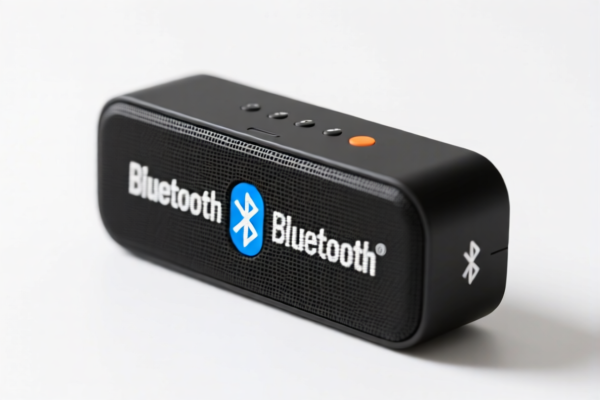
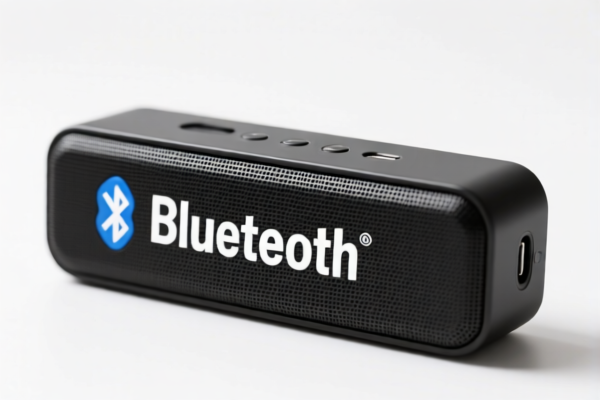
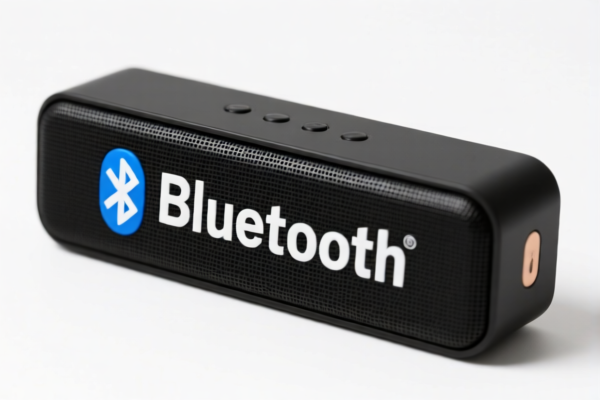
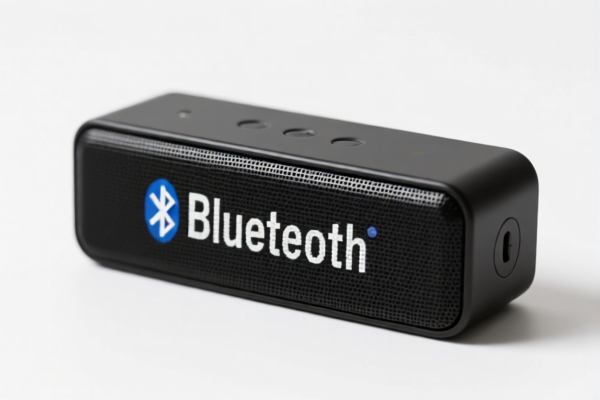
AI Analysis
📢 Hands-Free Bluetooth Speaker
🌐 HS Code Reference & Customs Clearance Guide | 2026 Latest Tariff Analysis | Professional Entry Strategy
📌 Part I: Product Definition and Classification: Do You Really Understand "Bluetooth Speakers"?
A "Hands-free Bluetooth Speaker" is a portable audio device that combines a loudspeaker unit with a microphone and Bluetooth wireless technology, allowing for audio playback and two-way communication without holding the device. In international trade, its classification depends heavily on structural integration:
1. Single Loudspeaker in Enclosure (8518.21):
If the product is essentially a single speaker unit that is mounted in an enclosure (even if it has Bluetooth internals), it falls under this category. This is the most common classification for standard portable Bluetooth speakers.
2. Electric Sound Amplifier Set (8518.50):
If the product is sold as a complete set consisting of a microphone and one or more loudspeakers, or includes dedicated audio-frequency electric amplifiers as a distinct functional unit separate from the speaker driver itself, it may be classified here. This is less common for simple portable speakers but applies to more complex "sound amplifier sets."
⚠️ Key Distinction Point:
- If it is a single unit combining the speaker and basic amplification in one enclosure → 8518.21.00.00
- If it is explicitly a "set" with separate components or dedicated amplifier hardware described as such → 8518.50.00.00
Note: Most consumer-grade "Hands-free Bluetooth Speakers" are classified as 8518.21.00.00 because they are essentially loudspeakers mounted in an enclosure.
📦 Part II: HS Code Classification Details (2026 Latest Tariff Authority Comparison)
Based on the provided , here are the relevant classifications for audio equipment:
| HS Code | Product Description | Applicable Scenario | Tax Rate |
|---|---|---|---|
8518.21.00.00 |
Loudspeakers, whether or not mounted in their enclosures: Single loudspeakers, mounted in their enclosures | Standard portable Bluetooth speakers, smart speakers, single-driver units | 7.5% |
8518.50.00.00 |
Electric sound amplifier sets | Complex audio sets, dedicated amplifier units, multi-component speaker systems | 25.0% |
🔍 Key Reminder:
- Do not confuse "Bluetooth Speaker" with "Wireless Headphones" (HS 8518.30) or "Microphones" alone (HS 8518.22).
- For a single unit that plays music and handles calls (hands-free), it is predominantly considered a Loudspeaker in an Enclosure.
- Misclassifying a standard speaker as an "Amplifier Set" (8518.50) can lead to overpayment of tariffs (25% vs 7.5%).
- Misclassifying it as a mere "Microphone" would be incorrect and subject to customs penalty.
💰 Part III: 2026 Latest Tariff Rate Breakdown (Including Additional Duties)
✅ Applicable Country: United States (US)
✅ Origin: China (CN)
✅ Effective Date: From November 10, 2025 (for subsequent imports)
🎯 1. 8518.21.00.00 —— Single Loudspeakers, Mounted in Enclosures (Most Common for Bluetooth Speakers)
| Item | Content |
|---|---|
| Base Duty Rate | 0.0% (ad valorem) |
| Section 301 Additional Duty | +7.5% |
| Total Tax Rate | 7.5% |
| Tax Calculation | CIF Value × 7.5% |
| De Minimis Eligibility | ❌ No (denied for Section 301 goods) |
| Legal Basis Path | Section 301: 9903.88.01 → USITC: 8518.21.00.00 |
📌 Explanation:
- The base duty is 0%, but due to US-China trade tensions, a Section 301 tariff of 7.5% is applied specifically to this HS code.
- This is a moderate tariff compared to other electronic categories.
- Important: This tax applies regardless of whether the speaker has Bluetooth, Wi-Fi, or voice assistant capabilities, as long as it is a "single loudspeaker in an enclosure."
🎯 2. 8518.50.00.00 —— Electric Sound Amplifier Sets (Less Common for Simple Bluetooth Speakers)
| Item | Content |
|---|---|
| Base Duty Rate | 0.0% (ad valorem) |
| Section 301 Additional Duty | +25.0% |
| Total Tax Rate | 25.0% |
| Tax Calculation | CIF Value × 25.0% |
| De Minimis Eligibility | ❌ No |
| Legal Basis Path | Section 301: 9903.88.01 → USITC: 8518.50.00.00 |
📌 Note:
- Only apply this if the product is explicitly marketed and structured as a "set" containing separate amplifier and speaker components.
- For a typical portable Bluetooth speaker, this classification is incorrect and leads to 3.3x higher costs.
- If misclassified, you will pay 25% instead of 7.5%, resulting in significant overpayment.
🛠️ Part IV: Customs Clearance Practical Advice (Real-World Pitfall Guide)
✅ 1. Required Documentation Checklist (Mandatory)
| Document | Required | Description |
|---|---|---|
| ✅ Product Spec Sheet | ✔️ | Include dimensions, power output, battery capacity, Bluetooth version, and input voltage. |
| ✅ Product Photos (with labels) | ✔️ | Clear images of the front, back, and any regulatory marks (FCC, CE, RoHS). |
| ✅ Commercial Invoice | ✔️ | Clearly state: "Bluetooth Wireless Loudspeaker, Single Unit, Mounted in Enclosure, Model XYZ." |
| ✅ Packing List | ✔️ | Detail contents: Speaker unit, charging cable, manual. Avoid listing "amplifier" as a separate component unless it physically is. |
| ✅ FCC ID (if applicable) | ✔️ | For US import, Bluetooth devices require FCC certification. Provide the FCC ID. |
| ✅ Certificate of Origin (CO) | ✔️ | If not made in China, may qualify for lower rates. For China origin, Section 301 applies. |
✅ 2. Declaration Tips (Key Mnemonic)
🔥 "Single Unit = Speaker, Set = Amplifier; Name Precisely, Save 17.5%!"
| Scenario | Correct Declaration | Incorrect Practice |
|---|---|---|
| Portable Bluetooth Speaker | 8518.21.00.00 |
Mislabel as "Audio Amplifier" → 25% tax |
| Smart Speaker (with Alexa/Google) | 8518.21.00.00 |
Mislabel as "Computer Peripheral" → Complex & risky |
| Bluetooth Speaker + Separate Amp | 8518.50.00.00 |
Split shipment unnecessarily |
| Single Speaker Driver (no box) | 8518.22.00.00 (Not in Data) |
Incorrectly used for boxed speakers |
✅ 3. Special Case Handling
| Situation | Handling Advice |
|---|---|
| OEM/White-Label Speakers | Provide OEM agreement and design drawings to prove it's a "single unit" and not a "set." |
| Multi-Driver Speakers (e.g., Left/Right) | If sold as one package with one enclosure, still likely 8518.21.00.00. If separate boxes, may need separate codes. |
| Speaker with Built-in Battery | Still classified under 8518.21.00.00. Do not classify as "Battery" (HS 8507) unless the battery is the primary commodity. |
| High-End Audio Systems | If it includes external DACs, pre-amps, and separate speaker boxes, consider 8518.50.00.00 but consult a broker. |
🌍 Part V: Global Market Comparison (2026 Latest)
| Country/Region | Recommended HS Code | Tariff (China Origin) | Certification Required | Notes |
|---|---|---|---|---|
| 🇺🇸 USA | 8518.21.00.00 |
7.5% | FCC + RoHS | Section 301 applies. Avoid 8518.50 unless necessary. |
| 🇨🇳 China | 8518.21.00.00 |
0% (Import) | CCC | No additional duties. |
| 🇪🇺 EU | 8518.21.00.00 |
1.9% | CE + ErP | No Section 301 equivalent. |
| 🇬🇧 UK | 8518.21.00.00 |
0% | UKCA | Post-Brexit regulations. |
| 🇦🇺 Australia | 8518.21.00.00 |
5% | RCM | Standard import duty. |
📌 Conclusion:
- USA has a specific 7.5% tariff for Bluetooth speakers under8518.21.00.00.
- EU, UK, and Australia have lower or no tariffs, making them more cost-effective for export.
- Always verify FCC compliance for US markets; non-compliance leads to seizure, not just tariffs.
📌 Part VI: Common Mistakes & Pitfalls (Lessons from Blood & Tears)
❌ Mistake 1: Declaring a Bluetooth Speaker as "Wireless Headphones" (HS 8518.30)
👉 Consequence: Customs may reject as "false declaration" or apply wrong duty. Headphones and speakers are different HTSUs.
❌ Mistake 2: Declaring a Single Speaker as "Electric Sound Amplifier Set" (8518.50.00.00)
👉 Consequence: Paying 25% instead of 7.5%. Overpayment of 17.5% on CIF value.
❌ Mistake 3: Not providing FCC ID for US-bound Bluetooth devices
👉 Consequence: Detention at customs, potential fines, or forced return/destruction.
❌ Mistake 4: Using vague descriptions like "Speaker" or "Audio Device"
👉 Consequence: Customs may classify under the highest applicable duty or require manual reclassification, causing delays.
✅ Correct Declaration Example:
"Bluetooth Wireless Loudspeaker, Single Unit, Mounted in Enclosure, Model XYZ, FCC ID: ABC123456, for Consumer Audio Playback"
🎯 Part VII: Conclusion: Precision Classification for Cost Savings!
🎯 Remember the Golden Rule:
🔹 "Single Enclosure = 8518.21 (7.5%)
🔹 "Set/Separate Amp = 8518.50 (25%)
🔹 "Bluetooth + Mic = Still a Speaker, Not Just a Mic!"
📌 Pro Tip:
If your product is manufactured in Vietnam, Mexico, or Thailand, you may avoid the 7.5% Section 301 tariff entirely, reducing the US duty to 0%.
Consider supply chain diversification if volume is high.
📣 Immediate Action:
📞 Contact a licensed customs broker + Provide Product Photos + Apply for FCC Certification
🚀 Ensure precise HS Code classification to save 17.5% in tariffs and avoid customs delays!
✨ Professional Clearance Starts with Accurate Classification!
💼 Every Percent Counts in Global Trade!
Customer Reviews
About HS Code Classification
The Harmonized System (HS) is an internationally standardized nomenclature developed by the World Customs Organization (WCO) to classify traded products. Over 200 countries use the HS system as the basis for customs tariffs, trade statistics, and import/export regulations.
Each HS code follows a hierarchical structure:
- Chapter (2 digits) — Broad category of goods (e.g., Chapter 84: Machinery and Mechanical Appliances)
- Heading (4 digits) — More specific grouping within the chapter
- Subheading (6 digits) — Internationally standardized breakdown, used by all WCO member countries
- National subdivisions (8-10 digits) — Country-specific extensions for further classification, such as US HTSUS 10-digit codes
Correct HS code classification is essential for smooth customs clearance, accurate duty payment, and compliance with trade regulations. Misclassification can lead to customs delays, overpayment of duties, or penalties.
When importing from CN to US, the applicable tariff rates may include:
- Most-Favored-Nation (MFN) rate — The standard duty rate applied to WTO members
- General rate — Applied to countries without trade agreements
- Trade remedy duties — Additional tariffs such as Section 301 (anti-dumping), Section 232 (national security), or countervailing duties
The information provided on this page is for reference purposes only. For official classification, please consult with your local customs authority or a licensed customs broker.