Hands free Bluetooth Speakerphone
CN → US| HS Code | Tariff Rate | Origin | Destination | Doc |
|---|---|---|---|---|
| 8517140080 | 10.0% | CN | US | Official Doc |
| 8517620020 | 35.0% | CN | US | Official Doc |
| 8543709860 | 37.6% | CN | US | Official Doc |
| 8543709810 | 37.6% | CN | US | Official Doc |
| 8518210000 | 17.5% | CN | US | Official Doc |
| 8518500000 | 35.0% | CN | US | Official Doc |
Product Images
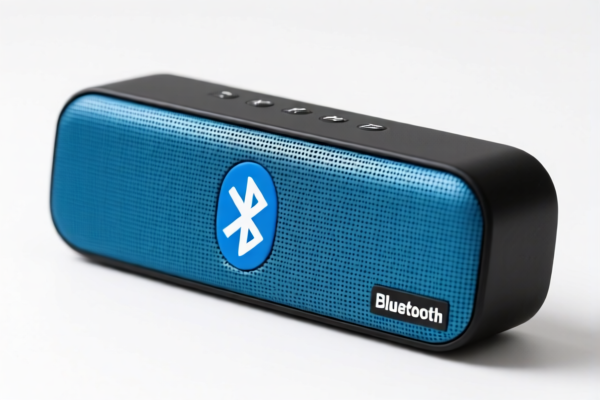
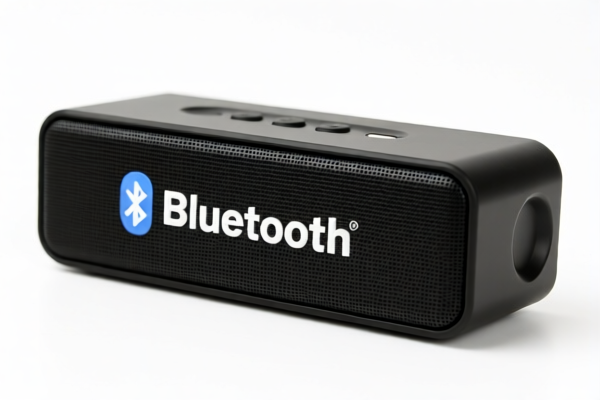
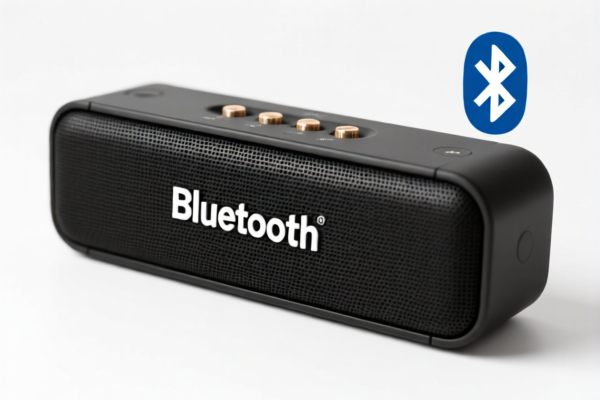

AI Analysis
📱 Hands-Free Bluetooth Speakerphone (Wireless Audio Devices)
🌐 HS Code Reference & Customs Clearance Guide | 2024/2025 Taxation Analysis | Professional Compliance Strategy
📌 I. Product Definition & Classification: What Exactly is a "Bluetooth Speakerphone"?
A "Hands-Free Bluetooth Speakerphone" typically refers to a device that combines audio output (loudspeaker) and audio input (microphone) for wireless voice communication. In international trade, classification depends heavily on the primary function and structure:
- Standalone Loudspeaker: If it is primarily a speaker that plays audio (music, calls) and has a built-in mic for simple functions but is classified primarily as a sound emitter.
- Telephone Set/Communication Apparatus: If the primary function is facilitating wireless telephone calls (e.g., car kits, dedicated VoIP speakers) where the device itself acts as the terminal for communication.
- Amplifier Set: If it is part of a larger sound system or includes amplification circuits specifically for sound reinforcement.
⚠️ Key Classification Distinction:
- Primary Audio Output Device → Usually falls under Chapter 8518 (Loudspeakers, Microphones, Headphones).
- Primary Communication Terminal → Falls under Chapter 8517 (Telephone sets, Data transmission apparatus).
- Amplification Equipment → Falls under Chapter 8543 (Other electrical machines/apparatus with individual functions).
📦 II. HS Code Classification Details (Based on Provided DATA)
Below are the relevant HS Codes from the provided data, mapped to specific configurations of Bluetooth Speakerphones.
| HS Code | Product Description | Applicability to Bluetooth Speakerphone | Key Distinction |
|---|---|---|---|
8518.21.00.00 |
Loudspeakers, mounted in enclosures "Single loudspeakers, mounted in their enclosures" |
✅ Best Fit for Standalone Speakers If the device is primarily a speaker unit (with or without basic mic) sold as a consumer audio device (e.g., portable Bluetooth speaker with call function). |
Focuses on the loudspeaker aspect. Even if it has a mic, if it's sold as a "speaker," this is often the correct header. |
8517.14.00.80 |
Other telephones for cellular networks or other wireless networks "Other" |
✅ Best Fit for Dedicated Phone Kits If the device is a dedicated hands-free car kit, office speakerphone for VoIP, or a standalone unit primarily designed for making/receiving calls (acting as a telephone terminal). |
Focuses on telephone/communication function. If it lacks music playback features or is purely for calls, this may apply. |
8517.62.00.20 |
Switching and routing apparatus "Machines for reception, conversion, transmission... switching and routing apparatus" |
⚠️ Unlikely for End-User Devices Typically applies to network infrastructure (routers, switches). Do not use for consumer speakerphones unless it is a specialized networking audio gateway. |
Rarely used for standard Bluetooth speakerphones. Misclassification risk. |
8543.70.98.60 |
Other machines and apparatus "Other: Other: Other" |
❌ Fallback/General Category May be used if the device has a unique function not covered elsewhere (e.g., a smart speaker with IoT functions that don't fit strictly as a "telephone" or "loudspeaker"). |
Use only if it doesn't fit 8518 or 8517 clearly. Often carries higher duty due to general classification. |
8543.70.98.10 |
Other machines and apparatus "Other: Other: Other: Amplifiers" |
✅ Best Fit for Audio Processing Units If the device is primarily an amplifier that connects to external speakers, or if it emphasizes audio signal processing/amplification over simple sound emission. |
Use if the core technical feature is amplification rather than just sound emission. |
🔍 Critical Note:
- The term "Speakerphone" is ambiguous. Customs officers will look at the technical specifications and marketing claims.
- If it plays MP3s/music → Strong case for8518.21.00.00(Loudspeaker).
- If it is exclusively for phone calls (e.g., Bluetooth car kit) → Strong case for8517.14.00.80(Wireless Telephone).
- Do not use8517.62.00.20(Switching/Routing) for consumer devices; it is for network infrastructure.
💰 III. 2024/2025 Latest Tariff Rate Breakdown (Based on Provided DATA)
✅ Applicable Country: United States (US)
✅ Origin: China (CN)
✅ Data Source: Provided JSON Tax Data
🎯 1. 8518.21.00.00 —— Loudspeakers, Mounted in Enclosures
| Item | Content |
|---|---|
| Base Duty | 0.0% |
| Additional Duty | 7.5% |
| Total Tax Rate | 7.5% |
| Tax Calculation | CIF Value × 7.5% |
| Legal Basis | Specific to HS Code 8518.21.00.00 |
📌 Explanation:
- This is the most common and favorable classification for consumer Bluetooth speakers that also handle calls.
- The total duty is relatively low (7.5%).
- Strategy: If your device primarily functions as a speaker (with Bluetooth music playback), argue for this classification to minimize duty.
🎯 2. 8517.14.00.80 —— Other Telephones for Wireless Networks
| Item | Content |
|---|---|
| Base Duty | 0.0% |
| Additional Duty | 0.0% |
| Total Tax Rate | 0.0% |
| Tax Calculation | CIF Value × 0% |
| Legal Basis | Specific to HS Code 8517.14.00.80 |
📌 Explanation:
- This is the most favorable rate (0% total).
- However, classification risk is higher. You must prove the device is primarily a telephone/communication apparatus and not just a speaker.
- Strategy: If your device is a dedicated hands-free car kit or office phone with minimal music features, this is the ideal classification. Ensure marketing materials emphasize "Communication" over "Entertainment."
🎯 3. 8517.62.00.20 —— Switching and Routing Apparatus
| Item | Content |
|---|---|
| Base Duty | 0.0% |
| Additional Duty | 25.0% |
| Total Tax Rate | 25.0% |
| Tax Calculation | CIF Value × 25% |
📌 Warning:
- Do NOT classify consumer Bluetooth speakerphones here unless it is a specialized networking device.
- Misclassification here leads to 25% duty and potential customs audits.
🎯 4. 8543.70.98.60 & 8543.70.98.10 —— Other Electrical Machines / Amplifiers
| Item | Content |
|---|---|
| Base Duty | 2.6% |
| Additional Duty | 25.0% |
| Total Tax Rate | 27.6% |
| Tax Calculation | CIF Value × 27.6% |
📌 Warning:
- High duty rate. Only use if the device is clearly an amplifier (e.g., a power amp for speakers) or a general-purpose electrical apparatus not covered by 8518 or 8517.
- Avoid for standard Bluetooth speakerphones unless no other category fits.
🛠️ IV. Customs Clearance Practical Advice (Avoid Pitfalls)
✅ 1. Documentation Checklist (Must-Haves)
| Document | Required? | Explanation |
|---|---|---|
| ✅ Product Specification Sheet | ✔️ | Must clearly state: "Bluetooth 5.0," "Wireless Microphone," "Loudspeaker Output," "Call Function." |
| ✅ User Manual | ✔️ | Highlight features. If it emphasizes "Hands-free Calling," lean toward 8517.14.00.80. If it emphasizes "Hi-Fi Sound," lean toward 8518.21.00.00. |
| ✅ Circuit Diagram/Block Diagram | ✔️ | Helps Customs understand if it's a simple speaker (8518) or a communication terminal (8517). |
| ✅ Product Photos | ✔️ | Show the device, buttons, ports (USB/Charging), and any branding. |
| ✅ Commercial Invoice | ✔️ | Description should be precise: "Bluetooth Wireless Speaker with Microphone" or "Hands-Free VoIP Telephone." Avoid vague terms like "Audio Device." |
| ✅ FCC ID (if US Import) | ✔️ | Bluetooth devices require FCC certification. Ensure the FCC ID matches the model. |
✅ 2. Declaration Strategy (Key Principles)
🔥 “Function Dictates Code: Speaker = 8518, Phone = 8517!”
| Scenario | Recommended HS Code | Reasoning |
|---|---|---|
| Portable Bluetooth Speaker with call capability | 8518.21.00.00 |
Primary function is audio playback; mic is secondary. Duty: 7.5% |
| Dedicated Car Bluetooth Kit (no music playback, only phone) | 8517.14.00.80 |
Primary function is telephone communication. Duty: 0% |
| Office VoIP Speakerphone (connects to PC/Network) | 8517.14.00.80 |
Acts as a communication terminal. Duty: 0% |
| Audio Amplifier for external speakers | 8543.70.98.10 |
Primary function is amplification. Duty: 27.6% |
| Smart Speaker with IoT/AI Assistant (e.g., Echo-style) | 8518.21.00.00 or 8543.70.98.60 |
Case-by-case. Often 8518.21.00.00 if speaker-focused. Duty: 7.5% |
✅ 3. Special Considerations
| Situation | Recommendation |
|---|---|
| Device Plays Music AND Makes Calls | Argue for 8518.21.00.00 (7.5%) as it is more common for consumer electronics. Customs often accept speakers with mic functions under 8518. |
| Device is Primarily for VoIP | Argue for 8517.14.00.80 (0%). Provide evidence that it interfaces with networks for voice data transmission. |
| Avoid "Switching/Routing" Classification | Do not use 8517.62.00.20 for speakerphones. It is for network infrastructure (routers/switches), not end-user audio devices. |
🌍 V. Global Market Comparison (2024/2025)
| Market | Recommended HS Code | Estimated Duty (China Origin) | Notes |
|---|---|---|---|
| 🇺🇸 USA | 8518.21.00.00 |
7.5% | Best balance for speakerphones with call functions. |
| 🇺🇸 USA | 8517.14.00.80 |
0.0% | Best for dedicated communication devices. |
| 🇨🇳 China | 8518.21.00.00 |
~6-10% | Import duty for speakers. |
| 🇪🇺 EU | 8518.21.00 |
0% | Most speakers enter duty-free in EU. |
| 🇬🇧 UK | 8518.21.00 |
0% | Post-Brexit, many electronics remain duty-free. |
📌 Conclusion:
- For US Imports, the choice between8518.21.00.00(7.5%) and8517.14.00.80(0%) is critical.
- Recommendation: If your product is a general-purpose Bluetooth speaker with calling capability,8518.21.00.00is safer and more commonly accepted, with a manageable 7.5% duty. If it is a specialized business VoIP device, strive for8517.14.00.80to achieve 0% duty.
📌 VI. Common Errors & Pitfalls (Blood & Tears)
❌ Error 1: Classifying a Bluetooth Speaker as 8517.62.00.20 (Switching/Routing)
👉 Consequence: 25% duty + customs audit for misclassification. This code is for routers, not speakers.
❌ Error 2: Claiming 0% duty (8517.14.00.80) for a standard MP3 player/speaker
👉 Consequence: Customs may reject it and reclassify to 8518.21.00.00 (7.5%) + penalties. Only use 8517 if it's truly a telephone/communication terminal.
❌ Error 3: Ignoring FCC Requirements
👉 Consequence: Device seized at US border. Bluetooth devices must have FCC ID.
❌ Error 4: Vague Description "Audio Device"
👉 Consequence: Delays. Be specific: "Bluetooth Wireless Loudspeaker with Integrated Microphone."
✅ Correct Approach:
"Bluetooth 5.0 Wireless Speakerphone, Model XYZ, IPX7 Waterproof, Supports Hands-free Calling & Music Playback, FCC ID: ABC123"
🎯 VII. Conclusion: Smart Classification, Smart Savings!
🎯 Key Takeaway:
🔹 Speakerphone = Speaker? →
8518.21.00.00→ 7.5% Duty
🔹 Speakerphone = Telephone? →8517.14.00.80→ 0% Duty
📌 Pro Tip:
- If your device is a consumer product (home, portable), go with 8518.21.00.00. It is widely accepted and the 7.5% duty is manageable.
- If your device is a business/industrial communication tool, fight for 8517.14.00.80 to save 7.5%.
📣 Action Item:
📞 Consult a customs broker with your product datasheet to confirm if it leans more towards "Speaker" or "Telephone."
🚀 Get an Advance Ruling from US Customs (CBP) if the value is high, to lock in the 0% or 7.5% classification.
✨ Precision Classification Saves Money!
💼 Every percentage point matters in global trade!
Customer Reviews
About HS Code Classification
The Harmonized System (HS) is an internationally standardized nomenclature developed by the World Customs Organization (WCO) to classify traded products. Over 200 countries use the HS system as the basis for customs tariffs, trade statistics, and import/export regulations.
Each HS code follows a hierarchical structure:
- Chapter (2 digits) — Broad category of goods (e.g., Chapter 84: Machinery and Mechanical Appliances)
- Heading (4 digits) — More specific grouping within the chapter
- Subheading (6 digits) — Internationally standardized breakdown, used by all WCO member countries
- National subdivisions (8-10 digits) — Country-specific extensions for further classification, such as US HTSUS 10-digit codes
Correct HS code classification is essential for smooth customs clearance, accurate duty payment, and compliance with trade regulations. Misclassification can lead to customs delays, overpayment of duties, or penalties.
When importing from CN to US, the applicable tariff rates may include:
- Most-Favored-Nation (MFN) rate — The standard duty rate applied to WTO members
- General rate — Applied to countries without trade agreements
- Trade remedy duties — Additional tariffs such as Section 301 (anti-dumping), Section 232 (national security), or countervailing duties
The information provided on this page is for reference purposes only. For official classification, please consult with your local customs authority or a licensed customs broker.