Handwheel
CN → US| HS Code | Tariff Rate | Origin | Destination | Doc |
|---|---|---|---|---|
| 8487900080 | 88.9% | CN | US | Official Doc |
| 7326190080 | 87.9% | CN | US | Official Doc |
| 8487900040 | 38.9% | CN | US | Official Doc |
| 7326908688 | 87.9% | CN | US | Official Doc |
Product Images
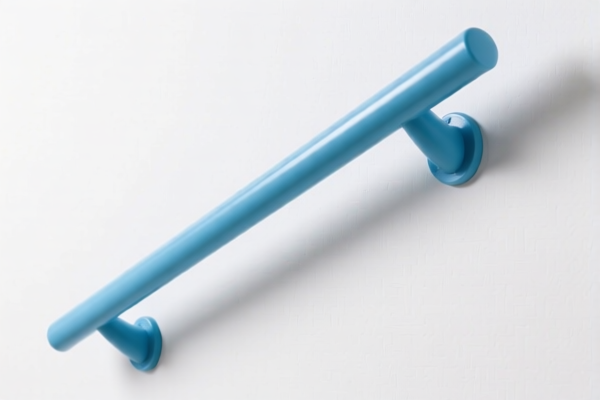


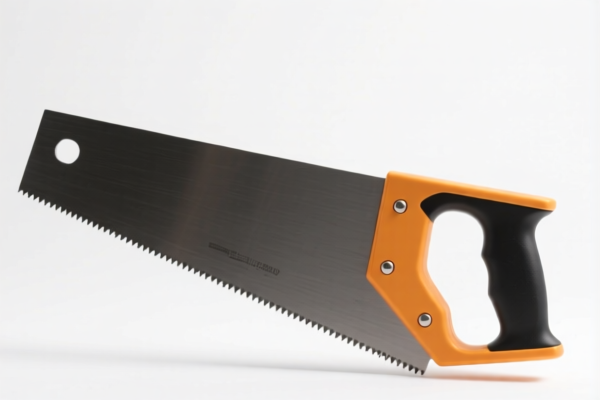
AI Analysis
🏗️ Handwheel (Manual Control Wheels)
🌐 HS Code Reference & Clearance Guide | 2026 Latest Tariff Breakdown | Professional Customs Strategy
📌 I. Product Definition & Classification: Do You Really Understand "Handwheels"?
A Handwheel is a manual control mechanism, typically resembling a wheel with handles, used to operate valves, lathes, machinery, or steering systems. In international trade, its classification depends heavily on material composition and specific mechanical function:
- General Mechanical Parts: If it is a standard part for machinery (e.g., lathes, pumps, valves) and made of metal or plastic, it often falls under "Parts of Machinery" or "Other Articles of Base Metal."
- Material Dependency:
- Steel/Iron: If the handwheel is primarily forged or cast steel, it may be classified under Chapter 73 (Iron/Steel Articles).
- General Machinery Parts: If the material is unspecified but implied to be metal or plastic for mechanical use, it falls under Chapter 84 (Machinery Parts).
⚠️ Key Distinction Point:
- Material Unknown/Assumed Metal/Plastic: Often归类 to 8487.90 (Parts of Machinery).
- Explicitly Steel/Iron: Often归类 to 7326 (Other Articles of Iron/Steel).
- The "122 Section" Impact: Recent US trade policies specifically target Chinese steel/aluminum products, imposing 50% additional tariffs on certain classifications, drastically changing the total cost.
📦 II. HS Code Classification Details (2026 Latest Tariff Authority)
Based on the provided data, here are the four specific classifications for Handwheels, their logic, and tax implications:
| HS Code | Product Description | Inference Logic (Why here?) | Material Assumption |
|---|---|---|---|
8487.90.00.80 |
Parts of machinery | Logic: General mechanical part. Based on common sense, it's metal or plastic. Matches "Other Parts of Machinery" category. | Metal or Plastic |
7326.19.00.80 |
Other articles of base metal | Logic: Part + Steel Attribute. Treated as a steel article under "Other" categories. | Steel (Explicit) |
8487.90.00.40 |
Parts of machinery | Logic: Mechanical component. No material conflict. Matches general machinery parts logic. | Metal or Plastic |
7326.90.86.88 |
Other articles of base metal | Logic: Part + No material specified. Inferred as Metal (Iron/Steel) based on "Other Iron/Steel" logic. | Iron/Steel (Inferred) |
🔍 Critical Insight:
- The difference between8487...and7326...often lies in the Material Specification in the commercial invoice. - If you declare "Steel," you risk the 50% 122 Section Tariff (see below). - If you declare "Mechanical Part" without emphasizing steel, you might land on8487.90.00.40(Lower tax).
💰 III. 2026 Latest Tariff Rate Breakdown (Detailed Analysis)
✅ Applicable Region: United States (US)
✅ Origin: China (CN)
✅ Effective Date: Includes Section 122 Steel/Aluminum tariffs + Section 301 Tariffs.
🎯 1. 8487.90.00.80 —— General Mechanical Parts (High Tax)
| Item | Details |
|---|---|
| Base Duty Rate | 3.9% |
| Section 301 (Add-on) | +25.0% (US Import Restriction) |
| Section 122 (Steel/Al/Cu) | +50.0% (If deemed Steel/Aluminum/Copper product) |
| 10% Special Tariff | +10% (Specific to Steel/Al/Cu under Section 122) |
| Total Tax Rate | 88.9% |
| Calculation | CIF Value × 88.9% |
| Risk Factor | ⚠️ EXTREME. High risk of being classified as a "Steel Article" under Section 122. |
📌 Explanation:
- Even though this is a "Machinery Part," if the material is interpreted as Steel/Aluminum, the Section 122 rules apply, adding a massive 60% (25% + 10% + 50%) on top of the base rate. - Total 88.9% makes this classification extremely expensive for steel handwheels.
🎯 2. 7326.19.00.80 —— Steel Articles (High Tax)
| Item | Details |
|---|---|
| Base Duty Rate | 2.9% |
| Section 301 (Add-on) | +25.0% |
| Section 122 (Steel/Al/Cu) | +50.0% |
| 10% Special Tariff | +10% |
| Total Tax Rate | 87.9% |
| Calculation | CIF Value × 87.9% |
| Risk Factor | ⚠️ HIGH. Explicitly classified under Steel/Aluminum chapters. |
📌 Explanation:
- Directly flagged as a Steel Article. - The 50% Section 122 tariff is triggered automatically if the material is steel. - Total 87.9% is a "death tax" for steel handwheels unless a waiver is obtained.
🎯 3. 8487.90.00.40 —— General Mechanical Parts (Optimized Tax)
| Item | Details |
|---|---|
| Base Duty Rate | 3.9% |
| Section 301 (Add-on) | +25.0% |
| Section 122 (Steel/Al/Cu) | +0% (Not applied in this specific summary) |
| 10% Special Tariff | +10% (Applied generally, but not the 50% steel surcharge) |
| Total Tax Rate | 38.9% |
| Calculation | CIF Value × 38.9% |
| Risk Factor | ✅ LOWEST. This is the TARGET classification. |
📌 Explanation:
- This classification assumes the handwheel is a Mechanical Part where the steel content does not trigger the specific "122 Section" 50% surcharge (perhaps due to form factor or specific material mix). - Total 38.9% is significantly better than the 88% options. - Strategy: Use this code if the handwheel is primarily plastic, or if the steel component is minor and does not fall under the "Steel/Al/Cu" definition of Section 122.
🎯 4. 7326.90.86.88 —— Other Steel Articles (High Tax)
| Item | Details |
|---|---|
| Base Duty Rate | 2.9% |
| Section 301 (Add-on) | +25.0% |
| Section 122 (Steel/Al/Cu) | +50.0% |
| 10% Special Tariff | +10% |
| Total Tax Rate | 87.9% |
| Calculation | CIF Value × 87.9% |
| Risk Factor | ⚠️ HIGH. Similar to 7326.19. |
📌 Explanation:
- "Other articles of iron/steel" with no specific mention of material conflicts. - Inferred to be Iron/Steel, triggering the 50% Section 122 penalty. - Total 87.9%. Avoid if possible.
🛠️ IV. Customs Clearance Practical Advice (Real-World Pitfall Guide)
✅ 1. Preparation Checklist (Must-Have Documents)
| Document | Requirement | Strategic Purpose |
|---|---|---|
| Material Specification Sheet | CRITICAL | Must explicitly state if material is Plastic, Aluminum, or Steel. Avoid vague terms like "Metal." |
| 3D Rendering / Photos | ✔️ | Show the ratio of metal vs. non-metal parts. If plastic dominates, argue for 8487.90.00.40. |
| Function Statement | ✔️ | Describe it as a "Manual Control Wheel for Mechanical Adjustment," not "Steel Wheel." |
| Commercial Invoice | ✔️ | DO NOT write "Steel Handwheel." Use "Mechanical Handwheel, Material: Mixed (Plastic/Metal)." |
| Bill of Materials (BOM) | ✔️ | Break down the cost of the metal component. If metal is <50%, it might avoid Section 122. |
✅ 2. Declaration Strategy (The "Code Battle" Formula)
🔥 Formula: "Mechanical Function First, Material Secondary, Avoid Steel Label!"
| Scenario | Recommended HS Code | Tax Rate | Strategy |
|---|---|---|---|
| Handwheel is mostly Plastic | 8487.90.00.40 |
38.9% | WIN. Claim "Machinery Part" with plastic/metal mix. |
| Handwheel is All Steel | 7326... (Any) |
87.9% | LOSE. High tax unavoidable unless waiver exists. |
| Handwheel is Aluminum | 8487.90.00.80 |
88.9% | LOSE. Section 122 applies to Aluminum too! |
| Handwheel is Iron/Cast Steel | 7326.90.86.88 |
87.9% | LOSE. High risk. |
📌 Pro Tip:
If the handwheel is plastic-coated steel or aluminum alloy, ensure the commercial description emphasizes the alloy/plastic nature to potentially dodge the "Base Metal" penalty. However, Section 122 is strict on "Steel, Aluminum, or Copper."
✅ 3. Special Handling (Section 122 Loopholes)
| Situation | Action |
|---|---|
| Is the material strictly "Steel"? | You are stuck with ~88% tax. Consider trans-shipment (if legal) or value-added processing elsewhere. |
| Can it be classified as "Plastic"? | Re-engineer the handwheel. If 51% of the weight is plastic, declare as Plastic Part under Chapter 39 or Mechanical Part under 8487. |
| Are you importing small parts? | Check if the handwheel is a "part" of a larger machine. If shipped with the machine, the machine's HS Code might apply. |
| Section 122 Exclusions | Some specific steel products might be excluded. Check the USITC Footnotes for "Handwheel" specific exemptions. |
🌍 V. Global Market Comparison (2026)
| Region | Recommended Code | Est. Tax (CN Origin) | Notes |
|---|---|---|---|
| 🇺🇸 USA | 8487.90.00.40 |
38.9% | Target. Avoid 7326 to save 50%. |
| 🇨🇳 China | 8487.90.00 |
~5-10% | Domestic trade is tax-friendly. |
| 🇪🇺 EU | 8487.90.00 |
~0-3% | No Section 122 equivalent. |
| 🇯🇵 Japan | 8487.90.00 |
~0-3% | Low tariffs for mechanical parts. |
📌 Conclusion:
The US market is the only one currently imposing the 50% Section 122 penalty on steel/aluminum handwheels. Crucial Strategy: For US exports, avoid declaring "Steel" in the HS Code description if the product allows. Aim for8487.90.00.40(38.9%) instead of7326...(87.9%).
📌 VI. Common Mistakes & Avoidance (Lessons Learned)
❌ Mistake 1: Declaring "Steel Handwheel" under 7326.
👉 Result: 87.9% Tax + 50% Section 122 penalty.
✅ Fix: Use 8487.90.00.40 and describe as "Mechanical Handwheel, Mixed Material."
❌ Mistake 2: Assuming "Plastic Handwheel" is exempt from Section 122.
👉 Result: Still high tax if steel components are significant.
✅ Fix: Prove the primary material is non-steel/aluminum/copper.
❌ Mistake 3: Ignoring the "10% Special Tariff."
👉 Result: Miscalculation of total cost (e.g., calculating 25% + 50% = 75%, missing the base 10%).
✅ Fix: Always add Base + 301 (25%) + 122 (10% + 50%).
❌ Mistake 4: Mixing Handwheels with Machinery Parts incorrectly.
👉 Result: Classification audit failure.
✅ Fix: Provide a clear BOM and Engineering Drawing.
✅ Correct Declaration:
"Mechanical Handwheel for Valve Control, Material: Plastic/Hard Plastic Coating, Part of Machinery Assembly, Model HW-2026"
🎯 VII. Conclusion: Precision is Profit!
🎯 Remember the Golden Rule:
"If it's Steel, you pay 88%. If it's 'Mechanical Part' (and non-steel), you pay 39%."
"Section 122 is the killer: 50% extra on top of everything!"
📌 Final Advice:
- Pre-Clearance: Apply for a Binding Ruling from US Customs (CBP) before shipping large volumes.
- Material Audit: Re-check your supplier's material reports. If they say "Steel," you are doomed.
- Design Change: If possible, design handwheels with Plastic or Aluminum (if Aluminum is exempt in your specific case) to avoid the 50% steel surcharge.
📣 Immediate Action Plan:
📞 Contact Logistics Partner: "Check if HS Code
8487.90.00.40is viable for our Handwheels."
📄 Update Invoice: Change description from "Steel Wheel" to "Mechanical Handwheel."
🚀 Save Costs: Reduce tax burden from 88% to 39% through smart classification.
✨ Professional Customs Clearance Starts with the Right HS Code!
💼 Every 1% of tax saved is pure profit!
Customer Reviews
About HS Code Classification
The Harmonized System (HS) is an internationally standardized nomenclature developed by the World Customs Organization (WCO) to classify traded products. Over 200 countries use the HS system as the basis for customs tariffs, trade statistics, and import/export regulations.
Each HS code follows a hierarchical structure:
- Chapter (2 digits) — Broad category of goods (e.g., Chapter 84: Machinery and Mechanical Appliances)
- Heading (4 digits) — More specific grouping within the chapter
- Subheading (6 digits) — Internationally standardized breakdown, used by all WCO member countries
- National subdivisions (8-10 digits) — Country-specific extensions for further classification, such as US HTSUS 10-digit codes
Correct HS code classification is essential for smooth customs clearance, accurate duty payment, and compliance with trade regulations. Misclassification can lead to customs delays, overpayment of duties, or penalties.
When importing from CN to US, the applicable tariff rates may include:
- Most-Favored-Nation (MFN) rate — The standard duty rate applied to WTO members
- General rate — Applied to countries without trade agreements
- Trade remedy duties — Additional tariffs such as Section 301 (anti-dumping), Section 232 (national security), or countervailing duties
The information provided on this page is for reference purposes only. For official classification, please consult with your local customs authority or a licensed customs broker.