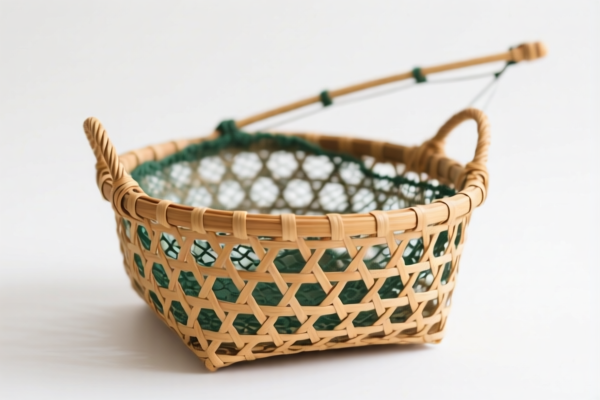
Handwoven Rattan Fishing Basket
CN → US| HS Code | Tariff Rate | Origin | Destination | Doc |
|---|---|---|---|---|
| 4602121400 | 35.0% | CN | US | Official Doc |
| 4602120500 | 40.0% | CN | US | Official Doc |
| 4602121600 | 40.0% | CN | US | Official Doc |
| 4602110500 | 40.0% | CN | US | Official Doc |
| 4602190500 | 40.0% | CN | US | Official Doc |
Product Images



AI Analysis
🧺 Handwoven Rattan Fishing Basket (Large)
🌐 HS Code Reference & Customs Clearance Guide | 2026 Latest Tariff Analysis | Professional Strategy for US Imports
📌 I. Product Definition & Classification: Do You Truly Understand "Rattan Fishing Baskets"?
The Handwoven Rattan Fishing Basket is a traditional tool used in angling for holding, transporting, and displaying catch. In international trade, its classification depends strictly on its material (Rattan/Vegetable Fiber) and form (Basket).
Because rattan is a vegetable material, these products fall under Chapter 46: Wickerwork, basketwork, and other articles of plaiting materials. They are not classified as plastic baskets (Chapter 39) or metal containers (Chapter 73).
⚠️ Critical Distinction:
- If the material is natural rattan or similar vegetable fibers →归类 to 4602
- If the material is plastic or metal, it falls under different chapters (e.g., 3924 or 7323).
- Note: The term "Fishing Basket" implies usage, but customs primarily classifies by material composition and article type for HS 4602.
📦 II. HS Code Classification Details (2026 Latest Tariff Authority Cross-Reference)
Based on the provided data, here are the valid HS Codes for Handwoven Rattan Fishing Baskets and their corresponding tax implications.
| HS Code | Product Description (Summary) | Total Tax Rate | Key Components |
|---|---|---|---|
| 4602.12.14.00 | Large Rattan Fishing Basket; Material: Rattan; Form: Basket; Use: Fishing. | 35.0% | Base: 0%, Section 301: 25%, Section 122: 10% |
| 4602.12.05.00 | Large Rattan Fishing Basket; Material: Rattan; Form: Basket; Use: Fishing. Fully compliant. | 40.0% | Base: 5%, Section 301: 25%, Section 122: 10% |
| 4602.12.16.00 | Rattan Basket; Material: Rattan; Form: Basket. Compliant with wicker basket classification. | 40.0% | Base: 5%, Section 301: 25%, Section 122: 10% |
| 4602.11.05.00 | Plant Fiber Woven Fishing Basket; Material: Plant Fiber; Form: Fishing Basket. | 40.0% | Base: 5%, Section 301: 25%, Section 122: 10% |
| 4602.19.05.00 | Plant Fiber Woven Fishing Basket; Material: Vegetable Material; Form: Woven Fishing Basket. | 40.0% | Base: 5%, Section 301: 25%, Section 122: 10% |
🔍 Key Insight:
- HS Code 4602.12 is the primary category for Wickerwork of Rattan.
- The sub-codes (.14,.05,.16) differ by specific product sub-type or manufacturing detail.
- HS Codes 4602.11 and 4602.19 cover other plant fibers or miscellaneous wicker goods if the basket is not strictly "rattan" but uses similar vegetable materials.
💰 III. 2026 Latest Tariff Rate Breakdown (Including Additional Taxes)
✅ Applicable Country: United States (US)
✅ Origin: China (CN)
✅ Effective Time: Current regulations apply (Section 122 and Section 301)
🎯 1. 4602.12.14.00 – Large Rattan Fishing Basket (Preferred Option)
| Item | Content |
|---|---|
| Base Tariff | 0% (Ad Valorem) |
| Section 301 Tariff | +25% (Added duty on Chinese imports) |
| Section 122 Tariff | +10% (Trade measure under 19 U.S.C. § 1677j) |
| Total Tax Rate | 35.0% |
| Tax Calculation | CIF Value × 35% |
| De Minimis Eligibility | ❌ No (Section 301 and 122 duties generally exempt de minimis relief for CN origin) |
| Legal Basis | USITC:4602.12.14.00 + Footnote: Section 301 + Section 122 |
📌 Explanation:
- This is the lowest tax rate among the options provided.
- Why 35%? It benefits from a 0% base tariff for specific rattan wicker goods, but still faces the full burden of Section 301 (25%) and Section 122 (10%).
- Recommendation: If your product strictly matches the description "Large Rattan Fishing Basket," prioritize this HS code to save 5% compared to others.
🎯 2. 4602.12.05.00 – Large Rattan Fishing Basket (Fully Compliant)
| Item | Content |
|---|---|
| Base Tariff | 5.0% |
| Section 301 Tariff | +25% |
| Section 122 Tariff | +10% |
| Total Tax Rate | 40.0% |
| Tax Calculation | CIF Value × 40% |
| De Minimis Eligibility | ❌ No |
| Legal Basis | USITC:4602.12.05.00 + Footnote: Section 301 + Section 122 |
📌 Note:
- Although described as "Fully Compliant," the base tariff is 5%, leading to a higher total duty.
- Use this only if customs explicitly requires this specific sub-code for your product variant.
🎯 3. 4602.12.16.00 – Rattan Basket
| Item | Content |
|---|---|
| Base Tariff | 5.0% |
| Section 301 Tariff | +25% |
| Section 122 Tariff | +10% |
| Total Tax Rate | 40.0% |
| Tax Calculation | CIF Value × 40% |
| Legal Basis | USITC:4602.12.16.00 + Footnote: Section 301 + Section 122 |
📌 Note:
- Generic "Rattan Basket" classification often attracts a higher base duty.
- Ensure the product is clearly identified as a Fishing Basket if possible, to potentially qualify for the 0% base rate under.14.00.
🎯 4. 4602.11.05.00 & 4602.19.05.00 – Plant Fiber/Woven Fishing Baskets
| Item | Content |
|---|---|
| Base Tariff | 5.0% |
| Section 301 Tariff | +25% |
| Section 122 Tariff | +10% |
| Total Tax Rate | 40.0% |
| Tax Calculation | CIF Value × 40% |
| Legal Basis | USITC:4602.11/19 + Footnote: Section 301 + Section 122 |
📌 Note:
- These codes are for baskets made from other plant fibers (not strictly rattan) or miscellaneous wickerwork.
- If your product is truly Rattan, use 4602.12 codes. Misclassifying rattan as "other plant fibers" can lead to audits and penalties.
🛠️ IV. Customs Clearance Practical Advice (Pitfall Avoidance Guide)
✅ 1. Preparation Checklist (Essential Documents)
| Document | Required? | Description |
|---|---|---|
| ✅ Product Specifications | ✔️ | Detail material (100% Rattan?), dimensions, weight, and capacity. |
| ✅ Photos (Clear) | ✔️ | Show the basket, weave pattern, and any labels. Prove it is woven, not molded plastic. |
| ✅ Commercial Invoice | ✔️ | Must clearly state: "Handwoven Rattan Fishing Basket, Material: Rattan, Country of Origin: China" |
| ✅ Packing List | ✔️ | Include gross/net weight. |
| ✅ Certificate of Origin | ✔️ | Required for Section 301/122 verification. |
✅ 2. Declaration Tips (Key Mnemonic)
🔥 "Material First, Usage Second, Code Precise, Tax Reduced!"
| Scenario | Correct Declaration | Incorrect Practice |
|---|---|---|
| Rattan Material | Use 4602.12 codes | Use 3926 (Plastic) or 7323 (Metal) → Severe Penalty |
| Base Tariff Optimization | Choose 4602.12.14.00 if applicable | Accepting 40% tax when 35% is possible |
| Section 122 Impact | Acknowledge +10% in cost structure | Ignoring Section 122 → Surprise Fees at Border |
| Product Description | "Large Rattan Fishing Basket" | "Fishing Net Container" → Vague description leads to delays |
✅ 3. Special Cases
| Case | Handling Advice |
|---|---|
| Mixed Materials | If basket has plastic lining or metal hooks, declare the primary material (Rattan). If >50% value is non-rattan, re-evaluate HS Code. |
| New Products | Apply for an Advance Ruling (Binding Tariff Information) before shipment to lock in the 35% rate. |
| Section 122 Exemptions | Currently, no exemptions for rattan baskets from China. Budget for the full 10%. |
🌍 V. Global Market Comparison (2026)
| Country/Region | Recommended HS Code | Tariff (CN Origin) | Certification | Notes |
|---|---|---|---|---|
| 🇺🇸 USA | 4602.12.14.00 |
35% | None Specific | High duty due to Sect 301 + 122. |
| 🇨🇳 China | 4602.12.14.00 |
5-10% | GB Standards | Lower export duty for Chinese exporters. |
| 🇪🇺 EU | 4602.12 |
0-2% | CE (if applicable) | No Section 301/122 equivalent. Favorable. |
| 🇬🇧 UK | 4602.12 |
0-2% | UKCA | Post-Brexit trade agreements may apply. |
📌 Conclusion:
- The US market is the most expensive for rattan products due to Section 122 and Section 301.
- For non-US markets, rattan baskets remain highly competitive.
📌 VI. Common Mistakes & Pitfalls (Lessons Learned)
❌ Mistake 1: Declaring as "Plastic Basket" to avoid Section 301
👉 Consequence: Customs inspection reveals natural material → Smuggling penalty + Backdated taxes.
❌ Mistake 2: Ignoring Section 122
👉 Consequence: Under-declaring duties by 10% → Late fees and interest.
❌ Mistake 3: Using vague terms like "Woven Container"
👉 Consequence: Customs assigns a higher default code → Potential 40%+ duty.
✅ Correct Practice:
"Large Handwoven Rattan Fishing Basket, 100% Natural Rattan, Origin: China, HS: 4602.12.14.00"
🎯 VII. Conclusion: Professional Declaration, Cost Control, Efficiency!
🎯 Remember the Mnemonic:
🔹 "Rattan is Chapter 46, Section 301 adds 25, Section 122 adds 10. Choose 4602.12.14 for the lowest tax at 35%!"
🔹 "Base 0% plus add-ons equals 35%, Base 5% plus add-ons equals 40%. Don't pay more than necessary!"
📌 Pro Tip:
If you are importing large volumes, consider pre-classification rulings with US Customs and Border Protection (CBP) to confirm that your specific product qualifies for 4602.12.14.00 with the 0% base rate. This provides legal certainty and protects against retroactive audits.
📣 Immediate Action:
📞 Consult a licensed customs broker + Provide product photos + Request HS Code Ruling
🚀 Let your Rattan Baskets pass smoothly, clear customs efficiently, and maximize profits!
✨ Professional Clearance Starts with Accurate Classification!
💼 Every cent of duty cost is worth calculating precisely!
Customer Reviews
About HS Code Classification
The Harmonized System (HS) is an internationally standardized nomenclature developed by the World Customs Organization (WCO) to classify traded products. Over 200 countries use the HS system as the basis for customs tariffs, trade statistics, and import/export regulations.
Each HS code follows a hierarchical structure:
- Chapter (2 digits) — Broad category of goods (e.g., Chapter 84: Machinery and Mechanical Appliances)
- Heading (4 digits) — More specific grouping within the chapter
- Subheading (6 digits) — Internationally standardized breakdown, used by all WCO member countries
- National subdivisions (8-10 digits) — Country-specific extensions for further classification, such as US HTSUS 10-digit codes
Correct HS code classification is essential for smooth customs clearance, accurate duty payment, and compliance with trade regulations. Misclassification can lead to customs delays, overpayment of duties, or penalties.
When importing from CN to US, the applicable tariff rates may include:
- Most-Favored-Nation (MFN) rate — The standard duty rate applied to WTO members
- General rate — Applied to countries without trade agreements
- Trade remedy duties — Additional tariffs such as Section 301 (anti-dumping), Section 232 (national security), or countervailing duties
The information provided on this page is for reference purposes only. For official classification, please consult with your local customs authority or a licensed customs broker.