Handwoven Wooden Basket
CN → US| HS Code | Tariff Rate | Origin | Destination | Doc |
|---|---|---|---|---|
| 4602193500 | 35.0% | CN | US | Official Doc |
| 4602198000 | 37.3% | CN | US | Official Doc |
Product Images
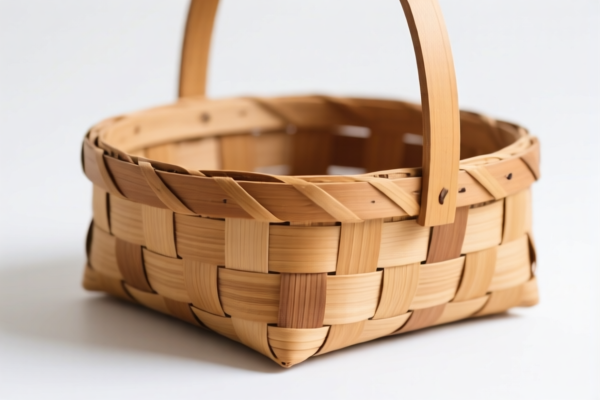
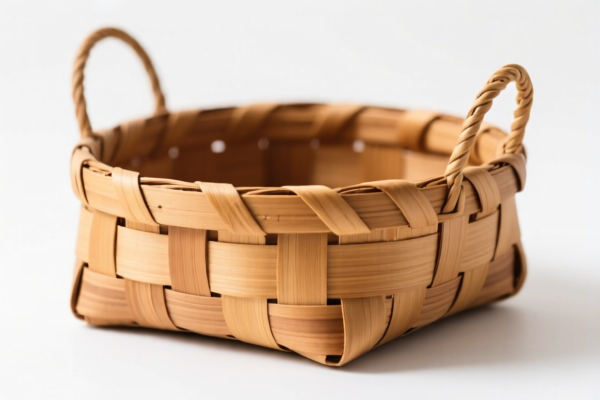
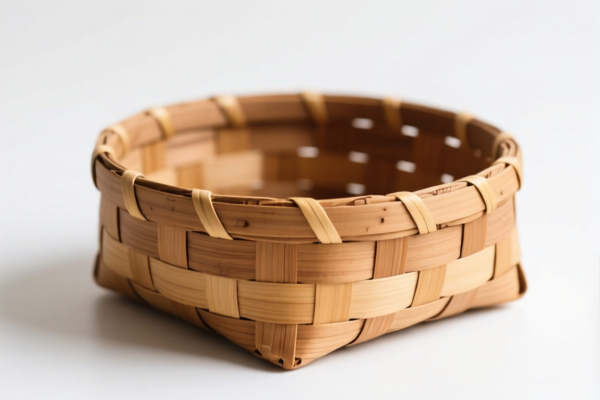
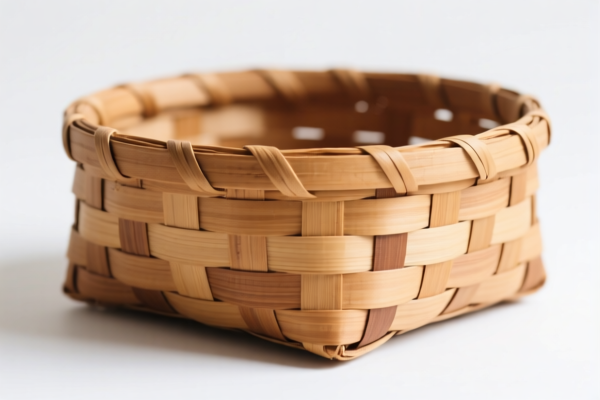
AI Analysis
🧺 Handwoven Wooden Basket (Wickerwork & Willow Products)
🌐 HS Code Reference & Customs Clearance Guide | 2026 Latest Tariff Analysis | Professional Clearance Strategy
📌 1. Product Definition & Classification: Do You Truly Understand "Handwoven Wooden Baskets"?
Handwoven wooden baskets, often referred to as wickerwork or willowware, are versatile containers crafted directly from plaiting materials. In international trade, they are strictly categorized by their manufacturing method and material composition.
Key Distinction: * Wickerwork/Willowware: Made directly to shape from plaiting materials (e.g., willow, wood strips) or made up from articles of heading 4601. * Material Specifics: The classification hinges on whether the product is made of willow/wood or other vegetable materials.
⚠️ Critical Classification Point:
- If the basket is made of willow or wood and is handwoven/wickerwork → It falls under 4602.19.35.00.
- If the basket is made of other vegetable materials (not willow/wood) and does not fit specific sub-categories → It falls under 4602.19.80.00.
📦 2. HS Code Classification Details (2026 Latest Tariff Authority)
| HS Code | Product Description | Application Scenario | Material/Feature |
|---|---|---|---|
4602.19.35.00 |
Basketwork, wickerwork... Of willow or wood: Wickerwork | Traditional willow baskets, wooden wicker storage, handcrafted wooden weaving | ✅ Willow/Wood |
4602.19.80.00 |
Basketwork, wickerwork... Other: Other: Other: Other | Baskets made of rattan, bamboo, reed, or other non-willow/wood vegetable fibers | ❌ Non-willow/wood |
🔍 Key Reminder:
- "Wickerwork" in HS Code terminology specifically refers to articles made of plaiting materials, often implying a structural flexibility and specific weaving technique.
- If the material is willow or wood strips, you MUST use4602.19.35.00.
- Using4602.19.80.00for willow/wood products is a classification error.
💰 3. 2026 Latest Tariff Rate Breakdown (Including Surcharge & Policy Add-ons)
✅ Applicable Country: United States (US)
✅ Country of Origin: China (CN)
✅ Effective Date: Post-November 2025 (Current Trade Policy)
🎯 1. 4602.19.35.00 —— Wickerwork of Willow or Wood
| Item | Content |
|---|---|
| Base Tariff Rate | 0% (ad valorem) |
| Section 301 Surcharge | +25.0% (Additional Tariff for Chinese Imports) |
| Total Tariff Rate | 25.0% |
| Tax Calculation | CIF Value × 25% |
| De Minimis Exemption | ❌ Not Applicable (Section 301 goods are generally excluded from de minimis relief) |
| Legal Basis Path | HTSUS:4602.19.35.00 → Section 301 Footnote |
📌 Explanation:
- The Base Tariff for wickerwork is often 0%, but the Section 301 Surcharge imposes an additional 25% on goods originating from China.
- Total Cost Impact: You must budget for a 25% duty on the CIF value.
- No Exemption: Unlike some consumer goods, basketry items from China do not benefit from the $800 de minimis exemption if they are subject to Section 301 measures.
🎯 2. 4602.19.80.00 —— Other Basketwork of Vegetable Materials
| Item | Content |
|---|---|
| Base Tariff Rate | 0% (ad valorem) |
| Section 301 Surcharge | 0.0% (No Additional Surcharge for this specific sub-category) |
| Total Tariff Rate | 0.0% |
| Tax Calculation | CIF Value × 0% = $0 |
| De Minimis Exemption | ✅ Applicable (If value <$800 and not restricted) |
| Legal Basis Path | HTSUS:4602.19.80.00 |
📌 Note:
- This category covers baskets made of rattan, bamboo, reed, straw, etc., provided they are not willow or wood.
- Total Duty is 0%, making it a highly favorable classification for importers, IF the material is correctly identified.
- Warning: Misclassifying a willow basket as "other vegetable material" to avoid the 25% tax is illegal and risks severe penalties.
🛠️ 4. Customs Clearance Practical Advice (Real-World Pitfall Guide)
✅ 1. Required Documentation Checklist (Non-negotiable)
| Document | Must Provide | Description |
|---|---|---|
| ✅ Product Specifications | ✔️ | Detailed material list (e.g., "100% Natural Willow," "Bamboo Rattan," "Poplar Wood Strips"). |
| ✅ Material Certification | ✔️ | Proof of origin of raw materials (e.g., ISPM 15 for wood packaging/materials if applicable). |
| ✅ Product Photos | ✔️ | Clear images showing weaving structure, labels, and any finishes (varnish, paint). |
| ✅ Commercial Invoice | ✔️ | Must state "Wickerwork Basket" or "Handwoven Basket" and specify material. |
| ✅ Packing List | ✔️ | Weight and dimensions per package. |
| ✅ Certificate of Origin | ✔️ | Required to prove CN origin for Section 301 assessment. |
✅ 2. Declaration Tips (Key Mantra)
🔥 "Material is King, Weaving is Key! Willow/Wood = 25%, Other = 0%!"
| Scenario | Correct Declaration | Incorrect Action |
|---|---|---|
| Willow Baskets | 4602.19.35.00 |
Misclassifying as "Rattan" → 25% Duty + Penalties |
| Bamboo/Rattan Baskets | 4602.19.80.00 |
Misclassifying as "Willow" → Unnecessary 25% Duty |
| Wooden Crates/Boxes | Not 4602 (Check Ch. 44) | Forcing into 4602 → Classification Error |
| Plastic Imitation Wicker | Not 4602 (Check Ch. 39) | Declaring as "Vegetable Material" → Smuggling Risk |
✅ 3. Special Case Handling
| Scenario | Handling Advice |
|---|---|
| Composite Materials | If a basket is 90% willow but has plastic handles, the primary material (willow) usually dictates classification under 4602.19.35.00. |
| Painted/Varnished Baskets | Finishes do not change the classification. Willowed baskets remain 4602.19.35.00. |
| Sets (Basket + Liner) | The basket is the essential character. Declare the basket's HS Code. |
| ISPM 15 Compliance | If wood is not heat-treated/fumigated, customs may detain or destroy the shipment. Ensure wood materials are compliant. |
🌍 5. Global Market Comparison (2026 Latest)
| Country/Region | Recommended HS Code | Tariff (China Origin) | Certification Requirements | Notes |
|---|---|---|---|---|
| 🇺🇸 USA | 4602.19.35.00 |
25% | None (General) | High duty due to Sec 301 |
| 🇺🇸 USA | 4602.19.80.00 |
0% | None (General) | Low duty if non-willow/wood |
| 🇪🇺 EU | 4602.19 |
0% | FSC Certification recommended | No Section 301 equivalent |
| 🇨🇳 China | 4602.19 |
5-10% | None | Import duties vary by exact subcode |
| 🇬🇧 UK | 4602.19 |
0-5% | None | Post-Brexit tariff schedule |
📌 Conclusion:
- The 25% tariff difference between willow/wood and other vegetable materials is significant.
- Accurate material identification is the single most important factor for cost optimization.
📌 6. Common Mistakes & Pitfall Guide (Lessons Learned)
❌ Mistake 1: Declaring all "wicker" baskets as 4602.19.80.00 to save 25%.
👉 Consequence: Customs audit reveals willow material → 25% back duty + 25% penalty + Legal Fees.
❌ Mistake 2: Ignoring ISPM 15 requirements for wooden materials.
👉 Consequence: Shipment rejected or destroyed at US Port.
❌ Mistake 3: Describing as "Home Decor" without material specs.
👉 Consequence: Customs requests additional info → Clearance Delay (1-2 weeks).
❌ Mistake 4: Confusing "Wickerwork" (Ch. 46) with "Wooden Boxes" (Ch. 44).
👉 Consequence: Wickerwork is plaited; Wooden Boxes are assembled. Different HS Codes and duties.
✅ Correct Practice:
"Handwoven Willow Basket, Natural Finish, 12 Inch, For Storage, Made in China"
HS Code:4602.19.35.00
Duty: 25%"Bamboo Rattan Storage Basket, With Cotton Liner, Made in China"
HS Code:4602.19.80.00
Duty: 0%
🎯 7. Conclusion: Precise Classification Saves Money!
🎯 Remember the Mantra:
🔹 "Willow/Wood = 25%, Other Veg. Mat. = 0%."
🔹 "Material Proof is Mandatory, Classification Error is Expensive!"
📌 Pro Tip:
If you are importing willow baskets, calculate the 25% duty into your pricing model.
If possible, consider sourcing rattan or bamboo baskets (4602.19.80.00) if the design allows, to save 25% in duties.
Always request a Material Certificate from your supplier to justify your HS Code.
📣 Immediate Action:
📞 Consult your customs broker with material samples.
📄 Apply for an Advance Ruling if your shipment volume is high.
🚀 Optimize your supply chain by balancing design aesthetics with tariff efficiency.
✨ Professional Clearance Starts with Precise Classification!
💼 Every 25% Saved is Pure Profit!
Customer Reviews
About HS Code Classification
The Harmonized System (HS) is an internationally standardized nomenclature developed by the World Customs Organization (WCO) to classify traded products. Over 200 countries use the HS system as the basis for customs tariffs, trade statistics, and import/export regulations.
Each HS code follows a hierarchical structure:
- Chapter (2 digits) — Broad category of goods (e.g., Chapter 84: Machinery and Mechanical Appliances)
- Heading (4 digits) — More specific grouping within the chapter
- Subheading (6 digits) — Internationally standardized breakdown, used by all WCO member countries
- National subdivisions (8-10 digits) — Country-specific extensions for further classification, such as US HTSUS 10-digit codes
Correct HS code classification is essential for smooth customs clearance, accurate duty payment, and compliance with trade regulations. Misclassification can lead to customs delays, overpayment of duties, or penalties.
When importing from CN to US, the applicable tariff rates may include:
- Most-Favored-Nation (MFN) rate — The standard duty rate applied to WTO members
- General rate — Applied to countries without trade agreements
- Trade remedy duties — Additional tariffs such as Section 301 (anti-dumping), Section 232 (national security), or countervailing duties
The information provided on this page is for reference purposes only. For official classification, please consult with your local customs authority or a licensed customs broker.