Hanging Feet
CN → US| HS Code | Tariff Rate | Origin | Destination | Doc |
|---|---|---|---|---|
| 9403896020 | 35.0% | CN | US | Official Doc |
| 9403608093 | 35.0% | CN | US | Official Doc |
| 9404902060 | 23.5% | CN | US | Official Doc |
| 9404901090 | 22.8% | CN | US | Official Doc |
| 9403608093 | 35.0% | CN | US | Official Doc |
Product Images


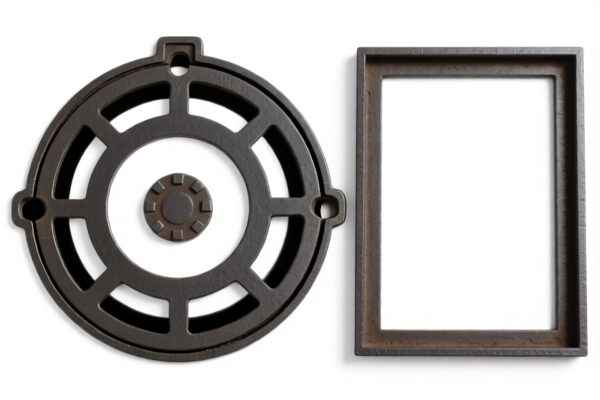
AI Analysis
🪵 Hanging Feet (Furniture Legs) – Complete HS Code Guide & Clearance Strategy
🌐 HS Code Reference & Customs Clearance Guide | 2026 Latest Tariff Analysis | Professional Entry Strategy
📌 I. Product Definition & Classification: Do You Truly Understand "Hanging Feet"?
"Hanging Feet" (also known as furniture legs, stand supports, or decorative legs) are structural components used to elevate and support furniture such as beds, tables, chairs, cabinets, and desks. In international trade, they can be classified under different HS codes depending on material composition, intended use, and degree of integration into the final product.
⚠️ Key Classification Factors:
- Material: Is it made of wood, metal, plastic, or other materials?
- Function: Is it a standalone part or an integrated component of a specific furniture type?
- Design: Is it generic or customized for a specific furniture line?
📦 II. HS Code Classification Details (2026 Latest Tariff Alignment)
| HS Code | Product Description | Application Scenario | Material & Features |
|---|---|---|---|
9403.89.60.20 |
Hanging feet as furniture parts, falling under "other furniture and parts" | Generic or unclassified furniture legs | Default match if material is unspecified |
9403.60.80.93 |
Wooden hanging feet, classified under "other wooden furniture and parts" | Clearly wooden furniture legs | Explicitly wood-based |
9404.90.20.60 |
Hanging feet as support components for beds, stools, etc. | Part of bedding or seating furniture | Classified under "other fillings/supports" |
9404.90.10.90 |
Hanging feet as furniture accessories for mattress support | Part of bed frames or similar furniture | Matches "mattress support and similar parts" |
🔍 Important Notes:
- If the material is not specified, the default classification is9403.89.60.20.
- Wooden legs are strictly categorized under9403.60.80.93.
- If the legs are part of beds or stools, they may fall under9404.90.20.60or9404.90.10.90depending on the specific function.
💰 III. 2026 Latest Tariff Rates Explained (Including Surcharges & Policy Add-ons)
✅ Applicable Country: United States (US)
✅ Country of Origin: China (CN)
✅ Effective Date: November 10, 2025 (including subsequent imports)
🎯 1. 9403.89.60.20 – Hanging Feet (Unspecified Material)
| Item | Content |
|---|---|
| Base Tariff | 0.0% (ad valorem) |
| Additional Tariff (Section 301) | +25.0% |
| Section 122 Tariff | +10.0% |
| Total Tariff Rate | 35.0% |
| Calculation Method | CIF Value × 35% |
| De Minimis Exemption | ❌ Not Applicable |
| Legal Basis Path | Section 301:9903.88.01 → Section 122:9903.88.01 → USITC:9403.89.60.20 |
📌 Explanation:
- The 25% additional tariff is imposed under Section 301 of the Trade Act of 1974, targeting Chinese-origin goods.
- The 10% Section 122 tariff is a special import duty for certain Chinese products.
- Total 35% is a high tariff, so accurate classification is essential.
🎯 2. 9403.60.80.93 – Wooden Hanging Feet
| Item | Content |
|---|---|
| Base Tariff | 0.0% |
| Additional Tariff (Section 301) | +25.0% |
| Section 122 Tariff | +10.0% |
| Total Tariff Rate | 35.0% |
| Calculation Method | CIF Value × 35% |
| De Minimis Exemption | ❌ Not Applicable |
| Legal Basis Path | Section 301:9903.88.01 → Section 122:9903.88.01 → USITC:9403.60.80.93 |
📌 Note:
- Even if the legs are clearly made of wood, the total tariff remains 35%.
- This applies to all wooden furniture parts imported from China.
🎯 3. 9404.90.20.60 – Hanging Feet for Beds/Stools
| Item | Content |
|---|---|
| Base Tariff | 6.0% |
| Additional Tariff (Section 301) | +7.5% |
| Section 122 Tariff | +10.0% |
| Total Tariff Rate | 23.5% |
| Calculation Method | CIF Value × 23.5% |
| De Minimis Exemption | ❌ Not Applicable |
| Legal Basis Path | Section 301:9903.88.01 → Section 122:9903.88.01 → USITC:9404.90.20.60 |
📌 Advantage:
- This classification offers a lower total tariff (23.5%) compared to others.
- Best for bed or stool support components.
🎯 4. 9404.90.10.90 – Hanging Feet for Mattress Support
| Item | Content |
|---|---|
| Base Tariff | 5.3% |
| Additional Tariff (Section 301) | +7.5% |
| Section 122 Tariff | +10.0% |
| Total Tariff Rate | 22.8% |
| Calculation Method | CIF Value × 22.8% |
| De Minimis Exemption | ❌ Not Applicable |
| Legal Basis Path | Section 301:9903.88.01 → Section 122:9903.88.01 → USITC:9404.90.10.90 |
📌 Best Option:
- This is the lowest total tariff (22.8%) among all classifications.
- Ideal for mattress support legs.
🛠️ IV. Customs Clearance Practical Advice (Avoid Pitfalls)
✅ 1. Document Checklist (Must-Haves)
| Document | Required? | Description |
|---|---|---|
| ✅ Product Specification Sheet | ✔️ | Includes dimensions, material, load capacity |
| ✅ Material Certificate | ✔️ | Confirms wood, metal, plastic, etc. |
| ✅ Product Photos | ✔️ | Clear images of legs, including labels |
| ✅ Commercial Invoice | ✔️ | Must specify "Hanging Feet" or "Furniture Legs" |
| ✅ Packing List | ✔️ | Shows packaging details and quantity |
| ✅ Certificate of Origin (CO) | ✔️ | If applicable, for potential tariff relief |
✅ 2. Declaration Tips (Golden Rules)
🔥 "Material First, Function Second, Name Accurate!"
| Scenario | Correct Declaration | Wrong Practice |
|---|---|---|
| Unspecified Material | 9403.89.60.20 |
Avoid generic "Furniture Parts" |
| Wooden Legs | 9403.60.80.93 |
Do not use 9403.89.60.20 |
| Bed/Stool Legs | 9404.90.20.60 |
Better tariff rate |
| Mattress Support Legs | 9404.90.10.90 |
Lowest tariff available |
✅ 3. Special Cases Handling
| Scenario | Recommendation |
|---|---|
| Custom-Made Legs | Provide design drawings to confirm classification |
| Mixed Material Legs | Declare based on primary material |
| Bulk Orders | Ensure consistent HS Code across all units |
| OEM/Contract Manufacturing | Confirm ownership and origin with supplier |
🌍 V. Global Market Comparison (2026 Latest)
| Country/Region | Recommended HS Code | Tariff | Certification | Notes |
|---|---|---|---|---|
| 🇺🇸 USA | 9404.90.10.90 |
22.8% (China origin) | None specific | Lowest tariff for mattress support legs |
| 🇨🇳 China | 9403.60.80.93 |
5% | CCC | No additional tariffs |
| 🇪🇺 EU | 9403.60.80.93 |
0% (if CE certified) | CE + RoHS | No extra duties |
| 🇦🇺 Australia | 9403.60.80.93 |
5% | RCM | No additional tariffs |
| 🇯🇵 Japan | 9403.60.80.93 |
0% | PSE | No additional tariffs |
📌 Conclusion:
- USA has the highest tariffs for Chinese-origin hanging feet.
- Best strategy: Use9404.90.10.90for lowest tariff (22.8%).
- Consider shifting origin to Vietnam, Mexico, or Thailand for tariff exemptions.
📌 VI. Common Mistakes & Avoidance Guide (Lessons Learned)
❌ Mistake 1: Declaring wooden legs as generic "furniture parts"
👉 Consequence: 35% tariff instead of 22.8% → Overpayment!
❌ Mistake 2: Failing to specify material in documentation
👉 Consequence: Customs may default to 9403.89.60.20 → 35% tariff
❌ Mistake 3: Using incorrect HS code for bed/stool legs
👉 Consequence: 35% instead of 23.5% → 3% extra cost
✅ Correct Practice:
"Wooden Hanging Feet, 30cm Length, Load Capacity 50kg, Model XYZ, Certified for US Import"
🎯 VII. Conclusion: Accurate Classification Saves Money!
🎯 Remember the Rules:
🔹 "Material First, Function Second, Name Accurate!"
🔹 "Use9404.90.10.90for 22.8% tariff – the lowest!"
🔹 "Wrong code = 35% tariff, right code = 22.8% savings!"
📌 Pro Tip:
If your hanging feet are originating from Vietnam, Mexico, Thailand, or Malaysia, you may qualify for IEEPA exemptions, reducing tariffs to 0–5%.
Recommend applying for Advance Ruling before shipment.
📣 Take Action Now:
📞 Contact a licensed customs broker + provide product specs + apply for HS Code Advance Ruling
🚀 Ensure smooth clearance, cost efficiency, and profit maximization!
✨ Professional customs clearance starts with accurate classification!
💼 Every dollar counts – calculate wisely!
Customer Reviews
About HS Code Classification
The Harmonized System (HS) is an internationally standardized nomenclature developed by the World Customs Organization (WCO) to classify traded products. Over 200 countries use the HS system as the basis for customs tariffs, trade statistics, and import/export regulations.
Each HS code follows a hierarchical structure:
- Chapter (2 digits) — Broad category of goods (e.g., Chapter 84: Machinery and Mechanical Appliances)
- Heading (4 digits) — More specific grouping within the chapter
- Subheading (6 digits) — Internationally standardized breakdown, used by all WCO member countries
- National subdivisions (8-10 digits) — Country-specific extensions for further classification, such as US HTSUS 10-digit codes
Correct HS code classification is essential for smooth customs clearance, accurate duty payment, and compliance with trade regulations. Misclassification can lead to customs delays, overpayment of duties, or penalties.
When importing from CN to US, the applicable tariff rates may include:
- Most-Favored-Nation (MFN) rate — The standard duty rate applied to WTO members
- General rate — Applied to countries without trade agreements
- Trade remedy duties — Additional tariffs such as Section 301 (anti-dumping), Section 232 (national security), or countervailing duties
The information provided on this page is for reference purposes only. For official classification, please consult with your local customs authority or a licensed customs broker.