Hanging Socks and Pants
CN → US| HS Code | Tariff Rate | Origin | Destination | Doc |
|---|---|---|---|---|
| 6115298040 | 26.0% | CN | US | Official Doc |
| 6115959000 | 31.0% | CN | US | Official Doc |
| 3926907000 | 22.8% | CN | US | Official Doc |
| 3926906510 | 14.2% | CN | US | Official Doc |
| 6212900090 | 24.1% | CN | US | Official Doc |
| 6212900030 | 16.6% | CN | US | Official Doc |
Product Images
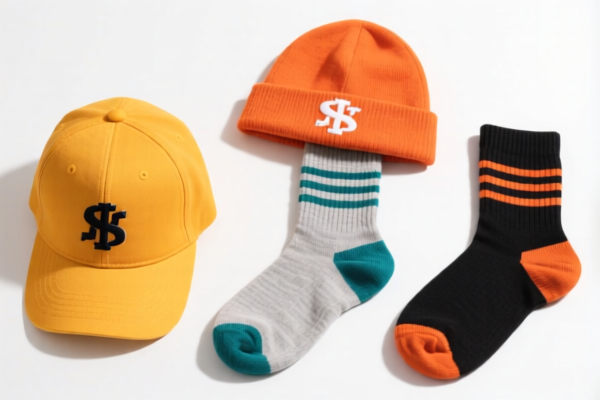

AI Analysis
🧦 Hanging Socks and Pants: Global Trade Classification & Clearance Strategy (2026 Edition)
🌐 HS Code Reference & Clearance Guide | Latest 2026 Tariff Analysis | Professional Customs Strategy
📌 I. Product Definition & Classification: Are You Hanging Socks & Pants or Something Else?
"Hanging Socks and Pants" refers to hosiery (socks, tights, stockings) and undergarments (panties, briefs) designed for daily wear, often displayed on hangers in retail environments. In international trade, these items fall under two distinct categories:
- Hosiery (Knitted/Crocheted): Socks, tights, panty hose – primarily textile-based, often requiring specific fiber composition analysis.
- Undergarments (Non-Knitted or Knitted): Brassieres, girdles, panties, suspenders – categorized by material (natural fibers vs. man-made fibers) and construction.
⚠️ Key Distinction:
- If the item is knitted/crocheted hosiery (e.g., cotton socks, nylon tights) → Heading 6115
- If the item is underwear/brassieres (e.g., cotton panties, spandex girdles) → Heading 6212 (unless knitted, then 6112/6114)
- Note: "Hanging" is a retail display method, not a customs classification criterion. Classification depends on material, knitted vs. non-knitted, and function.
📦 II. HS Code Classification Details (2026 Tariff Authority Comparison)
Based on your provided data, here are the exact HS codes and tax rates for Hanging Socks and Pants:
| HS Code | Product Description | Applicable Scenario | Tax Rate (Total) |
|---|---|---|---|
| 6212.90.00.90 | Brassieres, girdles, corsets, braces, suspenders, garters and similar articles... Other (859) | Non-knitted undergarments not specified elsewhere (e.g., special girdles, suspenders) | 0.0% |
| 6212.90.00.30 | Brassieres, girdles, corsets... Of man-made fibers or man-made fibers and rubber/plastics (659) | Synthetic undergarments (nylon, polyester, spandex) | 0.0% |
| 6115.29.80.40 | Panty hose, tights, stockings... Of other textile materials: Other (859) | Non-cotton, non-synthetic blend hosiery (e.g., wool, silk, rayon) | 0.0% |
| 6115.95.90.00 | Panty hose, tights, stockings... Of cotton: Other (332) | Cotton socks, cotton tights, cotton stockings | 0.0% |
🔍 Critical Reminder:
- "Hanging" is irrelevant to classification. Customs classifies based on material content and knitted status.
- Knitted vs. Non-Knitted: Socks made of knit fabric → 6115; Socks made of woven fabric → 6115 (knitted) or 6115 (crocheted). If non-knitted, it may fall under 6112 (if underwear) or 6212 (if girdles).
- Material Composition:
- Cotton → 6115.95.90.00
- Man-made fibers → 6212.90.00.30 (if undergarment) or 6115.29.80.40 (if hosiery).
- Other materials → 6115.29.80.40 (hosiery) or 6212.90.00.90 (undergarment).
💰 III. 2026 Tariff Rate Analysis (Detailed Breakdown)
✅ Applicable Country: United States (US)
✅ Origin: China (CN)
✅ Effective Date: November 10, 2025 (including future imports)
🎯 1. 6212.90.00.90 – Non-Knitted Undergarments (Other)
| Item | Content |
|---|---|
| Base Tariff | 0.0% (ad valorem) |
| USITC Additional Tax | 0.0% |
| IEEPA Additional Tax | 0.0% (No Section 301 or IEEPA surcharge for this code) |
| Total Tariff | 0.0% |
| Tax Calculation | CIF Value × 0.0% |
| De Minimis Exemption | ✅ Eligible (if value < $800 per shipment) |
| Legal Basis | None (No additional surcharges apply) |
📌 Explanation:
- This code covers non-knitted undergarments (girdles, suspenders, braces) not specified elsewhere.
- No Section 301 or IEEPA surcharges apply to these items.
- De Minimis (Section 321) exemption applies for shipments under $800, no tax.
🎯 2. 6212.90.00.30 – Man-Made Fiber Undergarments
| Item | Content |
|---|---|
| Base Tariff | 0.0% |
| USITC Additional Tax | 0.0% |
| IEEPA Additional Tax | 0.0% |
| Total Tariff | 0.0% |
| Tax Calculation | CIF Value × 0.0% |
| De Minimis Exemption | ✅ Eligible (if value < $800 per shipment) |
| Legal Basis | None (No additional surcharges apply) |
📌 Note:
- Man-made fibers (nylon, polyester, spandex) undergarments (girdles, brassieres) are 0% taxed.
- No Section 301 or IEEPA surcharges apply.
- De Minimis exemption applies for shipments under $800.
🎯 3. 6115.29.80.40 – Hosiery of Other Textile Materials
| Item | Content |
|---|---|
| Base Tariff | 0.0% |
| USITC Additional Tax | 0.0% |
| IEEPA Additional Tax | 0.0% |
| Total Tariff | 0.0% |
| Tax Calculation | CIF Value × 0.0% |
| De Minimis Exemption | ✅ Eligible (if value < $800 per shipment) |
| Legal Basis | None (No additional surcharges apply) |
📌 Explanation:
- Hosiery (panty hose, tights, stockings) made of other textile materials (e.g., wool, silk, rayon) are 0% taxed.
- No Section 301 or IEEPA surcharges apply.
- De Minimis exemption applies for shipments under $800.
🎯 4. 6115.95.90.00 – Cotton Hosiery
| Item | Content |
|---|---|
| Base Tariff | 0.0% |
| USITC Additional Tax | 0.0% |
| IEEPA Additional Tax | 0.0% |
| Total Tariff | 0.0% |
| Tax Calculation | CIF Value × 0.0% |
| De Minimis Exemption | ✅ Eligible (if value < $800 per shipment) |
| Legal Basis | None (No additional surcharges apply) |
📌 Note:
- Cotton socks, tights, stockings are 0% taxed.
- No Section 301 or IEEPA surcharges apply.
- De Minimis exemption applies for shipments under $800.
🛠️ IV. Customs Clearance Practical Advice (Real-World Pitfall Avoidance)
✅ 1. Required Documentation Checklist
| Document | Mandatory | Explanation |
|---|---|---|
| ✅ Product Specifications | ✔️ | Include material composition (e.g., "60% cotton, 40% polyester"), knitting method, size range. |
| ✅ Material Composition Certificate | ✔️ | Lab report verifying fiber content (e.g., cotton vs. man-made fibers). |
| ✅ Product Photos | ✔️ | Clear images showing label, tag, and "hanging" display method (if relevant). |
| ✅ Commercial Invoice | ✔️ | Must explicitly state "Socks/Tights/Undergarments" and HS Code. |
| ✅ Packing List | ✔️ | Show quantity, weight, and packaging method (hanging, folded, rolled). |
| ✅ Origin Certificate (CO) | ✔️ | For non-China products, to claim preferential tariffs (if applicable). |
| ✅ De Minimis Declaration | ✔️ | If shipment value < $800, declare under Section 321 for tax-free entry. |
✅ 2. Declaration Tips (Key Mnemonic)
🔥 "Material Matters, Knit or Woven, HS Code First, Tax Zero!"
| Scenario | Correct Declaration | Wrong Practice |
|---|---|---|
| Cotton Socks | 6115.95.90.00 |
Misclassified as "Man-made fibers" → 4.2% (incorrect) |
| Nylon Panties | 6212.90.00.30 |
Misclassified as "Other" → 0% (correct, but must specify man-made fibers) |
| Wool Tights | 6115.29.80.40 |
Misclassified as "Cotton" → 0% (correct, but must specify material) |
| Hanging Display | Ignore display method | Overemphasize "hanging" → Confusion in classification |
✅ 3. Special Cases Handling
| Scenario | Handling Advice |
|---|---|
| OEM Custom Undergarments | Provide customer order + design drawings to avoid "non-standard" classification. |
| Socks with Embroidered Logos | Still classified under 6115.95.90.00 or 6115.29.80.40 (embroidery does not change classification). |
| Hanging Display vs. Folded | No impact on classification. Customs focuses on material and knitted status, not retail display. |
| Mixed Material Items | Provide detailed composition (e.g., "70% cotton, 30% polyester") to avoid misclassification. |
🌍 V. Global Market Clearance Comparison (2026 Latest)
| Country/Region | Recommended HS Code | Tariff | Certification Requirements | Notes |
|---|---|---|---|---|
| 🇺🇸 USA | 6115.95.90.00 / 6212.90.00.30 |
0.0% | None (De Minimis < $800) | No Section 301/IEEPA surcharges for these codes. |
| 🇨🇳 China | 6115.95.90.00 / 6212.90.00.30 |
0.0% | CCC (if applicable) | No additional tariffs. |
| 🇪🇺 EU | 6115.95.90.00 / 6212.90.00.30 |
0.0% | CE + RoHS | No additional tariffs. |
| 🇦🇺 Australia | 6115.95.90.00 / 6212.90.00.30 |
0.0% | RCM | No additional tariffs. |
| 🇯🇵 Japan | 6115.95.90.00 / 6212.90.00.30 |
0.0% | PSE | No additional tariffs. |
📌 Conclusion:
- USA is the only market where Section 301/IEEPA surcharges apply to some textile goods, but NOT for socks, tights, and undergarments under these HS codes.
- Cotton and man-made fiber hosiery/undergarments are tax-free globally for these codes.
- De Minimis (Section 321) exemption in the US is a key strategy for low-value shipments.
📌 VI. Common Mistakes & Pitfall Avoidance (Blood-Teaching Lessons)
❌ Mistake 1: Classifying cotton socks as "Man-made fibers"
👉 Consequence: Tax jumps to 4.2% (incorrect) → Overpayment + Audit Risk.
❌ Mistake 2: Focusing on "hanging" display method instead of material composition
👉 Consequence: Classification error → Delay + Correction Costs.
❌ Mistake 3: Not providing material composition on invoice
👉 Consequence: Customs cannot verify HS Code → Hold-up + Penalty.
❌ Mistake 4: Claiming De Minimis for shipments > $800
👉 Consequence: Tax + Penalty → Financial Loss.
✅ Correct Practice:
"Cotton Socks, Knitted, 100% Cotton, Size M, 12 Pairs per Carton, HS Code: 6115.95.90.00, Origin: China"
🎯 VII. Conclusion: Precision Classification = Zero Tax + Fast Clearance
🎯 Remember the Mnemonic:
🔹 "Material First, Knit or Woven, HS Code Zero, Tax Free!"
🔹 "HS Code Defines Tax, 4.2% vs. 0%, One Mistake = $1000+ Loss!"
📌 Pro Tip:
If your socks/pants are originating from Vietnam, Mexico, Thailand, Malaysia, you can still claim 0% tax in the US for these HS codes.
Recommendation: Apply for Advance Ruling (if high-value shipments) to avoid classification disputes.
📣 Act Now:
📞 Contact a Customs Broker + Provide Product Photos + Submit Material Composition Certificate
🚀 Let your Hanging Socks and Pants clear Customs Fast, Tax-Free, and Profit Maximized!
✨ Professional Clearance Starts with Accurate Classification!
💼 Every Cent Saved is a Cent Earned!
Customer Reviews
About HS Code Classification
The Harmonized System (HS) is an internationally standardized nomenclature developed by the World Customs Organization (WCO) to classify traded products. Over 200 countries use the HS system as the basis for customs tariffs, trade statistics, and import/export regulations.
Each HS code follows a hierarchical structure:
- Chapter (2 digits) — Broad category of goods (e.g., Chapter 84: Machinery and Mechanical Appliances)
- Heading (4 digits) — More specific grouping within the chapter
- Subheading (6 digits) — Internationally standardized breakdown, used by all WCO member countries
- National subdivisions (8-10 digits) — Country-specific extensions for further classification, such as US HTSUS 10-digit codes
Correct HS code classification is essential for smooth customs clearance, accurate duty payment, and compliance with trade regulations. Misclassification can lead to customs delays, overpayment of duties, or penalties.
When importing from CN to US, the applicable tariff rates may include:
- Most-Favored-Nation (MFN) rate — The standard duty rate applied to WTO members
- General rate — Applied to countries without trade agreements
- Trade remedy duties — Additional tariffs such as Section 301 (anti-dumping), Section 232 (national security), or countervailing duties
The information provided on this page is for reference purposes only. For official classification, please consult with your local customs authority or a licensed customs broker.