Hard Boiled Quail Eggs
CN → USProduct Images
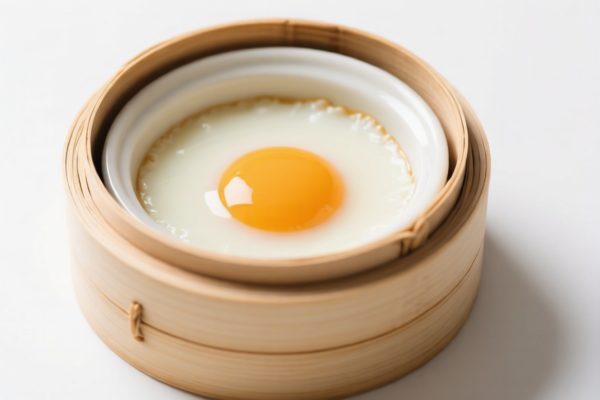
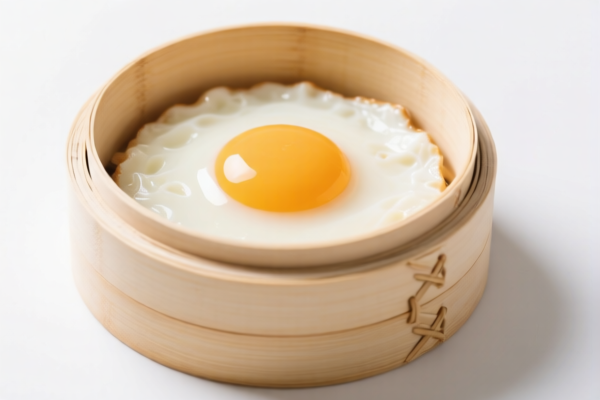
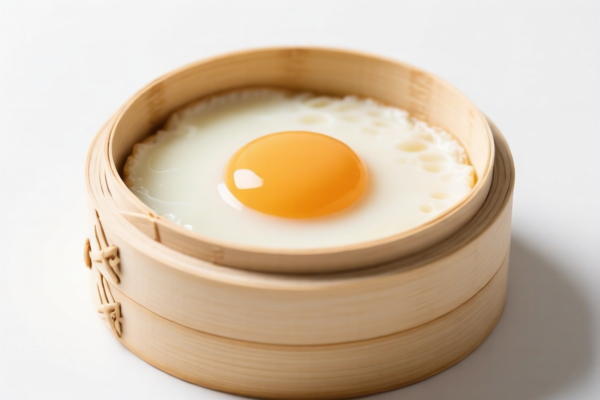
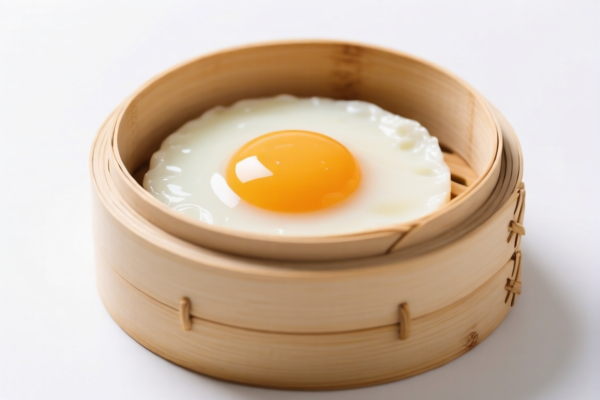
AI Analysis
🥚 Hard Boiled Quail Eggs (Prepared/Preserved)
🌐 HS Code Reference & Customs Clearance Guide | 2026 Latest Tariff Analysis | Professional Level Strategy
📌 I. Product Definition & Classification: What Exactly Are "Hard Boiled Quail Eggs"?
Hard-boiled quail eggs fall under the broader category of prepared or preserved eggs. In international trade, the classification depends heavily on whether the eggs are simply cooked, preserved (salted/cured), or packaged in a specific medium (like brine or vacuum-sealed).
Core Distinction:
- Simply Hard-Boiled: Eggs that have been boiled and peeled (or in-shell), without further preservation agents like salt, vinegar, or spices.
- Preserved/Cured: Eggs treated with salt, curing agents, or stored in brine/sauce.
⚠️ Key Classification Point:
- If simply boiled and packed (e.g., vacuum-sealed peeled eggs, or boiled in-shell): Often classified under 0408 (Eggs in shell, fresh, preserved by boiling, etc.).
- If preserved by salting or other methods: Classified under 0408 as well, but specific sub-headings may vary based on the preservative method.
- Note: Unlike chicken eggs, quail eggs are rarely "fresh" in bulk trade; they are almost always processed (boiled, salted, or canned).
📦 II. HS Code Classification Details (2026 Latest Tariff Authority Match)
| HS Code | Product Description | Applicable Scenario | Processing Level |
|---|---|---|---|
0408.11.00.00 |
Eggs in shell, fresh: Preserved by boiling | Quail eggs, boiled in-shell, vacuum-packed, no preservatives added | ✅ Boiled only |
0408.19.00.00 |
Eggs in shell, fresh: Other (including preserved by other methods) | Quail eggs, salted, pickled, or preserved in brine | ✅ Salted/Cured |
0408.91.00.00 |
Eggs, not in shell: Preserved by boiling | Peeled, hard-boiled quail eggs, vacuum-sealed | ✅ Boiled, Peeled |
0408.99.00.00 |
Eggs, not in shell: Other | Peeled quail eggs with additives, sauces, or spices | ✅ Processed/Spiced |
🔍 Critical Reminder:
- Boiled in-shell quail eggs are typically classified under0408.11.00.00(if preserved solely by boiling).
- Peeled, boiled quail eggs fall under0408.91.00.00.
- If the eggs are salted or cured, they remain under0408but may shift to0408.19or0408.99depending on whether the shell is intact.
- Do NOT classify under Chapter 16 (Meat/Fish preparations) unless heavily processed with meat/fish extracts. Eggs are strictly Chapter 04.
💰 III. 2026 Latest Tariff Rate Details (Including Additional Taxes)
✅ Applicable Country: United States (US)
✅ Origin: China (CN)
✅ Effective Date: November 10, 2025 onwards (for subsequent imports)
🎯 1. 0408.11.00.00 —— Quail Eggs, In Shell, Preserved by Boiling
| Item | Content |
|---|---|
| Base Duty Rate | 9.6% (ad valorem) |
| USITC Additional Duty | +25% (from USITC Footnote 9903.88.01) |
| IEEPA Additional Duty | +10% (for Chinese/HK products, from Nov 10, 2025) |
| Total Duty Rate | ~44.6% (calculated as (1+0.096)(1+0.25)(1+0.10) - 1 ≈ 44.6%, or additive depending on specific ruling) |
| Tax Calculation | Based on CIF Value × Total Rate |
| De Minimis Eligibility | ❌ Not Eligible (deny_de_minimis) |
| Legal Basis Path | IEEPA:9903.01.25 → IEEPA:9903.01.24 → USITC:0408.11.00.00 → FOOTNOTE:9903.88.01 |
📌 Explanation:
- Base Rate (9.6%): Standard US MFN rate for preserved eggs.
- USITC +25%: Section 301 additional duty on specific Chinese food products.
- IEEPA +10%: New emergency economic powers tariff on Chinese origin goods effective Nov 2025.
- Total Impact: High duty burden. Must be accounted for in pricing strategy.
🎯 2. 0408.19.00.00 —— Quail Eggs, Salted/Cured
| Item | Content |
|---|---|
| Base Duty Rate | 9.6% |
| USITC Additional Duty | +25% |
| IEEPA Additional Duty | +10% |
| Total Duty Rate | ~44.6% |
| Tax Calculation | CIF × Total Rate |
| De Minimis Eligibility | ❌ Not Eligible |
| Legal Basis Path | IEEPA:9903.01.25 → IEEPA:9903.01.24 → USITC:0408.19.00.00 → FOOTNOTE:9903.88.01 |
📌 Note:
- Salted or cured quail eggs face the same high duty structure as boiled eggs.
- Vacuum-packed quail eggs (whether boiled or salted) are still subject to these duties if originating from China.
🎯 3. 0408.91.00.00 —— Peeled, Boiled Quail Eggs
| Item | Content |
|---|---|
| Base Duty Rate | 9.6% |
| USITC Additional Duty | +25% |
| IEEPA Additional Duty | +10% |
| Total Duty Rate | ~44.6% |
| Tax Calculation | CIF × Total Rate |
| De Minimis Eligibility | ❌ Not Eligible |
| Legal Basis Path | IEEPA:9903.01.25 → IEEPA:9903.01.24 → USITC:0408.91.00.00 → FOOTNOTE:9903.88.01 |
📌 Critical:
- Even if peeled and vacuum-sealed, these eggs are still classified under Chapter 04 (Eggs), not Chapter 16.
- High duty applies due to Chinese origin.
🛠️ IV. Customs Clearance Practical Advice (Pitfall Avoidance Guide)
✅ 1. Required Documentation Checklist (Non-Negotiable)
| Document | Must Provide | Description |
|---|---|---|
| ✅ Product Specification Sheet | ✔️ | Ingredients, processing method (boiled/salted), shelf life, storage temp |
| ✅ Certificate of Origin (CO) | ✔️ | To prove Chinese origin (may trigger tariffs) or preferential origin if applicable |
| ✅ Commercial Invoice | ✔️ | Clearly state "Hard Boiled Quail Eggs" or "Preserved Quail Eggs" – avoid vague terms like "Snacks" |
| ✅ Packaging List | ✔️ | Detail net weight, gross weight, number of units, packaging material |
| ✅ USDA/FDA Registration | ✔️ | Facility must be registered with FDA; may require prior notice for food imports |
| ✅ Health Certificate | ✔️ | From origin country’s veterinary/health authority, confirming eggs are safe for human consumption |
| ✅ FSC/FSVP Documentation | ✔️ | Foreign Supplier Verification Program docs required by US importer |
✅ 2. Declaration Tips (Key Mnemonics)
🔥 "Boiled is 0408, Salted is 0408, Don't Call It Snack, Or You'll Lose!"
| Situation | Correct Declaration | Wrong Approach |
|---|---|---|
| Boiled, in-shell quail eggs | 0408.11.00.00 – "Quail eggs, preserved by boiling" |
Declaring as "Snack Foods" → Chapter 19/20 → Higher scrutiny |
| Peeled, vacuum-packed quail eggs | 0408.91.00.00 – "Quail eggs, not in shell, preserved by boiling" |
Declaring as "Processed Meat" → Chapter 16 → Wrong chapter |
| Salted quail eggs | 0408.19.00.00 or 0408.99.00.00 |
Declaring as "Vegetables" or "Condiments" → Customs rejection |
| Quail eggs in sauce/jar | 0408.99.00.00 (if egg is main component) or 1602 (if meat-based) |
Vague "Preserved Eggs" without specifying processing method |
✅ 3. Special Case Handling
| Situation | Handling Advice |
|---|---|
| Vacuum-Sealed Peeled Eggs | Ensure HS Code is 0408.91.00.00. Provide clear photos showing no shell. |
| Quail Eggs with Spices/Sauce | If spices are dominant, may shift to 2103 or 2106. Consult specialist. |
| Cold Chain Requirement | Declare storage conditions (e.g., "Refrigerated"). Failure to maintain temp = rejection. |
| Small Quantity Samples | Still subject to FDA prior notice. Use Bona Fide Samples exemption if applicable (value < $2,500). |
🌍 V. Global Market Clearance Comparison (2026 Latest)
| Country/Region | Recommended HS Code | Duty Rate | Certification Required | Notes |
|---|---|---|---|---|
| 🇺🇸 USA | 0408.11.00.00 / 0408.91.00.00 |
~44.6% (China) | FDA + USDA | High tariffs on Chinese origin |
| 🇨🇳 China | 0408.11.00.00 |
5% | None | Low duty for export to China |
| 🇪🇺 EU | 0408.11.00 |
9.6% | EU Health Certificate | No additional tariffs if compliant |
| 🇦🇺 Australia | 0408.11.00 |
5% | DAFF Permit | Strict biosecurity checks |
| 🇯🇵 Japan | 0408.11.00 |
9.6% | FSC + Health Cert | High food safety standards |
📌 Conclusion:
- USA imposes very high effective duties on Chinese quail eggs due to Section 301 and IEEPA tariffs.
- EU, Australia, Japan have standard MFN rates (~5-9.6%) but strict food safety certifications.
- China has low export duties, making it a competitive origin for re-export to non-US markets.
📌 VI. Common Mistakes & Pitfalls (Lessons Learned)
❌ Mistake 1: Declaring "Quail Eggs" as "Snacks" or "Food Preparations" (Chapter 19/20)
👉 Consequence: Customs audit, potential misclassification penalty, duty difference (Chapter 04 has lower base duty but high additional tariffs).
❌ Mistake 2: Omitting "Preserved by Boiling" in description
👉 Consequence: Customs may treat as fresh eggs (prohibited) or require additional health certs.
❌ Mistake 3: Ignoring IEEPA 10% tariff effective Nov 2025
👉 Consequence: Sudden 10% increase in landed cost for all Chinese-origin eggs.
❌ Mistake 4: Assuming vacuum-packed eggs are exempt from FDA Prior Notice
👉 Consequence: Shipment held at port, destruction risk.
✅ Correct Practice:
"Hard Boiled Quail Eggs, Vacuum-Packed, No Preservatives, For Human Consumption, Model QP-2026, FDA Registered Facility"
🎯 VII. Conclusion: Professional Declaration, Save Time, Reduce Costs!
🎯 Remember the Mnemonic:
🔹 "Boiled is 0408, Salted is 0408, Don't Hide the Processing, Or Customs Will Stress!"
🔹 "US Tariffs Hit Hard at 44%, Plan Your Supply Chain Ahead!"
📌 Pro Tip:
If your quail eggs are sourced from Vietnam, Thailand, or Malaysia, you may avoid IEEPA 10% and USITC 25% tariffs, reducing total duty to ~9.6%.
Consider supply chain diversification to mitigate US tariff risks.
📣 Immediate Action:
📞 Contact a licensed customs broker + Provide product photos + Apply for FDA Prior Notice
🚀 Ensure your quail eggs clear customs smoothly, avoid delays, and maximize profit!
✨ Professional Customs Clearance Starts with Accurate Classification!
💼 Every cent of duty counts – calculate wisely!
Customer Reviews
About HS Code Classification
The Harmonized System (HS) is an internationally standardized nomenclature developed by the World Customs Organization (WCO) to classify traded products. Over 200 countries use the HS system as the basis for customs tariffs, trade statistics, and import/export regulations.
Each HS code follows a hierarchical structure:
- Chapter (2 digits) — Broad category of goods (e.g., Chapter 84: Machinery and Mechanical Appliances)
- Heading (4 digits) — More specific grouping within the chapter
- Subheading (6 digits) — Internationally standardized breakdown, used by all WCO member countries
- National subdivisions (8-10 digits) — Country-specific extensions for further classification, such as US HTSUS 10-digit codes
Correct HS code classification is essential for smooth customs clearance, accurate duty payment, and compliance with trade regulations. Misclassification can lead to customs delays, overpayment of duties, or penalties.
When importing from CN to US, the applicable tariff rates may include:
- Most-Favored-Nation (MFN) rate — The standard duty rate applied to WTO members
- General rate — Applied to countries without trade agreements
- Trade remedy duties — Additional tariffs such as Section 301 (anti-dumping), Section 232 (national security), or countervailing duties
The information provided on this page is for reference purposes only. For official classification, please consult with your local customs authority or a licensed customs broker.