Hard Disk Drive
CN → US| HS Code | Tariff Rate | Origin | Destination | Doc |
|---|---|---|---|---|
| 8542390090 | 60.0% | CN | US | Official Doc |
| 8542320071 | 60.0% | CN | US | Official Doc |
| 8471705065 | 35.0% | CN | US | Official Doc |
| 8471704065 | 35.0% | CN | US | Official Doc |
| 8471709000 | 35.0% | CN | US | Official Doc |
Product Images
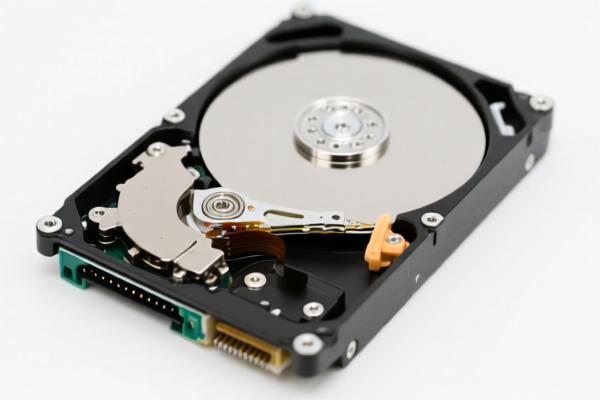
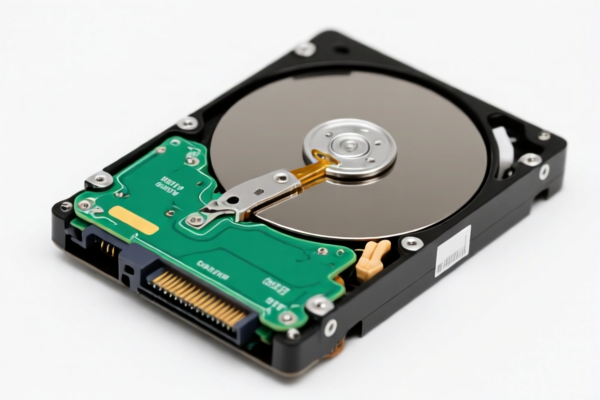
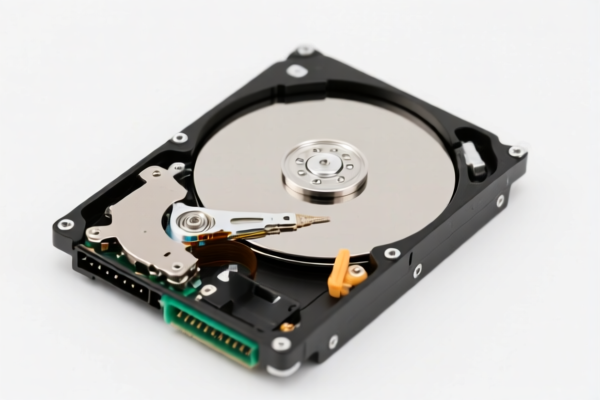
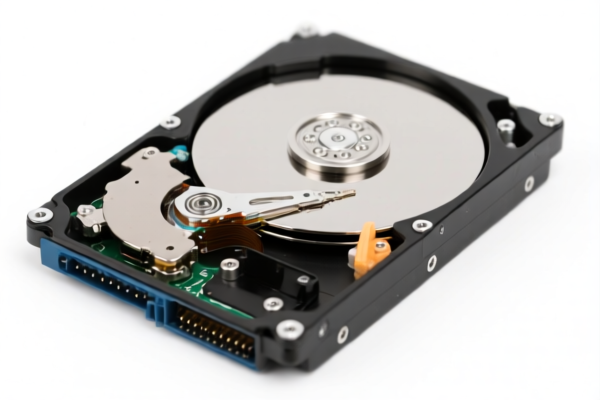
AI Analysis
🧠 Hard Disk Drives (HDD) — The Iron Memory of Computing
🌐 HS Code Reference & Customs Clearance Guide | 2026 Latest Tariff Analysis | Professional Clearance Strategy
📌 I. Product Definition & Classification: What Exactly is a "Hard Disk Drive"?
Hard Disk Drives (HDDs) are non-volatile storage devices that use magnetic storage to store and retrieve digital information using one or more rigid rapidly rotating disks (platters) coated with magnetic material. In international trade, the classification hinges heavily on physical form, integration level, and application logic.
Key Distinction in Classification Logic:
HDDs can be classified either as:
1. Complete Storage Units (Parts of Automatic Data Processing Machines): The standard "box" form factor (3.5", 2.5", etc.) that connects directly to a computer system.
2. Electronic Storage Modules (Integrated Circuits/Components): In some strict interpretations, if the focus is on the semiconductor controller or the storage chip technology, they may be misclassified under electronic components (though this is risky and less common for traditional HDDs).
⚠️ Critical Classification Pitfall:
- If it is a complete drive unit with casing, interface, and motor → Group 84 (Machinery).
- If mistakenly classified as a "semiconductor device" → Group 85 (Electrical Machinery).
Note: The data provided suggests a dual-path analysis, covering both the mechanical device aspect and the electronic storage aspect.
📦 II. HS Code Classification Details (2026 Authoritative对照)
| HS Code | Product Description | Application Scenario | Classification Logic |
|---|---|---|---|
8471.70.50.65 |
Magnetic Disk Drives (Directly Corresponding) | Standard desktop/server HDDs, form factor matches magnetic disk units. | ✅ Primary Fit: Direct match for magnetic disk drive units. |
8471.70.40.65 |
Drives for Automatic Data Processing Machines | Core form and usage align with ADP machine storage units. | ✅ Primary Fit: Consistent with ADP component definition. |
8471.70.90.00 |
Other Storage Units for ADP Machines | General storage devices, part of automatic data processing equipment. | ✅ General Fit: Broad category for storage devices. |
8542.39.00.90 |
Electronic Storage Integrated Circuits | Misclassification Risk: Focuses on the "electronic storage" IC aspect. | ❌ Secondary/Risky: Treats HDD as a generic electronic component. |
8542.32.00.71 |
Memory Processors/Storage ICs | Misclassification Risk: Focuses on "memory hardware" and IC category. | ❌ Secondary/Risky: Treats HDD as a semiconductor memory device. |
🔍 Key Insight from Data:
- The 8471 series (8471.70.x0.x0) is the correct and standard classification for physical Hard Disk Drives.
- The 8542 series (8542.3x.xx.xx) represents a controversial or aggressive classification that views the HDD through the lens of semiconductor/electronic components. While technically an HDD contains electronic circuits, customs authorities generally accept the 8471 code for complete drive units. However, the data indicates that customs may audit or challenge this, leading to the higher-taxed 8542 codes if the "electronic nature" is over-emphasized or if the product is considered a bare memory module rather than a complete drive unit.
💰 III. 2026 Latest Tariff Rate Breakdown (Detailed Tax Clauses)
✅ Applicable Country: United States (US)
✅ Origin: China (CN)
✅ Effective Date: 2025/2026 Tariff Period
🎯 1. The "Standard" Path: HS Codes 8471.70.50.65, 8471.70.40.65, 8471.70.90.00
These codes classify HDDs as Machinery/Automatic Data Processing Equipment Parts.
| Tax Component | Rate | Source/Clause |
|---|---|---|
| Base Tariff | 0.0% | General Rate of Duty (GRT) |
| Section 301 Tariff | +25.0% | USITC Footnote 9903.88.01 (List 3/4 additions) |
| IEEPA Tariff (122) | +10.0% | International Emergency Economic Powers Act (China-specific) |
| Total Tariff Rate | 35.0% | 0% + 25% + 10% |
| De Minimis Exemption | ❌ NO | Deny de minimis (Section 321 exclusion applies to these categories) |
| Legal Path | USITC:8471.70 → FOOTNOTE:9903.88.01 → IEEPA:9903.01.24 |
📌 Explanation:
- These are the most common and accepted codes for standard Hard Disk Drives.
- The 35% total duty is significant. It includes the base 0% + 25% Section 301 tariff + 10% IEEPA tariff.
- Crucial: Do not expect any de minimis exemption (Section 321) for these codes if they are subject to these specific footnote clauses.
🎯 2. The "Aggressive/Electronic" Path: HS Codes 8542.39.00.90, 8542.32.00.71
These codes classify HDDs as Electronic Memory Devices/Integrated Circuits.
| Tax Component | Rate | Source/Clause |
|---|---|---|
| Base Tariff | 0.0% | General Rate of Duty (GRT) |
| Section 301 Tariff | +50.0% | Higher rate for certain electronics/components |
| IEEPA Tariff (122) | +10.0% | International Emergency Economic Powers Act |
| Total Tariff Rate | 60.0% | 0% + 50% + 10% |
| De Minimis Exemption | ❌ NO | Deny de minimis |
| Legal Path | USITC:8542.32/39 → FOOTNOTE:9903.88.01 (or similar electronic footnote) → IEEPA:9903.01.24 |
📌 Explanation:
- If customs determines that the product falls under 8542 (due to interpretation of "storage functionality" as an electronic component rather than a mechanical drive), the tariff jumps to 60%.
- This is 25% higher than the standard 8471 classification.
- Risk: This classification is often used in audits to argue that the core value is the electronic storage medium (flash/memory) rather than the mechanical assembly. For traditional magnetic HDDs, 8471 is preferred, but for SSDs (Solid State Drives), 8542 is more common. However, the provided data explicitly links HDDs to these high-tax codes, suggesting a risk of reclassification.
🛠️ IV. Customs Clearance Practical Advice (Battle-Tested Guide)
✅ 1. Documentation Checklist (Non-Negotiable)
| Document | Required | Purpose |
|---|---|---|
| Product Specifications | ✔️ | Must specify: Form factor (3.5"/2.5"), Interface (SATA/SAS), Capacity, and Technology Type (HDD vs. SSD). |
| Commercial Invoice | ✔️ | Clearly state: "Hard Disk Drive, Magnetic Storage, For Use in Data Processing Machines." Avoid vague terms like "Computer Part." |
| Packing List | ✔️ | Detail weights and dimensions. Ensure no loose cables are declared separately if they are integral. |
| Origin Certificate | ✔️ | Required to verify CN origin for Section 301/IEEPA assessment. |
| Technical Data Sheet | ✔️ | Proves the device is a complete "unit" (motor, head, platter, controller) to support 8471 classification. |
✅ 2. Declaration Strategy & Keywords
🔥 "Clarify Form Factor: Magnetic or Electronic?"
| Scenario | Recommended HS Code | Tariff Rate | Declaration Keyword Strategy |
|---|---|---|---|
| Traditional HDD (Magnetic Platters) | 8471.70.50.65 or 8471.70.40.65 |
35% | "Magnetic Disk Drive," "HDD," "Rotating Platter Storage." |
| SSD (Solid State Drive) | 8542.32.00.71 or 8542.39.00.90 |
60% | "Solid State Drive," "Flash Memory Module," "No Moving Parts." |
| Hard Drive Controller Board Only | 8542.39.00.90 |
60% | "Storage Controller," "PCB for HDD." |
⚠️ Warning:
- If you declare an SSD as an HDD (8471), you risk a 25% tariff difference + penalties.
- If you declare an HDD as an SSD (8542), you overpay taxes unnecessarily.
- Accuracy is critical. The physical distinction (magnetic vs. flash) dictates the code.
✅ 3. Special Circumstances & Mitigation
| Situation | Advice |
|---|---|
| Hybrid Drives (SSHD) | Declare as HDD (8471) if the magnetic component is dominant, or SSD (8542) if flash is primary. Consult with a customs broker. |
| Bare Drive vs. Enclosure | If the HDD is inside an external enclosure (USB), it may be classified as a "Peripheral Unit" (8471.70) but still subject to 35%. Do not split the enclosure and drive into separate line items to avoid "parts" taxation. |
| RMA/Returns | Ensure documentation clearly states "Return for Repair" or "Warranty Replacement" to potentially avoid duty re-assessment if the original entry is used. |
| Origin Transshipment | If shipped via a third country (e.g., Malaysia), the origin is still China for tariff purposes. Do not attempt to evade Section 301/IEEPA tariffs; customs AI detects transshipment patterns. |
🌍 V. Global Market Comparison (2026)
| Region | Preferred HS Code | Total Tariff (China Origin) | Key Requirement |
|---|---|---|---|
| 🇺🇸 USA | 8471.70.50.65 (HDD) |
35% (Section 301 + IEEPA) | FCC Certification (if wireless), Detailed Specs |
| 🇺🇸 USA | 8542.32.00.71 (SSD/Elec) |
60% (Higher Section 301 + IEEPA) | Strict component proof |
| 🇨🇳 China | 8471.70.90.00 |
0%~5% | No Section 301. Standard import duty. |
| 🇪🇺 EU | 8471.70.90.00 |
0% | CE Mark, RoHS Compliance. No Section 301. |
| 🇬🇧 UK | 8471.70.90.00 |
0% | UKCA Mark. Post-Brexit tariff follows EU largely. |
📌 Conclusion:
- The US is the only major market with punitive tariffs (35-60%) on Chinese HDDs/SSDs.
- EU, UK, and China have favorable or low tariffs (0-5%).
- Strategy: If exporting to the US, ensure perfect HS Code classification to avoid the 60% trap if you are a standard HDD seller. If you are an SSD manufacturer, expect 60%.
📌 VI. Common Errors & Pitfalls (Lessons Learned)
❌ Error 1: Declaring all storage as 8471.70.90.00 regardless of technology.
👉 Consequence: If the item is an SSD, customs may reclassify to 8542, adding 25% penalty.
👉 Fix: Clearly distinguish HDD (Magnetic) from SSD (Flash) in product description.
❌ Error 2: Ignoring the "122 Clause" (IEEPA).
👉 Consequence: Assuming only Section 301 (25%) applies.
👉 Fix: Add +10% IEEPA to all calculations for China-origin goods. Total is 35% or 60%.
❌ Error 3: Splitting the drive and the power adapter.
👉 Consequence: Power adapter may be taxed separately (often lower rate), but if deemed "integral part," the whole unit is taxed at the drive rate.
👉 Fix: Declare as a complete unit unless the adapter is sold separately in a different shipment.
🎯 VII. Final Recommendation: Professional Clearance, Cost Optimization!
🎯 Key Takeaways:
🔹 For Magnetic HDDs: Target
8471.70.50.65or8471.70.40.65. Total Tax: 35%.
🔹 For Electronic/SSD Drives: Target8542.32.00.71or8542.39.00.90. Total Tax: 60%.
🔹 Never assume de minimis applies. Section 321 exemptions are blocked for these categories.
🔹 Documentation must prove the physical nature (Magnetic vs. Flash) to support your HS Code choice.
📌 Action Item:
📞 Pre-Arrival Audit: Send product specs to your customs broker before shipment to confirm the 8471 vs. 8542 classification.
🚀 Cost Savings: A misclassification error can cost you 25% of the CIF value in back-taxes + penalties.
💼 Bottom Line: 35% is the floor for HDDs; 60% is the floor for SSDs in the US market. Plan your pricing accordingly.
✨ Precision in Code, Profit in Pocket!
💼 Don't let customs reclassification eat your margins.
Customer Reviews
About HS Code Classification
The Harmonized System (HS) is an internationally standardized nomenclature developed by the World Customs Organization (WCO) to classify traded products. Over 200 countries use the HS system as the basis for customs tariffs, trade statistics, and import/export regulations.
Each HS code follows a hierarchical structure:
- Chapter (2 digits) — Broad category of goods (e.g., Chapter 84: Machinery and Mechanical Appliances)
- Heading (4 digits) — More specific grouping within the chapter
- Subheading (6 digits) — Internationally standardized breakdown, used by all WCO member countries
- National subdivisions (8-10 digits) — Country-specific extensions for further classification, such as US HTSUS 10-digit codes
Correct HS code classification is essential for smooth customs clearance, accurate duty payment, and compliance with trade regulations. Misclassification can lead to customs delays, overpayment of duties, or penalties.
When importing from CN to US, the applicable tariff rates may include:
- Most-Favored-Nation (MFN) rate — The standard duty rate applied to WTO members
- General rate — Applied to countries without trade agreements
- Trade remedy duties — Additional tariffs such as Section 301 (anti-dumping), Section 232 (national security), or countervailing duties
The information provided on this page is for reference purposes only. For official classification, please consult with your local customs authority or a licensed customs broker.