Hard PVC Industrial Pipe
CN → US| HS Code | Tariff Rate | Origin | Destination | Doc |
|---|---|---|---|---|
| 3916200091 | 40.8% | CN | US | Official Doc |
| 3916200020 | 40.8% | CN | US | Official Doc |
| 3926909989 | 22.8% | CN | US | Official Doc |
| 3917230000 | 38.1% | CN | US | Official Doc |
| 3917290090 | 38.1% | CN | US | Official Doc |
| 3926909987 | 22.8% | CN | US | Official Doc |
Product Images


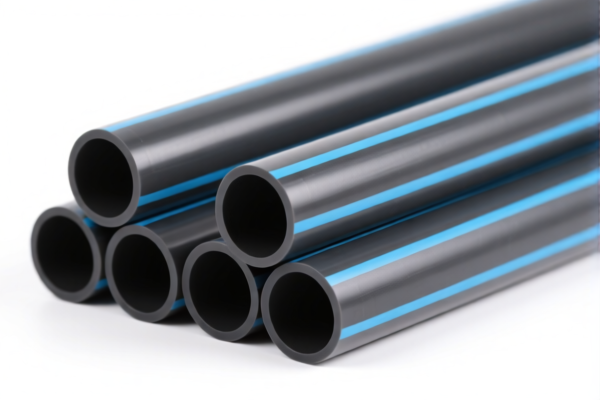
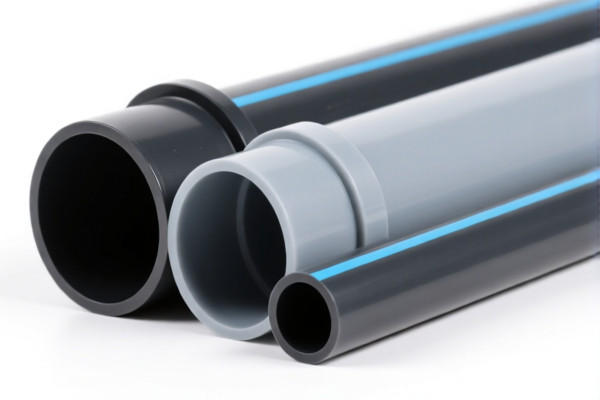
AI Analysis
🏭 Hard PVC Industrial Pipe (Commercial Use)
🌐 HS Code Reference & Customs Clearance Guide | 2026 Latest Tariff Analysis | Professional Strategy for Hard PVC Pipes
📌 I. Product Definition & Classification: What Exactly is "Hard PVC Pipe"?
Hard PVC (Polyvinyl Chloride) industrial pipes are rigid plastic conduits used for commercial and industrial applications. They are distinct from flexible hoses or specialized medical tubing. In international trade, the classification depends heavily on the material composition (pure PVC vs. Chlorinated Polyvinyl) and the form (tube vs. rod/profile).
⚠️ Key Distinction Points:
- If made primarily of PVC polymer → Likely falls under Chapter 3917 (Plastic pipes/hoses) or 3926 (Other plastic articles).
- If made of Chlorinated PVC or specific polymer blends → Might fall under 3916 (Rod/bar shapes) if classified as extruded profiles rather than hollow tubes.
- Commercial Use: Pipes intended for construction, plumbing, or industrial fluid transport are generally "tubes," not "rods." Misclassification as "rods" (3916) can lead to incorrect duty rates.
📦 II. HS Code Classification Details (2026 Latest Tariff Reference)
Based on the provided data for "Hard PVC Pipe (Commercial Use)", here are the 6 possible classifications and their corresponding tax implications.
| HS Code | Product Description | Summary Reasoning | Total Tax Rate | Tax Breakdown |
|---|---|---|---|---|
3916.20.00.91 |
Hard PVC Pipe (Commercial) - Classified as Rod/Bar/Profile | Material: PVC; Form: Tube but categorized under "rod/bar/profile" scope; Not excluded by specific use. | 40.8% | Base: 5.8% + Add'l: 25.0% + Section 122: 10% |
3916.20.00.20 |
Hard PVC Pipe (Commercial) - Tube Category | Material: PVC; Form: Tube; Matches attribute of commercial hard plastic tubes. | 40.8% | Base: 5.8% + Add'l: 25.0% + Section 122: 10% |
3926.90.99.89 |
Hard PVC Pipe (Commercial) - Other Plastic Article | Material: PVC; Form: Tube; Classified under "Other plastic articles" rather than specific pipes. | 22.8% | Base: 5.3% + Add'l: 7.5% + Section 122: 10% |
3917.23.00.00 |
Hard PVC Pipe (Commercial) - Chloride Polymer | Material: Chloride polymer; Form: Hard conduit; Fits code definition. | 38.1% | Base: 3.1% + Add'l: 25.0% + Section 122: 10% |
3917.29.00.90 |
Hard PVC Pipe (Commercial) - Hard Tube | Material: PVC; Form: Hard pipe; Fits "Hard plastic tube" definition. | 38.1% | Base: 3.1% + Add'l: 25.0% + Section 122: 10% |
3926.90.99.87 |
Hard PVC Pipe (Commercial) - Plastic Hard Pipe/Article | Material: PVC; Form: Hard pipe; Fits "Hard pipe/tube in plastic articles" definition. | 22.8% | Base: 5.3% + Add'l: 7.5% + Section 122: 10% |
🔍 Critical Observation:
- The lowest total tax rate is 22.8% (HS Codes3926.90.99.89and3926.90.99.87).
- The highest total tax rate is 40.8% (HS Codes3916.20.00.91and3916.20.00.20).
- Section 122 Tariff (10%) applies to ALL listed HS codes. This is a critical, non-negotiable addition for Chinese-origin goods entering the US market.
💰 III. Detailed Tax Rate Analysis (Including Surtaxes & Policy Add-ons)
✅ Applicable Country: United States (US)
✅ Origin: China (CN)
✅ Effective Time: Post-2025/2026 Regulations
🎯 1. The "Low-Tax" Strategy: HS Codes in Chapter 3926
| Item | Content |
|---|---|
| Base Duty | 5.3% (Standard MFN rate for "Other plastic articles") |
| USITC Add'l Duty | +7.5% (Section 301 Tariff) |
| Section 122 Duty | +10% (Specific to certain plastic products from China) |
| Total Effective Rate | 22.8% |
| Calculation | CIF Value × 22.8% |
| De Minimis Eligibility | ❌ No (Denied for Section 122 items) |
| Legal Path | Section 122 → USITC:3926.90.99.89 or 3926.90.99.87 |
📌 Explanation:
- Classifying the pipe under 3926 (Other plastic articles) rather than 3917 (Plastic pipes) or 3916 (Rods/Profiles) significantly reduces the Section 301 surtax from 25% to 7.5%.
- Note: This requires convincing customs that the product fits the "Other plastic articles" definition, which may be contested if it is clearly a "pipe."
🎯 2. The "Standard Pipe" Strategy: HS Codes in Chapter 3917
| Item | Content |
|---|---|
| Base Duty | 3.1% (Standard rate for plastic pipes) |
| USITC Add'l Duty | +25.0% (Section 301 Tariff) |
| Section 122 Duty | +10% |
| Total Effective Rate | 38.1% |
| Calculation | CIF Value × 38.1% |
| De Minimis Eligibility | ❌ No |
| Legal Path | Section 122 → USITC:3917.23.00.00 or 3917.29.00.90 |
📌 Explanation:
- If Customs determines the product is strictly a "pipe" (hollow, for fluid transport), it must fall under 3917.
- The high 25% Section 301 tax makes this category expensive.
- Difference between 3917.23 and 3917.29: 3917.23 is for "chloride polymer" (e.g., CPVC), while 3917.29 is for other plastic pipes.
🎯 3. The "High-Risk" Strategy: HS Codes in Chapter 3916 (Rods/Profiles)
| Item | Content |
|---|---|
| Base Duty | 5.8% |
| USITC Add'l Duty | +25.0% (Section 301 Tariff) |
| Section 122 Duty | +10% |
| Total Effective Rate | 40.8% |
| Calculation | CIF Value × 40.8% |
| De Minimis Eligibility | ❌ No |
| Legal Path | Section 122 → USITC:3916.20.00.91 or 3916.20.00.20 |
📌 Explanation:
- This classification treats the pipe as an extruded "rod" or "profile."
- This is likely the most expensive option due to the high base duty (5.8%) + 25% surtax + 10% Section 122.
- Risk: Misclassifying a pipe as a rod is a common compliance error that leads to audits and penalties.
🛠️ IV. Customs Clearance Practical Advice (Real-World Pitfall Guide)
✅ 1. Documentation Checklist (Must-Haves)
| Document | Required | Description |
|---|---|---|
| ✅ Product Specification Sheet | ✔️ | Must state: Material (PVC/CPVC), Diameter, Wall Thickness, Pressure Rating, Use (Commercial/Industrial). |
| ✅ Technical Drawing | ✔️ | Show cross-section (hollow vs. solid). Crucial for distinguishing between "Pipe" (3917) and "Rod" (3916). |
| ✅ Commercial Invoice | ✔️ | Clearly state: "Hard PVC Pipe for Commercial Use." Avoid vague terms like "Plastic Part." |
| ✅ Origin Certificate | ✔️ | Essential for proving Chinese origin to apply Section 122 and 301 taxes correctly. |
| ✅ Packaging List | ✔️ | Show quantity, weight, and dimensions. |
✅ 2. Classification Strategy (Key Tips)
🔥 “Hollow is Pipe, Solid is Rod; 3926 is Cheapest, 3916 is Most Expensive!”
| Scenario | Correct Classification | Avoid | Reason |
|---|---|---|---|
| Standard Hollow Pipe | 3917.29.00.90 (38.1%) or 3926.90.99.89 (22.8%) |
3916 |
Pipes are hollow. Rods (3916) are solid. |
| CPVC Pipe | 3917.23.00.00 (38.1%) |
3917.29 |
CPVC is a chloride polymer, not standard PVC. |
| Pipe Fittings/Accessories | 3926.90.99.89 (22.8%) |
3917 |
Fittings are often classified as "other plastic articles." |
| Solid PVC Rod/Bar | 3916.20.00.91 (40.8%) |
3917 |
Solid extrusions are rods, not pipes. |
⚠️ Warning:
- Do not try to classify a standard hollow PVC pipe as3916(Rod) to avoid penalties. While the tax rate is high (40.8%), the risk of audit is also high.
- The 22.8% rate under3926is attractive but may be challenged if the pipe is clearly used for fluid transport (which falls under 3917). Consult a customs broker to assess the risk of using3926.
✅ 3. Special Case Handling
| Situation | Recommendation |
|---|---|
| CPVC vs. PVC | If the pipe is Chlorinated, it must use 3917.23.00.00. Using 3917.29 for CPVC is a misdeclaration. |
| Section 122 Applicability | Ensure the product is not excluded from Section 122. All listed HS codes in the data are subject to the 10% add-on. |
| De Minimis | These items do not qualify for de minimis (Section 321) entry. Full formal entry is required. |
🌍 V. Global Market Comparison (2026 Context)
| Country/Region | Recommended HS Code | Est. Total Duty | Key Requirement |
|---|---|---|---|
| 🇺🇸 USA | 3926.90.99.89 (Lowest Risk) |
22.8% | Section 122 + 301 Taxes Apply. |
| 🇺🇸 USA | 3917.29.00.90 (Standard) |
38.1% | Higher duty, but more legally standard for pipes. |
| 🇨🇳 China | 3917.29.00.00 |
~5-10% | No Section 122/301. Import duties apply. |
| 🇪🇺 EU | 3917.29.00.00 |
4-6% | No Section 122. Anti-dumping duties may apply. |
📌 Conclusion:
- For US Imports, the 22.8% rate under3926offers significant savings over the 38.1-40.8% rates.
- However, legal compliance is paramount. Ensure the product description supports the3926classification (e.g., emphasizing "plastic article" rather than "pipe system").
- Always verify if Section 122 exclusions apply to your specific product type.
📌 VI. Common Mistakes & Pitfall Guide (Lessons Learned)
❌ Mistake 1: Classifying a solid PVC rod as a pipe.
👉 Consequence: Tax drop from 40.8% to 38.1% (minor saving), but high risk of audit if product is actually a pipe.
❌ Mistake 2: Ignoring Section 122.
👉 Consequence: Missing the 10% add-on leads to severe penalties and interest. All listed HS codes include this.
❌ Mistake 3: Confusing PVC with CPVC.
👉 Consequence: Misclassification leads to incorrect tax rates. CPVC uses 3917.23 (38.1%), while PVC uses 3917.29 (38.1%) or 3926 (22.8%).
✅ Best Practice:
"Hard PVC Pipe, Commercial Grade, Hollow Extrusion, for Fluid Transport, Model XYZ, Compliant with ASTM D1785."
🎯 VII. Conclusion: Smart Classification Saves Money
🎯 Key Takeaway:
🔹 Lowest Duty:
3926.90.99.89(22.8%) – Requires strong justification for "Other Plastic Article."
🔹 Standard Duty:3917.29.00.90(38.1%) – Safest for standard PVC pipes.
🔹 Avoid:3916(40.8%) – Highest duty, often misclassified.
📌 Pro Tip:
If you are importing large volumes, apply for an Advance Ruling from US Customs and Border Protection (CBP) to confirm if 3926 is acceptable for your specific product. This provides legal certainty and avoids post-import audits.
📣 Act Now:
📞 Contact a licensed customs broker.
📄 Prepare technical specs and drawings.
🚀 Optimize your supply chain with accurate HS Codes!
✨ Professional Customs Clearance Starts with Precise Classification!
💼 Every Percentage Point Saved is Pure Profit!
Customer Reviews
About HS Code Classification
The Harmonized System (HS) is an internationally standardized nomenclature developed by the World Customs Organization (WCO) to classify traded products. Over 200 countries use the HS system as the basis for customs tariffs, trade statistics, and import/export regulations.
Each HS code follows a hierarchical structure:
- Chapter (2 digits) — Broad category of goods (e.g., Chapter 84: Machinery and Mechanical Appliances)
- Heading (4 digits) — More specific grouping within the chapter
- Subheading (6 digits) — Internationally standardized breakdown, used by all WCO member countries
- National subdivisions (8-10 digits) — Country-specific extensions for further classification, such as US HTSUS 10-digit codes
Correct HS code classification is essential for smooth customs clearance, accurate duty payment, and compliance with trade regulations. Misclassification can lead to customs delays, overpayment of duties, or penalties.
When importing from CN to US, the applicable tariff rates may include:
- Most-Favored-Nation (MFN) rate — The standard duty rate applied to WTO members
- General rate — Applied to countries without trade agreements
- Trade remedy duties — Additional tariffs such as Section 301 (anti-dumping), Section 232 (national security), or countervailing duties
The information provided on this page is for reference purposes only. For official classification, please consult with your local customs authority or a licensed customs broker.