Hard Plastic Document Box
CN → US| HS Code | Tariff Rate | Origin | Destination | Doc |
|---|---|---|---|---|
| 3926909989 | 22.8% | CN | US | Official Doc |
| 4202122910 | 55.0% | CN | US | Official Doc |
| 4202122120 | 55.0% | CN | US | Official Doc |
Product Images
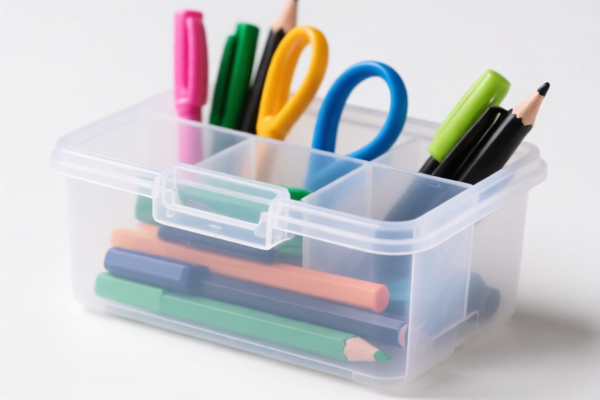
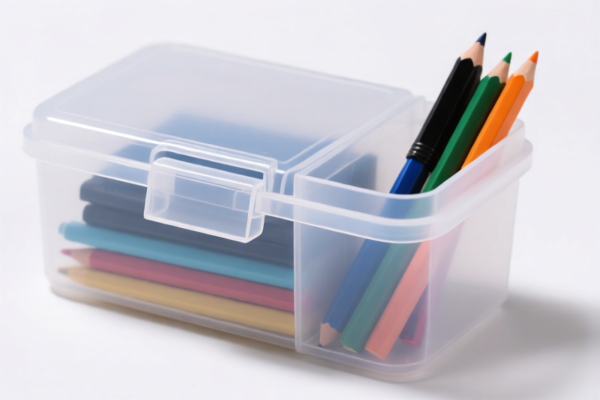
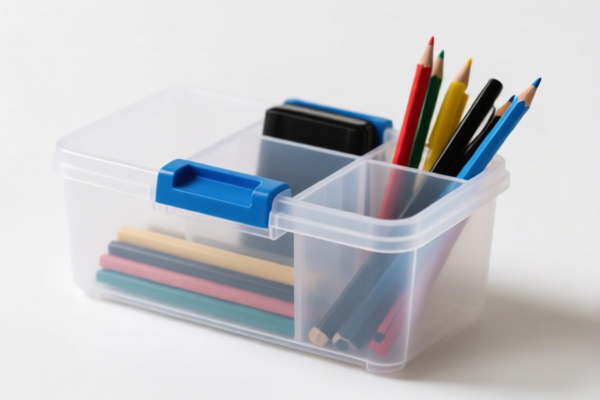
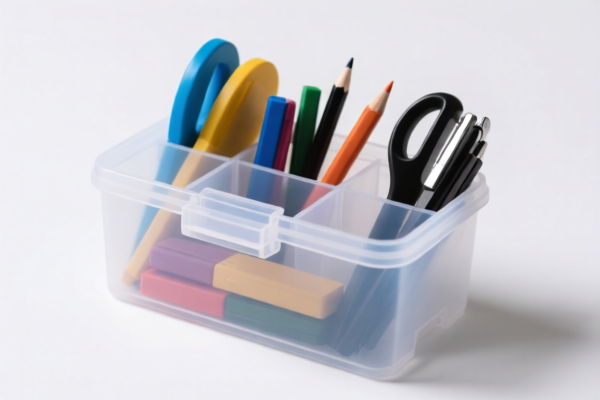
AI Analysis
📂 Hard Plastic Document Box (Briefcase)
🌐 HS Code Reference & Customs Clearance Guide | 2026 Latest Tariff Analysis | Professional Customs Strategy
📌 I. Product Definition & Classification: Do You Really Understand "Hard Plastic Document Boxes"?
A Hard Plastic Document Box (often categorized as a briefcase or portfolio) is an item used for carrying documents, files, or business materials. In international trade, its classification hinges on material composition, structure (rigidity), and specific use.
According to the provided data, there are three potential HS Code classifications, ranging from low-tariff general plastics to high-tariff specific article containers. The key differentiator is whether the item is considered a "general plastic product" or a "specific article of article of plastics/materials" under Chapter 42.
⚠️ Key Distinction Point:
- If classified under 3926.90.99.89: It is treated as a "other plastic article," implying it is a generic plastic item without specific functional characteristics required by Chapter 42. Result: Low Tax. - If classified under 4202.12.29.10 or 4202.12.21.20: It is treated as a "briefcase" with specific structural requirements (hard-sided, shaped). Result: High Tax (US-China Trade War Impact).
📦 II. HS Code Classification Details (2026 Latest Tariff Authority Comparison)
| HS Code | Product Description | Applicable Scenario | Structural/Material Requirement |
|---|---|---|---|
3926.90.99.89 |
Other articles of plastics | General plastic document box, no specific briefcase features emphasized | Generic plastic, "other" category |
4202.12.29.10 |
Hard-sided plastic briefcases | Matches material (plastic), form (hard), and use (briefcase) exactly | Hard, shaped, plastic, for documents |
4202.12.21.20 |
Hard-sided plastic briefcases (Specific Subheading) | Hard structure, formed, plastic material | Hard, formed, rigid structure |
🔍 Key Reminder:
- 3926.90.99.89 offers the lowest tax burden but requires proving the item is NOT a specific "article" under Chapter 42 (e.g., not primarily designed as a branded briefcase with specific compartments). - 4202.12.29.10 and 4202.12.21.20 are for items that clearly meet the definition of a "briefcase" with hard, formed structures. Both carry the same high tax rate due to US-China trade policies.
💰 III. 2026 Latest Tariff Rate Details (Including Surcharge, Policy Surcharges)
✅ Applicable Country: United States (US)
✅ Origin: China (CN)
✅ Effective Time: Current Trade War Measures Active
🎯 1. 3926.90.99.89 —— Other Articles of Plastics (Low-Tariff Option)
| Item | Content |
|---|---|
| Base Tariff | 5.3% |
| Section 301 Surcharge | 7.5% |
| Section 122 Tariff | 10% |
| Total Tariff Rate | 22.8% |
| Tax Calculation | CIF Value × 22.8% |
| Legal Basis Path | USITC:3926.90.99.89 → 301:7.5% → 122:10% |
📌 Explanation:
- This classification falls under "Other plastic articles." - The 7.5% is the Section 301 surcharge. - The 10% is the Section 122 tariff (national security/industrial base). - Total: 22.8%. This is the most cost-effective option if the product description avoids "briefcase" terminology and emphasizes "general plastic container."
🎯 2. 4202.12.29.10 —— Hard-Sided Plastic Briefcases (High-Tariff Option)
| Item | Content |
|---|---|
| Base Tariff | 20.0% |
| Section 301 Surcharge | 25.0% |
| Section 122 Tariff | 10% |
| Total Tariff Rate | 55.0% |
| Tax Calculation | CIF Value × 55.0% |
| Legal Basis Path | USITC:4202.12.29.10 → 301:25% → 122:10% |
📌 Note:
- This code explicitly identifies the product as a "briefcase" with hard plastic material. - The 25% Section 301 surcharge is significantly higher than for plastic goods. - Total: 55.0%. This is a very high tariff, impacting profitability heavily.
🎯 3. 4202.12.21.20 —— Hard-Sided Plastic Briefcases (Specific Subheading)
| Item | Content |
|---|---|
| Base Tariff | 20.0% |
| Section 301 Surcharge | 25.0% |
| Section 122 Tariff | 10% |
| Total Tariff Rate | 55.0% |
| Tax Calculation | CIF Value × 55.0% |
| Legal Basis Path | USITC:4202.12.21.20 → 301:25% → 122:10% |
📌 Note:
- Similar to the above, this code emphasizes "hard, formed structure." - Total: 55.0%. Same high tax burden.
🛠️ IV. Customs Clearance Practical Advice (Battle-Tested Pitfall Avoidance Guide)
✅ 1. Preparing Documentation (Cannot Be Missed)
| Document | Must Provide | Description |
|---|---|---|
| ✅ Product Specification Sheet | ✔️ | Details: Material (Plastic Type), Structure (Hard/Semi-hard), Dimensions, Intended Use (Document Storage) |
| ✅ Product Photos | ✔️ | Clear images showing the box, interior compartments, and lack of branding (if aiming for 3926) |
| ✅ Commercial Invoice | ✔️ | Description should be carefully worded (see below) |
| ✅ Packing List | ✔️ | Item count, weight, dimensions |
| ✅ Material Declaration | ✔️ | Proof of plastic composition, excluding leather/fabric parts that might trigger Chapter 42 |
✅ 2. Declaration Tips (Key Mantra)
🔥 "Avoid 'Briefcase' in Description if Possible; Emphasize 'Plastic Container'!"
| Scenario | Correct Declaration Approach | Wrong Approach |
|---|---|---|
| Generic Hard Plastic Box for Documents | Use 3926.90.99.89. Describe as "Hard Plastic Document Organizer" or "Plastic File Box". Avoid "Briefcase". |
Use "Briefcase" → Triggers 4202 → 55% Tax |
| Branded Business Briefcase with Compartments | Must use 4202.12.29.10 or 4202.12.21.20. Declare as "Hard-Sided Plastic Briefcase". |
Try to hide it as "Plastic Box" → Risk of Misclassification + Penalties |
| Semi-Rigid Plastic Folder | Evaluate if it meets "Hard" definition. If not, may fall under 3926. |
Declare as "Hard Briefcase" when it's soft → Classification Error |
✅ 3. Special Case Handling
| Scenario | Handling Advice |
|---|---|
| OEM Unbranded Boxes | Provide supplier declaration stating no specific brand, emphasizing generic utility. Supports 3926 classification. |
| Boxes with Leather Trim | If leather trim is >50% of exterior, may still fall under Chapter 42. Check material weight ratio. |
| Custom-Shaped Boxes | If shaped specifically to fit laptops/files, customs may argue for Chapter 42. Provide evidence of general use. |
| High-Value Luxury Boxes | Even if plastic, if marketed as "luxury briefcase," risk of 4202 classification increases. |
🌍 V. Global Market Customs Comparison (2026 Latest)
| Country/Region | Recommended HS Code | Tariff (China Origin) | Certification Required | Notes |
|---|---|---|---|---|
| 🇺🇸 USA | 3926.90.99.89 (Preferred) |
22.8% (vs 55% for 4202) | No specific | Critical to optimize classification |
| 🇺🇸 USA | 4202.12.29.10 |
55.0% | No specific | High cost, avoid if possible |
| 🇨🇳 China | 4202.12.29.10 |
5% - 10% | N/A | Lower tax, different classification norms |
| 🇪🇺 EU | 4202.12.00 |
4% - 5% | CE (if electronic) | Generally lower tariffs than US |
| 🇬🇧 UK | 4202.12.00 |
4% - 5% | UKCA | Post-Brexit rules apply |
📌 Conclusion:
- USA is the primary market where classification dramatically affects cost (22.8% vs 55.0%).
- Strategy: If the product is a generic hard plastic box, strive for3926.90.99.89. If it is a branded, structured briefcase,4202is likely unavoidable, but ensure accurate description to avoid penalties.
📌 VI. Common Mistakes & Pitfalls (Blood & Tears Lessons)
❌ Mistake 1: Describing a "Hard Plastic Briefcase" as "Plastic Box" in 3926 when it has zippers, handles, and compartments.
👉 Consequence: Customs reclassifies to 4202 + Back Taxes + Penalties.
❌ Mistake 2: Using "Briefcase" in the commercial invoice for a generic plastic box.
👉 Consequence: Automatic 55% tax application, even if product is generic.
❌ Mistake 3: Ignoring Section 122 Tariff.
👉 Consequence: Underestimating total tax by 10%. Always include it in cost calculations.
✅ Correct Practice:
For
3926: "Hard Plastic Document Storage Box, Generic Design, No Brand, Plastic Material, 12x9x3 inches"
For4202: "Hard-Sided Plastic Briefcase, Model XYZ, with Interior Compartments, Brand ABC"
🎯 VII. Conclusion: Professional Declaration Saves Money!
🎯 Remember the Mantra:
🔹 "Generic Box? Go 3926 (22.8%). Branded Briefcase? Accept 4202 (55%). Don't Lie, or Pay Double!"
🔹 "Tariff Difference: 32.2%! Declaration Accuracy is Profit!"
📌 Pro Tip:
- If you are importing to the USA, consider Advance Rulings from CBP to confirm classification.
- For low-value shipments, check if de minimis rules apply, but note that high tariffs often negate de minimis benefits for commercial goods.
📣 Immediate Action:
📞 Consult a Customs Broker + Provide Product Photos + Request HS Code Pre-Ruling
🚀 Ensure Smooth Clearance, Avoid Surprises, Maximize Profit!
✨ Professional Customs Clearance Starts with Accurate Classification!
💼 Every Cent Saved is Pure Profit!
Customer Reviews
About HS Code Classification
The Harmonized System (HS) is an internationally standardized nomenclature developed by the World Customs Organization (WCO) to classify traded products. Over 200 countries use the HS system as the basis for customs tariffs, trade statistics, and import/export regulations.
Each HS code follows a hierarchical structure:
- Chapter (2 digits) — Broad category of goods (e.g., Chapter 84: Machinery and Mechanical Appliances)
- Heading (4 digits) — More specific grouping within the chapter
- Subheading (6 digits) — Internationally standardized breakdown, used by all WCO member countries
- National subdivisions (8-10 digits) — Country-specific extensions for further classification, such as US HTSUS 10-digit codes
Correct HS code classification is essential for smooth customs clearance, accurate duty payment, and compliance with trade regulations. Misclassification can lead to customs delays, overpayment of duties, or penalties.
When importing from CN to US, the applicable tariff rates may include:
- Most-Favored-Nation (MFN) rate — The standard duty rate applied to WTO members
- General rate — Applied to countries without trade agreements
- Trade remedy duties — Additional tariffs such as Section 301 (anti-dumping), Section 232 (national security), or countervailing duties
The information provided on this page is for reference purposes only. For official classification, please consult with your local customs authority or a licensed customs broker.