Hard Plastic Suitcase
CN → US| HS Code | Tariff Rate | Origin | Destination | Doc |
|---|---|---|---|---|
| 3926100000 | 15.3% | CN | US | Official Doc |
| 3926909989 | 22.8% | CN | US | Official Doc |
| 3924905650 | 20.9% | CN | US | Official Doc |
| 3924104000 | 13.4% | CN | US | Official Doc |
| 3926100000 | 15.3% | CN | US | Official Doc |
Product Images


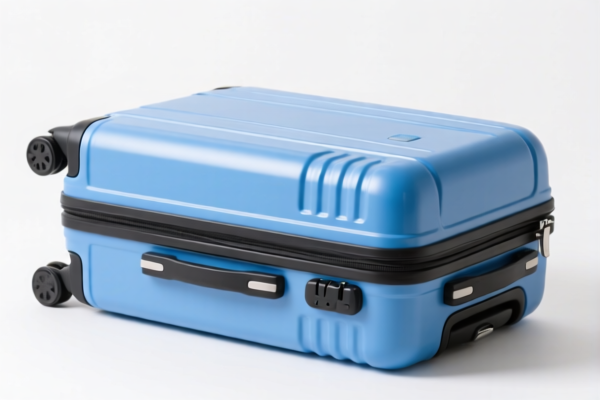
AI Analysis
🧳 Hard Plastic Suitcase: HS Code Classification & Customs Clearance Strategy (2026 Update)
🌐 HS Code Reference & Clearance Guide | Latest Tariff Analysis | Professional Entry Strategy
📌 Part I: Product Definition & Classification: What Exactly is a "Hard Plastic Suitcase"?
A "Hard Plastic Suitcase" is a rigid container used for transporting personal belongings. In international trade, its classification depends heavily on its primary function, structure, and material composition. It is not simply "a box made of plastic"; it is categorized based on whether it serves as general luggage, a cosmetic case, or a household item.
⚠️ Key Distinction:
- If it is a general-purpose luggage (large, handles, wheels, for travel) → It falls under Chapter 39 (Plastics), specifically as "Other articles of plastics."
- If it is a cosmetic case (smaller, specific for makeup/toiletries) → It may fall under Cosmetic Containers or Household Items.
- Material: Must be rigid plastic (ABS, PC, PP, etc.). Soft-shell or fabric suitcases are excluded.
📦 Part II: HS Code Classification Details (Based on Provided Data)
According to the provided data <DATA>, there are 4 unique HS Codes (with one duplicate) for "Hard Plastic Suitcases." Below is the detailed breakdown:
| HS Code | Product Description (Summary) | Category | Total Tax Rate |
|---|---|---|---|
| 3926.10.00.00 | Hard plastic suitcase, material: plastic, form: box, belongs to other plastic articles | Other Plastic Articles | 15.3% |
| 3926.90.99.89 | Hard plastic suitcase, material: plastic, form: cosmetic case, belongs to other plastic articles | Other Plastic Articles | 22.8% |
| 3924.90.56.50 | Hard plastic suitcase, material: plastic, use: cosmetic case, belongs to other household articles | Household Articles | 20.9% |
| 3924.10.40.00 | Hard plastic suitcase, material: plastic, use: sanitary/toilet items/household articles | Household Articles | 13.4% |
🔍 Note on Duplicate:
The HS Code3926.10.00.00appears twice in the source data with the same summary and tax rate. It is treated as a single entry.
💰 Part III: 2026 Latest Tariff Rate Breakdown (Detailed Tax Clauses)
✅ Applicable Country: United States (US)
✅ Origin: China (CN) (Implied by the tax structure, see below)
✅ Effective Date: Current tariffs apply as per the provided data.
The total tax rate consists of three components: 1. Base Tariff: The standard Most-Favored-Nation (MFN) duty. 2. Added Tariff: Section 301 tariffs (additional duties on Chinese goods). 3. Section 122 Tariff: Additional duties under specific executive orders (likely referencing IEEPA or related sanctions).
🎯 1. 3926.10.00.00 – Other Plastic Articles (General Box/Luggage)
Best for: General-purpose hard plastic luggage/suitcases.
| Item | Content |
|---|---|
| Base Tariff | 5.3% |
| Added Tariff (Section 301) | 0.0% |
| Section 122 Tariff | 10.0% |
| Total Tax Rate | 15.3% |
| Tax Calculation | CIF Value × 15.3% |
| De Minimis Exemption | ❌ Not Applicable (High tariff rate usually precludes de minimis relief for commercial shipments) |
| Legal Basis | HTSUS 3926.10.00.00 + Section 122 Executive Order |
📌 Explanation:
- This code captures general "boxes" or luggage that do not fit specific cosmetic or household sub-categories.
- The 10% Section 122 tariff is the primary driver of the cost, as the base rate is moderate (5.3%) and there is no additional Section 301 duty listed here.
🎯 2. 3926.90.99.89 – Other Plastic Articles (Cosmetic Case Form)
Best for: Plastic suitcases designed specifically for cosmetics or small personal items, classified under "other plastics."
| Item | Content |
|---|---|
| Base Tariff | 5.3% |
| Added Tariff (Section 301) | 7.5% |
| Section 122 Tariff | 10.0% |
| Total Tax Rate | 22.8% |
| Tax Calculation | CIF Value × 22.8% |
| De Minimis Exemption | ❌ Not Applicable |
| Legal Basis | HTSUS 3926.90.99.89 + Section 301 (Footnote) + Section 122 |
📌 Explanation:
- This code incurs the highest total tax (22.8%) in the provided data.
- The 7.5% added tariff indicates that this sub-category is subject to additional Section 301 restrictions beyond the Section 122 10%.
- Risk: This is the most expensive classification. Avoid if a lower-rated code is applicable.
🎯 3. 3924.90.56.50 – Household Articles (Cosmetic Use)
Best for: Hard plastic cases used for cosmetics, classified under "Household Articles" (Chapter 39.24).
| Item | Content |
|---|---|
| Base Tariff | 3.4% |
| Added Tariff (Section 301) | 7.5% |
| Section 122 Tariff | 10.0% |
| Total Tax Rate | 20.9% |
| Tax Calculation | CIF Value × 20.9% |
| De Minimis Exemption | ❌ Not Applicable |
| Legal Basis | HTSUS 3924.90.56.50 + Section 301 + Section 122 |
📌 Explanation:
- Chapter 39.24 covers "Tableware, kitchenware, other household articles."
- If your plastic suitcase is marketed as a "makeup organizer" or "toiletry case" rather than "luggage," this code may apply.
- Cost: Lower than3926.90.99.89due to a lower base rate (3.4% vs 5.3%).
🎯 4. 3924.10.40.00 – Household Articles (Sanitary/Toilet Use)
Best for: Hard plastic cases specifically for sanitary, toilet, or bathroom household use.
| Item | Content |
|---|---|
| Base Tariff | 3.4% |
| Added Tariff (Section 301) | 0.0% |
| Section 122 Tariff | 10.0% |
| Total Tax Rate | 13.4% |
| Tax Calculation | CIF Value × 13.4% |
| De Minimis Exemption | ❌ Not Applicable |
| Legal Basis | HTSUS 3924.10.40.00 + Section 122 |
📌 Explanation:
- Lowest Total Tax Rate (13.4%) in the provided data.
- The 0% Added Tariff is a significant advantage.
- Caution: This code is for "Sanitary or Toilet Use." A standard travel suitcase may not qualify unless it is specifically designed for bathroom storage. Misclassification could lead to customs audits.
🛠️ Part IV: Customs Clearance Practical Advice (Real-World Pitfalls)
✅ 1. Document Checklist (Mandatory)
| Document | Required? | Notes |
|---|---|---|
| ✅ Product Description | ✔️ | Must specify "Hard Plastic Suitcase," material (e.g., ABS, Polycarbonate), and dimensions. |
| ✅ Commercial Invoice | ✔️ | Must clearly state the value and country of origin (China). |
| ✅ Packing List | ✔️ | Include weights, dimensions, and number of pieces. |
| ✅ Product Photos | ✔️ | Front, back, interior, and any handles/wheels. Critical for customs to verify "rigid" structure. |
| ✅ Usage Declaration | ✔️ | Explicitly state intended use (e.g., "For travel luggage" vs. "For cosmetic storage"). |
✅ 2. Declaration Strategy (Critical Tips)
🔥 "Define Use to Define Tax!"
| Scenario | Recommended HS Code | Tax Rate | Reason |
|---|---|---|---|
| General Travel Luggage (Large, handles, wheels) | 3926.10.00.00 |
15.3% | Classified as "Other plastic articles" (Box form). |
| Cosmetic/Toiletry Case (Small, for makeup) | 3924.90.56.50 |
20.9% | Classified as "Household article" for cosmetic use. |
| Bathroom Storage Case (Sanitary/Toilet focus) | 3924.10.40.00 |
13.4% | Lowest rate, but strict use case. Only if primarily for bathroom/sanitary storage. |
| Misclassified Cosmetic Case (as general luggage) | 3926.90.99.89 |
22.8% | Highest risk/rate. Avoid unless it fits "other plastics" broadly. |
✅ 3. Special Handling for Section 122 & Section 301
- Section 122 Tariff (10%): Applies to all the above HS codes. This is a fixed additional duty. You cannot avoid this by changing the HS code within this group.
- Section 301 Added Tariff:
- 0% for
3926.10.00.00and3924.10.40.00. - 7.5% for
3926.90.99.89and3924.90.56.50. - Strategy: If your product can be legitimately declared as a sanitary/toilet household item (
3924.10.40.00), you save 7.5% compared to cosmetic cases or general luggage. However, if it is a standard travel suitcase, you must use3926.10.00.00(15.3%) or risk penalty.
🌍 Part V: Global Market Comparison (2026)
| Market | Recommended HS Code | Base Tariff | Additional Duties | Total Est. Cost |
|---|---|---|---|---|
| 🇺🇸 USA | 3926.10.00.00 (General) |
5.3% | +10% (Sec 122) | 15.3% |
| 🇨🇳 China (Import) | 3926.10.00.00 |
~5-10% | None | ~5-10% |
| 🇪🇺 EU | 3926.90.99 |
6.5% | None | 6.5% |
| 🇬🇧 UK | 3926.90.99 |
6.5% | None | 6.5% |
| 🇦🇺 Australia | 3926.90.99 |
5% | GST 10% | 15% (GST on value+tariff) |
📌 Conclusion:
- The US market is the most taxed due to Section 122 and potential Section 301 tariffs.
- China has moderate tariffs without political surcharges.
- EU/UK are the most competitive for hard plastic goods, with no major anti-dumping or Section 122 equivalents.
📌 Part VI: Common Mistakes & Pitfalls (Blood Lessons)
❌ Mistake 1: Calling a "Bathroom Organizer" a "Travel Suitcase" to get a lower rate?
👉 Consequence: Customs will inspect and reclassify to 3926.10.00.00 or 3924.90.56.50, leading to back taxes + penalties.
❌ Mistake 2: Ignoring the Section 122 Tariff.
👉 Consequence: Even if you find the "0% Section 301" code, you still pay 10%. Always budget for this.
❌ Mistake 3: Assuming "Plastic Case" = "Packaging."
👉 Consequence: If it is reusable and rigid, it is not packaging (Chapter 48/39.04), but goods (Chapter 39.26/39.24). Misclassification leads to severe fines.
✅ Correct Practice:
"Hard Plastic Travel Suitcase, 28-inch, Polycarbonate Material, with Wheels, Model ABC"
HS Code:3926.10.00.00
Declared Use: "Personal Luggage for Travel"
🎯 Part VII: Conclusion: Professional Declaration, Cost Efficiency
🎯 Remember the Key Rules:
🔹 "General Luggage = 3926.10.00.00 (15.3%)"
🔹 "Cosmetic Case = 3924.90.56.50 (20.9%) OR 3926.90.99.89 (22.8%)"
🔹 "Sanitary Storage = 3924.10.40.00 (13.4%)" (Only if applicable!)
🔹 "Section 122 10% is Universal in US"
📌 Pro Tip:
If you are exporting to the US, always confirm the exact end-use with your customs broker. A small change in product description (e.g., "Storage Box" vs. "Suitcase") can shift the tax burden by 7-9%.
📣 Action Item:
📞 Verify your product's primary function.
📄 Prepare clear photos and descriptions.
🚀 Apply for an Advance Ruling from CBP if the product is ambiguous.
✨ Accurate Classification Saves Money!
💼 Every 1% of tax saved is pure profit!
Customer Reviews
About HS Code Classification
The Harmonized System (HS) is an internationally standardized nomenclature developed by the World Customs Organization (WCO) to classify traded products. Over 200 countries use the HS system as the basis for customs tariffs, trade statistics, and import/export regulations.
Each HS code follows a hierarchical structure:
- Chapter (2 digits) — Broad category of goods (e.g., Chapter 84: Machinery and Mechanical Appliances)
- Heading (4 digits) — More specific grouping within the chapter
- Subheading (6 digits) — Internationally standardized breakdown, used by all WCO member countries
- National subdivisions (8-10 digits) — Country-specific extensions for further classification, such as US HTSUS 10-digit codes
Correct HS code classification is essential for smooth customs clearance, accurate duty payment, and compliance with trade regulations. Misclassification can lead to customs delays, overpayment of duties, or penalties.
When importing from CN to US, the applicable tariff rates may include:
- Most-Favored-Nation (MFN) rate — The standard duty rate applied to WTO members
- General rate — Applied to countries without trade agreements
- Trade remedy duties — Additional tariffs such as Section 301 (anti-dumping), Section 232 (national security), or countervailing duties
The information provided on this page is for reference purposes only. For official classification, please consult with your local customs authority or a licensed customs broker.