Hard Rubber Pen Barrel
CN → US| HS Code | Tariff Rate | Origin | Destination | Doc |
|---|---|---|---|---|
| 9608994000 | 17.5% | CN | US | Official Doc |
| 9608996000 | 17.5% | CN | US | Official Doc |
| 3926901000 | 20.9% | CN | US | Official Doc |
Product Images
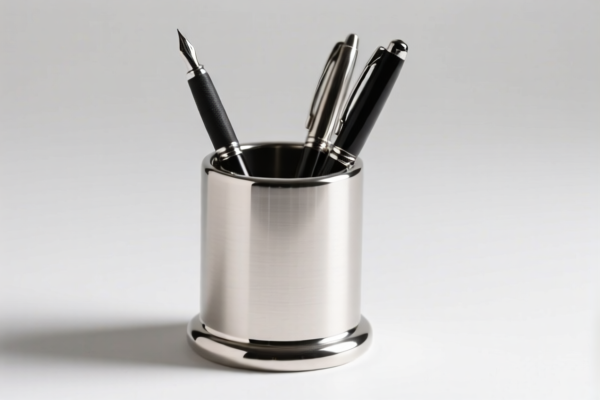
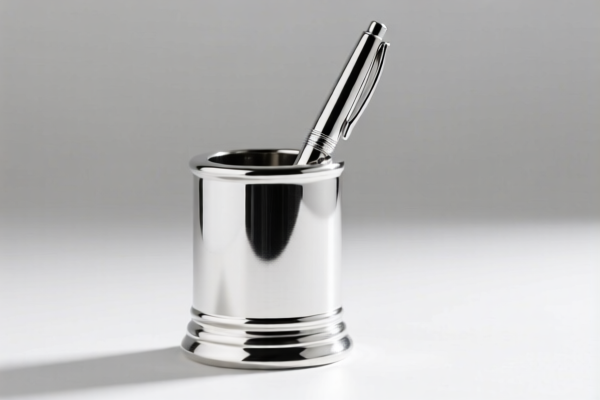

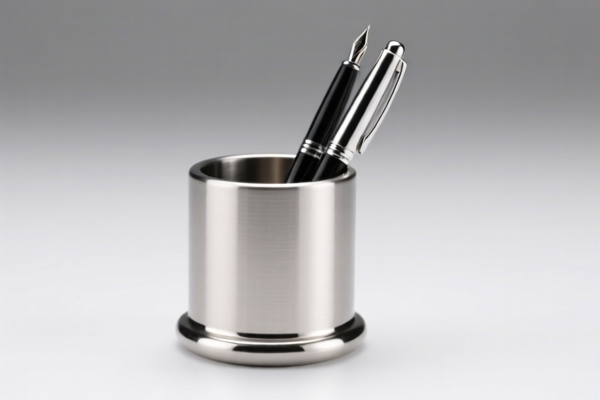
AI Analysis
🖊️ Hard Rubber Pen Barrel (Barrels for Writing Instruments)
🌐 HS Code Reference & Customs Clearance Guide | 2026 Latest Tariff Analysis | Professional Clearance Strategy
📌 I. Product Definition & Classification: What Exactly is a "Hard Rubber Pen Barrel"?
A Hard Rubber Pen Barrel refers to the main body or shaft of a writing instrument (such as a ballpoint, fountain, or gel pen). In international trade, the classification depends heavily on whether it is viewed as a specific part of a writing instrument or as a generic plastic/rubber article.
Two Main Interpretation Paths:
1. Parts of Writing Instruments: Classified under Chapter 96 (Miscellaneous Manufactured Articles). This is often preferred if the barrel is specifically shaped for a pen and cannot be used for other purposes.
2. General Plastic/Rubber Articles: Classified under Chapter 39 (Plastics and articles thereof). This applies if the barrel is considered a generic molded rubber/plastic component.
⚠️ Key Distinction:
- If the barrel is specifically designed for pens and has no other practical use → Chapter 96 (Parts of Writing Instruments).
- If the barrel is a generic molded item or considered a general rubber product → Chapter 39 (Other Plastics).
📦 II. HS Code Classification Details (Based on Provided Data)
| HS Code | Product Description | Source Summary | Logic |
|---|---|---|---|
9608.99.40.00 |
Parts of pens, specifically hard rubber barrels | "Hard rubber pen barrel as a pen part, fits 9608.99.40.00, no material conflict." | Specific part classification |
9608.99.60.00 |
Other parts of pens | "Hard rubber pen barrel belongs to pen parts, fits 9608.99.60.00, material reasonable." | General pen part classification |
3926.90.10.00 |
Other articles of plastics | "Hard rubber pen barrel as a plastic product, fits 3926.90.10.00, fits catch-all logic." | Generic plastic/rubber classification |
🔍 Key Insight:
- Chapters 96 vs. 39: The critical decision is whether the item is "specific to pens" (96) or "generic rubber/plastic" (39).
- Material Note: "Hard Rubber" is often treated as a type of plastic or vulcanized fiber in modern tariff contexts. If it’s strictly vulcanized rubber, Chapter 40 might apply, but the provided data focuses on 39 and 96.
💰 III. 2026 Latest Tariff Rate Details (Including Surcharges)
✅ Applicable Country: United States (US)
✅ Origin: China (CN)
✅ Effective Time: Based on provided data (includes 122 Clause and Additional Duties)
🎯 1. 9608.99.40.00 & 9608.99.60.00 — Parts of Pens (Chapter 96)
| Item | Content |
|---|---|
| Base Duty Rate | 0.0% |
| Additional Duty (Section 301) | +7.5% |
| Clause 122 Duty | +10% |
| Total Tax Rate | 17.5% |
| Tax Calculation | CIF Value × 17.5% |
| Legal Basis Path | Base (0%) + Sec 301 (7.5%) + Clause 122 (10%) |
📌 Explanation:
- Base Rate 0%: Parts of pens often enjoy low or zero base tariffs.
- Section 301 (7.5%): The standard additional duty on many Chinese goods.
- Clause 122 (10%): A specific additional tariff applicable to certain Chinese imports.
- Total 17.5%: This is a moderate tariff compared to other categories.
🎯 2. 3926.90.10.00 — Other Articles of Plastics (Chapter 39)
| Item | Content |
|---|---|
| Base Duty Rate | 3.4% |
| Additional Duty (Section 301) | +7.5% |
| Clause 122 Duty | +10% |
| Total Tax Rate | 20.9% |
| Tax Calculation | CIF Value × 20.9% |
| Legal Basis Path | Base (3.4%) + Sec 301 (7.5%) + Clause 122 (10%) |
📌 Explanation:
- Base Rate 3.4%: General plastics articles have a non-zero base tariff.
- Surcharge Same: Same Section 301 (7.5%) and Clause 122 (10%) apply.
- Total 20.9%: This is 3.4% higher than the Chapter 96 classification.
- Risk: If misclassified as a generic plastic part when it’s a pen part, you pay more. If misclassified as pen part when it’s generic, you risk customs penalties for incorrect declaration.
🛠️ IV. Customs Clearance Practical Advice (Avoid Pitfalls)
✅ 1. Preparation Checklist (Must-Haves)
| Document | Required | Notes |
|---|---|---|
| Product Specification Sheet | ✔️ | Must specify material (Hard Rubber/Vulcanized Fiber), dimensions, and intended use (Pen Parts). |
| Photos (Clear) | ✔️ | Show the barrel shape, any nib attachment points, and lack of other electronic/mechanical parts. |
| Commercial Invoice | ✔️ | Clearly state "Pen Barrel" or "Part of Writing Instrument," NOT "Rubber Tubing" or "Plastic Rod." |
| Packing List | ✔️ | Consistent with invoice. |
| Origin Certificate | ✔️ | If applicable, though US duties are high for CN origin. |
🔥 Critical Tip:
- Naming Matters: Use "Pen Barrel" or "Part of Pen." Avoid "Rubber Cylinder" or "Plastic Tube" as these trigger Chapter 39 (3926) classification, increasing taxes by 3.4%.
- Material Proof: If the importer can prove it is "Hard Rubber" (a specific type of vulcanized fiber/rubber composite), Chapter 96 is more defensible.
✅ 2. Classification Strategy & Risk Management
| Scenario | Recommended HS Code | Tax Rate | Risk Level |
|---|---|---|---|
| Specific Pen Barrel (Shaped for pens, no other use) | 9608.99.40.00 or 9608.99.60.00 |
17.5% | ⭐ Low (Preferred if justified) |
| Generic Rubber/Plastic Barrel (Could be used for other purposes) | 3926.90.10.00 |
20.9% | ⭐⭐ Medium (Higher tax) |
| Misclassification (Pen barrel declared as generic plastic) | 3926.90.10.00 |
20.9% | ⭐⭐⭐ High (Overpaid tax) |
| Misclassification (Generic plastic declared as pen part) | 9608.99.40.00 |
17.5% | ⭐⭐⭐ High (Under-declared, penalty risk) |
📌 Important:
- If the barrel is only used for pens and has a specific pen-nib attachment point, argue for Chapter 96.
- If the barrel is a straight tube with no specific pen features, customs may insist on Chapter 39.
✅ 3. Special Cases & Optimization
| Case | Advice |
|---|---|
| OEM Custom Barrels | Provide design drawings showing pen-specific features to support Chapter 96 classification. |
| Bulk Unfinished Barrels | If unfinished, still likely Chapter 96 if clearly for pens. Avoid vague descriptions. |
| Mixed Shipments | Separate pen parts from other rubber goods in declaration to avoid audit flags. |
🌍 V. Global Market Comparison (2026)
| Market | Preferred HS Code | Est. Total Duty | Notes |
|---|---|---|---|
| 🇺🇸 USA | 9608.99.40.00 / 9608.99.60.00 |
17.5% | Includes 7.5% Sec 301 + 10% Clause 122 |
| 🇺🇸 USA (if Chapter 39) | 3926.90.10.00 |
20.9% | Higher due to 3.4% base rate |
| 🇨🇳 China | 9608.99.00.00 |
Low/0% | Import duties may be lower, but check current CN tariff schedule. |
| 🇪🇺 EU | 9608.99.00 |
~0-2% | Generally lower tariffs on pen parts, no US-style surcharges. |
📌 Conclusion for US Importers:
- Aim for Chapter 96 (9608) to save 3.4% in base duty.
- Ensure documentation clearly supports "Pen Part" status.
📌 VI. Common Errors & Pitfalls (Lessons Learned)
❌ Error 1: Declaring as "Rubber Tubing"
👉 Result: Customs assigns 3926.90.10.00 → Tax increases to 20.9%.
💡 Fix: Use "Pen Barrel" in description.
❌ Error 2: Failing to distinguish between "Parts of Pens" and "General Plastics"
👉 Result: Customs audit, delays, and potential reclassification.
💡 Fix: Provide technical specs showing pen-specific design.
❌ Error 3: Ignoring Clause 122
👉 Result: Incorrect tax calculation. Both Chapter 96 and 39 items are subject to 10% Clause 122.
💡 Fix: Ensure all calculations include the 10% Clause 122 surcharge.
🎯 VII. Conclusion: Accurate Classification Saves Money!
🎯 Key Takeaway:
🔹 "Pen Barrel = Chapter 96 (17.5%)" vs. "Generic Plastic = Chapter 39 (20.9%)"
🔹 Every 3.4% counts!
🔹 Documentation is Key: Show, don’t just tell, that these are pen parts.
📌 Pro Tip:
- If you are unsure, consider applying for a Binding Ruling from U.S. Customs (CBP) to lock in the correct HS Code and tariff rate before shipment.
- Always consult with a licensed customs broker to review product samples.
📣 Action Item:
📞 Contact a Customs Broker
📄 Prepare Product Specs & Photos
🚀 Declare as "Pen Barrel" (HS 9608) to Minimize Duty!
✨ Professional Clearance Starts with Precise Classification!
💼 Optimize Your Tariff, Secure Your Supply Chain!
Customer Reviews
About HS Code Classification
The Harmonized System (HS) is an internationally standardized nomenclature developed by the World Customs Organization (WCO) to classify traded products. Over 200 countries use the HS system as the basis for customs tariffs, trade statistics, and import/export regulations.
Each HS code follows a hierarchical structure:
- Chapter (2 digits) — Broad category of goods (e.g., Chapter 84: Machinery and Mechanical Appliances)
- Heading (4 digits) — More specific grouping within the chapter
- Subheading (6 digits) — Internationally standardized breakdown, used by all WCO member countries
- National subdivisions (8-10 digits) — Country-specific extensions for further classification, such as US HTSUS 10-digit codes
Correct HS code classification is essential for smooth customs clearance, accurate duty payment, and compliance with trade regulations. Misclassification can lead to customs delays, overpayment of duties, or penalties.
When importing from CN to US, the applicable tariff rates may include:
- Most-Favored-Nation (MFN) rate — The standard duty rate applied to WTO members
- General rate — Applied to countries without trade agreements
- Trade remedy duties — Additional tariffs such as Section 301 (anti-dumping), Section 232 (national security), or countervailing duties
The information provided on this page is for reference purposes only. For official classification, please consult with your local customs authority or a licensed customs broker.