Hardcover Diary
CN → US| HS Code | Tariff Rate | Origin | Destination | Doc |
|---|---|---|---|---|
| 4901990070 | 17.5% | CN | US | Official Doc |
| 4820102010 | 35.0% | CN | US | Official Doc |
| 4820102060 | 35.0% | CN | US | Official Doc |
| 4901990093 | 17.5% | CN | US | Official Doc |
| 3926100000 | 15.3% | CN | US | Official Doc |
Product Images


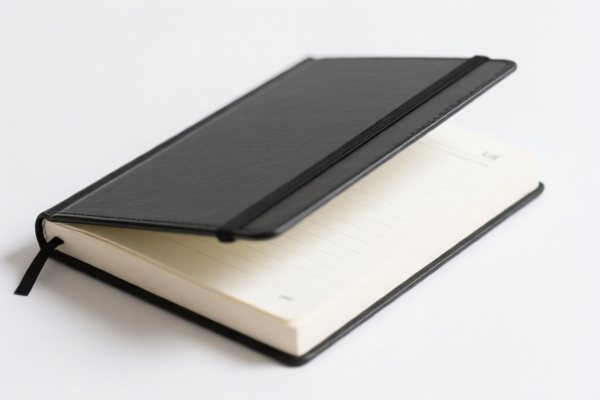

AI Analysis
📖 Hardcover Diary: The Ultimate 2026 HS Code & Taxation Guide
🌐 Global Trade Compliance | US Tariff Breakdown | Professional Customs Strategy
📌 One, What is a "Hardcover Diary"?
A Hardcover Diary is a premium writing instrument characterized by: * Format: Bound in rigid covers (hardboard, leather, or heavy cardboard). * Content: Primarily printed text, lined pages, or blank sheets for recording daily entries, schedules, or notes. * Purpose: Personal organization, journaling, or professional planning.
In international trade, the classification hinges on two critical factors: 1. Is it "Bound" as a Book? (If yes, it falls under Chapter 49 - Printed Books). 2. Is it "Stationery"? (If it leans more towards a blank notebook or diary form without extensive printed content, it falls under Chapter 48).
⚠️ Critical Distinction:
- If the diary contains significant printed text, pre-formatted content, or acts as a "book" of knowledge → Chapter 49.
- If the diary is essentially a blank or lightly printed "notebook" for daily use → Chapter 48.
Misclassification can lead to massive tax discrepancies (17.5% vs. 35%).
📦 Two. HS Code Classification Breakdown (2026 Official Reference)
Based on the 2026 US Harmonized Tariff Schedule, here are the four primary classifications for Hardcover Diaries:
| HS Code | Product Description | Key Classification Logic | Total Tax Rate* |
|---|---|---|---|
| 4901.99.00.93 | Hardcover Diary (Book Type) | Classified as Printed Books (49 pages or more). The "Hardcover" matches the "Hardbound" description. | 17.5% |
| 4901.99.00.70 | Hardbound Diary / Booklets | Matches "Hardbound" criteria in the Explanatory Notes. Treated as printed books/brochures. | 17.5% |
| 4820.10.20.10 | Diary (Stationery Type) | Matches the specific "Diary" usage. Focuses on the physical form of a daily journal. | 35.0% |
| 4820.10.20.60 | Hardbound Diary (Stationery) | A diary that is "Hardbound." Fits the binding characteristics of Chapter 48 stationery items. | 35.0% |
🔍 Critical Tax Discrepancy:
- Chapter 49 (4901) items are taxed at 17.5% (0% Base + 7.5% Section 301 + 10% 122).
- Chapter 48 (4820) items are taxed at 35.0% (0% Base + 25% Section 301 + 10% 122).
Choosing the wrong code can double your duty cost!
💰 Three. 2026 Tariff Rate Deep Dive (US Market)
✅ Applicable Market: United States (US)
✅ Origin: China (CN)
✅ Effective Date: Post-November 2025 (Current Policy)
🎯 Scenario A: Classified as "Book" (HS 4901.99.00.93 / .70)
Best for diaries with pre-printed calendars, educational content, or extensive text.
| Tax Component | Rate | Legal Basis | Explanation |
|---|---|---|---|
| MFN Base Duty | 0.0% | HTSUS Chapter 49 | Books are generally duty-free. |
| Section 301 (Add-on) | +7.5% | 122-Tariff Action | Added to "Books" under recent trade actions. |
| Section 122 (Add-on) | +10.0% | 122-Tariff Action | Additional surcharge on Chinese origin. |
| TOTAL EFFECTIVE RATE | 17.5% | CIF Value × 17.5% | |
| De Minimis Exemption | ❌ No | 321 Section | Cannot enter via $800 exemption (over $800 or restricted categories). |
📌 Interpretation:
The "7.5%" is a specific tariff rate for printed books/brochures. Even though base tax is 0%, the Section 301 (7.5%) + Section 122 (10%) = 17.5%.
🎯 Scenario B: Classified as "Stationery/Diary" (HS 4820.10.20.10 / .60)
Best for blank notebooks, planners, or diaries primarily used as writing pads.
| Tax Component | Rate | Legal Basis | Explanation |
|---|---|---|---|
| MFN Base Duty | 0.0% | HTSUS Chapter 48 | Standard duty-free rate for notebooks. |
| Section 301 (Add-on) | +25.0% | 301-Tariff Action | High penalty rate for stationery/paper goods. |
| Section 122 (Add-on) | +10.0% | 122-Tariff Action | Additional surcharge on Chinese origin. |
| TOTAL EFFECTIVE RATE | 35.0% | CIF Value × 35.0% | |
| De Minimis Exemption | ❌ No | 321 Section | Not eligible for Section 321. |
📌 Interpretation:
Stationery items like "Diaries" fall under Section 301 with a 25% surcharge, making them significantly more expensive to import than books. Total = 35%.
🎯 Scenario C: "Office/Stationery Sets" (HS 3926.10.00.00)
Rare for standalone diaries, but applies if the "Hardcover Diary" is sold as part of a plastic/paper office set.
| Tax Component | Rate | Legal Basis | Explanation |
|---|---|---|---|
| MFN Base Duty | 5.3% | HTSUS 3926 | Plastic office supplies base rate. |
| Section 301 (Add-on) | 0.0% | 301-Tariff Action | No specific 301 surcharge for this subheading. |
| Section 122 (Add-on) | +10.0% | 122-Tariff Action | Surcharge applies. |
| TOTAL EFFECTIVE RATE | 15.3% | CIF Value × 15.3% | |
| De Minimis Exemption | ❌ No | 321 Section | Not eligible for Section 321. |
📌 Interpretation:
Only applicable if the item is plastic-dominated or a mixed set. For pure paper diaries, this is likely incorrect.
🛠️ Four. Customs Clearance & Operational Strategy
✅ 1. Preparation Checklist (Must-Have Documents)
| Document | Requirement | Why It Matters |
|---|---|---|
| Product Specification Sheet | ✔️ | Must explicitly state: "Hardcover," "Binding Type," and "Page Count." |
| Content Samples | ✔️ | Crucial: Provide a sample page. Is it printed text (Book) or blank/lines (Stationery)? |
| Commercial Invoice | ✔️ | Description must match HS Code logic (e.g., "Hardbound Journal" vs. "Diary Notebook"). |
| Packing List | ✔️ | Weight and dimensions to verify volume for duty calculation. |
| Origin Certificate (CO) | ✔️ | Proof of China origin to confirm 122 & 301 applicability. |
✅ 2. Declaration Strategy: How to Avoid 35% Tax?
🔥 The Golden Rule: "Content Determines Code"
| Product Feature | Recommended HS Code | Resulting Tax | Risk if Misclassified |
|---|---|---|---|
| Contains pre-printed text, quotes, calendars, or educational content | 4901.99.00.93 or .70 | 17.5% | If declared as "Stationery" (4820) → 35% Tax! |
| Blank pages, lined only, or minimal print | 4820.10.20.10 or .60 | 35.0% | If declared as "Book" (4901) → Audit Risk & Penalty. |
| Plastic cover with paper inserts (Mixed Material Set) | 3926.10.00.00 | 15.3% | Rare; requires specific "set" definition. |
📌 Pro Tip:
If your diary has 49 pages or more and is "Hardbound," lean towards 4901.
However, if it is purely a blank notebook for writing, you must declare 4820 and pay 35%.
Do not attempt to force a "Book" classification on a blank notebook to save tax; Customs will flag it.
✅ 3. Common Pitfalls & Red Flags
❌ Error 1: Calling a Blank Diary a "Book"
Consequence: Customs may reject the claim that it contains "printed information," leading to re-classification to 4820 (35%)* + Penalties.
❌ Error 2: Ignoring the "122" Tariff
Consequence: Forgetting the 10% Section 122* surcharge on all Chinese-origin goods. Total tax is rarely just the base rate.
❌ Error 3: Vague Descriptions
Consequence:* Using only "Diary" on the invoice without specifying "Hardcover" or "Pages." This triggers manual inspection and delays.
🌍 Five. Quick Global Comparison (US vs. Others)
| Region | HS Code (Similar Item) | Base Tax | Section 301/Add-on | Total Tax | Strategy |
|---|---|---|---|---|---|
| 🇺🇸 USA | 4901 or 4820 | 0% | 7.5% / 25% + 10% | 17.5% or 35% | Critical: Define content (Book vs. Stationery). |
| 🇨🇦 Canada | 4901 or 4820 | 0% | Varies | Low | Generally lower tariffs, similar classification logic. |
| 🇪🇺 EU | 4901 or 4820 | 0% | None | 0% | No Section 301. Best alternative market for high-volume. |
📌 Conclusion: The US is the highest tax jurisdiction for diaries due to Section 301 and 122. If volume allows, consider shipping to EU/Canada to reduce costs, or optimize content to ensure correct (lower) 4901 classification.
📌 Six. Final Verdict: Action Plan
- Audit Your Product: Does the diary have printed text?
- Yes → Use 4901.99.00.93/70 (Tax: 17.5%).
- No (Blank/Lined) → Use 4820.10.20.10/60 (Tax: 35.0%).
- Update Invoices: Ensure descriptions clearly state "Hardbound," "Pages," and "Content Type."
- Budget accordingly: The 17.5% difference between "Book" and "Stationery" is the difference between profit and loss.
- Request Pre-Ruling: If unsure, file a Binding Tariff Information (BTI) request with US Customs to lock in the correct code before shipping.
✨ Customs Success Formula:
"Precise Description + Correct Content Proof + 122/301 Awareness = Smooth Clearance."
Don't let a 17.5% error kill your margin on Hardcover Diaries! 🚀
Customer Reviews
About HS Code Classification
The Harmonized System (HS) is an internationally standardized nomenclature developed by the World Customs Organization (WCO) to classify traded products. Over 200 countries use the HS system as the basis for customs tariffs, trade statistics, and import/export regulations.
Each HS code follows a hierarchical structure:
- Chapter (2 digits) — Broad category of goods (e.g., Chapter 84: Machinery and Mechanical Appliances)
- Heading (4 digits) — More specific grouping within the chapter
- Subheading (6 digits) — Internationally standardized breakdown, used by all WCO member countries
- National subdivisions (8-10 digits) — Country-specific extensions for further classification, such as US HTSUS 10-digit codes
Correct HS code classification is essential for smooth customs clearance, accurate duty payment, and compliance with trade regulations. Misclassification can lead to customs delays, overpayment of duties, or penalties.
When importing from CN to US, the applicable tariff rates may include:
- Most-Favored-Nation (MFN) rate — The standard duty rate applied to WTO members
- General rate — Applied to countries without trade agreements
- Trade remedy duties — Additional tariffs such as Section 301 (anti-dumping), Section 232 (national security), or countervailing duties
The information provided on this page is for reference purposes only. For official classification, please consult with your local customs authority or a licensed customs broker.