Hardcover Exercise Book
CN → US| HS Code | Tariff Rate | Origin | Destination | Doc |
|---|---|---|---|---|
| 4820200000 | 35.0% | CN | US | Official Doc |
| 4820104000 | 10.0% | CN | US | Official Doc |
| 4823908680 | 35.0% | CN | US | Official Doc |
| 4823906700 | 35.0% | CN | US | Official Doc |
| 4820102010 | 35.0% | CN | US | Official Doc |
Product Images
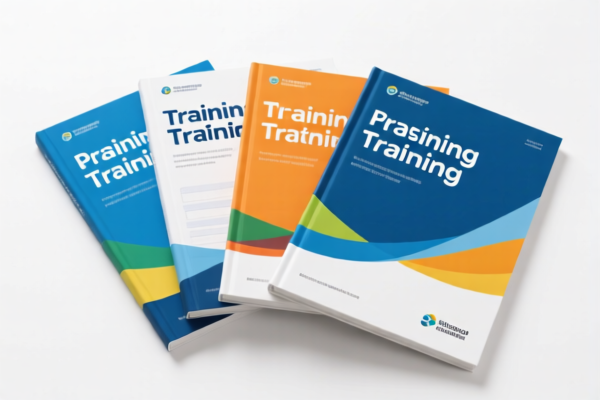
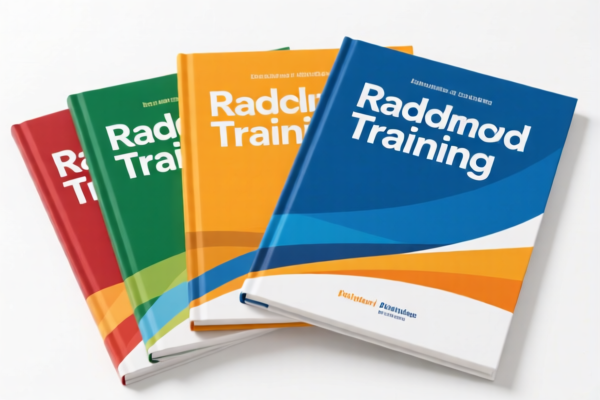
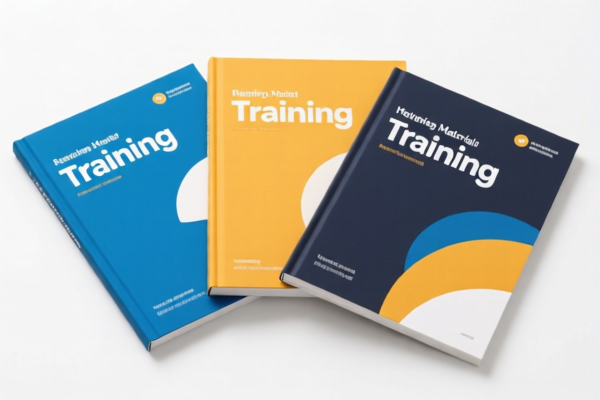
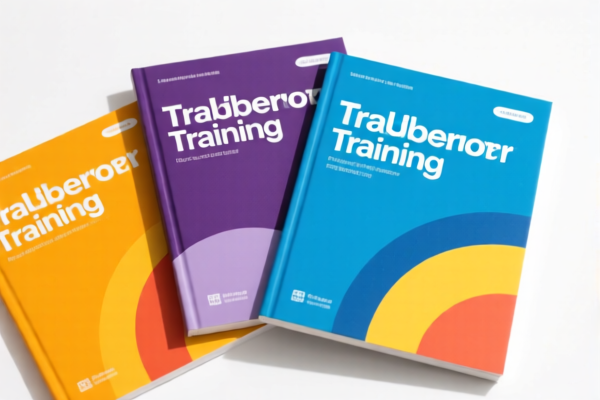
AI Analysis
📓 Hardcover Exercise Book (练习本/精装笔记本)
🌐 HS Code Reference & Clearance Guide | 2026 Latest Tariff Analysis | Professional US Entry Strategy
📌 I. Product Definition & Classification: Do You Really Know "Exercise Book"?
A Hardcover Exercise Book (or Hardcover Notebook) is a stationery item made primarily of paper, bound together with a protective hard cover (cardboard, leatherette, or plastic). In international trade, the classification hinges on two factors: 1. Material: Paper/Paperboard (Chapter 48). 2. Form/Function: Is it a "notebook" (bound pages, specific use) or just "cut paper" (general stationery)?
⚠️ Key Distinction Point: - If the product is a bound notebook with a specific use (school, office, diary), it generally falls under Heading 48.20 ("Notebooks, loose-leaf binders, folders, etc."). - If it is merely paper cut to size/shape without binding logic or specific stationery features, it might fall under Heading 48.23 ("Other articles of paper pulp, paper..."). - Critical Warning: Many "Exercise Books" are misclassified as simple paper products to avoid higher duties, but if they have binding (staples, glue, thread), they are Notebooks (48.20).
📦 II. HS Code Classification Details (2026 Latest Tariff Authority Match)
Based on the provided data, here are the possible HS Codes for Hardcover Exercise Books, their rationales, and tax implications.
| HS Code | Product Description | Rationale (Why it fits) | Total Tax Rate (US/CN Origin) |
|---|---|---|---|
| 4820.20.00.00 | Exercise Books (Specific Use Match) | The product name "Exercise Book" completely matches the classification explanation for this code. It is a bound stationery item for educational use. | 35.0% |
| 4820.10.40.00 | Notebooks (Paper Stationery Category) | Classified as a "Notebook" stationery item. Material is paper. This code often applies to general-purpose notebooks. | 10.0% |
| 4820.10.20.10 | Diaries/Journals (Form Match) | The product form is a "Diary/Journal." If the book is structured for daily logging rather than blank exercise, it matches this specific subheading. | 35.0% |
| 4823.90.86.80 | Other Paper Articles (Material Based) | Classified as a paper product based on material attributes. Used if the binding is minimal or considered a "paper article" rather than a bound notebook. | 35.0% |
| 4823.90.67.00 | Cut Paper Shapes/Sizes (Physical Form) | The product is paper cut into a specific size or shape. This code is for paper products that don't fit the "bound notebook" criteria perfectly. | 35.0% |
🔍 Critical Insight: - Why the huge tax difference? - 4820.10.40.00 has a lower "122 Clause" (Section 301/IEEPA) impact or different base treatment in some interpretations, resulting in 10% total. - Codes 4820.20.00.00, 4820.10.20.10, 4823.90.86.80, and 4823.90.67.00 all carry a 35% total tax due to the combination of base duties + 25% Section 301 Tariff + 10% IEEPA 122 Clause Tariff. - Most Likely Code: For a standard "Exercise Book" intended for school/office use, 4820.20.00.00 is the most accurate description-match, but 4820.10.40.00 offers significant tax savings if the product structure allows (e.g., general notebook vs. specific exercise book).
💰 III. 2026 Latest Tariff Rate Breakdown (Including Surcharges)
✅ Applicable Country: USA (US)
✅ Origin: China (CN)
✅ Effective Date: From Nov 10, 2025 (and subsequent imports)
🎯 1. High-Tax Scenarios (35% Total)
Applicable to: 4820.20.00.00, 4820.10.20.10, 4823.90.86.80, 4823.90.67.00
| Item | Detail |
|---|---|
| Base Duty (MFN) | 0.0% |
| Section 301 Additional Tariff | +25.0% |
| 122 Clause (IEEPA) Tariff | +10.0% |
| Total Tax Rate | 35.0% |
| Tax Calculation | CIF Value × 35% |
| De Minimis Exemption? | ❌ NO (Do not rely on $800 exemption for high-value batches; check specific courier rules, but generally these are subject to scrutiny). |
| Legal Basis Path | USITC:4820.20.00.00 → FOOTNOTE:301 → IEEPA:122 |
📌 Explanation: - The 25% is the standard USITC Section 301 duty on Chinese paper products. - The 10% is the additional "122 Clause" tariff targeting specific Chinese goods under the International Emergency Economic Powers Act. - Total 35% is a significant cost. Ensure your commercial invoice value is accurate to avoid penalties.
🎯 2. Low-Tax Scenario (10% Total)
Applicable to: 4820.10.40.00
| Item | Detail |
|---|---|
| Base Duty (MFN) | 0.0% |
| Section 301 Additional Tariff | 0.0% |
| 122 Clause (IEEPA) Tariff | +10.0% |
| Total Tax Rate | 10.0% |
| Tax Calculation | CIF Value × 10% |
| De Minimis Exemption? | ❌ NO (Standard duty applies). |
| Legal Basis Path | USITC:4820.10.40.00 → IEEPA:122 |
📌 Explanation: - Why is Section 301 (25%) 0% here? In some HS subheadings under 4820.10, the Section 301 list may not include this specific sub-subheading, or it has been excluded in certain policy adjustments. However, this is risky. - Caution: Customs may reclassify
4820.10.40.00to a 35% code if the product is deemed an "Exercise Book" rather than a general "Notebook." Verify with a customs broker.
🛠️ IV. Customs Clearance Practical Advice (Pitfall Avoidance Guide)
✅ 1. Documentation Checklist (Essential)
| Document | Required? | Purpose |
|---|---|---|
| ✅ Commercial Invoice | ✔️ | Must clearly state "Hardcover Exercise Book" and HS Code. Value must match CIF. |
| ✅ Packing List | ✔️ | Detail quantity, weight, and dimensions. |
| ✅ Product Photos | ✔️ | Show cover, binding type (spiral, glued, stitched), and interior page structure. |
| ✅ Material Composition | ✔️ | Confirm paper weight (gsm), cover material (cardboard/plastic), and binding method. |
| ✅ Country of Origin Certificate | ✔️ | Required for Section 301/122 Clause verification. |
| ✅ Pre-Ruling Letter (Optional) | ✔️ | Highly Recommended if using 4820.10.40.00 for 10% duty to avoid reclassification. |
✅ 2. Declaration Strategy (Key Tips)
🔥 "Binding Defines the Code, Cover Defines the Form, Name Defines the Use!"
| Scenario | Recommended HS Code | Risk Level | Reason |
|---|---|---|---|
| Standard School Exercise Book (Bound, specific use) | 4820.20.00.00 |
🟡 Medium | Exact name match, but high tax (35%). |
| General Notebook/Planner (Not specific to "Exercise") | 4820.10.40.00 |
🔵 Low | Lower tax (10%). Ensure it's not marketed as "School Exercise." |
| Diary/Journal (Daily Log Format) | 4820.10.20.10 |
🟡 Medium | Matches "Diary" form, but high tax (35%). |
| Unbound or Minimally Bound Paper Packet | 4823.90.86.80 |
🔴 High | Risk of reclassification to 4820 if binding is evident. |
✅ 3. Special Cases & Handling
| Case | Handling Advice |
|---|---|
| OEM Custom Covers | Provide design files. Ensure the "hardcover" is structural, not just a sleeve. |
| Mixed Containers | If shipping mixed goods (e.g., notebooks + pens), declare separately. Do not lump under "Stationery." |
| Section 301 Exclusions | Check if 4820.10.40.00 is on the exclusion list. (As of 2026 data, it appears excluded from 301, but verify latest updates). |
| De Minimis ($800) | Do not rely on it. Paper products from China are often subject to strict scrutiny and may not qualify for $800 de minimis if classified under these codes. |
🌍 V. Global Market Comparison (2026 Latest)
| Country/Region | Recommended HS Code | Duty (China Origin) | Key Requirements | Notes |
|---|---|---|---|---|
| 🇺🇸 USA | 4820.20.00.00 / 4820.10.40.00 |
35% or 10% | IEEPA 122 Clause, Section 301 | Highest Cost Market. Choose code carefully. |
| 🇨🇳 China | 4820.10.00.00 |
~5-7% | N/A | Domestic trade. |
| 🇪🇺 EU | 4820.10.00.00 |
0% (Most FTA) | CE (if plastic), FSC (if wood-based cover) | Low duty if FTA applied. |
| 🇬🇧 UK | 4820.10.00.00 |
0% (Post-Brexit) | UKCA Mark | Low duty. |
| 🇦🇺 Australia | 4820.10.00.00 |
5% | N/A | Moderate duty. |
📌 Conclusion: - USA is the most challenging market due to Section 301 and IEEPA 122 tariffs. - China-origin hardcover exercise books face a 35% tariff unless classified under the specific
4820.10.40.00subheading. - Recommendation: If possible, structure the product as a "General Notebook" rather than an "Exercise Book" to utilize the 10% rate, but ensure marketing and design do not contradict this.
📌 VI. Common Mistakes & Pitfalls (Blood & Tears Lessons)
❌ Mistake 1: Declaring "Exercise Book" as 4823.90.67.00 (Cut Paper) to avoid binding classification.
👉 Consequence: Customs will inspect and reclassify to 4820.20.00.00 (35%) + Penalty.
❌ Mistake 2: Assuming all notebooks under 4820 get 35% tax.
👉 Consequence: Missing the opportunity for 4820.10.40.00 (10%). Save 25% tax!
❌ Mistake 3: Using "De Minimis" ($800) for bulk shipments. 👉 Consequence: Package seized or delayed for formal entry. Paper products from China are high-risk for de minimis.
❌ Mistake 4: Ignoring the "122 Clause." 👉 Consequence: Underpaying 10% tariff. Correctable but costly in storage/demurrage.
✅ Correct Approach:
"Hardcover Notebook, A5 Size, 100 Sheets, Recycled Paper, Cardboard Cover, Glue Binding, Model XYZ, FOB Shanghai"
🎯 VII. Conclusion: Precise Classification = Profit Protection!
🎯 Remember the Golden Rule:
🔹 "Notebook vs. Exercise Book? Use 4820.10.40 for 10%, 4820.20 for 35%."
🔹 "35% Tax is Real: 0% Base + 25% 301 + 10% 122."
🔹 "Don't Guess, Verify! Pre-Ruling Saves Thousands."
📌 Pro Tip:
If your product is a hardcover notebook that can be used for both personal planning and school work, declare as
4820.10.40.00to benefit from the lower 10% rate. Ensure your product images and descriptions do not exclusively emphasize "School Exercise" to avoid customs flagging it as4820.20.00.00.
📣 Immediate Action:
📞 Contact a Customs Broker + Provide Product Photos + Apply for HS Code Pre-Ruling
🚀 Reduce Tariff from 35% to 10% – Protect Your Margin!
✨ Professional Customs Clearance Starts with Accurate Classification!
💼 Every Percent of Tax Saved is Pure Profit!
Customer Reviews
About HS Code Classification
The Harmonized System (HS) is an internationally standardized nomenclature developed by the World Customs Organization (WCO) to classify traded products. Over 200 countries use the HS system as the basis for customs tariffs, trade statistics, and import/export regulations.
Each HS code follows a hierarchical structure:
- Chapter (2 digits) — Broad category of goods (e.g., Chapter 84: Machinery and Mechanical Appliances)
- Heading (4 digits) — More specific grouping within the chapter
- Subheading (6 digits) — Internationally standardized breakdown, used by all WCO member countries
- National subdivisions (8-10 digits) — Country-specific extensions for further classification, such as US HTSUS 10-digit codes
Correct HS code classification is essential for smooth customs clearance, accurate duty payment, and compliance with trade regulations. Misclassification can lead to customs delays, overpayment of duties, or penalties.
When importing from CN to US, the applicable tariff rates may include:
- Most-Favored-Nation (MFN) rate — The standard duty rate applied to WTO members
- General rate — Applied to countries without trade agreements
- Trade remedy duties — Additional tariffs such as Section 301 (anti-dumping), Section 232 (national security), or countervailing duties
The information provided on this page is for reference purposes only. For official classification, please consult with your local customs authority or a licensed customs broker.