Hardcover Novel
CN → US| HS Code | Tariff Rate | Origin | Destination | Doc |
|---|---|---|---|---|
| 4901990070 | 17.5% | CN | US | Official Doc |
| 4901990093 | 17.5% | CN | US | Official Doc |
| 4911996000 | 17.5% | CN | US | Official Doc |
| 4911998000 | 17.5% | CN | US | Official Doc |
Product Images
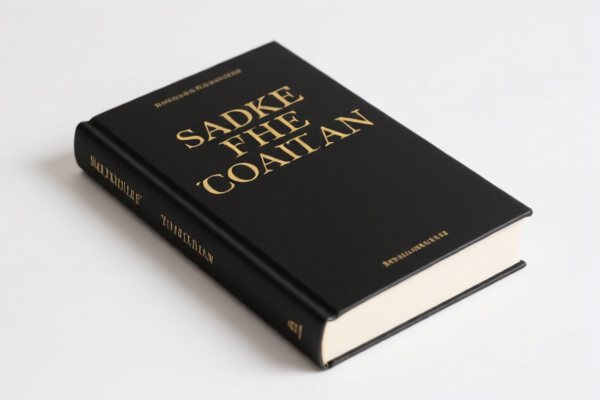

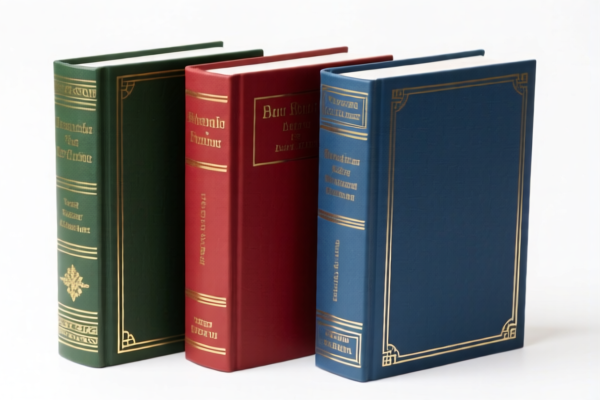

AI Analysis
📚 Hardcover Novel (精装小说)
🌐 HS Code Reference & Customs Clearance Guide | 2026 Tariff Deep Dive | Professional Clearance Strategy
📌 I. Product Definition & Classification: Do You Know "Hardcover Novels"?
A Hardcover Novel is a premium printed book featuring rigid cardboard or paperboard covers, often dust-jacketed, and bound with Smyth sewing or glue. It is a staple of the publishing industry, distinct from paperbacks (softcover) or ebooks.
In international trade, these items are strictly classified under Chapter 49 (Printed Books, Newspapers, Pictures and Other Products of the Printing Industry), specifically under Heading 49.01 or 49.11 depending on specific sub-characteristics.
⚠️ Critical Distinction for Classification:
- Standard Hardcover Books (fiction/non-fiction with rigid covers) → Primarily 4901.99 or 4911.99.
- Content Type: Must be "printed" (text/illustrations), not a blank journal or purely artistic print (which might fall under 4901.10).
- Format: "Hardbound" is the key keyword for 4901.99, while general "printed matter" fits 4911.99.
📦 II. HS Code Classification Details (2026 Tariff Authority)
Based on the provided data, Hardcover Novels are classified into four specific HS Codes, all sharing the same total tax rate of 17.5%, but differing slightly in their descriptive classification logic.
| HS Code | Product Description & Classification Logic | Application Scenario |
|---|---|---|
4901.99.00.70 |
Hardbound Novels. Specifically matches the "Hardbound" form factor. Classified under "Books, printed in volumes" (Heading 49.01). | Standard commercial fiction novels with rigid covers. |
4901.99.00.93 |
Hardbound Novels (General). Fits the "Printed Books" purpose. Meets page count and physical form characteristics of common books. | Common hardcover novels where "Hardbound" is the primary identifier but specific sub-codes vary. |
4911.99.60.00 |
Hardbound Novels (Printing Characteristics). Classified as "Printed matter," noting that the hardcover form includes paper and conforms to Lithographic (Planographic) Printing features. | Novels emphasizing the printing technology (offset/litho) used in their production. |
4911.99.80.00 |
Hardbound Novels (Material/Form). Classified as "Printed Publications," matching the material/form characteristics of printed items not covered by more specific headings. | General hardcover books where the focus is on the "Publication" status rather than the specific binding sub-type. |
🔍 Key Insight:
All four codes represent Hardcover Novels. The distinction lies in the specific administrative sub-category used by customs systems (e.g., 4901 vs. 4911, or specific suffixes .70, .93, .60, .80). All result in the same 17.5% total duty.
💰 III. 2026 Tariff Rate Analysis (Detailed Breakdown)
✅ Applicable Region: United States (US)
✅ Origin: China (CN) (Implied by the "Section 301" and "Section 122" context in tax details)
✅ Effective Date: Current (2026 context)
🎯 The 17.5% Total Tax Structure (Applicable to ALL 4 Codes)
| Component | Tax Rate | Description |
|---|---|---|
| Base Tariff | 0.0% | The standard Most-Favored-Nation (MFN) duty rate for books is typically duty-free. |
| Section 301 (Additional) Tariff | +7.5% | Added tariff under the Section 301 Trade Act (specific list for China). |
| Section 122 Tariff | +10.0% | Additional tariff under Section 122 (specific list for China). |
| TOTAL DUTY | 17.5% | Sum of Base + 301 + 122 |
| Tax Calculation | CIF Value × 17.5% |
Applied to the total cost of goods, insurance, and freight. |
| De Minimis Exemption | ❌ NO | Items classified under these HS codes do NOT qualify for the $800 de minimis exemption if they are part of a larger shipment or specific high-value categories. |
📌 Explanation of Tax Layers:
- Base (0%): Books are generally encouraged for trade, hence 0% base.
- Section 301 (+7.5%): A retaliatory tariff on Chinese goods for intellectual property concerns.
- Section 122 (+10%): An additional tariff layer often targeting specific manufacturing sectors or broad China trade restrictions.
- Result: Even though the book itself is "zero-rated" at the base level, the combined 17.5% makes it a taxable import.
🛠️ IV. Customs Clearance Practical Advice (Avoiding Pitfalls)
✅ 1. Documentation Checklist (Must Have)
| Document | Requirement | Why it Matters |
|---|---|---|
| Commercial Invoice | Must clearly state "Hardcover Novel" or "Hardbound Book". | Ambiguous descriptions (e.g., "Book" or "Paper") trigger manual review and potential delays. |
| Detailed Packing List | List the exact number of copies, ISBN, and page count. | Customs officers verify if the item truly matches "Book" characteristics vs. "Magazine" or "Printed Material". |
| Copyright/ISBN Proof | Provide ISBN numbers for each title. | Verifies the item is a legitimate publication, not counterfeit or unauthorized printing. |
| Country of Origin Cert. | Must explicitly state China. | Essential to calculate the correct 17.5% tariff (if origin changes, rates change). |
| Product Photos | Show the hard cover, spine, and dust jacket. | Visual proof of "Hardbound" status to justify 4901 vs. softcover 4906 or other categories. |
✅ 2. Declaration Strategy (The Golden Rule)
🔥 "Be Specific: 'Hardcover Novel', not just 'Book'"
| Scenario | Correct Declaration | Wrong Declaration | Consequence |
|---|---|---|---|
| Standard Fiction | 4901.99.00.70 / 93 |
4901.99.00.00 (Generic) |
May trigger manual inspection for exact sub-code. |
| Lithographic Printed | 4911.99.60.00 |
4901.00.00.00 |
Risk of misclassification if printing method is a key feature. |
| Bulk Shipment | Do not split into "pages" vs "covers". | Splitting material components | Will lead to "Part" classification with 89.5% duties (if applicable to parts) or audit. |
✅ 3. Special Considerations for Hardcover Novels
| Situation | Recommendation |
|---|---|
| Counterfeit Concerns | If the book is unlicensed or pirated, it may be seized regardless of HS Code. Ensure legal distribution rights. |
| Mixed Shipments | If shipping Hardcover + Paperback + Magazines together, separate the HS Codes. Do not lump them; Hardcover (17.5%) vs. Magazines (different rate) causes compliance issues. |
| Sample Copies | Even "Free Samples" of hardcover novels are subject to 17.5% duty if they do not meet specific "de minimis" thresholds for samples (often hard for physical books). |
| Digital Content | If the book includes a CD/USB, the entire shipment might be reclassified to electronics (e.g., 8523/8524), drastically changing the tax rate! Keep digital media separate if possible. |
🌍 V. Global Market Comparison (2026 Context)
| Market | Recommended HS Code | Base Duty | Extra Tariffs | Total Duty | Notes |
|---|---|---|---|---|---|
| 🇺🇸 USA | 4901.99.00.70 etc. |
0.0% | +7.5% (301) +10% (122) | 17.5% | Highest burden due to Section 301/122. |
| 🇨🇳 China | 4901.99.00.70 |
0.0% | None | 0.0% | Importing into China from US? No tariff. |
| 🇪🇺 EU | 4901.99.00 |
0.0% | None | 0.0% | Usually duty-free for books (unless specific restrictions). |
| 🇬🇧 UK | 4901.99.00 |
0.0% | None | 0.0% | Generally duty-free for books. |
📌 Conclusion:
The 17.5% tariff is a US-specific burden on Chinese-origin hardcover novels. If exporting to Europe or the UK, the cost is negligible. For US imports, budget for a 17.5% duty on CIF value.
📌 VI. Common Mistakes & How to Avoid Them
❌ Mistake 1: Calling it "Book" only.
👉 Result: Customs may not know if it's a hardcover (4901) or softcover (4906) or textbook (4901.10).
✅ Fix: Use "Hardcover Novel" or "Hardbound Book" in the description.
❌ Mistake 2: Splitting the Cover and Pages.
👉 Result: Attempting to declare the cover as "Paper" and pages as "Print" separately.
✅ Fix: Declare as a finished product (Book). The assembly is complete.
❌ Mistake 3: Ignoring Section 122.
👉 Result: Calculating only 7.5% tax and facing a surprise bill at the port.
✅ Fix: Always calculate Base (0%) + 301 (7.5%) + 122 (10%) = 17.5%.
🎯 VII. Conclusion: Precision is Profit
🎯 Key Takeaway:
"Hardcover Novel = 17.5% Total Duty in the US."
Whether you use4901.99.00.70,.93,4911.99.60.00, or.80, the tax outcome is identical. The critical step is accurate declaration to avoid audits and delays.
📌 Pro Tip:
If you are shipping multiple titles, ensure the ISBNs are listed. This proves they are "Books" and not "Printed Materials" (which might have different rules if they contain ads or are not books).
📣 Immediate Action:
📞 Contact your Customs Broker:
"I am importing Hardcover Novels from China to the US. Please declare using 4901.99.00.70 and prepare for 17.5% duty (Base 0% + 301 7.5% + 122 10%)."
✨ Professional Clearance Starts with Accurate Classification!
💼 Don't let 17.5% surprise you—plan your costs today!
Customer Reviews
About HS Code Classification
The Harmonized System (HS) is an internationally standardized nomenclature developed by the World Customs Organization (WCO) to classify traded products. Over 200 countries use the HS system as the basis for customs tariffs, trade statistics, and import/export regulations.
Each HS code follows a hierarchical structure:
- Chapter (2 digits) — Broad category of goods (e.g., Chapter 84: Machinery and Mechanical Appliances)
- Heading (4 digits) — More specific grouping within the chapter
- Subheading (6 digits) — Internationally standardized breakdown, used by all WCO member countries
- National subdivisions (8-10 digits) — Country-specific extensions for further classification, such as US HTSUS 10-digit codes
Correct HS code classification is essential for smooth customs clearance, accurate duty payment, and compliance with trade regulations. Misclassification can lead to customs delays, overpayment of duties, or penalties.
When importing from CN to US, the applicable tariff rates may include:
- Most-Favored-Nation (MFN) rate — The standard duty rate applied to WTO members
- General rate — Applied to countries without trade agreements
- Trade remedy duties — Additional tariffs such as Section 301 (anti-dumping), Section 232 (national security), or countervailing duties
The information provided on this page is for reference purposes only. For official classification, please consult with your local customs authority or a licensed customs broker.