Hardcover Planner Notebook
CN → US| HS Code | Tariff Rate | Origin | Destination | Doc |
|---|---|---|---|---|
| 4817300000 | 35.0% | CN | US | Official Doc |
| 4820102010 | 35.0% | CN | US | Official Doc |
| 4820102060 | 35.0% | CN | US | Official Doc |
| 4817202000 | 35.0% | CN | US | Official Doc |
| 4901990070 | 17.5% | CN | US | Official Doc |
Product Images
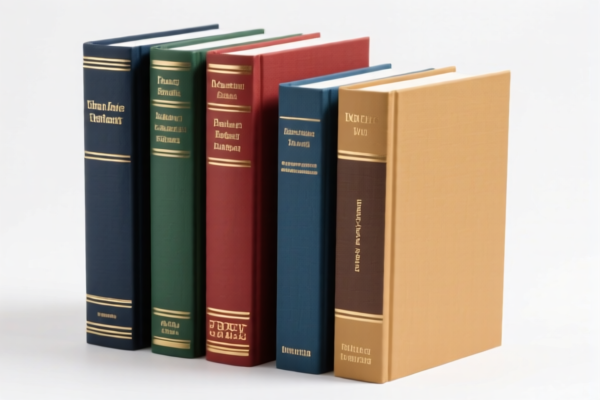
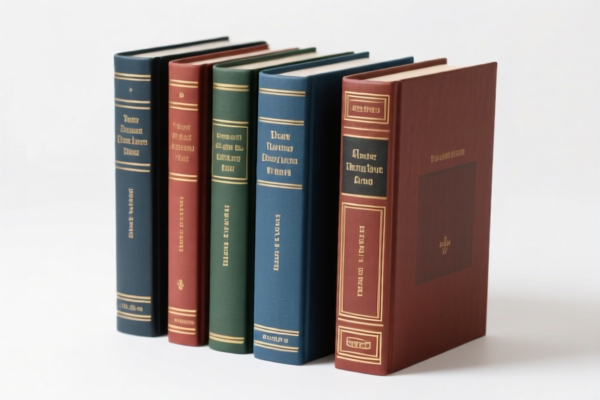

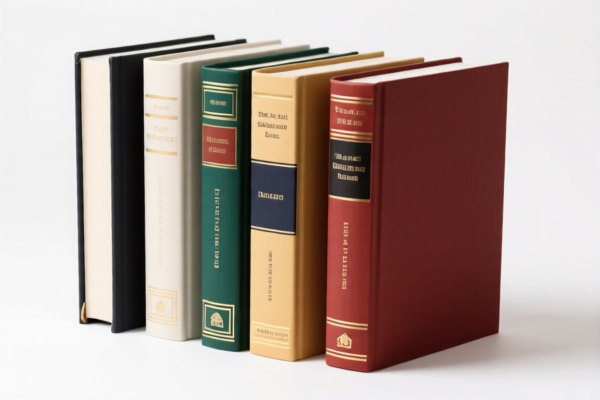
AI Analysis
📓 Hardcover Planner Notebook (Plan Book)
🌐 HS Code Reference & Customs Clearance Guide | 2026 Latest Tariff Analysis | Professional Clearance Strategy
📌 I. Product Definition & Classification: Do You Really Understand the "Planner"?
A Hardcover Planner Notebook (often referred to as "Plan Book" in trade) is a stationary item used for daily scheduling, record-keeping, or agenda management. In international trade, its classification hinges on two key factors: 1. Format: Is it bound like a notebook/journal (Chapter 48.20) or treated as a writing accessory/clipboard-like item (Chapter 48.17)? 2. Nature: Is it primarily a printed booklet (Chapter 49.01) due to significant printed content, or just stationery?
⚠️ Key Distinction Points: - If it is a bound paper product for writing/recording without significant printed text (mostly blank/grid pages) → Belongs to Chapter 48 (Notebooks/Journals). - If it contains substantial printed material (e.g., pre-filled guides, books, or small booklets) → May be classified under Chapter 49 (Printed Books). - Material: Always Paper/Paperboard. No conflict with textile or plastic covers if paper is the primary material.
📦 II. HS Code Classification Details (2026 Latest Tariff Authority Comparison)
| HS Code | Product Description | Applicability | Tax Rate (Total) | Legal Basis |
|---|---|---|---|---|
4817.30.00.00 |
Writing pads, clipboard-like items, or portable paper accessories | Portable recorders, clipboards, or loose-leaf style planners that don't fit standard notebook categories. | 35.0% | Text: "Inferred as paper stationery/portable recording item." |
4820.10.20.10 |
Diaries, notebooks, and address books (Other) | Standard bound notebooks for writing. Fits the category of "Diaries/Notebooks." | 35.0% | Text: "Planner belongs to diaries/notebooks; bound paper product." |
4820.10.20.60 |
Other diaries, notebooks, and address books | Similar to above; covers "Other" types of bound paper stationery not specifically sized/type defined. | 35.0% | Text: "Bound stationery; inferred paper material; no conflict with 'Other' category." |
4817.20.20.00 |
Paper/Board writing accessories (Other) | General paper writing aids that may not fit neatly into notebooks or letterheads. | 35.0% | Text: "Inferred as paper stationery; matches material (paper) and use (writing/recording)." |
4901.99.00.70 |
Printed Books/Booklets (Other) | Hardbound items with significant printed content (e.g., pre-filled guides, instructional planners) treating it as a "Hardbound" book. | 17.5% | Text: "'Hardcover' matches 'Hardbound'; belongs to printed books/booklets." |
🔍 Critical Reminder: - If the planner is mostly blank or lightly lined for user writing → Use 48xx series (Tax: 35%). - If the planner is heavily printed (e.g., includes books, guides, or is classified as a "booklet") → Use 4901.99.00.70 (Tax: 17.5%). - Misclassification Risk: Declaring a printed book as a notebook (or vice versa) can lead to duty discrepancies.
💰 III. 2026 Latest Tariff Rate Breakdown (Including Surtaxes & Policy Add-ons)
✅ Applicable Country: USA (US)
✅ Origin: China (CN)
✅ Effective Time: From November 10, 2025 (and subsequent imports)
🎯 1. HS Codes 4817.30.00.00, 4820.10.20.10, 4820.10.20.60, 4817.20.20.00
(For Standard Paper Notebooks/Planners)
| Item | Detail |
|---|---|
| Base Tariff | 0.0% (ad valorem) |
| Section 301 Surtax | +25.0% (From USITC Footnote 9903.88.01 / Section 301 List 4A) |
| IEEPA Surtax | +10.0% (Targeting China/HK products, effective Nov 10, 2025) |
| Total Tax Rate | 35.0% |
| Calculation | CIF Value × 35% |
| De Minimis Exemption? | ❌ No (deny_de_minimis) |
| Legal Path | IEEPA:9903.01.24 → USITC:48xx.00.xx → FOOTNOTE:301 |
📌 Explanation: - The 25% is the standard "Section 301" tariff on Chinese goods. - The 10% is the new IEEPA surcharge added in late 2025. - Combined 35% is high. Standard stationery is NOT exempt.
🎯 2. HS Code 4901.99.00.70
(For Hardbound Printed Planners/Booklets)
| Item | Detail |
|---|---|
| Base Tariff | 0.0% |
| Section 301 Surtax | +7.5% (Note: Different subset rate applies for some 4901 items) |
| IEEPA Surtax | +10.0% (Targeting China/HK products) |
| Total Tax Rate | 17.5% |
| Calculation | CIF Value × 17.5% |
| De Minimis Exemption? | ❌ No (deny_de_minimis) |
| Legal Path | IEEPA:9903.01.24 → USITC:4901.99.00.70 → FOOTNOTE:301 |
📌 Note: - If your planner is considered a "Booklet" (printed content > blank space), the Section 301 rate is lower (7.5%). - This results in a significantly lower total duty (17.5%) compared to standard notebooks (35%). - Strategy: If applicable, highlight "Hardbound Printed Content" to qualify for this lower tier.
🛠️ IV. Customs Clearance Practical Advice (Battle-Tested Pitfall Avoidance)
✅ 1. Required Documentation Checklist (Mandatory)
| Document | Required | Description |
|---|---|---|
| ✅ Product Specifications | ✔️ | Must specify: "Planner," "Notebook," dimensions, binding type (Hardcover/Softcover), page count. |
| ✅ Product Photos | ✔️ | Show cover, binding, and sample internal pages. - Crucial: Show if pages are blank/grid (supports 48xx) or printed/text-heavy (supports 4901). |
| ✅ Commercial Invoice | ✔️ | Clearly state: "Hardcover Planner Notebook for Daily Scheduling." Avoid vague terms like "Gift." |
| ✅ Packing List | ✔️ | Detail contents to ensure no mixed SKUs. |
| ✅ Origin Certificate (CO) | ✔️ | Required for China origin verification. |
✅ 2. Declaration Tips (Key Mantras)
🔥 "Bind Type & Print Content Determine Your Tax!"
| Scenario | Correct Declaration | Common Error |
|---|---|---|
| Standard Blank/Grid Planner | 4820.10.20.10 or 4820.10.20.60 |
Declaring as 4901 → Risk of Audit (Tax: 35% vs 17.5%) |
| Heavy Printed Guide Planner | 4901.99.00.70 |
Declaring as 4820 → Overpaying Duty (17.5% vs 35%) |
| Loose-Leaf/Clipboard Style | 4817.30.00.00 |
Declaring as Notebook → Misclassification |
| Mixed Kit (Pen + Planner) | Split Declaration | Packing Pen as Planner → Pen Tax (Higher) Applied to All |
⚠️ Warning: - If you declare a printed planner as
4820(35%), you overpay. - If you declare a blank planner as4901(17.5%), you underdeclare and risk penalties for tax evasion. - Evidence is Key: Provide photos of the inside pages. Blank = Chapter 48. Printed/Booklet = Chapter 49.
✅ 3. Special Case Handling
| Scenario | Handling Advice |
|---|---|
| Custom Cover Material | If cover is leather/fabric but paper pages dominate, still Chapter 48/49. |
| OEM Custom Planners | Provide design files to prove it's a "Notebook" (custom layout) vs. "Book" (pre-printed content). |
| Gift Sets | If planner is part of a gift box with pens, declare separately or risk higher combined tax. |
🌍 V. Global Market Clearance Comparison (2026 Latest)
| Country/Region | Recommended HS Code | Tariff (China Origin) | Certification | Notes |
|---|---|---|---|---|
| 🇺🇸 USA | 4820.10.20.10 / 4901.99.00.70 |
35% (Notebook) 17.5% (Booklet) |
N/A | High duty due to 301 + IEEPA. |
| 🇨🇳 China | 4820.10.10.00 |
8% - 15% | N/A | Standard import tax. |
| 🇪🇺 EU | 4820.10.20 |
6.5% | N/A | No Section 301 equivalent. |
| 🇬🇧 UK | 4820.10.20 |
6.5% | N/A | Post-Brexit tariff aligns with EU. |
| 🇯🇵 Japan | 4820.10.00.00 |
8% | N/A | Moderate tariff. |
📌 Conclusion: - USA is the most expensive market for Chinese stationery due to layered tariffs (Base 0% + 25% + 10% = 35%). - Strategic Shift: If targeting the US, ensure your planner is accurately described. If it has substantial printed content, use
4901.99.00.70to save 17.5% in duties.
📌 VI. Common Errors & Pitfalls (Lessons Learned)
❌ Error 1: Calling a "Hardbound Book" a "Notebook" to avoid higher scrutiny.
👉 Consequence: Customs may reclassify as 4901 (17.5%) or reject if content doesn't match.
❌ Error 2: Declaring a "Blank Notebook" as "Printed Book" (4901).
👉 Consequence: Overpayment. You pay 17.5%? No, wait—actually, for notebooks, the 301 tax is 25%, so 35% total. If you declare it as a book, you might pay 17.5%. BUT, if customs audits and finds it's blank, they may penalize you for misdeclaration. Accuracy is safer.
❌ Error 3: Ignoring the "Hardcover" keyword.
👉 Consequence: "Hardcover" triggers 4901.99.00.70 consideration. If you ignore it and use 4820, you may be flagged for inconsistency.
✅ Correct Approach:
"Hardcover Planner Notebook, Bound Paper, For Daily Scheduling, Model XYZ, No Electronic Components."
Attach photo showing blank/grid pages to support48xxclassification.
OR
"Hardcover Planner Booklet, With Pre-Printed Guides, Model ABC, Supports4901.99.00.70."
Attach photo showing printed text to support lower17.5%rate.
🎯 VII. Conclusion: Precise Classification Saves Money!
🎯 Remember the Mantra:
🔹 "Blank Pages = 35% (Notebook); Printed Content = 17.5% (Booklet)."
🔹 "Hardcover" is a Keyword for Chapter 49; "Notebook" is Chapter 48.
🔹 "Don't Guess, Show Photos to Prove Page Content!"
📌 Pro Tip:
For US imports, the 10% IEEPA surcharge is new and unavoidable for China-origin goods. Focus on the 301 surtax difference (25% vs 7.5%).
If your planner has significant printed value, argue for4901.99.00.70to reduce the 301 tax burden.
📣 Immediate Action:
📞 Contact your customs broker with internal page photos.
📝 Decide: Is it a Notebook (35%) or a Booklet (17.5%)?
🚀 Clarify early to avoid surprise bills at US Customs!
✨ Professional Clearance Starts with Accurate HS Codes!
💼 Every 1% Tax Difference Counts in Stationery Trade!
Customer Reviews
About HS Code Classification
The Harmonized System (HS) is an internationally standardized nomenclature developed by the World Customs Organization (WCO) to classify traded products. Over 200 countries use the HS system as the basis for customs tariffs, trade statistics, and import/export regulations.
Each HS code follows a hierarchical structure:
- Chapter (2 digits) — Broad category of goods (e.g., Chapter 84: Machinery and Mechanical Appliances)
- Heading (4 digits) — More specific grouping within the chapter
- Subheading (6 digits) — Internationally standardized breakdown, used by all WCO member countries
- National subdivisions (8-10 digits) — Country-specific extensions for further classification, such as US HTSUS 10-digit codes
Correct HS code classification is essential for smooth customs clearance, accurate duty payment, and compliance with trade regulations. Misclassification can lead to customs delays, overpayment of duties, or penalties.
When importing from CN to US, the applicable tariff rates may include:
- Most-Favored-Nation (MFN) rate — The standard duty rate applied to WTO members
- General rate — Applied to countries without trade agreements
- Trade remedy duties — Additional tariffs such as Section 301 (anti-dumping), Section 232 (national security), or countervailing duties
The information provided on this page is for reference purposes only. For official classification, please consult with your local customs authority or a licensed customs broker.