Hardcover Sample Book
CN → US| HS Code | Tariff Rate | Origin | Destination | Doc |
|---|---|---|---|---|
| 3926904800 | 13.4% | CN | US | Official Doc |
| 3926908700 | 40.3% | CN | US | Official Doc |
| 4901990070 | 17.5% | CN | US | Official Doc |
| 4901100040 | 17.5% | CN | US | Official Doc |
| 4820500000 | 35.0% | CN | US | Official Doc |
| 4820900000 | 35.0% | CN | US | Official Doc |
Product Images
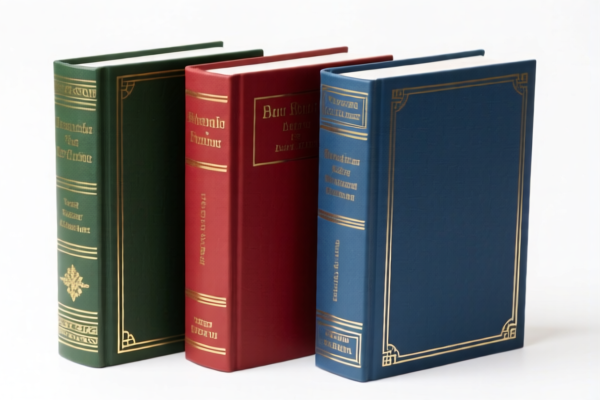


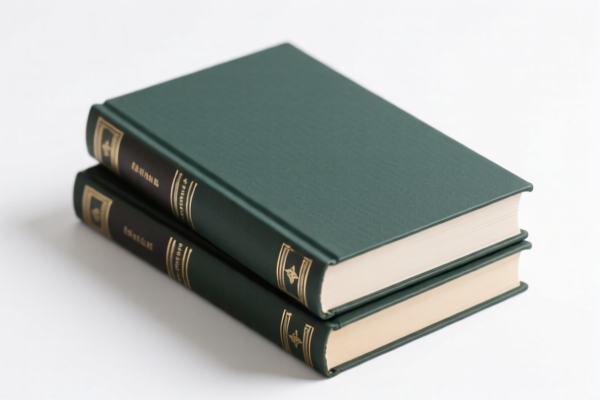
AI Analysis
📘 Hardbound Sample Book: The Ultimate Guide to HS Codes & 2026 Customs Strategy
🌐 HS Code Reference & Clearance Guide | 2026 Latest Tariff Analysis | Professional Logistics Strategy
📌 I. Product Definition & Classification: What Exactly is a "Hardcover Sample Book"?
A Hardcover Sample Book is a specialized stationery or display item designed to hold, organize, and showcase physical samples (textiles, swatches, photos, materials).
It consists of a rigid hardbound cover (cardboard/paperboard) and internal sleeves, pockets, or loose-leaf systems.
Crucial Distinction:
- If it is primarily an "Album for Samples": It falls under Stationery (Chapter 48).
- If it is a "Photo Album" made of Plastic: It falls under Plastics (Chapter 39).
- If it is a "Book" (printed text): It falls under Printed Matter (Chapter 49).
⚠️ The "Material" Trap:
- Paper/Paperboard Construction → HS Code 4820.50.00.00 (High Tariff Alert: 25%)
- Plastic Construction → HS Code 3926.90.48.00 (Low Tariff: 0%)
- Flexible Plastic Binders → HS Code 3926.90.87.00 (Low Tariff: 0%)
📦 II. HS Code Classification Breakdown (2026 Authorized Data)
Based on the specific product composition provided in your query, here is the authoritative classification for Hardcover Sample Books:
| HS Code | Product Description | Material Composition | Tax Rate (Total) |
|---|---|---|---|
4820.50.00.00 |
Albums for samples or for collections | Paper / Paperboard (Hardbound covers, loose-leaf folders) | 25.0% |
4820.90.00.00 |
Other Stationery Articles (Non-sample specific) | Paper / Paperboard | 25.0% |
3926.90.48.00 |
Photo Albums (Plastic) | Plastics (Hardbound plastic albums) | 0.0% |
3926.90.87.00 |
Flexible Plastic Document Binders | Plastics (Rolling/Flat plastic binders) | 0.0% |
4901.99.00.70 |
Hardbound Books (Text/Printed) | Paper (If filled with printed text, not just samples) | 7.5% |
4901.10.00.40 |
Single Sheet Booklets | Paper | 7.5% |
🔍 Critical Analysis:
- Scenario A (Paper Board): Most traditional "swatch books" for textiles are made of thick paperboard. They attract a 25% tariff because they are classified as "Stationery/Albums" rather than "Books".
- Scenario B (Plastic): Modern "sample books" with clear plastic sleeves or plastic hardcovers are classified under Plastics. They attract 0% tariff.
- Scenario C (Printed Text): If the "book" is actually a catalog with printed text inside, not empty pockets, it might fall under Books (4901), attracting only 7.5%.
💰 III. 2026 Tariff Rate Breakdown (Detailed Tax Clause)
✅ Applicable Jurisdiction: Import from China (CN) to US (US) (Standard Trade Data)
✅ Effective Date: Current 2026 Trade Framework
✅ Tax Structure: Base Tariff + "Add-on" Tariff (Section 301 / 232)
🎯 1. 4820.50.00.00 (Paper Board Sample Album) — High Risk
| Tax Item | Rate | Legal Basis | Explanation |
|---|---|---|---|
| Base Tariff | 0.0% | Most Favored Nation (MFN) | Standard import duty for stationery is often 0%. |
| Section 301 / Add-on | +25.0% | USITC Footnote 9903.88 (Section 301) | Critical: Paper products from China face a heavy 25% "add-on" tariff. |
| Total Tax | 25.0% | 25.0% | Total = 0% + 25% |
| De Minimis? | ❌ NO | $800 exemption NOT applicable for commercial goods. | |
| Payment Calculation | CIF Value × 25% |
📌 The "Stationery Penalty":
Even though the base rate is 0%, the 25% punitive tariff makes this category expensive. Do NOT classify a paper swatch book as a "Book" (4901) if it lacks text; it will be seized/reclassified and fined.
🎯 2. 3926.90.48.00 (Plastic Photo/Sample Album) — Optimal
| Tax Item | Rate | Legal Basis | Explanation |
|---|---|---|---|
| Base Tariff | 0.0% | MFN | Plastics generally have low base rates. |
| Section 301 / Add-on | 0.0% | No Applicable Footnote | Bonus: Plastic sample albums (photo style) often escape the high paper tariff. |
| Total Tax | 0.0% | 0.0% | Total = 0% + 0% |
| De Minimis? | ❌ NO | Commercial goods. |
📌 The "Plastic Advantage":
If your sample book is made of plastic (even with paper inserts), shifting the classification to Plastics (3926.90.48.00) can save you 25% immediately.
🎯 3. 4901.99.00.70 (Hardbound Printed Books) — Medium Risk
| Tax Item | Rate | Legal Basis | Explanation |
|---|---|---|---|
| Base Tariff | 0.0% | MFN | Books are duty-free. |
| Section 301 / Add-on | +7.5% | USITC Footnote 9903.01.25 | Books from China face a moderate 7.5% "add-on" tariff. |
| Total Tax | 7.5% | 7.5% | Total = 0% + 7.5% |
📌 The "Text" Loophole:
If your sample book contains printed information, instructions, or catalogs inside (making it a "Book" not an "Album"), you only pay 7.5%.
Warning: If it is empty or holds loose items, this code is invalid.
🛠️ IV. Clearance Operational Advice (Real-World Pitfalls)
✅ 1. Preparation Checklist (Do Not Skip)
| Document | Requirement | Why It Matters |
|---|---|---|
| Material Specification Sheet | Mandatory | Must explicitly state: "Cover: Paperboard vs. Plastic". This determines 0% vs 25%. |
| Product Photos (Open & Closed) | Mandatory | Must show if pockets are for "samples" (Album) or "text" (Book). |
| Sample Swatches/Inserts | Highly Recommended | Prove the item is for "collections" (4820) or just a "book" (4901). |
| Bill of Materials (BOM) | Highly Recommended | Breakdown of % paper vs. % plastic. |
✅ 2. Declaration Strategy (The "Name Game")
| Scenario | Correct Declaration | Wrong Declaration | Consequence |
|---|---|---|---|
| Paper Swatch Book | "Hardbound Album for Samples, Paperboard" | "Hardcover Book" | Reclassified to 4820 (25%) + Penalty |
| Plastic Swatch Book | "Plastic Photo/Sample Album" | "Paper Album" | Avoid 25% tax (Use 0%) |
| Catalog with Swatches | "Hardbound Book with Sample Inserts" | "Empty Album" | Qualifies for 7.5% (Better than 25%) |
🔥 Golden Rule:
"If it's paper, call it an Album (25%). If it's plastic, call it an Album (0%). If it has text, call it a Book (7.5%)."
✅ 3. Special Scenarios
- Scenario: Hybrid Material (Plastic Cover, Paper Pages)
- Advice: Declare under Plastics (3926.90.48.00) if the cover and structural integrity are plastic. The plastic component often dictates the classification for tax purposes if it provides the "main function" (durability).
- Scenario: "Blank" Hardcover Book
- Advice: If it has no text and no pockets, it may be a "Notebook" (4820.90.00.00 → 25%). If it has text, it is a "Book" (4901 → 7.5%).
🌍 V. Global Market Comparison (2026 Snapshot)
| Market | Best HS Code for Sample Book | Total Tax (China Origin) | Key Requirement |
|---|---|---|---|
| 🇺🇸 USA | 3926.90.48.00 (Plastic) |
0% | Plastic construction proof |
| 🇺🇸 USA | 4820.50.00.00 (Paper) |
25% | No plastic alternative |
| 🇪🇺 EU | 4820.50.00.00 |
~5-15% (Variable) | CE Marking + FSC Paper |
| 🇬🇧 UK | 3926.90.48.00 |
0% | Plastic declaration |
📌 Conclusion:
The USA is the most aggressive market regarding Paper Stationery (25% tax).
Strategy: If possible, switch Paper Sample Books to Plastic Sample Books to save 25%. If switching is impossible, ensure the book contains printed text to qualify for 7.5% instead of 25%.
📌 VI. Common Mistakes & How to Avoid Them
❌ Mistake 1: Calling a Paper Swatch Book a "Book" (4901).
👉 Result: Customs sees "Stationery", reclassifies to 4820, and charges 25% + Penalties.
❌ Mistake 2: Calling a Plastic Book "Paper" to avoid plastic fees.
👉 Result: No fees exist for plastic, so this is a waste of effort. However, if mislabeled, it might delay inspection.
❌ Mistake 3: Ignoring the Material Composition in the commercial invoice.
👉 Result: Customs cannot verify the HS Code. Goods will be held.
✅ Correct Way:
"Plastic Hardbound Sample Album for Textile Swatches, 20 Pockets, Model X-200."
HS Code:3926.90.48.00
Tax: 0.0%
🎯 VII. Final Verdict: Action Plan
- Check Material: Is it Paper or Plastic?
- Plastic → Go for 3926.90.48.00 (Tax: 0%) 🟢
- Paper → Can you add text?
- If Paper & No Text:
- Prepare for 25% Tax (Code:
4820.50.00.00). - Action: Re-evaluate packaging. Can you use plastic sleeves?
- Prepare for 25% Tax (Code:
- If Paper & Has Text:
- Claim 7.5% Tax (Code:
4901.99.00.70). - Action: Add a printed catalog/introduction page to the cover.
- Claim 7.5% Tax (Code:
🚀 Pro Tip:
Plastic is King. For US imports, converting a paper sample book to a plastic one is the single most effective cost-saving measure in the 2026 trade landscape.
✨ Professional Clearance Starts with the Right HS Code!
💼 Don't let a 25% tariff eat your margins. Optimize your classification today!
Customer Reviews
About HS Code Classification
The Harmonized System (HS) is an internationally standardized nomenclature developed by the World Customs Organization (WCO) to classify traded products. Over 200 countries use the HS system as the basis for customs tariffs, trade statistics, and import/export regulations.
Each HS code follows a hierarchical structure:
- Chapter (2 digits) — Broad category of goods (e.g., Chapter 84: Machinery and Mechanical Appliances)
- Heading (4 digits) — More specific grouping within the chapter
- Subheading (6 digits) — Internationally standardized breakdown, used by all WCO member countries
- National subdivisions (8-10 digits) — Country-specific extensions for further classification, such as US HTSUS 10-digit codes
Correct HS code classification is essential for smooth customs clearance, accurate duty payment, and compliance with trade regulations. Misclassification can lead to customs delays, overpayment of duties, or penalties.
When importing from CN to US, the applicable tariff rates may include:
- Most-Favored-Nation (MFN) rate — The standard duty rate applied to WTO members
- General rate — Applied to countries without trade agreements
- Trade remedy duties — Additional tariffs such as Section 301 (anti-dumping), Section 232 (national security), or countervailing duties
The information provided on this page is for reference purposes only. For official classification, please consult with your local customs authority or a licensed customs broker.