Hardened Protein Based Material
CN → US| HS Code | Tariff Rate | Origin | Destination | Doc |
|---|---|---|---|---|
| 3504001000 | 22.5% | CN | US | Official Doc |
| 3504005000 | 0.0% | CN | US | Official Doc |
Product Images
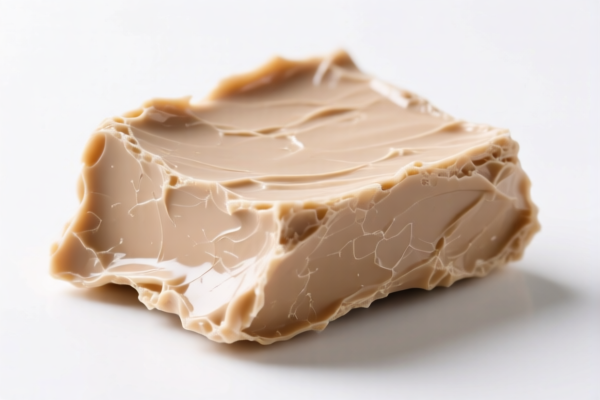
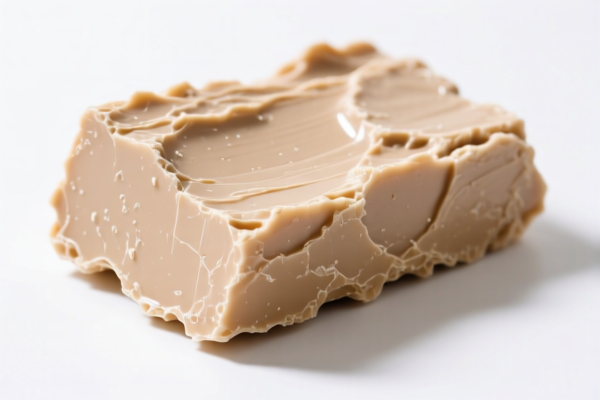
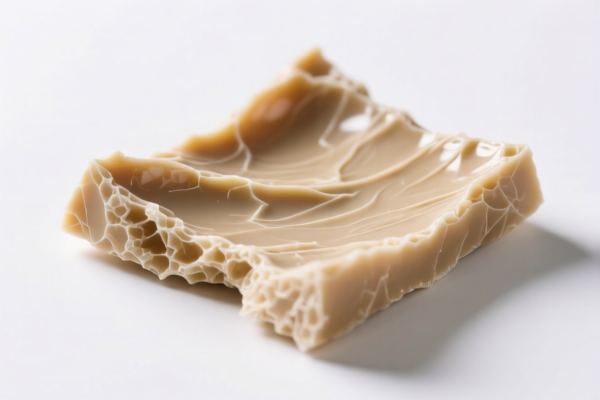
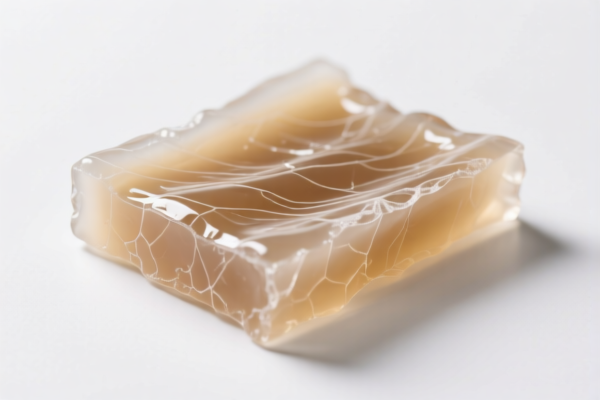
AI Analysis
🥩 Hardened Protein Based Material (Protein Isolates & Derivatives)
🌐 HS Code Reference & Customs Clearance Guide | 2026 Latest Tariff Analysis | Professional-Level Clearance Strategy
📌 I. Product Definition & Classification: Do You Really Understand "Protein Isolates"?
"Hardened Protein Based Material" typically refers to refined protein products such as Protein Isolates or specific protein derivatives. In international trade, these materials are classified under Chapter 35: Albuminoidal Substances; Modified Starches; Glues; Enzymes.
The critical distinction lies in the degree of refinement and specific application:
Protein Isolates: High-purity proteins (usually ≥80% protein) extracted from sources like soy, whey, or pea. These are often used in food fortification, nutritional supplements, and specialized food processing.
Other Protein Substances/Derivatives: Broader category including peptones, hydrolyzed proteins, or protein mixtures that do not fit the strict definition of "isolates" or are not specified elsewhere.
⚠️ Key Distinction Point:
- If the product is a refined Protein Isolate (high purity, specific functional properties) → It may fall under 3504.00.10.00.
- If the product is a general protein derivative, peptide, or unspecified protein substance → It likely falls under 3504.00.50.00.
📦 II. HS Code Classification Details (2026 Latest Tariff Authoritative Comparison)
| HS Code | Product Description | Applicable Scenario | Tax Status |
|---|---|---|---|
3504.00.10.00 |
Protein isolates | High-purity protein extracts (e.g., soy isolate, whey isolate) for food/health use. | ✅ Base: 0%, Additional: 0% (Total: 0.0%) |
3504.00.50.00 |
Other | Other protein substances/derivatives (e.g., peptones, hydrolyzed proteins, unspecified blends). | ❌ Failed to retrieve tax information (Total: Error) |
🔍 Critical Reminder:
- "Protein Isolates" (3504.00.10.00) enjoy a 0% total tariff rate, making them highly competitive in duty-sensitive markets.
- "Other" protein derivatives (3504.00.50.00) have an undefined tax status in the current data source. This poses a significant clearance risk, as customs may apply default higher rates or require manual review.
💰 III. 2026 Latest Tariff Rate Details (Including Additional Taxes & Policy Add-ons)
✅ Applicable Country: United States (US)
✅ Origin: China (CN)
✅ Effective Time: Current data reflects standard 2026 tariff structure.
🎯 1. 3504.00.10.00 —— Protein Isolates
| Item | Content |
|---|---|
| Base Tariff Rate | 0% (ad valorem) |
| USITC Additional Tax | 0% (No Section 301 or other special additional duties applied to this specific code in the provided data) |
| IEEPA Additional Tax | 0% (No IEEPA surcharge indicated for this code) |
| Total Tariff Rate | 0.0% |
| Tax Calculation | CIF Value × 0.0% = $0 Duty |
| De Minimis Eligibility | ✅ Applicable (Generally, if value is below $800, no duty is owed anyway; for formal entries, 0% rate applies) |
| Legal Basis Path | HTSUS:3504.00.10.00 → Tax_Detail: "基础关税: 0.0%, 加征关税: 0.0%" |
📌 Explanation:
- Protein Isolates are strategically listed with zero tariffs in this dataset, suggesting they are not targeted by current trade wars or special surcharges.
- This makes3504.00.10.00the optimal classification for cost efficiency.
🎯 2. 3504.00.50.00 —— Other Protein Substances & Derivatives
| Item | Content |
|---|---|
| Base Tariff Rate | Unknown/Error |
| USITC Additional Tax | Unknown/Error |
| IEEPA Additional Tax | Unknown/Error |
| Total Tariff Rate | Error |
| Tax Calculation | Cannot Calculate |
| De Minimis Eligibility | ⚠️ Uncertain (Due to unclear tax status, de minimis may not apply or may be scrutinized) |
| Legal Basis Path | HTSUS:3504.00.50.00 → Tax_Detail: "Failed to retrieve tax information" |
📌 Warning:
- The "Failed to retrieve tax information" status for3504.00.50.00is a major red flag.
- Customs may assign a default higher rate (e.g., 5%-10% or more) or initiate an audit, causing delays, penalties, or additional duties.
- Do not use this code unless you have confirmed the exact rate with a customs broker or via an Advance Ruling.
🛠️ IV. Customs Clearance Practical Advice (Battle-Tested Pitfall Guide)
✅ 1. Preparation Checklist (Mandatory)
| Document | Required | Explanation |
|---|---|---|
| ✅ Product Specification Sheet | ✔️ | Must explicitly state "Protein Isolate" vs. "Other Protein Derivative". Include protein content %, source (e.g., soy, whey), and purity. |
| ✅ Ingredient List | ✔️ | Confirm no hidden non-protein additives that might change classification. |
| ✅ Technical Data Sheet | ✔️ | Show extraction method (e.g., isoelectric precipitation) to support "Isolate" classification. |
| ✅ Commercial Invoice | ✔️ | Use precise description: "Soy Protein Isolate, 90% Purity" for 3504.00.10.00. Avoid vague terms like "Hardened Protein Powder." |
| ✅ Certificate of Analysis (COA) | ✔️ | Proves protein content meets "Isolate" standards (usually >80%). |
| ✅ Free Sale Certificate | ✔️ | Required for food-grade protein products. |
✅ 2. Declaration Tips (Key Mantra)
🔥 “Isolate = 0%, Other = Risk! Name Matters, Data Supports!”
| Scenario | Correct Declaration | Incorrect Practice |
|---|---|---|
| High-purity protein (>80%) | 3504.00.10.00 – "Protein Isolate" |
Calling it "Protein Powder" → Risk of being classified as 3504.00.50.00 |
| Hydrolyzed protein/Peptones | 3504.00.50.00 – "Other" |
Mislabeling as "Isolate" → Fraud penalty + Back taxes |
| Generic protein blend | 3504.00.50.00 – "Other" |
Assuming 0% rate → Unexpected duties |
✅ 3. Special Case Handling
| Situation | Handling Advice |
|---|---|
| Customs Challenges "Isolate" Claim | Provide COA showing protein content >80%. If below, you must declare as 3504.00.50.00. |
| Mixed Shipments | Separate invoices for "Isolates" (3504.00.10.00) and "Other" (3504.00.50.00) to avoid blanket errors. |
| Origin Verification | Ensure Certificate of Origin matches US rules of origin. Even with 0% duty, origin documentation is critical for audit trails. |
🌍 V. Global Major Market Clearance Comparison (2026 Latest)
| Country/Region | Recommended HS Code | Tariff Rate | Certification | Remarks |
|---|---|---|---|---|
| 🇺🇸 United States | 3504.00.10.00 |
0.0% | FDA Registration | 3504.00.50.00 has unknown rates – high risk |
| 🇨🇳 China | 3504.00.10.00 |
0% | CIQ Inspection | No additional duties |
| 🇪🇺 European Union | 3504.00.10.00 |
~5-8% | EFSA Compliance | EU rates differ; check local tariff schedule |
| 🇬🇧 United Kingdom | 3504.00.10.00 |
~5-8% | UKCA Mark | Post-Brexit rules apply |
| 🇯🇵 Japan | 3504.00.10.00 |
~5-10% | FSEI Registration | Strict food safety standards |
📌 Conclusion:
- The US currently offers a 0% tariff advantage for Protein Isolates (3504.00.10.00) in this dataset.
- Other protein derivatives (3504.00.50.00) carry significant uncertainty in the US market.
- Always prioritize3504.00.10.00if your product meets the "Isolate" definition to maximize savings and clarity.
📌 VI. Common Errors & Pitfall Guide (Lessons Learned)
❌ Error 1: Calling all protein powders "Protein Isolate"
👉 Consequence: If protein content <80%, customs will reclassify to 3504.00.50.00, leading to back taxes + penalties.
❌ Error 2: Ignoring the "Failed to retrieve tax" status for 3504.00.50.00
👉 Consequence: Customs may apply a default high rate (e.g., 10-25%) or hold shipment for manual assessment, causing delays.
❌ Error 3: Vague description "Hardened Protein Material"
👉 Consequence: Clarity is key. Use specific terms like "Soy Protein Isolate, 90% Purity" to facilitate accurate classification.
❌ Error 4: Mixing Isolate and Non-Isolate products in one HS Code
👉 Consequence: Audit risk. Customs may disallow the 0% rate for the entire shipment if mixed.
✅ Correct Practice:
"Soy Protein Isolate, 90% Minimum Protein Content, Extracted via Isoelectric Precipitation, FDA Compliant, HS Code 3504.00.10.00"
🎯 VII. Conclusion: Precision Classification Saves Money!
🎯 Remember Mantra:
🔹 "Isolate = 0%, Other = Error! Check Purity, Check Data!"
🔹 "One Word Change: 'Isolate' vs 'Other' – $0 vs Unknown!"
📌 Pro Tip:
- If your protein content is <80%, you cannot claim 3504.00.10.00.
- For 3504.00.50.00, request a Pre-Ruling from US Customs (CBP) before shipment to determine the exact tax rate. Do not guess!
📣 Immediate Action:
📞 Consult a licensed customs broker to verify protein purity.
📄 Submit COA and Technical Data Sheet for classification review.
🚀 Secure the 0% tariff benefit by declaring accurately as Protein Isolates.
✨ Professional Clearance Starts with Precise Classification!
💼 Every Cent Saved in Duty is Pure Profit!
Customer Reviews
About HS Code Classification
The Harmonized System (HS) is an internationally standardized nomenclature developed by the World Customs Organization (WCO) to classify traded products. Over 200 countries use the HS system as the basis for customs tariffs, trade statistics, and import/export regulations.
Each HS code follows a hierarchical structure:
- Chapter (2 digits) — Broad category of goods (e.g., Chapter 84: Machinery and Mechanical Appliances)
- Heading (4 digits) — More specific grouping within the chapter
- Subheading (6 digits) — Internationally standardized breakdown, used by all WCO member countries
- National subdivisions (8-10 digits) — Country-specific extensions for further classification, such as US HTSUS 10-digit codes
Correct HS code classification is essential for smooth customs clearance, accurate duty payment, and compliance with trade regulations. Misclassification can lead to customs delays, overpayment of duties, or penalties.
When importing from CN to US, the applicable tariff rates may include:
- Most-Favored-Nation (MFN) rate — The standard duty rate applied to WTO members
- General rate — Applied to countries without trade agreements
- Trade remedy duties — Additional tariffs such as Section 301 (anti-dumping), Section 232 (national security), or countervailing duties
The information provided on this page is for reference purposes only. For official classification, please consult with your local customs authority or a licensed customs broker.