Hardware
CN → US| HS Code | Tariff Rate | Origin | Destination | Doc |
|---|---|---|---|---|
| 8205598000 | 38.7% | CN | US | Official Doc |
| 8204110030 | 44.0% | CN | US | Official Doc |
| 8205595560 | 40.3% | CN | US | Official Doc |
| 8203206030 | 0.0% | CN | US | Official Doc |
| 8708106050 | 87.5% | CN | US | Official Doc |
Product Images
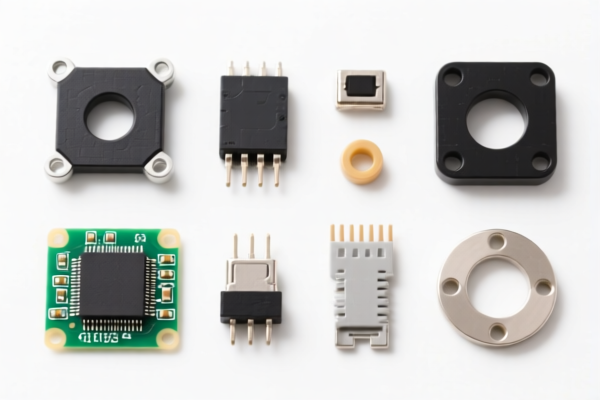
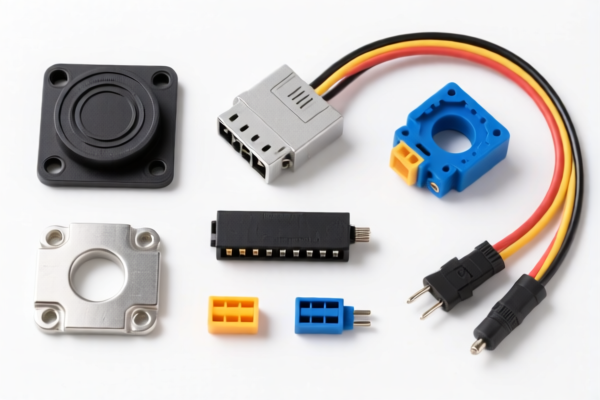
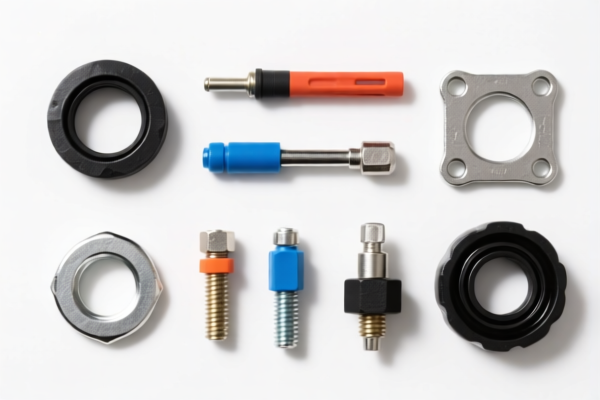
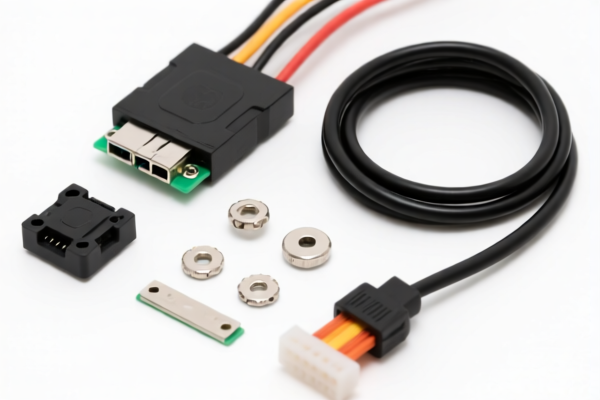
AI Analysis
🛠️ Hardware (五金工具/汽配)
🌐 HS Code Reference & Customs Clearance Guide | 2026 Latest Tariff Analysis | Strategic通关 Strategy
📌 I. Product Definition & Classification: What Exactly is "Hardware"?
In international trade, "Hardware" (五金工具) is a broad category. It generally refers to tools, fasteners, and accessories made of metal. However, for customs classification (HS Code), the specific function, material, and form determine the tariff code.
Based on the provided data, "Hardware" is ambiguously classified into two main sub-categories: 1. Hand Tools (金属手工具): Including wrenches, pliers, shears, etc. 2. Vehicle Parts (汽车配件): Specifically metal parts for vehicles.
⚠️ Critical Distinction Point:
- If it is a manual tool (wrench, plier, screwdriver) → It falls under Chapter 82 (Tools, Implements, Cutlery, Spoons and Forks, of Base Metal).
- If it is a vehicle part (even if made of steel/aluminum/copper) → It falls under Chapter 87 (Vehicles other than railway or tramway rolling-stock, and parts thereof).
- Misclassification Risk: Declaring a wrench as a "vehicle part" or vice versa leads to severe customs delays, fines, or re-assessment of taxes.
📦 II. HS Code Classification Details (Based on Provided Data)
The following HS Codes are derived directly from the <DATA> input. Note that the "Summary" explains the logical deduction for each code.
| HS Code | Product Description | Logic/Summary from Data | Total Tax Rate |
|---|---|---|---|
8205.59.80.00 |
Other Hand Tools | "Hardware belongs to manual tools... inferred material is metal." | 38.7% |
8204.11.00.30 |
Hand Wrenches | "Hardware material inferred as base metal... fits attribute of wrenches... catch-all category." | 44.0% |
8205.59.55.60 |
Other Hand Tools | "Hardware belongs to metal material category... matches other hand tools... catch-all matching principle." | 40.3% |
8203.20.60.30 |
Pliers, Cutters, etc. | "Hardware usually made of metal... fits category of pliers, shears, etc." | 12¢/doz. + 5.5% + 35.0% |
8708.10.60.50 |
Vehicle Parts | "Auto parts belong to vehicle parts category... fits vehicle parts & accessories... catch-all category." | 87.5% |
🔍 Key Observation:
- Hand Tools (HS 820x) are treated as manual tools.
- Vehicle Parts (HS 8708) are treated as auto components.
- The tax burden varies significantly based on the specific shape and function (e.g., Wrenches vs. Pliers vs. Vehicle Parts).
💰 III. 2026 Latest Tariff Rate Breakdown (Including Surcharges & Policy Add-ons)
✅ Applicable Country: United States (US)
✅ Origin: China (CN) (Inferred from "122" and "Section 301" style surcharges)
✅ Effective Time: Current policies apply (Section 301 + Section 232/IEEPA variants)
🎯 1. 8205.59.80.00 – Other Hand Tools
| Item | Detail |
|---|---|
| Base Duty | 3.7% |
| Section 301 Surcharge | 25.0% |
| "122" Clause Surcharge | 10.0% |
| Total Tax Rate | 38.7% |
| Tax Calculation | CIF Value × 38.7% |
| De Minimis Exemption? | ❌ No (High total duty rate usually disqualifies Section 321 de minimis for commercial shipments) |
| Legal Basis | HTSUS 8205.59.80.00 + Section 301 Footnotes + Specific "122" Trade Action |
📌 Explanation:
- This code applies to general metal hand tools not specifically classified elsewhere (like wrenches or pliers).
- The 38.7% rate is a heavy burden. It combines the standard MFN rate (3.7%) with punitive tariffs (25% + 10%).
- Note: The "122" tariff likely refers to specific trade enforcement actions (e.g., related to steel/aluminum or specific Chinese imports).
🎯 2. 8204.11.00.30 – Hand Wrenches
| Item | Detail |
|---|---|
| Base Duty | 9.0% |
| Section 301 Surcharge | 25.0% |
| "122" Clause Surcharge | 10.0% |
| Total Tax Rate | 44.0% |
| Tax Calculation | CIF Value × 44.0% |
| De Minimis Exemption? | ❌ No |
| Legal Basis | HTSUS 8204.11.00.30 + Section 301 + "122" |
📌 Explanation:
- Wrenches are specifically identified.
- The base duty (9.0%) is higher than general hand tools (3.7%), but the surcharges are identical.
- This is a higher tax bracket for wrenches compared to other hand tools in this dataset.
🎯 3. 8205.59.55.60 – Other Hand Tools (Catch-All)
| Item | Detail |
|---|---|
| Base Duty | 5.3% |
| Section 301 Surcharge | 25.0% |
| "122" Clause Surcharge | 10.0% |
| Total Tax Rate | 40.3% |
| Tax Calculation | CIF Value × 40.3% |
| De Minimis Exemption? | ❌ No |
| Legal Basis | HTSUS 8205.59.55.60 + Section 301 + "122" |
📌 Explanation:
- Another "catch-all" for metal hand tools.
- Tax rate (40.3%) is between general hand tools (38.7%) and wrenches (44.0%).
- Classification often depends on specific shape and ergonomic design.
🎯 4. 8203.20.60.30 – Pliers, Cutters, Tweezers, etc.
| Item | Detail |
|---|---|
| Base Duty | 12¢/doz. + 5.5% |
| Section 301 Surcharge | 25.0% |
| "122" Clause Surcharge | 10.0% |
| Total Tax Rate | 12¢/doz. + 5.5% + 35.0% |
| Tax Calculation | (12 cents per dozen) + (5.5% of CIF) + (35% Surcharge) |
| De Minimis Exemption? | ❌ No |
| Legal Basis | HTSUS 8203.20.60.30 + Section 301 + "122" |
📌 Explanation:
- Pliers/Shears have a compound tariff (specific + ad valorem).
- The 35% surcharge (25% + 10%) is applied to the total value.
- Warning: The "12¢/doz." is a specific duty, which can be very high for low-value items but negligible for high-value items. However, the ad valorem part (5.5% + 35%) is still significant.
🎯 5. 8708.10.60.50 – Vehicle Parts (Bumpers, etc.)
| Item | Detail |
|---|---|
| Base Duty | 2.5% |
| Section 301 Surcharge | 25.0% |
| "122" Clause Surcharge | 10.0% |
| Steel/Aluminum/Copper Surcharge | 50.0% |
| Total Tax Rate | 87.5% |
| Tax Calculation | CIF Value × 87.5% |
| De Minimis Exemption? | ❌ No |
| Legal Basis | HTSUS 8708.10.60.50 + Section 301 + "122" + Steel/Aluminum Tariffs |
📌 Explanation:
- This is the highest tax rate in the dataset.
- It applies to vehicle parts (e.g., bumpers, frames).
- Critical Factor: The 50% surcharge is applied because the part is made of Steel, Aluminum, or Copper.
- Combined Tax: 2.5% (Base) + 25% (Section 301) + 10% (122) + 50% (Steel/Al/Cu) = 87.5%.
- Risk: Importing metal vehicle parts into the US from China is extremely costly.
🛠️ IV. Customs Clearance Practical Advice (Battle-Proven Tips)
✅ 1. Preparation Checklist (Essential)
| Document | Required? | Purpose |
|---|---|---|
| ✅ Product Specifications | ✔️ | Define material (Steel/Aluminum/Copper) and Function (Tool vs. Vehicle Part). |
| ✅ Product Photos | ✔️ | Clear images showing the item is a tool (e.g., wrench head) or vehicle part (e.g., bumper). |
| ✅ Material Composition | ✔️ | Crucial for 8708.10.60.50. If it’s steel/aluminum, expect the 50% surcharge. |
| ✅ Commercial Invoice | ✔️ | Must clearly state "Hardware Tools" or "Vehicle Parts". Mislabeling causes audits. |
| ✅ HTSUS Code Declaration | ✔️ | Declare the correct 10-digit code. Guessing leads to penalties. |
| ✅ Certified Labeling | ✔️ | If sold as "Hardware", ensure labeling matches the declared function. |
✅ 2. Declaration Strategy (Key Rules)
🔥 "Identify Function First, Material Second!"
| Scenario | Correct Declaration | Risk if Wrong |
|---|---|---|
| Wrench | 8204.11.00.30 (44.0%) |
If misdeclared as "Vehicle Part" (8708) → 87.5% Tax + Fraud Penalty! |
| Pliers | 8203.20.60.30 (35% Surcharge) |
If misdeclared as "Tool" → May face scrutiny on compound duty calculation. |
| Metal Bumper | 8708.10.60.50 (87.5%) |
If misdeclared as "General Tool" (8205) → Underpayment Tax + Seizure! |
| General Hand Tool | 8205.59.80.00 (38.7%) |
Ensure it is not a "Vehicle Part" disguised as a tool. |
📌 Warning:
- Do NOT declare a wrench as a "Vehicle Part" to avoid higher taxes unless it is actually a part of a vehicle. Customs checks function.
- Do NOT declare a vehicle part as a "Hand Tool" to save taxes. The 50% steel/aluminum surcharge is strictly enforced.
✅ 3. Special Cases
| Case | Handling Advice |
|---|---|
| Mixed Shipment (Tools + Vehicle Parts) | Separate Lines! Do not combine. One line for 820x, one for 870x. Mixed declarations cause 100% inspection. |
| OEM Hardware | Provide the design drawing and function description. Prove it is a tool, not a part. |
| Material: Plastic/Metal Mix | If >50% metal by weight/value, it is still subject to base metal duties. Check if plastic parts dominate for a different classification. |
| Steel/Aluminum/Copper | If using 8708, assume 87.5% tax. Budget accordingly. |
🌍 V. Global Market Comparison (2026 Outlook)
| Market | Recommended HS Code | Estimated Tax (China Origin) | Note |
|---|---|---|---|
| 🇺🇸 USA | 8205.59.80.00 / 8708.10.60.50 |
38.7% – 87.5% | High Section 301 & "122" tariffs. Steel/Al/Cu parts hit hard. |
| 🇨🇳 China | 8205.59.80.00 |
~5-10% | Low base duty, no punitive tariffs for domestic production. |
| 🇪🇺 EU | 8205.59.80.00 |
~4-5% | No Section 301. Only standard EU duty. |
| 🇯🇵 Japan | 8205.59.80.00 |
~3-4% | Low duty, no punitive tariffs. |
📌 Conclusion:
- The US is the most expensive market for Chinese hardware due to Section 301 and Steel/Aluminum tariffs.
- Vehicle Parts (8708) are prohibitively expensive (87.5%) compared to Hand Tools (38-44%).
- Strategy: If possible, avoid importing metal vehicle parts from China to the US. Focus on hand tools if compliance is manageable.
📌 VI. Common Mistakes & Pitfalls (Lessons Learned)
❌ Mistake 1: Declaring a Steel Bumper as a "Hand Tool" to avoid the 50% surcharge.
👉 Consequence: Customs detects material/function mismatch. 87.5% tax + 50% Penalty + Seizure.
❌ Mistake 2: Assuming All Metal Items are "Hand Tools".
👉 Consequence: A wrench declared as "Other Hand Tool" (8205) instead of "Wrench" (8204) may face incorrect duty assessment. While rates are close, specific descriptions are required.
❌ Mistake 3: Ignoring the "122" Clause.
👉 Consequence: Missing the 10% surcharge leads to underpayment penalties and future audits.
✅ Correct Approach:
"Steel Wrench, Manual Hand Tool, for General Use, Model XYZ, Made in China"
→ Declare as8204.11.00.30→ Tax: 44.0%
🎯 VII. Conclusion: Precision in Classification Saves Money!
🎯 Remember the Formula:
🔹 "Function First: Tool vs. Part."
🔹 "Material Matters: Steel/Al/Cu = 50% Surcharge."
🔹 "Total Tax: Base + 301 (25%) + 122 (10%) + Material (50% if Vehicle Part)."
📌 Pro Tip:
- For Hand Tools: Budget 38-44% tax.
- For Vehicle Parts: Budget 87.5% tax.
- Consult a Customs Broker before shipping high-value metal hardware to the US.
- Consider Third-Country Transshipment (e.g., Vietnam, Mexico) for vehicle parts to avoid US punitive tariffs, but ensure Rules of Origin are respected to avoid anti-circumvention duties.
📣 Immediate Action:
📞 Contact your Customs Broker
📦 Provide Detailed Product Specs (Material, Function, Photos)
📊 Calculate Total Landed Cost including 38-87% taxes
🚀 Ensure Compliance to avoid seizures and delays!
✨ Professional Clearance Starts with Accurate Classification!
💼 Your Cost Control Begins with the Right HS Code!
Customer Reviews
About HS Code Classification
The Harmonized System (HS) is an internationally standardized nomenclature developed by the World Customs Organization (WCO) to classify traded products. Over 200 countries use the HS system as the basis for customs tariffs, trade statistics, and import/export regulations.
Each HS code follows a hierarchical structure:
- Chapter (2 digits) — Broad category of goods (e.g., Chapter 84: Machinery and Mechanical Appliances)
- Heading (4 digits) — More specific grouping within the chapter
- Subheading (6 digits) — Internationally standardized breakdown, used by all WCO member countries
- National subdivisions (8-10 digits) — Country-specific extensions for further classification, such as US HTSUS 10-digit codes
Correct HS code classification is essential for smooth customs clearance, accurate duty payment, and compliance with trade regulations. Misclassification can lead to customs delays, overpayment of duties, or penalties.
When importing from CN to US, the applicable tariff rates may include:
- Most-Favored-Nation (MFN) rate — The standard duty rate applied to WTO members
- General rate — Applied to countries without trade agreements
- Trade remedy duties — Additional tariffs such as Section 301 (anti-dumping), Section 232 (national security), or countervailing duties
The information provided on this page is for reference purposes only. For official classification, please consult with your local customs authority or a licensed customs broker.