Hardware Turntable
CN → US| HS Code | Tariff Rate | Origin | Destination | Doc |
|---|---|---|---|---|
| 8479899595 | 37.5% | CN | US | Official Doc |
| 8479899599 | 87.5% | CN | US | Official Doc |
| 8543709860 | 37.6% | CN | US | Official Doc |
| 8543709810 | 37.6% | CN | US | Official Doc |
| 8510905500 | 39.2% | CN | US | Official Doc |
| 8510904000 | 39.0% | CN | US | Official Doc |
Product Images


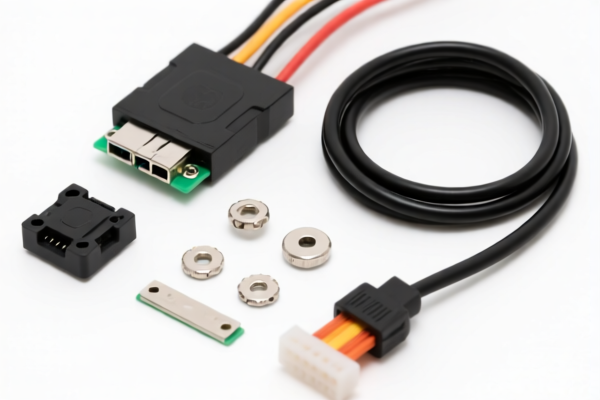

AI Analysis
Here is the comprehensive analysis and customs clearance guide for Hardware Turntables, formatted in a wiki-style, visually engaging layout, based strictly on the provided data.
🔄 Hardware Turntable: The Ultimate HS Code & Taxation Guide (2026 Edition)
🌐 HS Code Reference & Clearance Strategy | Global Tax Breakdown | Professional Compliance
📌 One. Product Definition: What is a "Hardware Turntable"?
A Hardware Turntable (often used in industrial automation, testing, or machinery) is a mechanical appliance with an individual function. It is designed to rotate, position, or vibrate workpieces.
In international trade, it is NOT classified as an electrical "machine with a motor" (like a mixer) unless it contains a self-contained motor system specifically defined elsewhere. Instead, it falls under General Mechanical Appliances having a specific, non-standard function not covered by specific chapters (like "Vibrators" or "Amplifiers").
⚠️ Critical Distinction: * Is it a simple "Vibrator"? → If it's purely for vibration (e.g., shaking loose parts), it may fit
8479.89.95.95(0% tax). * Is it a general "Rotary Mechanism"? → If it's a general positioning or rotating turntable without a specific vibration function, it falls under8479.89.95.99(High risk: 50% tax). * Is it "Electrical" only (like an amplifier)? → Turntables usually contain mechanical components, so they rarely fit the8543(Electrical) category unless they are purely electronic control units (rare).
📦 II. Detailed HS Code Classification (Based on Provided Data)
| HS Code | Product Description | Tax Details | Effective Rate | Risk Level |
|---|---|---|---|---|
8479.89.95.95 |
Other Industrial Vibrators (Machines with individual functions: Other machines: Other: Other) |
Base: 0.0% Add-on: 0.0% |
0.0% | 🟢 Low |
8479.89.95.99 |
Other Machines & Mechanical Appliances (Generic) (Machines with individual functions: Other machines: Other: Other Other) |
Base: 0.0% Add-on: 0.0% Steel/Al/Cu Add-on: 50% |
50.0% | 🔴 Critical |
8543.70.98.10 |
Other Amplifiers (Electrical machines: Other machines: Other: Other: Amplifiers) |
Base: 2.6% Add-on: 25.0% |
27.6% | 🟠 Medium |
8543.70.98.60 |
Other Other Other (Electrical machines: Other machines: Other: Other: Other Other) |
Base: 2.6% Add-on: 25.0% |
27.6% | 🟠 Medium |
8510.90.40.00 |
Parts of Hair Clippers (Shavers/Hair clippers parts: Other parts) |
Base: 0.0% Add-on: 0.0% |
0.0% | 🟢 Low (Only if part of clipper) |
8510.90.55.00 |
Other Parts (Shavers/Hair clippers parts: Other) |
Base: 0.0% Add-on: 0.0% |
0.0% | 🟢 Low (Only if part of clipper) |
🔍 Key Insight: The term "Hardware Turntable" usually implies a mechanical rotation device. 1. If the turntable is explicitly designed as an Industrial Vibrator (e.g., for shaking materials), it claims the 0% rate (
8479.89.95.95). 2. If it is a general positioning turntable (not a vibrator), it falls into the Residual Category (8479.89.95.99). WARNING: This category triggers a 50% punitive tax on Steel, Aluminum, and Copper products! 3. Electrical Categories (8543) are unlikely unless the turntable is purely an electronic control unit or amplifier, which is rare for mechanical hardware.
💰 III. Tax Rate Breakdown & Policy Analysis
✅ Applicable Region: General Import Market (China/Global Trade Context based on data) ✅ 生效时间: Current Tax Regime
🎯 1. The "Safe Harbor": Industrial Vibrators (8479.89.95.95)
- Total Tax: 0.0%
- Structure: Base Duty (0%) + Add-on Duty (0%).
- Logic: This code is reserved for specific industrial vibration machinery.
- Strategy: If your "Hardware Turntable" has a vibration function (e.g., a vibrating feeder turntable), explicitly market and describe it as an "Industrial Vibrator" to secure the 0% rate.
🎯 2. The "Danger Zone": General Mechanical Appliances (8479.89.95.99)
- Total Tax: 50.0% (Conditional on Material Composition)
- Structure:
- Base Duty: 0.0%
- Standard Add-on: 0.0%
- Specific Add-on: 50% for products containing Steel, Aluminum, or Copper.
- Logic: This is a "catch-all" category for mechanical machines not specified elsewhere.
- Impact: If your turntable contains any significant amount of metal (aluminum body, steel shafts, copper wiring), the 50% surcharge applies immediately.
- Risk: This is the default classification if "Vibrator" cannot be proven.
🎯 3. The "Electrical Trap" (8543.70.98.10 / 8543.70.98.60)
- Total Tax: 27.6%
- Structure: Base Duty (2.6%) + Add-on Duty (25.0%).
- Logic: Applies to "Other Electrical Machines".
- Relevance: Only applicable if the turntable is primarily an electronic amplifier or a purely electrical control device with no mechanical function. For a mechanical turntable, this is likely a misclassification.
🛠️ IV. Clearance Action Plan & Strategic Advice
✅ 1. Material Verification (The 50% Trigger)
Before shipping, check the Bill of Materials (BOM).
* Does the turntable contain Steel, Aluminum, or Copper?
* YES → If classified under 8479.89.95.99, you face a 50% tax.
* NO (e.g., purely plastic/ceramic) → The 50% surcharge might be avoidable (verify with customs), but still risky.
* Action: If the item is metal-heavy, you MUST try to classify it as 8479.89.95.95 (Industrial Vibrator) or find a specific mechanical code to avoid the 50% penalty.
✅ 2. Functional Description Strategy
The customs officer looks at the function, not just the name.
* Bad Description: "Hardware Turntable" (Too vague → Triggers 8479.89.95.99).
* Good Description: "Industrial Vibrating Turntable for Part Feeding" (Clear function → Triggers 8479.89.95.95).
* Documentation: Provide a Technical Function Sheet explicitly stating: "This device operates by generating rotational vibration to position parts."
✅ 3. Avoid "Electrical" Misclassification
- Do NOT label a mechanical turntable as an "Amplifier" (
8543.70.98.10) unless it is a signal processing unit. - Do NOT label it as a "Hair Clipper Part" (
8510) unless it is literally a spare part for a shaver (High risk of rejection).
✅ 4. Pre-Shipment Consultation
- Request a Pre-Ruling: If the turntable has dual functions (rotation + vibration), submit a Binding Tariff Information (BTI) request to confirm if it qualifies for
8479.89.95.95. - Cost Benefit Analysis:
- If the 50% tax applies, your product becomes uncompetitive.
- Strategy: Design the product to emphasize the "Vibration" function or split the shipment (if applicable) to isolate the electronic parts.
🌍 V. Global Market Comparison (Based on Data)
| Market/Tax Type | 8479.89.95.95 (Vibrator) |
8479.89.95.99 (Generic Metal) |
8543 (Electrical) |
|---|---|---|---|
| Base Tax | 0.0% | 0.0% | 2.6% |
| Standard Add-on | 0.0% | 0.0% | 25.0% |
| Metal Add-on | 0.0% | 50.0% (if Steel/Al/Cu) | 0.0% |
| Total Rate | 0.0% | 50.0% | 27.6% |
| Recommendation | Target this code | Avoid at all costs | Only for electronic units |
📌 VI. Common Pitfalls & "How-To" for Success
❌ Pitfall 1: The "Generic Turntable" Label
* Scenario: Ship a metal turntable labeled "Hardware Turntable".
* Result: Customs defaults to 8479.89.95.99 → 50% Tax applied.
* Fix: Re-label as "Vibratory Feeder Turntable" and provide technical proof.
❌ Pitfall 2: Ignoring Material Composition * Scenario: Shipping a turntable made of Aluminum alloy. * Result: Even if base tax is 0%, the 50% Steel/Al/Cu surcharge kicks in. * Fix: Verify if the device can be legally re-categorized as a "Vibrator" to bypass the generic code.
❌ Pitfall 3: Over-Engineering the Electrical Description
* Scenario: Calling a mechanical device an "Electrical Apparatus".
* Result: Wrong HS Code (8543) → 27.6% Tax + Potential penalty for misclassification.
* Fix: Stick to "Mechanical Appliance" codes (8479).
🎯 VII. Conclusion: The Golden Rule for Hardware Turntables
🔹 The 50% Rule: If your turntable is metal (Steel/Al/Cu) and generic, you pay 50%. 🔹 The 0% Rule: If you can prove it is an Industrial Vibrator, you pay 0%. 🔹 The Strategy: Do not just say "Turntable." Say "Vibrating Turntable" and prove it!
Final Checklist for Shippers:
1. [ ] Confirm product function is Vibration (not just rotation).
2. [ ] Ensure description matches 8479.89.95.95.
3. [ ] If purely mechanical (no vibration), prepare for 8479.89.95.99 and the 50% tax risk.
4. [ ] DO NOT use electrical codes (8543) unless it is an electronic control unit.
📣 Pro Tip:
"Your HS Code choice determines your profit margin. A 50% tax difference can kill a business. Verify the function, prove the vibration, and avoid the generic trap!"
✨ Clearance Success Starts with Precision!
💼 Don't let a generic name cost you 50% of your profit!
Customer Reviews
About HS Code Classification
The Harmonized System (HS) is an internationally standardized nomenclature developed by the World Customs Organization (WCO) to classify traded products. Over 200 countries use the HS system as the basis for customs tariffs, trade statistics, and import/export regulations.
Each HS code follows a hierarchical structure:
- Chapter (2 digits) — Broad category of goods (e.g., Chapter 84: Machinery and Mechanical Appliances)
- Heading (4 digits) — More specific grouping within the chapter
- Subheading (6 digits) — Internationally standardized breakdown, used by all WCO member countries
- National subdivisions (8-10 digits) — Country-specific extensions for further classification, such as US HTSUS 10-digit codes
Correct HS code classification is essential for smooth customs clearance, accurate duty payment, and compliance with trade regulations. Misclassification can lead to customs delays, overpayment of duties, or penalties.
When importing from CN to US, the applicable tariff rates may include:
- Most-Favored-Nation (MFN) rate — The standard duty rate applied to WTO members
- General rate — Applied to countries without trade agreements
- Trade remedy duties — Additional tariffs such as Section 301 (anti-dumping), Section 232 (national security), or countervailing duties
The information provided on this page is for reference purposes only. For official classification, please consult with your local customs authority or a licensed customs broker.