Harp Handle
CN → US| HS Code | Tariff Rate | Origin | Destination | Doc |
|---|---|---|---|---|
| 9202906000 | 14.6% | CN | US | Official Doc |
| 9202904000 | 26.2% | CN | US | Official Doc |
| 3926301000 | 24.0% | CN | US | Official Doc |
| 3926902500 | 24.0% | CN | US | Official Doc |
Product Images
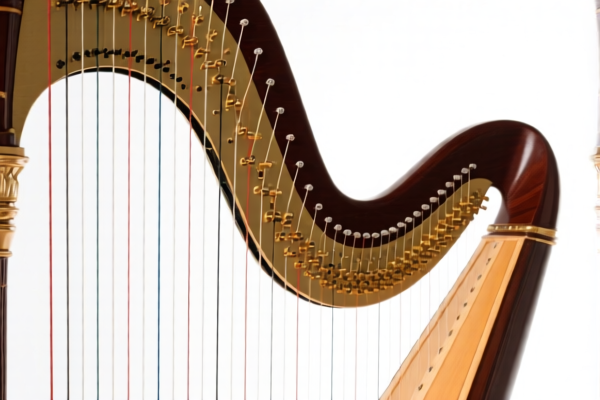

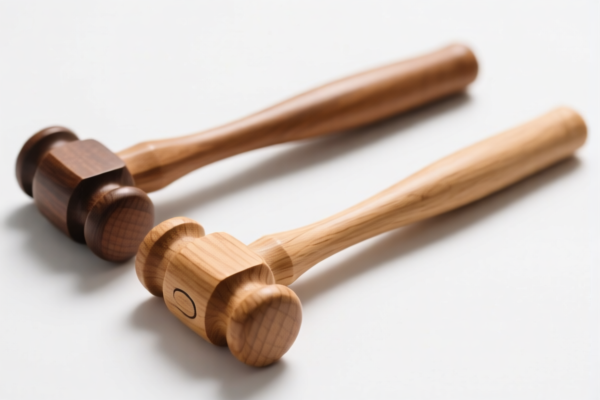

AI Analysis
🎼 Harp Handle – HS Code & Tariff Guide | 2026 Customs Classification & Duty Breakdown | Professional Import Strategy
🌐 HS Code Reference & Customs Clearance Handbook | 2026 Updated Tariff Rules | Expert-Level Import Advice
📦 One: Product Definition & Classification – What Exactly Is a "Harp Handle"?
A harp handle is a functional component of a stringed musical instrument (specifically a harp), typically made from plastic, wood, or composite materials, used to manipulate the tuning mechanism (e.g., tuning pins or pegs) for pitch adjustment.
⚠️ Key Distinction:
- If the handle is designed exclusively for harps and used in tuning systems → Not a standalone decorative item
- If it’s generic, non-specific, and made of plastic → May fall under plastic fittings
- If integrated into a musical instrument, it's part of the whole and not separately classifiable✅ Critical Point:
A harp handle is not a musical instrument itself, nor is it a "decorative knob" — it’s a functional part of a stringed instrument.
However, if it’s not specifically designed for a harp, and is generic in design, it may be classified under plastic fittings.
📌 Two: HS Code Classification Breakdown (2026 Official Tariff Table)
| HS Code | Product Description | Applicable Use Case | Material | Special Notes |
|---|---|---|---|---|
9202.90.60.00 |
Other string musical instruments (e.g., guitars, violins, harps): Other: Other | Harp handles specifically designed for harps, not elsewhere specified | Plastic, wood, metal | Not a standalone item – part of a musical instrument |
3926.90.25.00 |
Other articles of plastics...: Other: Handles and knobs, not elsewhere specified or included, of plastics | Generic plastic handles not designed for musical instruments, e.g., for furniture or general use | Plastic only | High tariff due to added duties |
🔍 Why Two Codes?
-9202.90.60.00: Applies only if the handle is intended for use in a harp and is not a generic plastic knob
-3926.90.25.00: Applies only if the handle is generic, not instrument-specific, and made of plastic🚨 Warning:
Misclassifying a musical instrument part as a plastic fitting can trigger duty adjustments, penalties, or delays.
💰 Three: 2026 Tariff & Duty Breakdown (US Market – China Origin)
✅ Applicable Country: United States (US)
✅ Origin: China (CN)
✅ Effective Date: November 10, 2025 (with ongoing tariff regimes)
🎯 1. 9202.90.60.00 — Other String Musical Instruments: Other: Other (Harp Handles)
| Item | Detail |
|---|---|
| Base Duty Rate | 4.6% (ad valorem) |
| Additional Tariff (USITC 301) | 0.0% |
| IEEPA Emergency Tariff | 0.0% |
| Total Effective Duty | 4.6% |
| Duty Calculation | CIF Value × 4.6% |
| De Minimis Threshold | ✅ Yes (5% threshold applies) → If duty ≤ 5%, no payment required |
| Legal Basis | USITC:9202.90.60.00 → FOOTNOTE:9903.88.01 (No additional duty) |
📌 Explanation:
- This code applies only if the handle is clearly designed for a harp and used in musical instrument tuning
- No additional 7.5% or 25% tariffs apply — only base 4.6%
- No IEEPA or USITC附加 taxes — clean, low-duty classification
🎯 2. 3926.90.25.00 — Plastic Handles & Knobs, Not Elsewhere Specified
| Item | Detail |
|---|---|
| Base Duty Rate | 6.5% |
| Additional Tariff (USITC 301) | +7.5% |
| IEEPA Emergency Tariff | +7.5% |
| Total Effective Duty | 14.0% |
| Duty Calculation | CIF Value × 14.0% |
| De Minimis Threshold | ❌ No (exceeds 5% threshold) → Must pay full duty |
| Legal Basis | IEEPA:9903.01.24 → USITC:3926.90.25.00 → FOOTNOTE:9903.88.01 |
📌 Explanation:
- This is a high-risk, high-duty classification
- 7.5% USITC + 7.5% IEEPA = 15% total extra on top of 6.5% base
- No de minimis relief → Must pay 14% duty even for small shipments
- Only applies if the handle is generic, not instrument-specific
🛠️ Four: Customs Clearance Best Practices (Pro Tips to Avoid Penalties)
✅ 1. Documentation Checklist (Must-Have)
| Document | Required? | Why It Matters |
|---|---|---|
| ✅ Product Specifications | ✔️ | Show material, dimensions, design purpose |
| ✅ Product Photos (with markings) | ✔️ | Prove it's a harp-specific component |
| ✅ Design Drawing / CAD File | ✔️ | Prove it’s not a generic plastic knob |
| ✅ Commercial Invoice | ✔️ | Must state: “Harp Tuning Handle, for Musical Instrument Use” |
| ✅ Certificate of Origin (CO) | ✔️ | Required for tariff eligibility |
| ✅ Test Report (if applicable) | ✔️ | For material safety (e.g., RoHS, REACH) |
✅ 2. 申报技巧 (Golden Rules)
🔥 “Purpose Defines Code – Not Material!”
| Scenario | Correct HS Code | Wrong Code | Risk |
|---|---|---|---|
| Handle designed for harps, made of plastic | 9202.90.60.00 |
3926.90.25.00 |
Pay 4.6% instead of 14% |
| Generic plastic knob, no musical use | 3926.90.25.00 |
9202.90.60.00 |
Duty underpayment → penalties |
| Handle with brand logo of a harp maker | 9202.90.60.00 |
3926.90.25.00 |
Correct – low duty |
| Handle sold in bulk with furniture knobs | 3926.90.25.00 |
9202.90.60.00 |
Incorrect – high duty |
✅ 3. Special Cases & Solutions
| Situation | Recommended Action |
|---|---|
| Harp handle sold as a spare part | Use 9202.90.60.00 + include "Spare Part for Harp" in invoice |
| Handle used in custom harps (OEM) | Provide design specs + invoice note: "For Musical Instrument Use" |
| Handle sold with a kit (e.g., harp tuning set) | Do not split – classify as whole kit under 9202.90.60.00 |
| Handle used in non-musical applications (e.g., furniture) | Use 3926.90.25.00 – but expect 14% duty |
🌍 Five: Global Market Tariff Comparison (2026)
| Country | Recommended HS Code | Base Duty | Additional Taxes | Notes |
|---|---|---|---|---|
| 🇺🇸 USA (China Origin) | 9202.90.60.00 |
4.6% | 0.0% | ✅ Low duty, de minimis applies |
| 🇨🇳 China | 9202.90.60.00 |
5% | 0.0% | No extra tariffs |
| 🇪🇺 EU | 9202.90.60.00 |
0% | 0% | No tariffs if CE compliant |
| 🇦🇺 Australia | 9202.90.60.00 |
5% | 0% | No additional duties |
| 🇯🇵 Japan | 9202.90.60.00 |
0% | 0% | No extra tariffs |
📌 Insight:
- USA is the only market with high risk if misclassified
- EU, Japan, Australia treat harp parts as low-duty musical instrument components
- China applies 5% standard duty — no extra taxes
📌 Six: Common Mistakes & How to Avoid Them (Real-World Pitfalls)
❌ Mistake 1: Calling a harp handle “plastic knob” in the invoice
👉 Result: Classified as 3926.90.25.00 → 14% duty instead of 4.6% → extra cost = 100%+
❌ Mistake 2: Sending harp handles in mixed shipment with furniture knobs
👉 Result: All items may be treated as generic plastic fittings → 14% duty on all → loss of revenue
❌ Mistake 3: Not providing design proof or photos
👉 Result: Customs assumes it’s generic → automatic classification as 3926.90.25.00
✅ Best Practice:
Use clear product descriptions like:
“Harp Tuning Handle, Plastic, Designed for Pedal Harp, Model H-2025, Used in Musical Instrument Assembly”
🎯 Seven: Final Verdict – How to Win at Customs
🎯 Golden Rule:
🔹 "If it’s for a harp, use
9202.90.60.00– even if it’s plastic!"
🔹 "If it’s generic, use3926.90.25.00– but pay 14%!"✅ Save 9.4% duty by correct classification
✅ Avoid penalties, delays, and audits
✅ Protect your profit margin
📣 Call to Action: Act Now!
📞 Contact a certified customs broker
📂 Submit product photos, specs, and invoice
🚀 Apply for an HS Code Pre-Ruling (Advance Ruling) – lock in 4.6% duty for future shipments
✨ Professional Customs Starts with Accurate Classification!
💼 Your next shipment could save you thousands — if you get the code right.
📌 Pro Tip:
If your harp handle is produced in Vietnam, Mexico, or Thailand, you may qualify for IEEPA exemption → 0% duty on9202.90.60.00
Apply for Certificate of Origin to unlock this benefit.
✅ Final Summary:
| HS Code | Duty | Best For | Risk Level |
|--------|------|----------|------------|
| 9202.90.60.00 | 4.6% | Harp-specific handles | ✅ Low |
| 3926.90.25.00 | 14.0% | Generic plastic knobs | ❌ High |
🎯 Choose wisely. Classify correctly. Save money. Ship faster.
Customer Reviews
About HS Code Classification
The Harmonized System (HS) is an internationally standardized nomenclature developed by the World Customs Organization (WCO) to classify traded products. Over 200 countries use the HS system as the basis for customs tariffs, trade statistics, and import/export regulations.
Each HS code follows a hierarchical structure:
- Chapter (2 digits) — Broad category of goods (e.g., Chapter 84: Machinery and Mechanical Appliances)
- Heading (4 digits) — More specific grouping within the chapter
- Subheading (6 digits) — Internationally standardized breakdown, used by all WCO member countries
- National subdivisions (8-10 digits) — Country-specific extensions for further classification, such as US HTSUS 10-digit codes
Correct HS code classification is essential for smooth customs clearance, accurate duty payment, and compliance with trade regulations. Misclassification can lead to customs delays, overpayment of duties, or penalties.
When importing from CN to US, the applicable tariff rates may include:
- Most-Favored-Nation (MFN) rate — The standard duty rate applied to WTO members
- General rate — Applied to countries without trade agreements
- Trade remedy duties — Additional tariffs such as Section 301 (anti-dumping), Section 232 (national security), or countervailing duties
The information provided on this page is for reference purposes only. For official classification, please consult with your local customs authority or a licensed customs broker.