Harvester
CN → US| HS Code | Tariff Rate | Origin | Destination | Doc |
|---|---|---|---|---|
| 8433510010 | 35.0% | CN | US | Official Doc |
| 8433110060 | 17.5% | CN | US | Official Doc |
| 8433190040 | 17.5% | CN | US | Official Doc |
Product Images
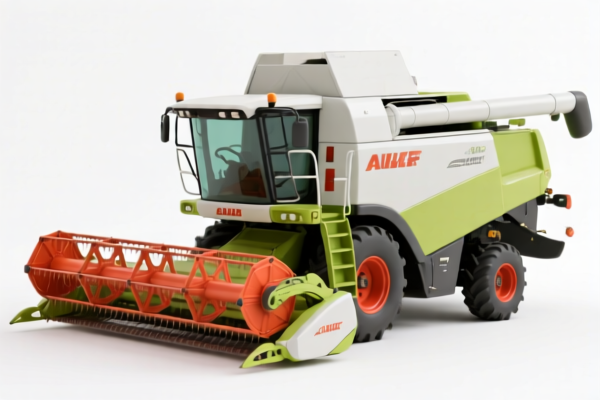
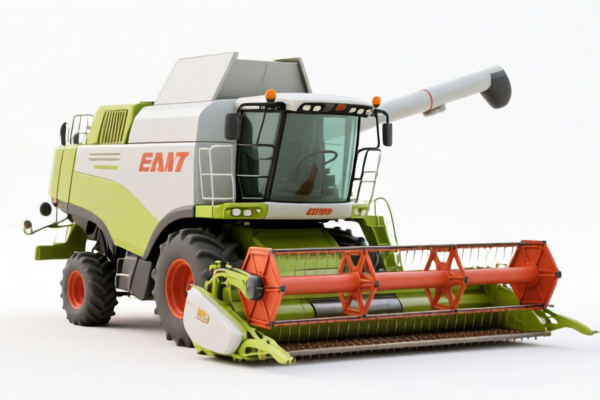
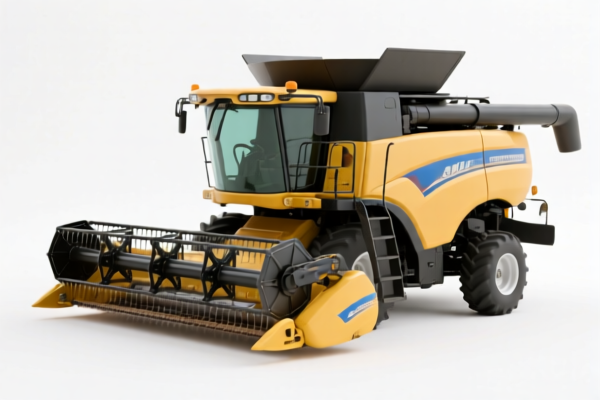
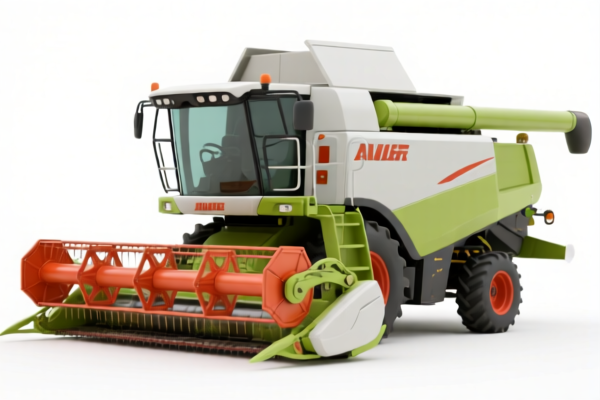
AI Analysis
🚜 Harvester (Agricultural Harvesting Machinery)
🌐 HS Code Reference & Customs Clearance Guide | 2026 Latest Tariff Analysis | Professional-Level Entry Strategies
📌 I. Product Definition & Classification: Do You Really Understand "Harvesters"?
Harvesters are specialized agricultural machines designed for the cutting, threshing, or gathering of crops. In international trade, precise classification is critical because mechanical structure and specific function dictate the HS Code, which directly impacts tariff rates (especially under US Section 301 and IEEPA rules).
They are generally categorized by their primary action: * Combine Harvesters: Machines that cut, thresh, and clean grain crops in a single pass. * Reapers/Threshers: Machines dedicated to cutting (reaping) or separating grain from husk (threshing). * Forage Harvesters: Machines for cutting and chopping grass/corn for silage.
⚠️ Key Distinction Point:
- If the machine is primarily for cutting/gathering (Reaping) → Look at 8433.1x series.
- If the machine is primarily for threshing/separating grain → Look at 8433.2x series.
- If it is a Combined Harvester (cutting + threshing + cleaning) → Look at 8433.5x series.
📦 II. HS Code Classification Details (2026 Latest Tariff Authority Comparison)
Based on the provided data, here are the three most relevant HS Codes for Harvesters, along with their specific tariff structures.
| HS Code | Product Description | Specific Application | Tax Rate (Total) | Tax Detail Breakdown |
|---|---|---|---|---|
8433.51.00.10 |
Combine Harvesters | For machines that perform both harvesting (cutting) and threshing operations simultaneously. | 35.0% | Base: 0.0% Add'l Tariff (Sec 301): 25.0% IEEPA Clause: 10% |
8433.11.00.60 |
Self-Propelled Reapers/Binders | For self-propelled machines primarily designed for reaping (cutting) crops. Matches core harvesting purpose without material conflicts. | 17.5% | Base: 0.0% Add'l Tariff (Sec 301): 7.5% IEEPA Clause: 10% |
8433.19.00.40 |
Other Reaping/Threshing Machinery | For other harvesting or threshing machinery not specified elsewhere in heading 8433.11. General description for specific harvesting tools. | 17.5% | Base: 0.0% Add'l Tariff (Sec 301): 7.5% IEEPA Clause: 10% |
🔍 Critical Reminder:
-8433.51.00.10carries a significantly higher tariff (35%) because "Combine Harvesters" are often viewed as high-value, complex agricultural equipment subject to stricter trade measures.
-8433.11.00.60and8433.19.00.40are more favorable (17.5%) for simpler reaping or dedicated threshing machines.
- Misclassification Risk: Declaring a Combine Harvester as a simple Reaper (8433.1x) to save on tariffs is a common customs audit target and will result in penalties, back taxes, and seizure.
💰 III. 2026 Latest Tariff Rate Breakdown (Including Add-on Taxes & Policy Surcharges)
✅ Applicable Country: USA (US)
✅ Country of Origin: China (CN)
✅ Effective Date: 2025/2026 (Subject to ongoing trade policy)
🎯 1. 8433.51.00.10 —— Combine Harvester (High Risk/High Cost)
| Item | Content |
|---|---|
| Base Rate | 0.0% (ad valorem) |
| USITC Additional Tariff (Sec 301) | +25.0% (High-level tariff on agricultural machinery) |
| IEEPA Additional Tariff | +10.0% (Specific clause for Chinese agricultural imports) |
| Total Tariff Rate | 35.0% |
| Tax Calculation | CIF Value × 35% |
| De Minimis Exemption | ❌ Not Eligible |
| Legal Basis Path | USITC:8433.51.00.10 → FOOTNOTE:301 (25%) → IEEPA (10%) |
📌 Explanation:
- The 25% is the standard Section 301 duty on many Chinese agricultural machines.
- The 10% is an additional IEEPA (International Emergency Economic Powers Act) levy specifically targeting this category.
- Total 35% is extremely high. Profit margins must account for this burden, or supply chain diversification is required.
🎯 2. 8433.11.00.60 —— Self-Propelled Reapers (Cost-Effective Option)
| Item | Content |
|---|---|
| Base Rate | 0.0% |
| USITC Additional Tariff (Sec 301) | +7.5% (Lower tier for basic reaping machinery) |
| IEEPA Additional Tariff | +10.0% (Standard IEEPA levy) |
| Total Tariff Rate | 17.5% |
| Tax Calculation | CIF Value × 17.5% |
| De Minimis Exemption | ❌ Not Eligible |
| Legal Basis Path | USITC:8433.11.00.60 → FOOTNOTE:301 (7.5%) → IEEPA (10%) |
📌 Note:
- This code applies to machines that cut but do not perform full threshing/cleaning in one go.
- If your machine is a true Combine (cutting + threshing + cleaning), you cannot use this code. Customs will reclassify it to8433.51.00.10, leading to a retroactive tax of 35%.
🎯 3. 8433.19.00.40 —— Other Harvesting/Threshing Machinery
| Item | Content |
|---|---|
| Base Rate | 0.0% |
| USITC Additional Tariff (Sec 301) | +7.5% |
| IEEPA Additional Tariff | +10.0% |
| Total Tariff Rate | 17.5% |
| Tax Calculation | CIF Value × 17.5% |
| De Minimis Exemption | ❌ Not Eligible |
| Legal Basis Path | USITC:8433.19.00.40 → FOOTNOTE:301 (7.5%) → IEEPA (10%) |
📌 Note:
- Use this for specialized harvesters that don't fit "Self-Propelled" (8433.11) or "Combine" (8433.51).
- Examples: Tractor-mounted reapers, stationary threshers, or specific forage harvesters not classified elsewhere.
🛠️ IV. Customs Clearance Practical Advice (Pitfall Avoidance Guide)
✅ 1. Required Documentation Checklist
| Document | Mandatory | Explanation |
|---|---|---|
| ✅ Technical Specification Sheet | ✔️ | Must detail: Cutting width, engine power, threshing capacity, whether it is self-propelled. |
| ✅ Operation Manual/Photos | ✔️ | Photos must clearly show: Brand, Model, Engine, Cutting Header, Threshing Drum (if any). |
| ✅ Commercial Invoice | ✔️ | Description must be precise: e.g., "Self-Propelled Grain Combine Harvester" vs. "Reaping Machine". |
| ✅ Bill of Lading | ✔️ | Consistent with Invoice description. |
| ✅ Origin Certificate | ✔️ | Essential for proving Chinese origin (triggers the 10% IEEPA + Sec 301). |
✅ 2. Declaration Tips (Key Mantra)
🔥 "Combine is 35%, Reaper is 17.5%! Don't mix them up!"
| Scenario | Correct Declaration | Wrong Action | Consequence |
|---|---|---|---|
| Full Combine Harvester | 8433.51.00.10 |
Declare as 8433.11.00.60 |
Audit Trigger: Customs will reclassify, charge 35% + penalties + interest. |
| Simple Reaper (No Threshing) | 8433.11.00.60 |
Declare as 8433.51.00.10 |
Overpayment: You pay 35% instead of 17.5%. |
| Thresher Only (No Cutting Header) | 8433.19.00.40 or 8433.2x |
Declare as 8433.51.00.10 |
Misclassification: Risk of audit. |
| Parts (e.g., Cutting Blade) | 8433.90.00.00 (if applicable) |
Declare as whole machine | Discrepancy: Customs will demand correct part code. |
✅ 3. Special Handling Scenarios
| Situation | Handling Advice |
|---|---|
| Modular Harvesters | If a machine can be configured as both a Reaper and a Combine, declare based on the standard configuration shipped. Provide configuration charts. |
| Used Harvesters | Used agricultural machinery may face additional quarantine/phytosanitary inspections. Ensure no soil/plant debris remains. |
| OEM/White Label | Provide the original manufacturer's data sheet. Customs may reject "generic" descriptions. |
| High-Value Equipment | Consider applying for an Advance Ruling from US Customs (CBP) before shipment to lock in the HS Code and tariff rate. |
🌍 V. Global Market Comparison for Harvesters (2026)
| Country/Region | Recommended HS Code | Estimated Tariff (China Origin) | Certification | Note |
|---|---|---|---|---|
| 🇺🇸 USA | 8433.51.00.10 (Combine) 8433.11.00.60 (Reaper) |
35% (Combine) 17.5% (Reaper) |
EPA Emissions, ISO Safety | Highest tariffs globally due to trade war. |
| 🇨🇳 China | 8433.51 / 8433.11 |
0% - 5% | CCC (if applicable) | No additional trade sanctions. |
| 🇪🇺 EU | 8433.51 / 8433.11 |
0% - 4.5% | CE Marking, Noise/Exhaust | Generally low tariffs, strict environmental standards. |
| 🇧🇷 Brazil | 8433.51 / 8433.11 |
14% - 16% | INMETRO Certification | Major agricultural market, high domestic taxes. |
📌 Conclusion:
- The US market is the most expensive due to the 25% Sec 301 + 10% IEEPA structure.
- Combine Harvesters are hit hardest (35%).
- Reapers/Threshers offer a cost advantage (17.5%) if the machine design allows it.
📌 VI. Common Mistakes & Pitfalls (Lessons Learned)
❌ Mistake 1: Declaring a Combine Harvester as a Reaper to save 17.5%.
👉 Consequence: Customs detects the threshing unit via photos/specs. Reassignment to 8433.51.00.10. Back taxes of 17.5% + Interest + Penalties.
❌ Mistake 2: Ignoring the IEEPA 10% clause.
👉 Consequence: Assuming only Sec 301 (25% or 7.5%) applies. Underpayment leads to seizure or hold at port.
❌ Mistake 3: Vague Description: "Farm Machine."
👉 Consequence: Customs assigns a random code or holds the shipment for inspection, delaying delivery by weeks.
✅ Correct Practice:
"Self-Propelled Grain Combine Harvester, Model XYZ, Cutting Width 6m, Engine Power 200HP, For Wheat/Corn Harvesting"
🎯 VII. Conclusion: Precision Saves Money
🎯 Remember the Mantra:
🔹 "Combine is 35%, Reaper is 17.5%. Check the Threshing Drum!"
🔹 "IEEPA 10% is Always On. Don't forget it!"
🔹 "HS Code is Life. Wrong Code, Wrong Price."
📌 Pro Tip:
If your harvesters are originating from Vietnam, Mexico, or Thailand, you may avoid the IEEPA 10% and potentially Sec 301 duties (depending on FTAs).
Consider supply chain reshoring or substantial transformation in a third country to reduce tariffs.
Apply for a Pre-Ruling from CBP if the machine type is ambiguous.
📣 Immediate Action:
📞 Consult a Licensed Customs Broker + Provide Detailed Specs + Verify HS Code Pre-Ruling
🚀 Ensure Smooth Clearance, Avoid Penalties, Maximize Margins!
✨ Professional Classification, Start with Accuracy!
💼 Every Dollar in Tariffs Counts!
Customer Reviews
About HS Code Classification
The Harmonized System (HS) is an internationally standardized nomenclature developed by the World Customs Organization (WCO) to classify traded products. Over 200 countries use the HS system as the basis for customs tariffs, trade statistics, and import/export regulations.
Each HS code follows a hierarchical structure:
- Chapter (2 digits) — Broad category of goods (e.g., Chapter 84: Machinery and Mechanical Appliances)
- Heading (4 digits) — More specific grouping within the chapter
- Subheading (6 digits) — Internationally standardized breakdown, used by all WCO member countries
- National subdivisions (8-10 digits) — Country-specific extensions for further classification, such as US HTSUS 10-digit codes
Correct HS code classification is essential for smooth customs clearance, accurate duty payment, and compliance with trade regulations. Misclassification can lead to customs delays, overpayment of duties, or penalties.
When importing from CN to US, the applicable tariff rates may include:
- Most-Favored-Nation (MFN) rate — The standard duty rate applied to WTO members
- General rate — Applied to countries without trade agreements
- Trade remedy duties — Additional tariffs such as Section 301 (anti-dumping), Section 232 (national security), or countervailing duties
The information provided on this page is for reference purposes only. For official classification, please consult with your local customs authority or a licensed customs broker.