Headlight Ballast
CN → US| HS Code | Tariff Rate | Origin | Destination | Doc |
|---|---|---|---|---|
| 8543709810 | 37.6% | CN | US | Official Doc |
| 8543709860 | 37.6% | CN | US | Official Doc |
Product Images
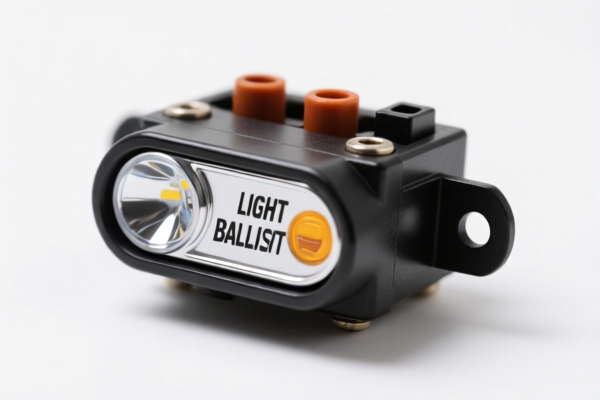
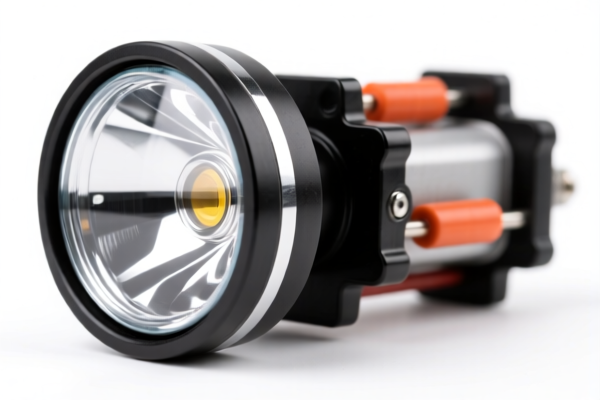
AI Analysis
💡 Headlight Ballast (Automotive Lighting Apparatus)
🌐 HS Code Reference & Customs Clearance Guide | 2026 Latest Tariff Analysis | Professional-Level Clearance Strategy
📌 I. Product Definition & Classification: Do You Really Understand a "Headlight Ballast"?
A Headlight Ballast (also known as a HID Ballast or Igniter) is an electrical component used in High-Intensity Discharge (HID) lighting systems. Its primary function is to convert the vehicle’s low-voltage DC current into a high-voltage pulse to ignite the xenon gas, and then regulate the current to maintain stable light output.
In international trade, these are not considered simple light bulbs (which might fall under Chapter 8539). Instead, they are classified as "Electrical machines and apparatus, having individual functions."
⚠️ Critical Distinction:
- If the device is custom-built for a specific car model (e.g., a ballast integrated into a headlight housing that cannot be used elsewhere), it might be considered a "part of a vehicle."
- However, standalone ballasts (aftermarket or replacement units with standard connectors) are classified under Chapter 8543 (Electrical machinery and apparatus having individual functions, not specified elsewhere).
- Key Factor: Does it have an individual function distinct from the vehicle chassis? Yes → Chapter 8543.
📦 II. HS Code Classification Details (Based on Provided Data)
According to the provided dataset, there are two specific sub-categories for "Other machines and apparatus" under HS Code 8543.70.98. The classification depends on the specific design and function description.
| HS Code | Product Description | Key Characteristics | Tax Rate (China Origin to US) |
|---|---|---|---|
| 8543.70.98.10 | Other Amplifiers | Note: This code is explicitly listed as "Amplifiers" in the data. While a ballast is technically an electronic control unit, some customs brokers may incorrectly classify it here if it functions similarly to a signal amplifier or if the specific product is marketed as an "electronic amplifier" for lighting. | 0.0% (Base: 0%, Additional: 0%) |
| 8543.70.98.60 | Other Other | The standard "catch-all" category for electrical apparatus with individual functions not listed elsewhere. This is the most likely correct classification for a standard HID ballast if it does not fit the specific "Amplifier" definition. | 27.6% (Base: 2.6%, Additional: 25.0%) |
🔍 Analysis of the Data Discrepancy:
- 8543.70.98.10 is labeled "Amplifiers". A headlight ballast is an electronic power converter, not typically an audio/video signal amplifier. However, if your product is described in commercial documents as an "electronic amplifier for lighting," customs might accept this code, resulting in 0% tax.
- 8543.70.98.60 is the broader "Other Other" category. This is the safer, more standard classification for HID ballasts, but it incurs the 25% Section 301 Additional Duty on top of the base rate.
💰 III. Detailed Tariff Rate Breakdown (2026 Analysis)
✅ Applicable Market: United States (US)
✅ Country of Origin: China (CN)
✅ Effective Date: Post-2025 Trade Policies (Section 301 & IEEPA)
🎯 1. HS Code 8543.70.98.10 — "Other Amplifiers" (Potential 0% Rate)
| Item | Content |
|---|---|
| Base Tariff | 0.0% |
| Section 301 Additional Duty | 0.0% |
| IEEPA Additional Duty | 0.0% |
| Total Tariff | 0.0% |
| Tax Calculation | CIF Value × 0% = $0 |
| De Minimis Eligibility | ✅ Yes (if value < $800) |
| Legal Basis | HTSUS 8543.70.98.10 |
📌 Explanation:
- This rate is extremely attractive but risky.
- A ballast is not an amplifier in the technical sense (it does not amplify signal strength; it converts power).
- Risk: If Customs and Border Protection (CBP) determines the product is not an "amplifier," they will reclassify it under 8543.70.98.60, leading to back-taxes, penalties, and delays.
- Strategy: Only use this code if the product is explicitly marketed and technically designed as a signal amplifier for lighting control, or if you have a prior Binding Ruling from CBP.
🎯 2. HS Code 8543.70.98.60 — "Other Other" (Standard 27.6% Rate)
| Item | Content |
|---|---|
| Base Tariff | 2.6% |
| Section 301 Additional Duty | +25.0% |
| IEEPA Additional Duty | 0.0% (Included in the 25% or separate? Data states Total 27.6%) |
| Total Tariff | 27.6% |
| Tax Calculation | CIF Value × 27.6% |
| De Minimis Eligibility | ❌ No (Section 301 goods are generally ineligible for de minimis if they are subject to additional duties, depending on current enforcement) |
| Legal Basis | HTSUS 8543.70.98.60 |
📌 Explanation:
- This is the standard, compliant classification for most HID/LED ballasts.
- The 25% additional duty is imposed under U.S. Trade Law Section 301 on Chinese goods.
- Cost Impact: For a $100 shipment, you pay $27.60 in duties alone.
🛠️ IV. Customs Clearance Practical Advice (Avoiding Pitfalls)
✅ 1. Documentation Checklist (Non-Negotiable)
| Document | Required? | Description |
|---|---|---|
| ✅ Product Specification Sheet | ✔️ | Must clearly state: "HID Ballast," "Input: 12V DC," "Output: 8500V Pulse," "Function: Ignition & Current Regulation." |
| ✅ Technical Diagram | ✔️ | Show that it is a standalone electronic component, not a part of a headlight assembly. |
| ✅ Commercial Invoice | ✔️ | Clearly describe as "Electronic Ballast for Automotive Headlights" or "HID Ballast." Avoid vague terms like "Part." |
| ✅ Country of Origin Certificate | ✔️ | Crucial for proving Chinese origin to apply the correct 27.6% rate (or challenge it if applicable). |
| ✅ FCC Declaration | ✔️ | Since it is an electronic device emitting interference, FCC certification is often required for US entry. |
✅ 2. Declaration Strategy (Key Mantras)
🔥 "Be Honest, Be Specific, Avoid 'Amplifier' Unless Proven!"
| Scenario | Recommended HS Code | Risk Level |
|---|---|---|
| Standard HID Ballast (Aftermarket/Replacement) | 8543.70.98.60 (27.6%) | 🟢 Low Risk (Compliant) |
| Ballast with Signal Amplification Function | 8543.70.98.10 (0%) | 🟡 High Risk (Requires technical proof it is an amplifier) |
| Integrated Headlight Assembly (Ballast + Lens + Bulb) | 8512.20 (Vehicle Lighting) | 🟢 Low Risk (Different chapter, but different product) |
| Vague Description: "Electronic Part" | Any | 🔴 Critical Risk (CBP will guess and charge highest rate) |
✅ 3. Special Case Handling
| Case | Handling Advice |
|---|---|
| OEM Custom Ballasts | If the ballast is molded specifically for one car model and cannot be used elsewhere, argue for 8708.99 (Parts of Motor Vehicles). However, standalone replacement ballasts are almost always 8543. |
| LED Drivers | LED drivers are also electrical apparatus. They are not amplifiers. They fall under 8543.70.98.60 (27.6%). Do not mislabel as 8543.70.98.10. |
| Import via Canada/Mexico | If transshipped, ensure USMCA benefits are not claimed if the final assembly was in China. Re-exporting Chinese goods does not change origin. |
🌍 V. Global Market Comparison (2026)
| Country/Region | Recommended HS Code | Estimated Tariff (China Origin) | Notes |
|---|---|---|---|
| 🇺🇸 USA | 8543.70.98.60 |
27.6% | High barrier. Avoid "Amplifier" misclassification. |
| 🇨🇳 China (Export) | 8543.70.98 |
0%~5% (Refundable) | Check if electronic products have export tax rebates. |
| 🇪🇺 EU | 8504.40 (Converters) |
0%~3% + VAT | EU classifies ballasts as power converters. Lower duties than US. |
| 🇦🇺 Australia | 8543.70 |
5% | No Section 301 equivalent. |
📌 Conclusion:
The US market is the most expensive for importing headlight ballasts from China due to the 25% Section 301 tariff.
- Cost-Saving Tip: If your product is indeed an LED Driver, ensure it is not mislabeled.
- Risk Mitigation: If you want to use 8543.70.98.10 (0%), you must provide technical evidence that the device functions as an amplifier (e.g., signal amplification for light sensors) and obtain a Pre-Ruling from CBP. Otherwise, stick to 8543.70.98.60.
📌 VI. Common Errors & Pitfalls (Lessons Learned)
❌ Mistake 1: Labeling a HID Ballast as an "Amplifier" to get 0% tax.
👉 Consequence: CBP audits reveal it's a power converter. Back-taxes of 27.6% + Penalties.
👉 Fix: Use the correct "Other Other" code unless technically proven otherwise.
❌ Mistake 2: Describing the product as "Car Part" without specifying function.
👉 Consequence: CBP may classify it under 8708.99 (85%+ potential if not exempt) or misclassify as generic electronics.
👉 Fix: Always specify "Electronic Ballast for HID/LED Lighting."
❌ Mistake 3: Ignoring FCC Requirements.
👉 Consequence: Goods detained at port for lack of electronic compliance.
👉 Fix: Include FCC ID or Declaration of Conformity in documentation.
✅ Correct Description Example:
"Automotive HID Headlight Ballast, Model XYZ, 12V DC Input, 8500V Output, Electronic Current Regulator, Standalone Component, Not Part of Headlight Assembly"
🎯 VII. Conclusion: Professional Clearance, Lower Costs!
🎯 Remember the Rules:
🔹 "Ballasts are NOT Amplifiers unless proven so."
🔹 "Expect 27.6% for standard ballasts from China to the US."
🔹 "Documentation is your shield against reclassification."
📌 Pro Tip:
If your volume is high, consider Applying for an Advance Ruling (CBP Ruling) from U.S. Customs. Provide technical specs to CBP and ask for a binding decision on whether your specific ballast qualifies as an "Amplifier" (0%) or "Other Apparatus" (27.6%). This provides legal certainty.
📣 Immediate Action:
📞 Review your technical specs: Is it a power converter or a signal amplifier?
📄 Update your Invoice: Use precise terminology.
🚀 Plan for Tariffs: Factor in the 27.6% if using the standard code.
✨ Professional Clearance, Starting from Accurate Classification!
💼 Every percent of tariff saved is pure profit!
Customer Reviews
About HS Code Classification
The Harmonized System (HS) is an internationally standardized nomenclature developed by the World Customs Organization (WCO) to classify traded products. Over 200 countries use the HS system as the basis for customs tariffs, trade statistics, and import/export regulations.
Each HS code follows a hierarchical structure:
- Chapter (2 digits) — Broad category of goods (e.g., Chapter 84: Machinery and Mechanical Appliances)
- Heading (4 digits) — More specific grouping within the chapter
- Subheading (6 digits) — Internationally standardized breakdown, used by all WCO member countries
- National subdivisions (8-10 digits) — Country-specific extensions for further classification, such as US HTSUS 10-digit codes
Correct HS code classification is essential for smooth customs clearance, accurate duty payment, and compliance with trade regulations. Misclassification can lead to customs delays, overpayment of duties, or penalties.
When importing from CN to US, the applicable tariff rates may include:
- Most-Favored-Nation (MFN) rate — The standard duty rate applied to WTO members
- General rate — Applied to countries without trade agreements
- Trade remedy duties — Additional tariffs such as Section 301 (anti-dumping), Section 232 (national security), or countervailing duties
The information provided on this page is for reference purposes only. For official classification, please consult with your local customs authority or a licensed customs broker.