Headlight Lens
CN → US| HS Code | Tariff Rate | Origin | Destination | Doc |
|---|---|---|---|---|
| 7020004000 | 41.6% | CN | US | Official Doc |
| 9405920000 | 38.7% | CN | US | Official Doc |
| 9405913000 | 47.0% | CN | US | Official Doc |
| 7020006000 | 40.0% | CN | US | Official Doc |
Product Images
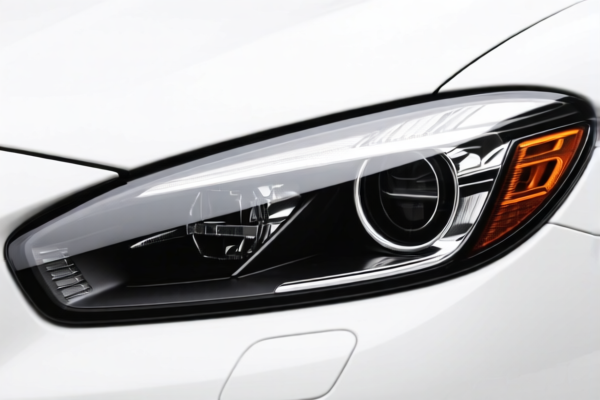
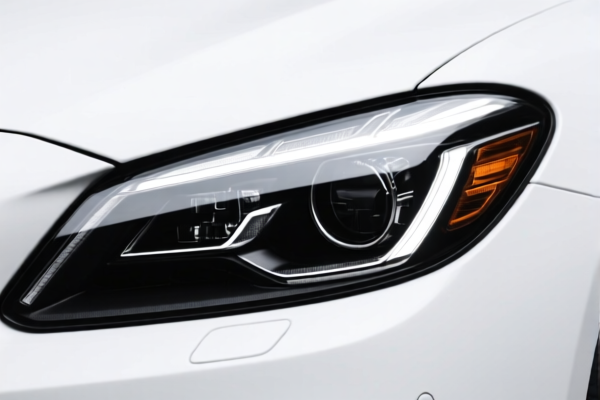
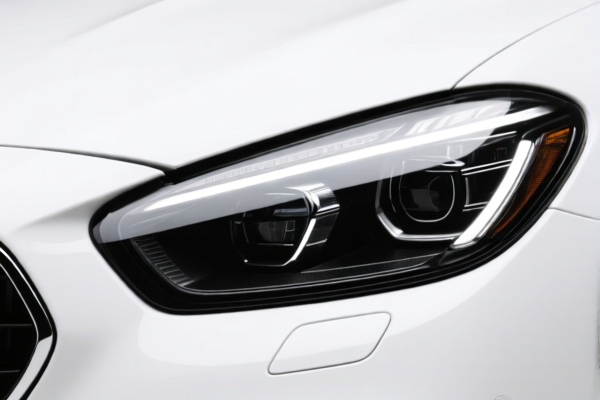
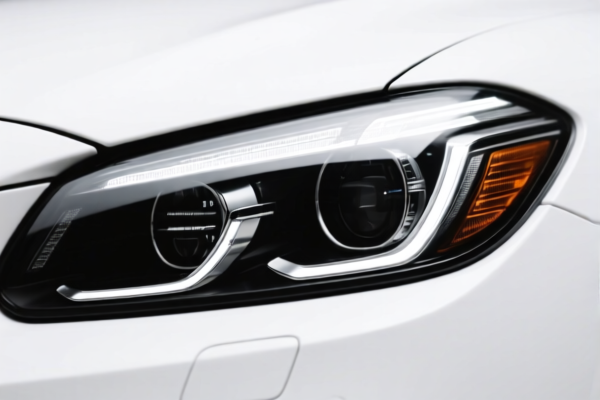
AI Analysis
🚗 Headlight Lens (汽车大灯罩)
🌐 HS Code Reference & Customs Clearance Guide | 2026 Latest Tariff Analysis | Professional Clearance Strategy
📌 Part 1: Product Definition & Classification: Do You Really Understand "Headlight Lens"?
Headlight Lenses are critical transparent or translucent components used in automotive lighting systems. In international trade, their classification hinges on Material and Function. The ambiguity often lies in whether they are classified as "Glass Articles" or "Parts of Luminaires." Based on customs interpretation rules (General Rules of Interpretation), the lack of explicit material declaration in the prompt leads to specific inference paths.
⚠️ Key Classification Logic:
- If the material is Glass → Classified under Chapter 70 (Glass and Glassware).
- If the material is Plastic/Metal or unspecified but function is strictly a luminaire part → Classified under Chapter 94 (Lamps and Lighting Fittings).
- Crucial Distinction: The HS Code choice directly impacts the Total Tax Rate by up to 9% due to differing base tariffs, despite identical additional duties.
📦 Part 2: HS Code Classification Details (2026 Latest Tariff Authority Comparison)
Based on the provided data, here are the four possible HS Codes for Headlight Lenses, ranked by their logical basis and tax implications.
| HS Code | Product Description | Logical Basis for Classification | Material Inference | Total Tax Rate |
|---|---|---|---|---|
7020.00.40.00 |
Glass Articles, Lenses for Lamps | Part/Accessory Rule: In the absence of material conflict, parts are inferred to match the main material category (Glass). | Glass | 41.6% |
9405.92.00.00 |
Parts of Luminaires (Plastic/Metal) | Functional Rule: Lenses are integral parts of lighting devices. Unspecified material defaults to common luminaire parts (Plastic/Metal). | Plastic/Metal (Unspecified) | 38.7% |
9405.91.30.00 |
Parts of Luminaires (Glass) | Specific Part Rule: Matches form (Lens) and use (Luminaire part); defaults to "Other" glass parts for headlight lenses. | Glass | 47.0% |
7020.00.60.00 |
Other Glass Articles (Residual Category) | Residual Rule: Fits the "Other Glass Articles" category. No conflict with form/material inference. | Glass | 40.0% |
🔍 Key Insight:
- Cheapest Option:9405.92.00.00at 38.7% (Assumes Plastic/Metal).
- Most Expensive Option:9405.91.30.00at 47.0% (Specific Glass Part).
- Standard Glass Option:7020.00.40.00at 41.6% (Most common inference for glass lenses).
💰 Part 3: 2026 Latest Tariff Rate Breakdown (Including Additional Duties)
✅ Applicable Country: United States (US)
✅ Country of Origin: China (CN)
✅ Effective Date: 2025/2026 Period (Includes Section 301 & IEEPA Duties)
🎯 1. 7020.00.40.00 — Glass Articles, Lenses for Lamps (Glass Inference)
| Item | Detail |
|---|---|
| Base Tariff | 6.6% |
| Section 301 Additional Duty | +25.0% |
| IEEPA Additional Duty | +10.0% |
| Total Tax Rate | 41.6% |
| Tax Calculation | CIF Value × 41.6% |
| De Minimis Exemption? | ❌ No (High tariff rate disqualifies from 800.300 de minimis exemption) |
| Legal Basis Path | USITC:7020.00.40.00 → FOOTNOTE:9903.88.01 (25%) + IEEPA:9903.01.25 (10%) |
📌 Explanation:
- The 6.6% base rate is typical for non-specified glass articles.
- The 35% total additional duty (25% + 10%) significantly increases the landed cost.
- This classification assumes the lens is made of glass, inferred via the "parts default to main material" rule.
🎯 2. 9405.92.00.00 — Parts of Luminaires (Plastic/Metal/Unspecified)
| Item | Detail |
|---|---|
| Base Tariff | 3.7% |
| Section 301 Additional Duty | +25.0% |
| IEEPA Additional Duty | +10.0% |
| Total Tax Rate | 38.7% |
| Tax Calculation | CIF Value × 38.7% |
| De Minimis Exemption? | ❌ No |
| Legal Basis Path | USITC:9405.92.00.00 → FOOTNOTE:9903.88.01 (25%) + IEEPA:9903.01.25 (10%) |
📌 Explanation:
- This is the lowest tax rate option in the provided data.
- It relies on the inference that the lens is a luminaire part made of common materials (plastic/metal) or that the material is unspecified but fits the "parts" category broadly.
- Risk: If the lens is actually glass, this classification might be challenged as incorrect, leading to penalties.
🎯 3. 9405.91.30.00 — Parts of Luminaires (Glass Specific)
| Item | Detail |
|---|---|
| Base Tariff | 12.0% |
| Section 301 Additional Duty | +25.0% |
| IEEPA Additional Duty | +10.0% |
| Total Tax Rate | 47.0% |
| Tax Calculation | CIF Value × 47.0% |
| De Minimis Exemption? | ❌ No |
| Legal Basis Path | USITC:9405.91.30.00 → FOOTNOTE:9903.88.01 (25%) + IEEPA:9903.01.25 (10%) |
📌 Explanation:
- This is the highest tax rate.
- It specifically targets glass parts of luminaires with a high base tariff (12%).
- Use this only if the lens is definitively glass and declared as a specific "glass part of a luminaire," not a general glass article.
🎯 4. 7020.00.60.00 — Other Glass Articles (Residual)
| Item | Detail |
|---|---|
| Base Tariff | 5.0% |
| Section 301 Additional Duty | +25.0% |
| IEEPA Additional Duty | +10.0% |
| Total Tax Rate | 40.0% |
| Tax Calculation | CIF Value × 40.0% |
| De Minimis Exemption? | ❌ No |
| Legal Basis Path | USITC:7020.00.60.00 → FOOTNOTE:9903.88.01 (25%) + IEEPA:9903.01.25 (10%) |
📌 Explanation:
- A middle-ground option for glass articles that don't fit specific subheadings.
- Lower base rate (5%) than7020.00.40.00but higher than9405.92.00.00.
🛠️ Part 4: Customs Clearance Practical Advice (Avoid Pitfalls)
✅ 1. Documentation Checklist (Essential)
| Document | Required | Purpose |
|---|---|---|
| ✅ Product Specification Sheet | ✔️ | Must state Material (Glass vs. Polycarbonate vs. Metal). |
| ✅ Product Photos (Clear Label) | ✔️ | Shows form factor, transparency, and mounting points. |
| ✅ Commercial Invoice | ✔️ | Must clearly describe item as "Headlight Lens" and specify material. |
| ✅ Packaging List | ✔️ | Shows if lenses are packed with housings (which would change classification). |
| ✅ Declaration of Origin | ✔️ | Required for IEEPA duty application. |
📌 Critical Warning:
- Do not guess the material. If the invoice says "Lens" without material, customs may infer the highest risk or incorrect classification.
- If the lens is Plastic, use9405.92.00.00(38.7%).
- If the lens is Glass, choose between7020.00.40.00(41.6%) or9405.91.30.00(47.0%) based on specificity.
✅ 2. Classification Strategy (Decision Tree)
🔥 "Material Determines Destiny, Function Determines Chapter!"
| Scenario | Recommended HS Code | Total Tax | Reason |
|---|---|---|---|
| Plastic Lens (Most Common) | 9405.92.00.00 |
38.7% | Lowest tax; fits "parts of luminaires" with unspecified/common material. |
| Glass Lens (Standard Inference) | 7020.00.40.00 |
41.6% | Balanced tax; "Glass Article" default for parts. |
| Glass Lens (Specific Part) | 9405.91.30.00 |
47.0% | Highest tax; specific glass part of luminaire. |
| Glass Lens (Residual) | 7020.00.60.00 |
40.0% | Alternative glass classification; mid-range tax. |
⚠️ Do NOT Split:
- If the lens is sold as part of a complete headlight assembly, classify the entire assembly under9405.42.00.00(Lighting Fittings), not as a lens part.
- If sold only as the lens (replacement part), use the codes above.
✅ 3. Special Circumstances & Risk Management
| Situation | Advice |
|---|---|
| OEM Replacement Parts | Provide original equipment manufacturer (OEM) number to prove it is a "part" and not a complete device. |
| Unspecified Material | Declare as "Plastic" if true to get 9405.92.00.00 (38.7%). Misdeclaring glass as plastic can lead to fraud penalties. |
| High-Value Lenses | Consider applying for a Binding Ruling from CBP if the material is ambiguous (e.g., coated glass vs. glass). |
| De Minimis Threshold | ❌ Not Eligible: All these HS codes have >20% duty, so Section 321 de minimis ($800 exemption) does NOT apply. Each shipment is subject to duty. |
🌍 Part 5: Global Market Comparison (2026)
| Country | Recommended HS Code | Estimated Duty (CN Origin) | Notes |
|---|---|---|---|
| 🇺🇸 USA | 9405.92.00.00 |
38.7% | Includes 35% additional duties. Plastic lenses preferred for lower tax. |
| 🇺🇸 USA | 7020.00.40.00 |
41.6% | Glass lenses incur higher base tariff. |
| 🇪🇺 EU | 9405.91.00 |
~3.2% | No Section 301/IEEPA duties. Glass vs. Plastic matters less for rate, more for VAT. |
| 🇨🇳 China | 9405.91.00 |
~5-9% | Import duties vary. Not applicable for US export data. |
📌 Conclusion:
- USA is the most costly market due to 35% additional duties.
- Material choice (Plastic vs. Glass) is the biggest tax driver.
- Plastic lenses (9405.92.00.00) are the most tax-efficient option for US imports.
📌 Part 6: Common Mistakes & Pitfalls (Blood Lessons)
❌ Mistake 1: Classifying a Plastic Lens under 7020 (Glass)
👉 Consequence: Incorrect declaration, potential penalty, and delayed clearance.
❌ Mistake 2: Claiming De Minimis Exemption for these items
👉 Consequence: Shipment held at customs, duties collected + storage fees + penalties. (All rates >20% disqualify exemption).
❌ Mistake 3: Listing as "Auto Part" without HS Code
👉 Consequence: Customs will assign a code, likely 9405.91.30.00 (47.0%), leading to overpayment.
✅ Correct Declaration Example:
"Headlight Lens, Replacement Part, Polycarbonate Plastic, For Model XYZ, No Lighting Assembly Included"
→ Use HS Code:9405.92.00.00(38.7%)
🎯 Part 7: Conclusion: Precise Classification Saves Money!
🎯 Remember the Golden Rule:
🔹 "Plastic Lens = 38.7% | Glass Lens = 40-47%"
🔹 "No De Minimis for High Duty Items!"
🔹 "Specify Material on Invoice to Avoid Guesswork!"
📌 Pro Tip:
If your headlight lenses are plastic, ensure your supplier declares them as such. If they are glass, calculate the 41.6% or 47.0% tax into your pricing model.
For high-volume imports, apply for a Binding Ruling to lock in the correct HS Code and avoid future disputes.
📣 Immediate Action:
📞 Verify Material with your supplier.
📝 Update Invoice to include "Material: Plastic/Glass".
🚀 Choose9405.92.00.00if plastic to minimize costs!
✨ Professional Clearance, Starting from Accurate Classification!
💼 Every Percent of Duty Counts!
Customer Reviews
About HS Code Classification
The Harmonized System (HS) is an internationally standardized nomenclature developed by the World Customs Organization (WCO) to classify traded products. Over 200 countries use the HS system as the basis for customs tariffs, trade statistics, and import/export regulations.
Each HS code follows a hierarchical structure:
- Chapter (2 digits) — Broad category of goods (e.g., Chapter 84: Machinery and Mechanical Appliances)
- Heading (4 digits) — More specific grouping within the chapter
- Subheading (6 digits) — Internationally standardized breakdown, used by all WCO member countries
- National subdivisions (8-10 digits) — Country-specific extensions for further classification, such as US HTSUS 10-digit codes
Correct HS code classification is essential for smooth customs clearance, accurate duty payment, and compliance with trade regulations. Misclassification can lead to customs delays, overpayment of duties, or penalties.
When importing from CN to US, the applicable tariff rates may include:
- Most-Favored-Nation (MFN) rate — The standard duty rate applied to WTO members
- General rate — Applied to countries without trade agreements
- Trade remedy duties — Additional tariffs such as Section 301 (anti-dumping), Section 232 (national security), or countervailing duties
The information provided on this page is for reference purposes only. For official classification, please consult with your local customs authority or a licensed customs broker.