Heartwood
CN → US| HS Code | Tariff Rate | Origin | Destination | Doc |
|---|---|---|---|---|
| 4407190055 | 35.0% | CN | US | Official Doc |
| 4407190056 | 35.0% | CN | US | Official Doc |
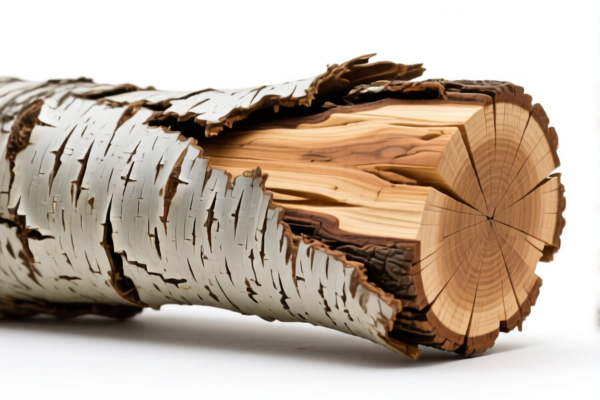
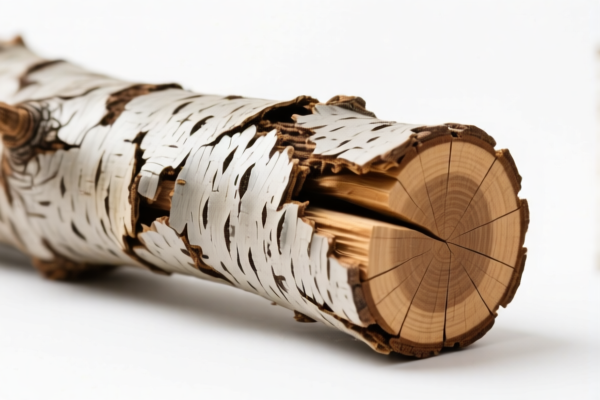
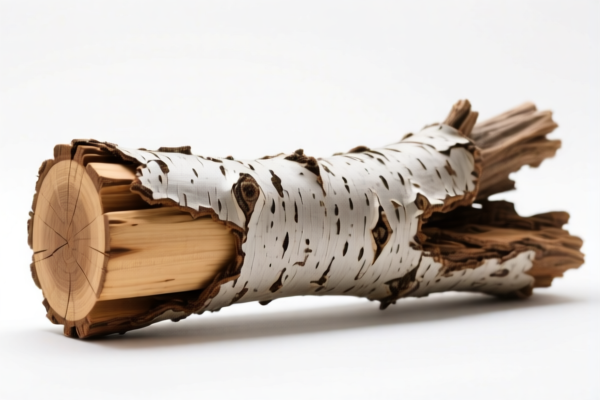
Product Images
AI Analysis
Based on the <DATA> provided, here is the professional classification, tax analysis, and customs clearance guide for Heartwood (specifically Douglas-fir logs/sawn timber).
🌲 Heartwood: Douglas-Fir Sawn Timber (Pseudotsuga menziesii)
🌐 HS Code Reference & Customs Clearance Guide | 2026 Latest Tariff Analysis | Professional Clearance Strategy
📌 I. Product Definition & Classification: What Exactly is "Heartwood" Here?
In the context of international timber trade, "Heartwood" refers to the central, non-living core of the tree trunk. Unlike sapwood, heartwood is typically darker, more durable, and resistant to decay. However, for US Customs (CBP) classification under Chapter 44, the physical form (thickness, dimension, and treatment) determines the HS Code, not just the biological part of the tree.
The <DATA> provided specifies Douglas-fir (Pseudotsuga menziesii) that is:
* Processed: Sawn, chipped, sliced, or peeled.
* Thickness: Exceeds 6 mm.
* Species: Coniferous – Other – Douglas-fir.
* Treatment: Not treated (Untreated).
* Surface: Rough (Not planed/sanded smooth).
⚠️ Key Distinction Point:
- If the wood is planed, sanded, or end-jointed, it may fall under different sub-headings.
- If the wood is treated (e.g., with preservatives), it falls under 4403 (Timber treated), NOT the codes below.
- The codes below apply strictly to Untreated, Rough-Sawn Douglas-fir.
📦 II. HS Code Classification Details (2026 Latest Tariff Authority Match)
| HS Code | Product Description | Application Scenario | Minimum Dimension |
|---|---|---|---|
4407.19.00.55 |
Douglas-fir, Rough, Untreated | Rough-sawn planks/lumber | ≥ 5.1 cm but < 12.7 cm |
4407.19.00.56 |
Douglas-fir, Rough, Untreated | Large rough beams/timbers | ≥ 12.7 cm |
🔍 Critical Reminder:
- "Rough" means the surface has not been planed, sanded, or otherwise smoothed for aesthetic purposes. It retains the saw marks or chisel marks from processing.
- "Minimum Dimension" refers to the smallest side of the cross-section (e.g., if a plank is 2x6, the min dimension is 2 inches / ~5.1 cm).
- Misclassification Risk: Declaring rough-sawn timber as "planed" to lower duties will result in penalties and seizure.
💰 III. 2026 Latest Tariff Rate Breakdown (Including Surcharges)
✅ Applicable Country: United States (US)
✅ Origin: China (CN) (Assumed based on typical 25% surcharge context in data)
✅ Effective Date: Current (Based on Section 301 Tariffs)
🎯 1. 4407.19.00.55 — Douglas-fir (Min Dim: 5.1 cm – < 12.7 cm)
| Item | Content |
|---|---|
| Base Tariff Rate | 0.0% (Most Favored Nation / MFN rate for many timber products) |
| Section 301 Surcharge | +25.0% (Imposed on Chinese-origin goods) |
| Total Effective Tax Rate | 25.0% |
| Tax Calculation | CIF Value × 25% |
| De Minimis Exemption | ❌ Not Applicable (Section 301 goods are generally excluded from de minimis waivers for high-value shipments) |
| Legal Authority Path | USITC: 4407.19.00.55 → Section 301: HTSUS 9903.01.12 (Timber Products) |
📌 Explanation:
- Although the base MFN rate is 0%, the 25% Section 301 tariff applies because the product is classified under heading 4407 and originates from a country subject to these tariffs (typically China).
- This is a flat 25% on the total value.
🎯 2. 4407.19.00.56 — Douglas-fir (Min Dim: ≥ 12.7 cm)
| Item | Content |
|---|---|
| Base Tariff Rate | 0.0% |
| Section 301 Surcharge | +25.0% |
| Total Effective Tax Rate | 25.0% |
| Tax Calculation | CIF Value × 25% |
| De Minimis Exemption | ❌ Not Applicable |
| Legal Authority Path | USITC: 4407.19.00.56 → Section 301: HTSUS 9903.01.12 |
📌 Note:
- The tax rate is identical to the smaller dimension code.
- The distinction is purely for statistical tracking and quota management (if any apply), not tax savings.
🛠️ IV. Customs Clearance Practical Advice (Avoid Pitfalls)
✅ 1. Required Documentation Checklist (Non-Negotiable)
| Document | Must Provide | Explanation |
|---|---|---|
| ✅ Phytosanitary Certificate | ✔️ | Mandatory for wood products to prove no pests/diseases. Issued by the country of origin. |
| ✅ Fumigation Certificate | ✔️ | If the wood is not heat-treated (HT) or methyl bromide (MB) treated, this is critical. |
| ✅ Commercial Invoice | ✔️ | Must clearly state: "Untreated Douglas-fir, Rough Sawn," species (Pseudotsuga menziesii), and dimensions. |
| ✅ Packing List | ✔️ | Must specify minimum dimensions of each piece to confirm correct HS code (55 vs 56). |
| ✅ Bill of Lading | ✔️ | Standard shipping document. |
| ✅ ISPM 15 Mark (if applicable) | ✔️ | If packaged in wood pallets/ crates, they must be marked. The timber itself does not need ISPM 15 if untreated/rough, but pests are the concern. |
✅ 2. Declaration Tips (Key Mnemonics)
🔥 “Rough, Untreated, Measure Min Dimension, Declare Species”
| Scenario | Correct Declaration | Incorrect Declaration |
|---|---|---|
| Surface Finish | "Rough Sawn, Untreated" | "Planed," "Sanded," or "Smooth" |
| Species | "Douglas-fir (Pseudotsuga menziesii)" | "Softwood" or "Coniferous" (Too vague) |
| Dimensions | "Min Dim: 7.5 cm" | "2x4" (US customary units may cause confusion; use cm/mm for USCBP if possible) |
| Treatment | "Not Treated" | "Preservative Treated" (Changes HS Code to 4403) |
✅ 3. Special Handling for Heartwood
| Situation | Handling Advice |
|---|---|
| Mixed Dimensions | If a shipment contains both <12.7 cm and ≥12.7 cm pieces, they must be declared separately or the higher/stricter code may be applied. Best to segregate in packing list. |
| Moisture Content | Declare moisture content. High moisture can lead to mold issues during transit, triggering additional phytosanitary scrutiny. |
| Value Declaration | Ensure FOB/CIF values are accurate. A 25% duty on undervalued shipments will trigger audits and penalties. |
| End-Jointed Wood | If the wood is end-jointed (finger-jointed), it is still considered sawn timber under 4407, but ensure it is not classified as "wood blocks" or "prefabricated parts." |
🌍 V. Global Market Comparison (2026 Latest)
| Country/Region | Recommended HS Code | Tariff (China Origin) | Certification Requirements | Notes |
|---|---|---|---|---|
| 🇺🇸 United States | 4407.19.00.55/56 |
25.0% | Phytosanitary + ISPM 15 | High duty due to Section 301. |
| 🇨🇳 China | 4407.19.00.55/56 |
5% | N/A | Lower entry barrier. |
| 🇪🇺 European Union | 4407.10.20 |
0% (if EBA) | EUTR (EU Timber Regulation) | Strict due diligence required. |
| 🇯🇵 Japan | 4407.10.00 |
3.4% | Phytosanitary | Standard tariff. |
📌 Conclusion:
- The US is the most expensive market for this product due to the 25% Section 301 surcharge.
- Phytosanitary compliance is critical in all markets to avoid rejection.
📌 VI. Common Errors & Pitfalls (Lessons Learned)
❌ Error 1: Declaring "Planed" instead of "Rough"
👉 Consequence: Incorrect HS Code classification → Potential fraud allegations + back taxes.
❌ Error 2: Ignoring "Minimum Dimension"
👉 Consequence: Customs may reclassify based on the largest piece, leading to unexpected duties or delays.
❌ Error 3: Missing Phytosanitary Certificate
👉 Consequence: Shipment held at port for fumigation or destroyed. Costly delays.
❌ Error 4: Mixing Treated and Untreated Wood
👉 Consequence: The entire shipment may be classified as "Treated" (4403), which has different rules and potential higher scrutiny.
✅ Correct Approach:
"Untreated Douglas-fir, Rough Sawn, Pseudotsuga menziesii, Min Dim 7.6 cm, accompanied by Phytosanitary Certificate."
🎯 VII. Conclusion: Professional Classification Saves Costs!
🎯 Remember the Mnemonic:
🔹 "Rough & Untreated, Check the Size, 25% Duty for US, Phytosanitary is the Prize!"
🔹 "HS Code 4407.19, Min Dim decides 55 or 56, Never lie about Treatment!"
📌 Pro Tip:
If you are importing into the US, consider applying for a Customs Ruling if your wood dimensions are borderline or your processing methods are ambiguous. This provides legal certainty and prevents future disputes.
📣 Immediate Action:
📞 Contact a licensed customs broker + Provide Product Photos + Verify Phytosanitary Status
🚀 Ensure smooth clearance, avoid delays, and protect your profit margin!
✨ Professional Clearance Starts with Accurate Classification!
💼 Every dollar of duty is a dollar of profit—classify correctly!
Customer Reviews
About HS Code Classification
The Harmonized System (HS) is an internationally standardized nomenclature developed by the World Customs Organization (WCO) to classify traded products. Over 200 countries use the HS system as the basis for customs tariffs, trade statistics, and import/export regulations.
Each HS code follows a hierarchical structure:
- Chapter (2 digits) — Broad category of goods (e.g., Chapter 84: Machinery and Mechanical Appliances)
- Heading (4 digits) — More specific grouping within the chapter
- Subheading (6 digits) — Internationally standardized breakdown, used by all WCO member countries
- National subdivisions (8-10 digits) — Country-specific extensions for further classification, such as US HTSUS 10-digit codes
Correct HS code classification is essential for smooth customs clearance, accurate duty payment, and compliance with trade regulations. Misclassification can lead to customs delays, overpayment of duties, or penalties.
When importing from CN to US, the applicable tariff rates may include:
- Most-Favored-Nation (MFN) rate — The standard duty rate applied to WTO members
- General rate — Applied to countries without trade agreements
- Trade remedy duties — Additional tariffs such as Section 301 (anti-dumping), Section 232 (national security), or countervailing duties
The information provided on this page is for reference purposes only. For official classification, please consult with your local customs authority or a licensed customs broker.