Heat Dissipation Pot Mat
CN → US| HS Code | Tariff Rate | Origin | Destination | Doc |
|---|---|---|---|---|
| 4419199000 | 13.2% | CN | US | Official Doc |
| 4419909100 | 20.7% | CN | US | Official Doc |
| 6912004890 | 19.8% | CN | US | Official Doc |
| 6912005000 | 16.0% | CN | US | Official Doc |
Product Images
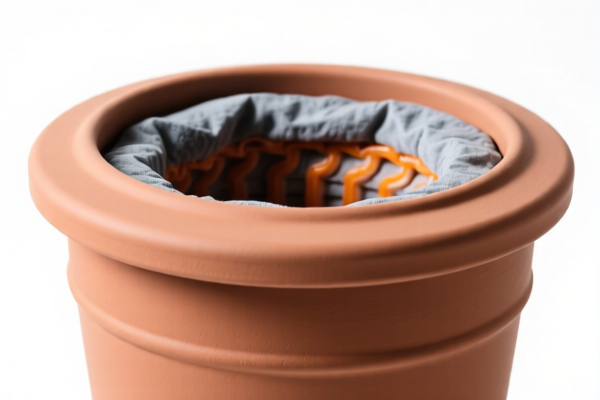
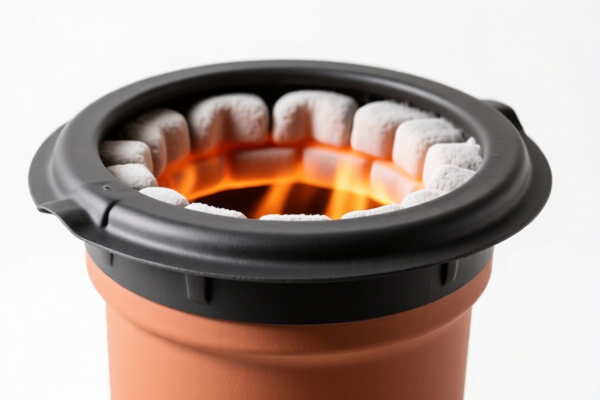


AI Analysis
🍲 Heat Dissipation Pot Mat
🌐 HS Code Reference & Customs Clearance Guide | 2026 Latest Tariff Analysis | Professional Clearance Strategy
📌 I. Product Definition and Classification: Do You Really Understand "Pot Mats"?
A Heat Dissipation Pot Mat (also known as a pot trivet, hot pad, or heat-resistant mat) is a household item designed to protect table surfaces from heat damage, scratches, and moisture caused by hot cookware. In international trade, these products are classified based on their material composition, as the Harmonized System (HS) differentiates strictly between ceramics, wood, and other materials.
⚠️ Key Distinction Point:
- If the mat is made of ceramic/porcelain (hard, brittle, fired clay) → It falls under Chapter 69.
- If the mat is made of wood/bamboo (organic, carved or pressed) → It falls under Chapter 44.
- ⚠️ Note: Rubber, silicone, or fabric mats are not included in the provided and require separate classification codes.
📦 II. HS Code Classification Details (2026 Latest Tariff Authority Reference)
Based on the provided data, here are the applicable HS codes for Heat Dissipation Pot Mats made of Ceramic or Wood/Bamboo:
| HS Code | Product Description | Material Type | Tax Rate (Total) | Base Tariff | Additional Tariff |
|---|---|---|---|---|---|
6912.00.48.90 |
Ceramic tableware, kitchenware... Other | Ceramic (Non-porcelain/Non-china) | 9.8% | 9.8% | 0.0% |
6912.00.50.00 |
Ceramic tableware, kitchenware... Other | Ceramic (General Category) | 6.0% | 6.0% | 0.0% |
4419.19.90.00 |
Tableware and kitchenware, of wood: Of bamboo: Other | Bamboo | 3.2% | 3.2% | 0.0% |
4419.90.91.00 |
Tableware and kitchenware, of wood: Other: Other | Wood (Non-bamboo) | 0.0% | 0.0% | 0.0% |
🔍 Detailed Explanation:
1. Ceramic Mats (6912.00.48.90&6912.00.50.00):
- Ceramic pot mats are classified as "Tableware and kitchenware."
- If the ceramic is not high-quality porcelain or china (e.g., stoneware, earthenware), it may fall under the broader "Other" categories.
- The difference between48.90(9.8%) and50.00(6.0%) often depends on specific sub-classification criteria (e.g., weight, exact ceramic type, or specific national sub-heading rules).
2. Bamboo Mats (4419.19.90.00):
- Bamboo is explicitly categorized under "Of bamboo" in Chapter 44.
- Bamboo pot mats are common due to heat resistance and aesthetics.
3. Wood Mats (4419.90.91.00):
- Made from non-bamboo wood (e.g., rubberwood, oak, bamboo-free wood).
- Zero Duty Advantage: This code has 0.0% total tax, making it the most cost-effective option for clearance if the material is pure wood.
💰 III. 2026 Latest Tariff Rate Breakdown (Detailed Tax Clauses)
✅ Applicable Country: United States (US)
✅ Origin: China (CN) (Assumed based on typical trade flows, but verify local origin rules)
✅ Effective Time: 2026
🎯 1. Ceramic Pot Mats (6912.00.48.90 / 6912.00.50.00)
| Item | Content |
|---|---|
| Base Tariff | 6.0% – 9.8% (varies by sub-classification) |
| Additional Tariff | 0.0% |
| Total Tax Rate | 6.0% or 9.8% |
| Tax Calculation | CIF Value × 6.0% (or 9.8%) |
| De Minimis Eligibility | ✅ Yes (if value < $800) |
| Legal Basis | HTSUS: 6912.00.48.90 / 6912.00.50.00 |
📌 Interpretation:
- Ceramic pot mats are not subject to the heavy 25% USITC tariffs (Section 301) that apply to many industrial goods.
- However, they are not duty-free. The 6.0%-9.8% rate is moderate.
- Tip: If your ceramic mats are classified under6912.00.50.00, you save 3.8% compared to6912.00.48.90. Provide detailed material specs to support the lower rate if possible.
🎯 2. Bamboo Pot Mats (4419.19.90.00)
| Item | Content |
|---|---|
| Base Tariff | 3.2% |
| Additional Tariff | 0.0% |
| Total Tax Rate | 3.2% |
| Tax Calculation | CIF Value × 3.2% |
| De Minimis Eligibility | ✅ Yes (if value < $800) |
| Legal Basis | HTSUS: 4419.19.90.00 |
📌 Interpretation:
- Bamboo is a renewable resource, and the tariff is lower than ceramic.
- No additional tariffs apply.
🎯 3. Wooden Pot Mats (4419.90.91.00)
| Item | Content |
|---|---|
| Base Tariff | 0.0% |
| Additional Tariff | 0.0% |
| Total Tax Rate | 0.0% |
| Tax Calculation | Duty-Free |
| De Minimis Eligibility | ✅ Yes (if value < $800) |
| Legal Basis | HTSUS: 4419.90.91.00 |
📌 Interpretation:
- Zero Duty! This is the most tariff-efficient option for clearance.
- Ensure the product is 100% wood and not mixed with ceramic feet or glue-heavy compositions that might trigger a reclassification to "composite materials" or "other."
🛠️ IV. Customs Clearance Practical Advice (Pitfall Avoidance Guide)
✅ 1. Required Documentation Checklist
| Document | Must Provide | Notes |
|---|---|---|
| ✅ Product Specification | ✔️ | Material composition (e.g., "100% Bamboo," "Stoneware Ceramic") |
| ✅ Material Declaration | ✔️ | Explicitly state if it is "Non-porcelain Ceramic" or "Wood/Bamboo" |
| ✅ Product Photos | ✔️ | Show the mat, any packaging, and scale (to prove it's for kitchen use) |
| ✅ Commercial Invoice | ✔️ | Use clear description: "Bamboo Pot Mat" or "Ceramic Heat Trivet" |
| ✅ HS Code Confirmation | ✔️ | Pre-clearance ruling recommended if value is high |
✅ 2. Declaration Tips (Key Mnemonics)
🔥 “Material First, Function Second: Wood is Free, Bamboo is Cheap, Ceramic is Pay.”
| Scenario | Correct Declaration | Wrong Practice |
|---|---|---|
| Bamboo Mat | 4419.19.90.00 (3.2%) |
Misdeclared as "Plastic Mat" → Higher tax or penalty |
| Wood Mat | 4419.90.91.00 (0.0%) |
Misdeclared as "Ceramic" → Unnecessary 6-9.8% tax |
| Ceramic Mat | 6912.00.50.00 (6.0%) |
Misdeclared as "Kitchen Tool" without HS → Delay |
| Mixed Material | Check dominant material | If >50% wood, try for 4419; if ceramic base, use 6912 |
✅ 3. Special Cases
| Scenario | Handling Advice |
|---|---|
| Mat with Rubber Feet | If rubber feet are negligible (<5% value), still classify as wood/ceramic. If significant, may require separate classification. |
| Gift Sets | If pot mat is part of a set (e.g., with bowls), apply Essential Character rule. If mat is accessory, whole set may follow the main item’s HS. |
| Origin Marking | Ensure products are marked "Made in China" (if applicable) to avoid origin fraud issues. |
🌍 V. Global Market Clearance Comparison (2026 Latest)
| Country/Region | Recommended HS Code | Tariff | Certification | Notes |
|---|---|---|---|---|
| 🇺🇸 USA | 4419.90.91.00 |
0% | None | Best for wood; avoid ceramic if tax-sensitive |
| 🇨🇳 China | 6912.00.50.00 |
~6-9% | CCC (if applicable) | Export tariffs may vary |
| 🇪🇺 EU | 6912.00 |
4.5% (Ceramic) 3.5% (Wood) |
CE (if applicable) | VAT adds 19-27% on top |
| 🇯🇵 Japan | 6912.00 |
14-15% | JIS | High tariffs for ceramics |
📌 Conclusion:
- USA offers 0% duty for wooden mats (4419.90.91.00). This is the optimal choice for cost savings.
- Ceramic mats incur 6-9.8% duty. Consider bamboo (3.2%) as a cost-effective alternative.
- Always verify material composition to avoid misclassification penalties.
📌 VI. Common Errors & Pitfall Guide (Lessons Learned)
❌ Error 1: Mislabeling "Wooden" mats as "Ceramic"
👉 Consequence: Paying 6-9.8% instead of 0%. Unnecessary cost!
❌ Error 2: Calling "Ceramic" mats "Kitchenware" without HS code
👉 Consequence: Customs delays, potential reclassification at higher rate.
❌ Error 3: Ignoring "Bamboo" vs. "Wood" distinction
👉 Consequence: Bamboo is 4419.19.90.00 (3.2%), Wood is 4419.90.91.00 (0%). Confusion leads to errors.
❌ Error 4: Mixed-material mats without clear declaration
👉 Consequence: Customs may classify based on the most expensive component or apply general "Other" rates.
✅ Correct Practice:
"Bamboo Pot Mat, Heat Resistant, Non-Slip Base, 100% Natural Bamboo, HS 4419.19.90.00"
🎯 VII. Conclusion: Smart Classification, Lower Costs!
🎯 Remember the Mnemonic:
🔹 "Wood is Free, Bamboo is Low, Ceramic is Pay, Choose Smart to Save!"
🔹 "HS Code Determines Tariff: 0% for Wood, 3.2% for Bamboo, 6-9.8% for Ceramic."
📌 Pro Tip:
If your product is wooden, always insist on 4419.90.91.00 for 0% duty.
If it is ceramic, verify if it qualifies for 6912.00.50.00 (6.0%) instead of 48.90 (9.8%) by providing detailed ceramic type documentation.
📣 Immediate Action:
📞 Contact your customs broker + Provide material composition + Apply for pre-clearance if high value.
🚀 Ensure smooth clearance, minimize costs, and maximize profit!
✨ Professional Clearance Starts with Accurate Classification!
💼 Every percent of tariff matters!
Customer Reviews
About HS Code Classification
The Harmonized System (HS) is an internationally standardized nomenclature developed by the World Customs Organization (WCO) to classify traded products. Over 200 countries use the HS system as the basis for customs tariffs, trade statistics, and import/export regulations.
Each HS code follows a hierarchical structure:
- Chapter (2 digits) — Broad category of goods (e.g., Chapter 84: Machinery and Mechanical Appliances)
- Heading (4 digits) — More specific grouping within the chapter
- Subheading (6 digits) — Internationally standardized breakdown, used by all WCO member countries
- National subdivisions (8-10 digits) — Country-specific extensions for further classification, such as US HTSUS 10-digit codes
Correct HS code classification is essential for smooth customs clearance, accurate duty payment, and compliance with trade regulations. Misclassification can lead to customs delays, overpayment of duties, or penalties.
When importing from CN to US, the applicable tariff rates may include:
- Most-Favored-Nation (MFN) rate — The standard duty rate applied to WTO members
- General rate — Applied to countries without trade agreements
- Trade remedy duties — Additional tariffs such as Section 301 (anti-dumping), Section 232 (national security), or countervailing duties
The information provided on this page is for reference purposes only. For official classification, please consult with your local customs authority or a licensed customs broker.