Heat Sensitive Paper Base Paper High Brightness
CN → US| HS Code | Tariff Rate | Origin | Destination | Doc |
|---|---|---|---|---|
| 4802202000 | 35.0% | CN | US | Official Doc |
| 4802201000 | 35.0% | CN | US | Official Doc |
| 4811908030 | 35.0% | CN | US | Official Doc |
| 4811909030 | 35.0% | CN | US | Official Doc |
| 4911998000 | 17.5% | CN | US | Official Doc |
Product Images
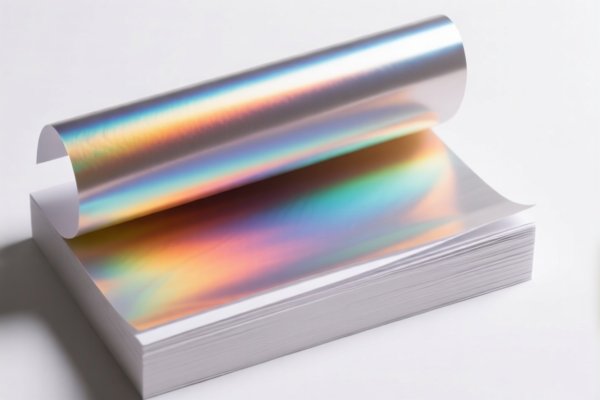

AI Analysis
📄 Thermal Sensitive Paper Base Paper High Brightness
🌐 HS Code Reference & Customs Clearance Guide | 2026 Latest Tariff Analysis | Professional Strategy 📌 I. Product Definition & Classification: Do You Understand "Thermal Paper" Truly?
Thermal Sensitive Paper (High Brightness Base Paper) is a core material widely used in POS receipts, bank tickets, fax machines, and thermal labels. In international trade, it is primarily classified under Chapter 48 (Paper and Paperboard). The classification hinges on whether it is a raw base paper or a coated functional paper.
Base Paper (Uncoated/Pre-coat): The raw pulp foundation before thermal coating is applied. Coated Thermal Paper: The final product with the heat-sensitive chemical layer ready for printing.
⚠️ Key Distinction Point: - If it is pure base paper (white pulp paper) intended for further processing into thermal paper → Falls under 4802.20.10.00 / 4802.20.20.00. - If it is finished thermal paper (coated with heat-sensitive chemicals) → Falls under 4811.90.80.30 / 4811.90.90.30. - If classified broadly as other printed items (less common for raw rolls) → Could be 4911.99.80.00.
📦 II. HS Code Classification Details (2026 Latest Tariff Authoritative Comparison)
| HS Code | Product Description | Application Scenario | Key Characteristics |
|---|---|---|---|
4802.20.20.00 |
Base paper suitable for photosensitive, thermal, or electric-sensitive paper/cardboard | Raw white pulp, high brightness base | ✅ Matched: Purpose & Material Consistency |
4802.20.10.00 |
Other wood-free paper of a kind used for writing, printing or other commercial purposes, in rolls | Raw base paper, thermal-specific material | ✅ Matched: Material & Name Consistency |
4811.90.80.30 |
Other paper, paperboard, cellulose wadding and webs of cellulose fibres, coated, impregnated, covered, surface-coloured, surface-decorated or printed, other | Finished thermal coated paper | ✅ Matched: Direct correspondence to "Thermal" attribute |
4811.90.90.30 |
Other paper, paperboard, cellulose wadding and webs of cellulose fibres, coated, impregnated, covered, surface-coloured, surface-decorated or printed, other | Finished thermal paper with direct thermal coating | ✅ Matched: Material (Paper) + Core Use (Direct Thermal Coating) |
4911.99.80.00 |
Other printed matter (including printed pictures and photographs) | Other printed items, inferred material | ✅ Matched: Inferred as printed material, no conflict in form/use |
🔍 Important Note: - "Base Paper" (4802 series): Refers to the uncoated or lightly primed paper roll before final thermal coating. High brightness is a key quality indicator here. - "Thermal Paper" (4811 series): Refers to the final consumable product with the chemical coating. - Customs Risk: Misclassifying coated thermal paper as simple base paper (4802) may lead to audits, as 4811 items often have different duty structures or regulatory requirements depending on the specific chemical composition.
💰 III. 2026 Latest Tariff Rate Details (Including Surcharges & Policy Add-ons)
✅ Applicable Country: United States (US) ✅ Origin: China (CN) ✅ Effective Time: Post-November 2025 (Current 2026 Status)
🎯 1. 4802.20.20.00 & 4802.20.10.00 —— Thermal Paper Base Paper (Raw/Pre-coat)
| Item | Content |
|---|---|
| Base Tariff | 0% (ad valorem) |
| USITC Surcharge | +25% (From USITC Footnote 9903.88.01 / Section 301) |
| IEEPA Surcharge | +10% (Against China/HK products, effective from Nov 10, 2025) |
| Total Rate | 35% |
| Tax Calculation | CIF Value × 35% |
| De Minimis Exemption | ❌ Not Eligible (deny_de_minimis) |
| Legal Path | IEEPA:9903.01.25 → IEEPA:9903.01.24 → USITC:4802.20.x0.00 → FOOTNOTE:9903.88.01 |
📌 Explanation: - The 25% USITC surcharge is applied to paper products from China under Section 301. - The 10% IEEPA surcharge is the additional penalty for Chinese origin. - Total 35% is the mandatory duty burden for base paper.
🎯 2. 4811.90.80.30 & 4811.90.90.30 —— Finished Thermal Paper (Coated)
| Item | Content |
|---|---|
| Base Tariff | 0% |
| USITC Surcharge | +25% |
| IEEPA Surcharge | +10% |
| Total Rate | 35% |
| Tax Calculation | CIF Value × 35% |
| De Minimis Exemption | ❌ Not Eligible |
| Legal Path | Same as above, applicable to coated paper under 4811 |
📌 Note: - Even though it is a "finished" product, it falls under the same high tariff bracket (35%) as the base paper. - Ensure the description clearly states "Thermal Coated Paper" to avoid customs questioning why a coated paper is declared as "base paper."
🎯 3. 4911.99.80.00 —— Other Printed Matter (Less Common for Raw Paper)
| Item | Content |
|---|---|
| Base Tariff | 0% |
| USITC Surcharge | +7.5% |
| IEEPA Surcharge | +10% |
| Total Rate | 17.5% |
| Tax Calculation | CIF Value × 17.5% |
| De Minimis Exemption | ❌ Not Eligible |
⚠️ Risk Warning: - This classification is rarely appropriate for raw thermal paper rolls. It is intended for other printed items. - Using this code for standard thermal paper may trigger a customs audit for misclassification, potentially leading to penalties or back-taxes (the difference between 35% and 17.5%). - Recommendation: Stick to 4802 or 4811 codes unless the product is definitively a printed item with no further paper characteristics.
🛠️ IV. Customs Clearance Practical Advice (Real-world Pitfall Avoidance)
✅ 1. Required Documentation Checklist
| Document | Mandatory | Description |
|---|---|---|
| ✅ Product Specification Sheet | ✔️ | Must specify: Base weight (gsm), Brightness (ISO), Roll Diameter, Width, Material (Wood-free pulp). |
| ✅ Material Safety Data Sheet (MSDS) | ✔️ | Crucial if the paper contains chemical coatings (Thermal paper). Helps classify correctly under 4811 vs 4802. |
| ✅ Product Photos | ✔️ | Clear images of the roll, label, and packaging showing "Thermal Paper" or "Base Paper." |
| ✅ Commercial Invoice | ✔️ | Must explicitly state: "Thermal Sensitive Paper" or "Paper Base for Thermal Printing," NOT just "Paper." |
| ✅ Packing List | ✔️ | Detail net/gross weight, number of rolls. |
| ✅ Certificate of Origin (CO) | ✔️ | Required to prove Chinese origin (which triggers the 35% tax). |
✅ 2. Declaration Tips (Key Mantra)
🔥 "Specify 'Thermal' or 'Base', Define Material, Avoid Ambiguity!"
| Scenario | Correct Declaration | Incorrect Practice |
|---|---|---|
| Raw white pulp for coating | 4802.20.20.00 - "Wood-free base paper for thermal printing" |
Declaring as "Copy Paper" (0% risk, but high audit chance) |
| Finished thermal receipt paper | 4811.90.80.30 - "Thermal coated paper for POS" |
Declaring as "Stationery" or vague "Paper" |
| Printed thermal labels | 4811.90.80.30 or 4911.99.80.00 (if heavily printed) |
Using 4911 for unprinted base paper |
📌 Note: - If the paper is uncoated, use 4802. - If the paper is coated with thermal chemicals, use 4811. - Do not use
4911.99.80.00for raw paper rolls unless they are explicitly finished printed goods, as it is a low-risk code that may attract scrutiny for misclassification.
✅ 3. Special Case Handling
| Situation | Handling Advice |
|---|---|
| High Brightness Claim | Provide test reports proving brightness >85% to justify "High Quality" base paper, but this doesn't change the HS code. |
| OEM Custom Sizes | Provide customer specs + drawings to prove it's a specialized industrial product, not generic stationery. |
| Thermal Coating Chemicals | If the coating contains hazardous substances, ensure MSDS is accurate to avoid hazardous cargo delays. |
| Small Sample Shipments | Even small samples are subject to the 35% duty if declared properly. De Minimis (Section 321) is not applicable for Chinese origin goods. |
🌍 V. Global Market Clearance Comparison (2026 Latest)
| Country/Region | Recommended HS Code | Tariff (China Origin) | Certification Requirements | Notes |
|---|---|---|---|---|
| 🇺🇸 USA | 4802.20.20.00 / 4811.90.80.30 |
35% (Base + 25% + 10%) | None specific for paper | High duty burden. |
| 🇨🇳 China | 4802.20.20.00 / 4811.90.80.30 |
~5-10% | RoHS (if coating) | Lower tariff, no Section 301. |
| 🇪🇺 EU | 4802.20.20.00 / 4811.90.80.30 |
0% (if FTA) / 6.5% | REACH (chemical coating) | Check REACH for thermal chemicals. |
| 🇬🇧 UK | 4802.20.20.00 / 4811.90.80.30 |
0% - 6.5% | UKCA (if applicable) | Post-Brexit rules. |
| 🇯🇵 Japan | 4802.20.20.00 / 4811.90.80.30 |
~5-6% | None specific | No major surcharges. |
📌 Conclusion: - USA is the most expensive market for Chinese thermal paper due to the 35% combined tariff. - EU/UK/Japan are more favorable, but REACH compliance in the EU is critical for coated thermal papers. - Domestic China remains the lowest cost base for production.
📌 VI. Common Errors & Pitfall Guide (Lessons Learned)
❌ Error 1: Declaring "Thermal Paper" as "Copy Paper" (4802.55) to avoid tariffs. 👉 Consequence: Customs seizure, fines, and blacklisting. Thermal paper has different chemical properties and uses.
❌ Error 2: Using 4911.99.80.00 for unprinted base paper rolls.
👉 Consequence: Misclassification. Customs may re-classify to 4802/4811, resulting in back-taxes (17.5% vs 35%) and penalties.
❌ Error 3: Ignoring the "Coated" vs "Uncoated" distinction.
👉 Consequence: If you declare coated thermal paper as 4802 (base paper), customs may demand additional documentation or re-classify it, delaying clearance.
✅ Correct Practice:
"Thermal Sensitive Paper, Uncoated Wood-Free Base Paper, High Brightness, Roll Form, for POS Receipt Printing, Model XYZ"
🎯 VII. Conclusion: Precise Classification for Cost Efficiency
🎯 Remember the Mantra:
🔹 "Base Paper is 4802, Coated is 4811, Both Pay 35% in USA." 🔹 "Don't use 4911 for Raw Paper, It's a Trap." 🔹 "35% Duty is Non-Negotiable for China Origin."
📌 Pro Tip: If you are sourcing from Vietnam, Malaysia, or Indonesia, you may avoid the USITC 25% surcharge and potentially the IEEPA 10%, reducing the total tax significantly. ✅ Recommendation: Consider Supplier Diversification or Advance Ruling to mitigate the 35% US duty burden.
📣 Immediate Action:
📞 Consult a licensed customs broker + Provide MSDS + Apply for HS Code Advance Ruling 🚀 Let your thermal paper pass customs smoothly, control costs, and maximize profit!
✨ Professional Clearance Starts with Accurate Classification! 💼 Every cent of tax matters; get it right the first time!
Customer Reviews
About HS Code Classification
The Harmonized System (HS) is an internationally standardized nomenclature developed by the World Customs Organization (WCO) to classify traded products. Over 200 countries use the HS system as the basis for customs tariffs, trade statistics, and import/export regulations.
Each HS code follows a hierarchical structure:
- Chapter (2 digits) — Broad category of goods (e.g., Chapter 84: Machinery and Mechanical Appliances)
- Heading (4 digits) — More specific grouping within the chapter
- Subheading (6 digits) — Internationally standardized breakdown, used by all WCO member countries
- National subdivisions (8-10 digits) — Country-specific extensions for further classification, such as US HTSUS 10-digit codes
Correct HS code classification is essential for smooth customs clearance, accurate duty payment, and compliance with trade regulations. Misclassification can lead to customs delays, overpayment of duties, or penalties.
When importing from CN to US, the applicable tariff rates may include:
- Most-Favored-Nation (MFN) rate — The standard duty rate applied to WTO members
- General rate — Applied to countries without trade agreements
- Trade remedy duties — Additional tariffs such as Section 301 (anti-dumping), Section 232 (national security), or countervailing duties
The information provided on this page is for reference purposes only. For official classification, please consult with your local customs authority or a licensed customs broker.