Heat Transfer Badge Pin
CN → US| HS Code | Tariff Rate | Origin | Destination | Doc |
|---|---|---|---|---|
| 5810999000 | 0.0% | CN | US | Official Doc |
| 3926400090 | 15.3% | CN | US | Official Doc |
| 3926909989 | 22.8% | CN | US | Official Doc |
| 7117909000 | 28.5% | CN | US | Official Doc |
| 5810921000 | 0.0% | CN | US | Official Doc |
Product Images
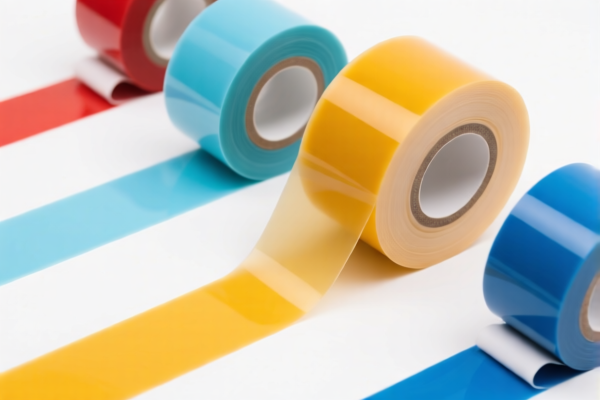
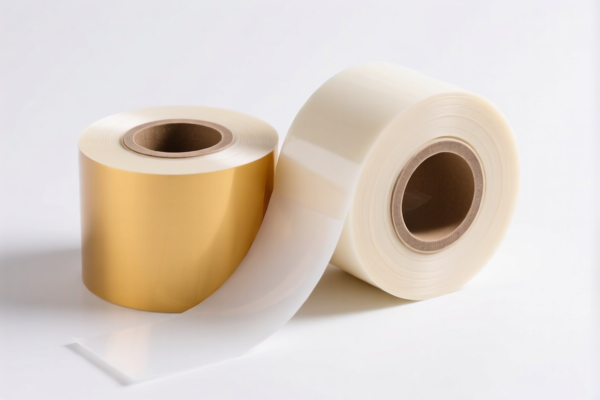


AI Analysis
🔥🏅 Heat Transfer Badge Pin: The Ultimate HS Code & Tariff Guide for US Importers (2026)
🌐 Global Trade Compliance Center | Decoding the "Heat Transfer" Mystery | Strategic Tariff Roadmap
📌 One-Stop Clarity: Why Same Product, Different Tariffs?
A Heat Transfer Badge Pin is a versatile decorative item, often used for uniforms, events, or fashion. The complexity lies in its material composition and manufacturing process: - Scenario A: It's a textile-based embroidered patch transferred onto fabric (Fabric/Elastomer). - Scenario B: It's a plastic/polymer badge created via a transfer film (Plastic). - Scenario C: It's a decorative imitation jewelry piece (Metal/Plastic composite).
⚠️ The Critical Trap: The same "Heat Transfer Badge" can fall under Textiles (5810), Plastics (3926), or Jewelry (7117). The difference in tariffs ranges from 15.3% to over 45% depending on the material declaration!
📦 Two. Detailed HS Code Analysis & Tax Breakdown (US Market)
Based on the 2026 US Tariff Schedule and the specific "Heat Transfer" mechanism, here are the four most likely classification scenarios, ranked by material logic.
🧵 Option 1: Textile-Based (The "Embroidery" Path)
HS Code: 5810.99.90.00 (Other embroidered articles of other textile materials)
Logic: The badge is made of thread/fabric with a heat-transfer adhesive backing. It fits the definition of "textile embroidered articles."
* 📉 Base Duty: See Additional U.S. Note 5 (Often 0% or low, subject to specific quotas).
* 📈 Section 301 (Section 122) Penalty: +25.0% (USITC Additional Duty).
* 📉 IEEPA (China Specific): +10.0%.
* 💰 Total Estimated Tax: ~35.0% (or higher depending on Note 5 specifics).
💡 Strategy: High risk. If the backing is plastic but the face is embroidery, this classification is risky.
🧵 Option 2: Synthetic Fiber Embroidery (The "Fiber" Path)
HS Code: 5810.92.10.00 (Embroidery of man-made fibers)
Logic: Specifically targets badges made of synthetic threads (polyester/nylon) which is the most common material for modern heat transfer embroidery.
* 📉 Base Duty: See Additional U.S. Note 2 (Often 0% or low).
* 📈 Section 301 (Section 122) Penalty: +25.0%.
* 📉 IEEPA (China Specific): +10.0%.
* 💰 Total Estimated Tax: ~35.0%.
💡 Strategy: Similar to Option 1. If your product is 100% synthetic fiber embroidery, this is the most accurate but still carries a heavy 35% tariff.
🧩 Option 3: Plastic/Polymer Based (The "Film" Path - LOWEST TAX?)
HS Code: 3926.40.00.90 (Plastic articles: Decorations, Buttons, Badges)
Logic: The badge is molded or printed on a plastic film or plastic base, using the "heat transfer" method to apply a graphic or design. No textile fibers involved.
* 📉 Base Duty: 5.3%.
* 📈 Section 301 Penalty: 0.0% (No Section 301 surcharge for this specific sub-heading in some contexts, check current 122 rules carefully).
* 📉 IEEPA (China Specific): +10.0%.
* 💰 Total Estimated Tax: 15.3%.
💡 Strategy: The Gold Mine! If your product is purely plastic/film-based (no embroidery threads), this classification slashes your tax from 35% down to 15.3%.
🧩 Option 4: Other Plastic Articles (The "General" Path)
HS Code: 3926.90.99.89 (Other articles of plastics: Not elsewhere specified)
Logic: If the badge is plastic but doesn't fit the specific "decorative" (3926.40) definition, it falls into the "Other" bucket.
* 📉 Base Duty: 5.3%.
* 📈 Section 301 Penalty: +7.5%.
* 📉 IEEPA (China Specific): +10.0%.
* 💰 Total Estimated Tax: 22.8%.
💡 Strategy: A safe middle ground if
3926.40is rejected by Customs. Still significantly cheaper than the textile options.
💍 Option 5: Imitation Jewelry (The "Fashion" Path)
HS Code: 7117.90.90.00 (Imitation jewelry: Other)
Logic: If the badge is considered a fashion accessory/jewelry (e.g., metal base with enamel or plastic coating), it falls here.
* 📉 Base Duty: 11.0%.
* 📈 Section 301 Penalty: +7.5%.
* 📉 IEEPA (China Specific): +10.0%.
* 💰 Total Estimated Tax: 28.5%.
💡 Strategy: Moderate tax. Only use this if the item is marketed strictly as "jewelry" and has a metal component that defines it as such.
💰 Three. Tariff Clause Deep Dive: What Do Those Numbers Mean?
To navigate this, you must understand the 3 components of your total tax bill:
| Component | Definition | Impact on Badge Pin |
|---|---|---|
| Base Duty | Standard Most-Favored-Nation (MFN) rate | Ranges from 0% to 11% depending on material (Plastic vs. Textile). |
| Section 301 / 122 Penalty | Retaliatory tariff on "Made in China" goods | Crucial: Textile badges (5810) often get hit with 25% (Total 35%+). Plastic badges (3926) often get 0% or 7.5%. |
| IEEPA (Section 122) | Emergency Economic Power Act | Fixed +10% surcharge on most Chinese-origin goods (Effective 2025+). |
🚨 The "Tax Cliff": Moving from a Textile classification (
5810) to a Plastic classification (3926) can save you 12% to 20% in total duty costs!
🛠️ Four. Customs Clearance实操 (Actionable Advice for 2026)
✅ 1. Material Declaration is King
Customs officers do not guess; they test.
* If you declare 5810 (Textile): You must prove the embroidery threads are the dominant material. Provide a fiber content analysis report from a third-party lab.
* If you declare 3926 (Plastic): You must prove the backing/film is plastic and there are no textile fibers.
* The "Hybrid" Trap: If your badge has both embroidery AND a plastic backing, Customs may classify it by the essential character. Often, if the embroidery is the main feature, they force 5810. Solution: Use non-textile "printed" designs on plastic film to avoid the high textile tax.
✅ 2. Product Name Strategy
- ❌ Avoid: "Embroidered Badge" (Triggers
5810). - ✅ Use: "Plastic Heat Transfer Badge," "PVC Transfer Pin," or "Synthetic Film Badge."
- Description Tip: Explicitly state: "Plastic base with heat-transfer adhesive backing, no textile fibers."
✅ 3. Supporting Documents Checklist
| Document | Purpose |
|---|---|
| Material Spec Sheet | Must explicitly state "100% Plastic/Polymer" or "100% Synthetic Fiber." |
| Photograph (Close-up) | Show the texture. If it looks like fabric, you are in trouble. If it looks like smooth plastic, you are safe. |
| Cut Cross-Section | A diagram showing the layers (Adhesive -> Plastic Film -> Design). |
| Supplier Affidavit | "We certify this product contains no animal or plant fibers." |
✅ 4. The "De Minimis" Warning
- NO Small Shipment Exemption: Unlike some low-value items, these goods are NOT eligible for de minimis (Section 321) exemption if they fall under Section 301.
- Duty Payment: You MUST pay the full tariff (15% - 35%) at the border, even for small sample quantities.
🌍 Five. Market Comparison: USA vs. Rest of World
| Destination | Recommended HS Code | Estimated Total Duty | Notes |
|---|---|---|---|
| 🇺🇸 USA | 3926.40.00.90 (Plastic) |
15.3% | Avoid 5810 (35%) unless necessary. |
| 🇨🇳 China | 3926.90.99 |
5.0% - 10% | No Section 301. Lower risk. |
| 🇪🇺 EU | 3926.90 |
3.0% - 4.5% | Lower base duty, no "Section 301" equivalent. |
| 🇯🇵 Japan | 3926.90 |
5.0% | Consistent classification. |
📌 Conclusion: The US market is the most aggressive. If your product is plastic-based, aggressively pursue HS Code 3926.40.00.90 to avoid the 25% Section 301 surcharge applied to textiles.
🎯 Six. Summary & Final Verdict
| Scenario | HS Code | Total Tax (Est.) | Recommendation |
|---|---|---|---|
| Pure Embroidery (Textile) | 5810.99.90.00 / 5810.92.10.00 |
~35.0% | High Cost. Consider switching to plastic design. |
| Plastic/PVC Badge | 3926.40.00.90 |
15.3% | 🏆 Best Choice. Lowest tax, safest for heat transfer films. |
| Other Plastic | 3926.90.99.89 |
22.8% | Good Alternative. If 3926.40 is disputed. |
| Imitation Jewelry | 7117.90.90.00 |
28.5% | Moderate. Only if metal/jewelry features are dominant. |
🚀 Pro Tip: Before shipping, submit an Advance Ruling (Request for Binding Ruling) to US Customs and Border Protection (CBP). Show them a sample and ask: "Is this plastic or textile?" A written ruling protects you from surprise audits and back-taxes later.
📣 Final Call:
Don't let a "Badge Pin" cost you 35% of your profit!
🔹 Audit your materials.
🔹 Choose Plastic (3926) over Textile (5810).
🔹 Declare accurately.
Stay compliant, stay profitable, ship smart! ✈️📦
Customer Reviews
About HS Code Classification
The Harmonized System (HS) is an internationally standardized nomenclature developed by the World Customs Organization (WCO) to classify traded products. Over 200 countries use the HS system as the basis for customs tariffs, trade statistics, and import/export regulations.
Each HS code follows a hierarchical structure:
- Chapter (2 digits) — Broad category of goods (e.g., Chapter 84: Machinery and Mechanical Appliances)
- Heading (4 digits) — More specific grouping within the chapter
- Subheading (6 digits) — Internationally standardized breakdown, used by all WCO member countries
- National subdivisions (8-10 digits) — Country-specific extensions for further classification, such as US HTSUS 10-digit codes
Correct HS code classification is essential for smooth customs clearance, accurate duty payment, and compliance with trade regulations. Misclassification can lead to customs delays, overpayment of duties, or penalties.
When importing from CN to US, the applicable tariff rates may include:
- Most-Favored-Nation (MFN) rate — The standard duty rate applied to WTO members
- General rate — Applied to countries without trade agreements
- Trade remedy duties — Additional tariffs such as Section 301 (anti-dumping), Section 232 (national security), or countervailing duties
The information provided on this page is for reference purposes only. For official classification, please consult with your local customs authority or a licensed customs broker.