Heat Transfer Patch
CN → US| HS Code | Tariff Rate | Origin | Destination | Doc |
|---|---|---|---|---|
| 4823908620 | 35.0% | CN | US | Official Doc |
| 3919102055 | 40.8% | CN | US | Official Doc |
| 4823908680 | 35.0% | CN | US | Official Doc |
| 3919905060 | 40.8% | CN | US | Official Doc |
Product Images



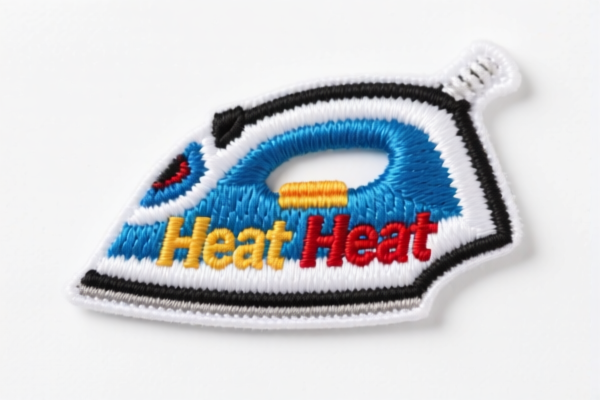
AI Analysis
🧵 Heat Transfer Patch (Iron-On / Vinyl Decals)
🌐 HS Code Reference & Customs Clearance Guide | 2026 Latest Tariff Analysis | Professional Level Clearance Strategy
📌 I. Product Definition & Classification: Do You Really Know "Heat Transfer Patch"?
Heat transfer patches are adhesive decorative or functional labels applied to fabrics, bags, shoes, and apparel using heat and pressure. In international trade, their classification depends heavily on the base material and structure. Based on common industry knowledge and the provided data, they are primarily categorized into two main material types:
1. Paper-Based Patches (with Adhesive): The carrier is paper, and the heat-transfer adhesive is coated on it. After heating, the paper carrier is removed (or left on, depending on type), leaving the design on the fabric. 2. Plastic/Resin-Based Patches (Self-Adhesive/Thermal): The carrier or the material itself is plastic/resin (such as PVC, PU, or hot melt adhesive films). These often behave like self-adhesive plastic sheets that transfer upon heating.
⚠️ Key Distinction Point:
- If the patch is primarily a paper substrate with an adhesive layer (common for textile printing transfers) → Tends toward Chapter 48.
- If the patch is primarily plastic/resin (e.g., PVC patches, hot melt adhesive films, vinyl) → Tends toward Chapter 39.
📦 II. HS Code Classification Details (2026 Latest Tariff Authority Comparison)
| HS Code | Product Description | Application Scenario | Material Basis |
|---|---|---|---|
4823.90.86.20 |
Other paper articles; adhesive products based on paper | Paper-based heat transfer stickers; textile transfer papers | ✅ Paper Base |
3919.10.20.55 |
Self-adhesive plates, sheets, film, foil, strip, of plastics | Plastic/Resin-based heat transfer films; self-adhesive plastic patches | ✅ Plastic/Resin Base |
4823.90.86.80 |
Other paper articles (Other than above) | Other paper-based adhesive stickers/fallback category | ✅ Paper Base |
3919.90.50.60 |
Other self-adhesive plates, sheets, film, foil, strip, of plastics | Fallback for plastic self-adhesive patches/films | ✅ Plastic/Resin Base |
🔍 Key Reminder:
- Paper-based patches (where the backing is paper) fall under HS 4823.
- Plastic/Resin-based patches (where the material itself is plastic or the adhesive is the main plastic component) fall under HS 3919.
- Misclassification leads to significant tax differences and potential customs delays.
💰 III. 2026 Latest Tariff Rate Details (Including Surtaxes & Policy Add-ons)
✅ Applicable Country: United States (US)
✅ Country of Origin: China (CN)
✅ Effective Date: November 10, 2025 onwards (including subsequent imports)
🎯 1. 4823.90.86.20 —— Paper-Based Heat Transfer Patches
| Item | Content |
|---|---|
| Base Tariff | 0% (ad valorem) |
| USITC Surcharge | +25% (Section 301 Tariff) |
| IEEPA Surcharge | +10% (China-specific, effective Nov 10, 2025) |
| Total Tariff | 35.0% |
| Tax Calculation | CIF Value × 35.0% |
| De Minimis Eligibility | ❌ Not Eligible (deny_de_minimis) |
| Legal Basis Path | IEEPA:9903.01.25 → IEEPA:9903.01.24 → USITC:4823.90.86.20 → FOOTNOTE:9903.88.01 |
📌 Explanation:
- The 25% USITC surcharge is imposed under Section 301 of the Trade Act;
- The 10% IEEPA surcharge is an additional sanction on Chinese goods under the International Emergency Economic Powers Act;
- Total 35% is a high tariff rate. Must be anticipated in cost calculations!
🎯 2. 3919.10.20.55 —— Plastic/Resin Self-Adhesive Patches
| Item | Content |
|---|---|
| Base Tariff | 5.8% |
| USITC Surcharge | +25% |
| IEEPA Surcharge | +10% |
| Total Tariff | 40.8% |
| Tax Calculation | CIF Value × 40.8% |
| De Minimis Eligibility | ❌ Not Eligible |
| Legal Basis Path | IEEPA:9903.01.25 → IEEPA:9903.01.24 → USITC:3919.10.20.55 → FOOTNOTE:9903.88.01 |
📌 Note:
- Plastic-based patches have a higher base tariff (5.8%) compared to paper (0%), but both are subject to the same surcharges;
- This category covers PVC patches, PU patches, and self-adhesive vinyl films used for heat transfer.
🎯 3. 4823.90.86.80 —— Other Paper-Based Patches (Fallback)
| Item | Content |
|---|---|
| Base Tariff | 0% |
| USITC Surcharge | +25% |
| IEEPA Surcharge | +10% |
| Total Tariff | 35.0% |
| Tax Calculation | CIF Value × 35.0% |
| De Minimis Eligibility | ❌ Not Eligible |
| Legal Basis Path | IEEPA:9903.01.25 → IEEPA:9903.01.24 → USITC:4823.90.86.80 → FOOTNOTE:9903.88.01 |
📌 Note:
- Same tax rate as4823.90.86.20because both are paper-based and subject to identical surcharges;
- Use this code if the specific paper product doesn't fit the more specific description of.86.20.
🎯 4. 3919.90.50.60 —— Other Plastic Self-Adhesive Patches (Fallback)
| Item | Content |
|---|---|
| Base Tariff | 5.8% |
| USITC Surcharge | +25% |
| IEEPA Surcharge | +10% |
| Total Tariff | 40.8% |
| Tax Calculation | CIF Value × 40.8% |
| De Minimis Eligibility | ❌ Not Eligible |
| Legal Basis Path | IEEPA:9903.01.25 → IEEPA:9903.01.24 → USITC:3919.90.50.60 → FOOTNOTE:9903.88.01 |
📌 Note:
- Same tax rate as3919.10.20.55because both are plastic-based and subject to identical surcharges;
- Use this code if the specific plastic product doesn't fit the more specific description of.10.20.55.
🛠️ IV. Customs Clearance Practical Advice (Battle-Tested Pitfall Avoidance)
✅ 1. Required Documentation Checklist (All Mandatory)
| Document | Mandatory | Notes |
|---|---|---|
| ✅ Product Specification Sheet | ✔️ | Include material (paper/plastic), adhesive type, application temperature |
| ✅ Product Photos (Front/Back) | ✔️ | Show adhesive side, carrier type, and final application |
| ✅ Material Composition Statement | ✔️ | Explicitly state % of paper vs. plastic/resin |
| ✅ Commercial Invoice | ✔️ | Describe as "Heat Transfer Patch - Paper Base" or "Plastic Base" |
| ✅ Packing List | ✔️ | Include unit count, net/gross weight |
| ✅ Certificate of Origin (CO) | ✔️ | If applicable for origin verification |
✅ 2. Declaration Tips (Key Mnemonics)
🔥 "Paper Base = 35%, Plastic Base = 40.8%. Be Precise!"
| Scenario | Correct Declaration | Wrong Practice |
|---|---|---|
| Paper-based transfer sticker | 4823.90.86.20 / 4823.90.86.80 |
Misdeclare as plastic → 40.8% |
| Plastic/PVC transfer patch | 3919.10.20.55 / 3919.90.50.60 |
Misdeclare as paper → 35.0% (but may trigger audit) |
| Mixed material (e.g., fabric-backed) | Consult custom broker | Generic "adhesive" label → Delays |
| Small samples (De Minimis) | ❌ Not Eligible for China-origin | Assume $800 exemption applies → Penalty + Seizure |
✅ 3. Special Situation Handling
| Situation | Handling Advice |
|---|---|
| OEM Custom Patches | Provide design files + material specs to avoid misclassification |
| Fabric-Backed Patches | If fabric is the primary material, may fall under Chapter 59 or 6307 (different rates) – Check carefully! |
| Hot Melt Adhesive Films | Typically classified under 3919 (plastic/film) |
| Textile Transfer Paper | Typically classified under 4823 (paper) |
🌍 V. Global Major Market Customs Comparison (2026 Latest)
| Country/Region | Recommended HS Code | Tariff (China Origin) | Certification Requirements | Notes |
|---|---|---|---|---|
| 🇺🇸 USA | 4823.90.86.20 or 3919.10.20.55 |
35.0% - 40.8% | None specific for patches | High surtaxes apply |
| 🇨🇳 China | 4823.90.86.20 or 3919.10.20.55 |
0% - 5.8% | CCC (if applicable) | No surtaxes |
| 🇪🇺 EU | 4823.90.86.20 or 3919.10.20.55 |
0% - 5.8% | REACH, RoHS | No Section 301 equivalent |
| 🇬🇧 UK | 4823.90.86.20 or 3919.10.20.55 |
0% - 5.8% | UKCA | Post-Brexit rules apply |
| 🇦🇺 Australia | 4823.90.86.20 or 3919.10.20.55 |
5% | ACMA (if electronic) | No surtaxes |
📌 Conclusion:
- USA is the only major market with high additional tariffs (35-41%) for these goods from China;
- EU/UK/Asia markets have lower base tariffs and no Section 301-style surcharges.
📌 VI. Common Mistakes & Pitfall Avoidance (Blood-Teaching Lessons)
❌ Mistake 1: Assuming all "stickers" are eligible for De Minimis ($800 exemption)
👉 Consequence: Seizure + Penalty. China-origin goods under 301/IEEPA are excluded.
❌ Mistake 2: Misdeclaring plastic patches as paper to save 5.8%
👉 Consequence: Customs audit → Back taxes + Interest + Potential Fraud Charges.
❌ Mistake 3: Not specifying material in the invoice
👉 Consequence: Customs cannot determine HS Code → Delay + Inspection + 100% Tax Hold.
❌ Mistake 4: Confusing "heat transfer paper" with "heat transfer vinyl (HTV)"
👉 Consequence: HTV is plastic (3919), transfer paper is paper (4823). Different tax rates!
✅ Correct Approach:
"Heat Transfer Patch, Paper-Based, Adhesive Side, for Textile Application, Model XYZ, US 35% Tariff Applicable"
🎯 VII. Conclusion: Precision in Classification Saves Money!
🎯 Remember the Mantra:
🔹 "Paper is 35%, Plastic is 40.8%. No De Minimis for China."
🔹 "Specify material! Avoid audits! Save thousands!"
📌 Pro Tip:
If your heat transfer patches are originally manufactured in Vietnam, Mexico, Thailand, or Malaysia, you may qualify for IEEPA Exemption, reducing tariffs to 0%~5.8%.
Recommend Advance Ruling (Pre-classification) to avoid clearance risks.
📣 Take Action Now:
📞 Contact a professional customs broker + Provide product photos + Apply for HS Code Pre-classification
🚀 Ensure your Heat Transfer Patches clear customs smoothly, efficiently, and profitably!
✨ Professional clearance starts with accurate classification!
💼 Every cent of cost deserves precise calculation!
Customer Reviews
About HS Code Classification
The Harmonized System (HS) is an internationally standardized nomenclature developed by the World Customs Organization (WCO) to classify traded products. Over 200 countries use the HS system as the basis for customs tariffs, trade statistics, and import/export regulations.
Each HS code follows a hierarchical structure:
- Chapter (2 digits) — Broad category of goods (e.g., Chapter 84: Machinery and Mechanical Appliances)
- Heading (4 digits) — More specific grouping within the chapter
- Subheading (6 digits) — Internationally standardized breakdown, used by all WCO member countries
- National subdivisions (8-10 digits) — Country-specific extensions for further classification, such as US HTSUS 10-digit codes
Correct HS code classification is essential for smooth customs clearance, accurate duty payment, and compliance with trade regulations. Misclassification can lead to customs delays, overpayment of duties, or penalties.
When importing from CN to US, the applicable tariff rates may include:
- Most-Favored-Nation (MFN) rate — The standard duty rate applied to WTO members
- General rate — Applied to countries without trade agreements
- Trade remedy duties — Additional tariffs such as Section 301 (anti-dumping), Section 232 (national security), or countervailing duties
The information provided on this page is for reference purposes only. For official classification, please consult with your local customs authority or a licensed customs broker.