Heat resistant gloves
CN → US| HS Code | Tariff Rate | Origin | Destination | Doc |
|---|---|---|---|---|
| 6216000800 | 18.3% | CN | US | Official Doc |
| 4015191150 | 38.0% | CN | US | Official Doc |
| 4015195100 | 49.0% | CN | US | Official Doc |
| 6216002600 | 24.5% | CN | US | Official Doc |
Product Images


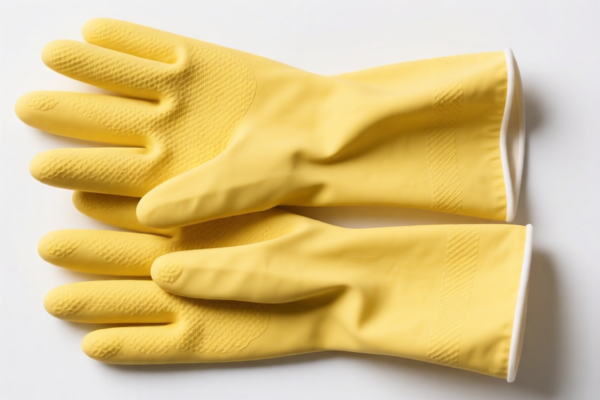
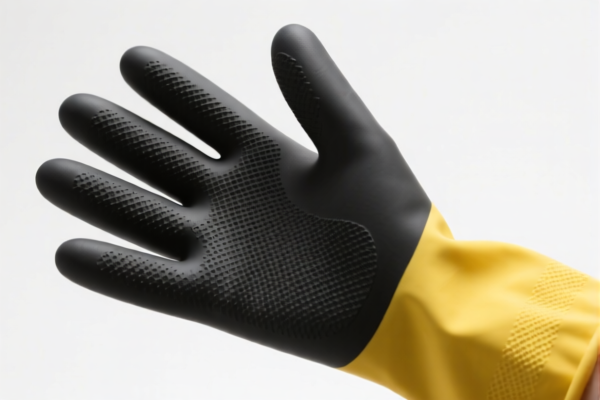
AI Analysis
🔥 Heat Resistant Gloves (Anti-Burn Gloves)
🌐 HS Code Reference & Customs Clearance Guide | 2026 Latest Tariff Analysis | Professional Clearance Strategy
📌 I. Product Definition & Classification: Do You Really Understand "Heat Resistant Gloves"?
Heat resistant gloves, also known as anti-burn gloves, are essential personal protective equipment (PPE) used in industrial, culinary, and laboratory settings to protect hands from high temperatures, open flames, and molten materials.
In international trade, the classification depends heavily on the material composition and the manufacturing process:
Category A: Textile-Based with Surface Treatment
- Gloves made from textile materials (e.g., cotton, nylon, polyester) that are impregnated, coated, or covered with plastics or rubber.
- Key Feature: The base structure is fabric, but the surface layer provides the heat resistance.
Category B: Rubber-Based Products
- Gloves made entirely or primarily of vulcanized rubber or similar protective rubber articles.
- Key Feature: The material itself is rubber, often molded or dipped, without a dominant textile base structure treated as a secondary layer.
⚠️ Critical Distinction Point:
- If the glove is fabric-based with a plastic/rubber coating for heat resistance →归入 Chapter 62 (Textile Articles)
- If the glove is pure rubber or primarily rubber-based →归入 Chapter 40 (Rubber Articles)
📦 II. HS Code Classification Details (2026 Latest Tariff Authority Comparison)
Based on the provided data, here are the specific HS codes applicable to Heat Resistant Gloves:
| HS Code | Product Description | Material/Composition | Key Characteristics |
|---|---|---|---|
6216.00.08.00 |
Heat resistant gloves | Impregnated/coated with plastic or rubber | Fabric base with surface treatment |
6216.00.26.00 |
Heat resistant gloves | Impregnated/coated with plastic or rubber | Fabric base with surface treatment (different sub-category) |
4015.19.11.50 |
Heat resistant gloves | Vulcanized rubber or similar protective rubber | Pure rubber construction |
4015.19.51.00 |
Heat resistant gloves | Vulcanized rubber (not metal/hard rubber) | Pure rubber construction (different sub-category) |
🔍 Important Reminder:
- Chapter 62 Goods (6216.xxx): Generally have lower tariffs because they are primarily textile products with minor surface treatments.
- Chapter 40 Goods (4015.xxx): Typically have higher tariffs because they are classified as rubber products, which face stricter trade measures.
- Do not misclassify: A rubber-coated cotton glove is6216, NOT4015.
💰 III. 2026 Latest Tariff Rate Breakdown (Including Surtaxes & Policy Add-ons)
✅ Applicable Country: United States (US)
✅ Country of Origin: China (CN)
✅ Effective Date: 2025/2026 (Current Trade Policy)
🎯 1. 6216.00.08.00 —— Heat Resistant Gloves (Textile Base, Plastic/Rubber Coated)
| Item | Content |
|---|---|
| Base Tariff | 0.8% (Ad Valorem) |
| Section 301 Surtax | +7.5% |
| Section 122 Tariff | +10% |
| Total Tariff Rate | 18.3% |
| Tax Calculation | CIF Value × 18.3% |
| De Minimis Eligibility | ❌ Not Eligible (Due to Section 122/301) |
| Legal Basis Path | HTS:6216.00.08.00 → Section 301: 7.5% → Section 122: 10% |
📌 Explanation:
- This is the lowest tariff option among the listed codes.
- Suitable for gloves made of cotton/nylon fabric with a PVC or rubber coating for heat resistance.
- Recommendation: If your product is fabric-based, prioritize this classification to save costs.
🎯 2. 6216.00.26.00 —— Heat Resistant Gloves (Textile Base, Plastic/Rubber Coated)
| Item | Content |
|---|---|
| Base Tariff | 7.0% (Ad Valorem) |
| Section 301 Surtax | +7.5% |
| Section 122 Tariff | +10% |
| Total Tariff Rate | 24.5% |
| Tax Calculation | CIF Value × 24.5% |
| De Minimis Eligibility | ❌ Not Eligible |
| Legal Basis Path | HTS:6216.00.26.00 → Section 301: 7.5% → Section 122: 10% |
📌 Note:
- Slightly higher base tariff than6216.00.08.00.
- May apply to specific types of coated textiles not covered under the 0.8% base rate.
- Still significantly cheaper than rubber-based classifications.
🎯 3. 4015.19.11.50 —— Heat Resistant Gloves (Vulcanized Rubber)
| Item | Content |
|---|---|
| Base Tariff | 3.0% (Ad Valorem) |
| Section 301 Surtax | +25.0% |
| Section 122 Tariff | +10% |
| Total Tariff Rate | 38.0% |
| Tax Calculation | CIF Value × 38.0% |
| De Minimis Eligibility | ❌ Not Eligible |
| Legal Basis Path | HTS:4015.19.11.50 → Section 301: 25.0% → Section 122: 10% |
📌 Warning:
- High tariff burden due to the 25% Section 301 surtax applied to rubber products.
- Only applicable if the glove is purely rubber (e.g., dipped rubber gloves with no textile core).
🎯 4. 4015.19.51.00 —— Heat Resistant Gloves (Vulcanized Rubber, Non-Metal/Hard Rubber)
| Item | Content |
|---|---|
| Base Tariff | 14.0% (Ad Valorem) |
| Section 301 Surtax | +25.0% |
| Section 122 Tariff | +10% |
| Total Tariff Rate | 49.0% |
| Tax Calculation | CIF Value × 49.0% |
| De Minimis Eligibility | ❌ Not Eligible |
| Legal Basis Path | HTS:4015.19.51.00 → Section 301: 25.0% → Section 122: 10% |
📌 Critical Alert:
- Highest tariff rate (49%)!
- Applies to specific rubber glove types not covered under4015.19.11.50.
- Avoid this classification if possible. It is extremely costly for importers.
🛠️ IV. Customs Clearance Practical Advice (Real-World Pitfall Avoidance)
✅ 1. Documentation Checklist (Non-Negotiable)
| Document | Required? | Description |
|---|---|---|
| ✅ Product Specification Sheet | ✔️ | Must detail material composition (e.g., "90% Cotton, 10% PVC Coating") |
| ✅ Material Safety Data Sheet (MSDS) | ✔️ | For rubber/plastic components |
| ✅ Product Photos (Clear) | ✔️ | Show texture, coating, and any labels indicating "Heat Resistant" |
| ✅ Commercial Invoice | ✔️ | Clearly state "Heat Resistant Gloves" and HS Code |
| ✅ Packing List | ✔️ | Include quantity, weight, and dimensions |
| ✅ Test Reports | ✔️ | ASTM F2675 (Impact Protection) or ISO 13982 (Chemical Protection) if claiming specific standards |
✅ 2. Declaration Tips (Key Mnemonics)
🔥 "Fabric Base = 6216 (Low Tax), Rubber Base = 4015 (High Tax)"
| Scenario | Correct Declaration | Incorrect Action |
|---|---|---|
| Cotton glove with rubber coating | 6216.00.08.00 |
Misdeclare as 4015.19.11.50 → Pay 38% instead of 18.3% |
| Pure rubber dipped glove | 4015.19.11.50 |
Misdeclare as 6216 → Risk penalty for misclassification |
| Kevlar glove with ceramic coating | 6216.00.08.00 (if textile dominant) |
Misdeclare as 4015 → Overpay tax |
| Mixed material glove | Consult custom broker | Ambiguous declaration → Customs delay |
✅ 3. Special Cases Handling
| Scenario | Handling Advice |
|---|---|
| OEM Custom Gloves | Provide design specs to prove material composition |
| Multi-Functional Gloves | If it has both heat resistance AND cut resistance, declare as "Heat Resistant" if that is the primary function |
| Import from Non-China Origins | Verify if Section 301/122 tariffs apply (e.g., Vietnam origin may have different rates) |
| Samples vs. Commercial Goods | Samples under $800 may qualify for de minimis, but not if classified under these HS codes due to Section 122 restrictions |
🌍 V. Global Market Comparison (2026 Latest)
| Country/Region | Recommended HS Code | Tariff (China Origin) | Certification Requirements | Notes |
|---|---|---|---|---|
| 🇺🇸 USA | 6216.00.08.00 |
18.3% | No specific certs required for basic PPE | Best for cost-saving |
| 🇺🇸 USA | 4015.19.51.00 |
49.0% | No specific certs required | Avoid if possible |
| 🇪🇺 EU | 6216.00 |
Varies (approx. 4-6%) | CE Marking (PPE Regulation) | Lower tariffs than US |
| 🇨🇳 China | 6216.00 |
~10% | CCC (if applicable) | Domestic production common |
| 🇯🇵 Japan | 6216.00 |
~10% | JIS Standards | No Section 301/122 |
📌 Conclusion:
- USA is the most expensive market due to Section 301 and Section 122 tariffs.
- Textile-based gloves (6216) are significantly cheaper than rubber-based (4015) in the US.
- Optimize classification by ensuring proper material documentation.
📌 VI. Common Errors & Pitfall Guide (Lessons from Blood & Tears)
❌ Error 1: Misclassifying a fabric-coated glove as a rubber glove
👉 Consequence: Pay 38-49% instead of 18.3-24.5% → Huge cost increase!
❌ Error 2: Not providing material composition on the invoice
👉 Consequence: Customs may reclassify to the higher tariff code → Penalties + Delay
❌ Error 3: Assuming all "gloves" have the same tariff
👉 Consequence: Overlooking the 25% Section 301 surtax on rubber products → Unexpected costs
❌ Error 4: Ignoring Section 122 Tariff
👉 Consequence: All imports from China under these codes are subject to +10%, regardless of base tariff.
✅ Correct Action:
"Heat Resistant Gloves, Made of Cotton Fabric with PVC Coating, ASTM F2675 Compliant, Model XYZ, Origin: China"
🎯 VII. Conclusion: Professional Declaration, Save Costs, Ensure Smooth Clearance!
🎯 Remember the Mnemonic:
🔹 "Fabric = 6216 (Low Tax), Rubber = 4015 (High Tax)"
🔹 "Section 301 adds 7.5% or 25%, Section 122 adds 10% Always!"
🔹 "HS Code determines destiny, tax difference is huge, wrong declaration means overpaying!"
📌 Pro Tip:
If your heat resistant gloves are made of high-performance fibers (e.g., Kevlar, Nomex) with minimal rubber/plastic, ensure the textile component is dominant to qualify for 6216.
Consider Advance Ruling from US Customs and Border Protection (CBP) for complex multi-material gloves.
📣 Immediate Action:
📞 Contact a professional customs broker + Provide material specs + Apply for HS Code Advance Ruling
🚀 Let your heat resistant gloves clear customs smoothly, efficiently, and profitably!
✨ Professional Customs Clearance Starts with Accurate Classification!
💼 Every cent of your cost deserves to be calculated precisely!
Customer Reviews
About HS Code Classification
The Harmonized System (HS) is an internationally standardized nomenclature developed by the World Customs Organization (WCO) to classify traded products. Over 200 countries use the HS system as the basis for customs tariffs, trade statistics, and import/export regulations.
Each HS code follows a hierarchical structure:
- Chapter (2 digits) — Broad category of goods (e.g., Chapter 84: Machinery and Mechanical Appliances)
- Heading (4 digits) — More specific grouping within the chapter
- Subheading (6 digits) — Internationally standardized breakdown, used by all WCO member countries
- National subdivisions (8-10 digits) — Country-specific extensions for further classification, such as US HTSUS 10-digit codes
Correct HS code classification is essential for smooth customs clearance, accurate duty payment, and compliance with trade regulations. Misclassification can lead to customs delays, overpayment of duties, or penalties.
When importing from CN to US, the applicable tariff rates may include:
- Most-Favored-Nation (MFN) rate — The standard duty rate applied to WTO members
- General rate — Applied to countries without trade agreements
- Trade remedy duties — Additional tariffs such as Section 301 (anti-dumping), Section 232 (national security), or countervailing duties
The information provided on this page is for reference purposes only. For official classification, please consult with your local customs authority or a licensed customs broker.