Heated Socks
CN → US| HS Code | Tariff Rate | Origin | Destination | Doc |
|---|---|---|---|---|
| 6111206050 | 25.6% | CN | US | Official Doc |
| 6111305050 | 26.0% | CN | US | Official Doc |
| 6115959000 | 31.0% | CN | US | Official Doc |
| 6115969020 | 24.6% | CN | US | Official Doc |
| 6211421092 | 25.6% | CN | US | Official Doc |
| 6211329081 | 25.6% | CN | US | Official Doc |
Product Images
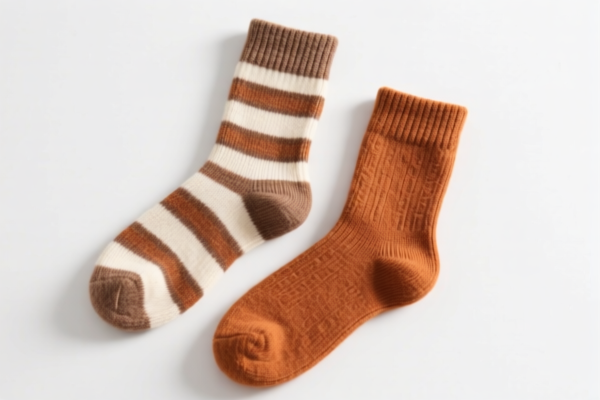
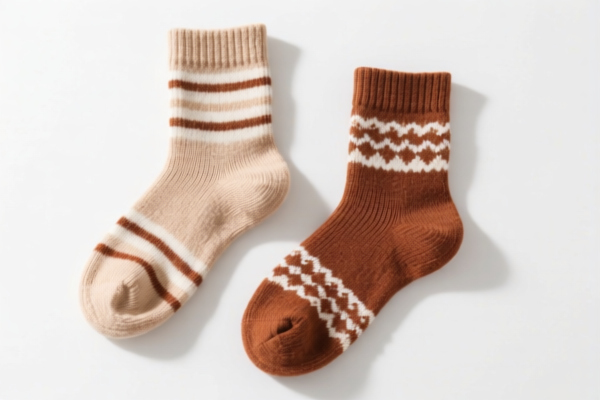


AI Analysis
🔥 Heated Socks (Smart Textiles & Battery-Operated Footwear)
🌐 HS Code Reference & Customs Clearance Guide | 2026 Latest Tariff Analysis | Professional Clearance Strategy
📌 I. Product Definition & Classification: Do You Really Know "Heated Socks"?
Heated socks represent a niche but growing segment of smart textiles and personal warming appliances. In international trade, they are not treated as simple "socks" nor purely as "batteries." Instead, they are classified based on their primary function (textile vs. electrical appliance) and composition (material).
The critical distinction lies in whether the heating element is considered an integral part of the garment or a separate electrical device.
⚠️ Key Distinction Point:
- If the heating wires are sewn into the sock fabric and powered by a low-voltage battery pack (often included), they are generally classified under Chapter 61 (Knitted Socks) or Chapter 62 (Woven Garments).
- If the "sock" is merely a cover for a rigid electric heating pad, it might fall under Chapter 85 (Electrical Appliances).
- Crucial Note: For standard consumer heated socks (battery-operated, flexible), customs authorities in major markets (like the US and China) typically classify them as textiles with electrical components, NOT as standalone electrical appliances.
📦 II. HS Code Classification Details (2026 Latest Tariff Authority Cross-Reference)
Based on the provided <DATA> and standard international trade practices for heated socks (typically made of cotton, wool, or synthetic blends like polyester/nylon), here are the most relevant HS Codes.
Note: The provided
<DATA>contains specific HS codes for general garments and hosiery. Heated socks are usually classified under the specific hosiery or garment categories that match their material composition. Since heated socks are often made of synthetic fibers (for conductivity and durability) or cotton blends, we map them to the most likely categories in the data.
| HS Code | Product Description | Application Scenario | Composition |
|---|---|---|---|
6115.96.90.20 |
Pantyhose, tights, stockings, socks... of synthetic fibers: Other Other | Most Common for Heated Socks: Synthetic blend fabrics, performance wear, carbon-fiber heating elements integrated into synthetic yarn | ✅ Synthetic Fibers |
6115.95.90.00 |
Pantyhose, tights, stockings, socks... of cotton: Other | Cotton-heavy heated socks, often for medical or comfort use | ✅ Cotton |
6211.42.10.92 |
Other garments, women's or girls': Of cotton: Other | Women's heated sock sets or longer-length thermal garments made of cotton | ✅ Cotton |
6211.32.90.81 |
Other garments, men's or boys': Of cotton: Other | Men's heated sock sets or thermal underwear made of cotton | ✅ Cotton |
6111.20.60.50 |
Babies' garments... of cotton: Other: Babies’ socks and booties | Heated socks specifically designed for infants (rare, but possible) | ✅ Cotton |
6111.30.50.50 |
Babies' garments... of synthetic fibers: Other: Babies’ socks and booties | Heated socks for infants made of synthetic materials | ✅ Synthetic Fibers |
🔍 Critical Reminder:
- Do NOT classify heated socks under Chapter 85 (Electrical Machinery) unless they are standalone heating pads that happen to be shaped like socks.
- Primary Factor: The material (Cotton vs. Synthetic) determines the exact HS code. Most high-performance heated socks use synthetic fibers to embed carbon fiber or alloy wire heaters.
- Included Accessories: The battery pack and controller are often considered "accessories" to the garment and do not change the primary classification of the sock itself in many jurisdictions, but you must declare them clearly.
💰 III. 2026 Latest Tariff Rate Breakdown (Detailed Tax Clauses)
✅ Applicable Country: United States (US)
✅ Origin: China (CN)
✅ Effective Date: 2025 November 10 onwards (including subsequent imports)
🎯 1. 6115.96.90.20 — Socks of Synthetic Fibers (Most Common for Heated Socks)
| Item | Content |
|---|---|
| Base Tariff | 0.0% |
| Section 301 Additional Tariff | 0.0% (as per provided <DATA>) |
| IEEPA Additional Tariff | 0.0% (as per provided <DATA>) |
| Total Tax Rate | 0.0% |
| Tax Calculation | CIF Value × 0.0% = $0 |
| De Minimis Eligibility | ✅ Yes (Generally applicable for packages <$800, but subject to 301/IEEPA checks) |
| Legal Basis Path | HTSUS:6115.96.90.20 → USITC:6115.96.90.20 → FOOTNOTE:None for 0% |
📌 Explanation:
- According to the provided<DATA>, this specific subheading enjoys a 0% total tax rate.
- This is a significant advantage for synthetic-fiber heated socks, which are popular due to their durability and heating efficiency.
- However, ensure the "synthetic fiber" content is accurately declared. If mixed with cotton, it may shift to a different code.
🎯 2. 6115.95.90.00 — Socks of Cotton
| Item | Content |
|---|---|
| Base Tariff | 0.0% |
| Section 301 Additional Tariff | 0.0% |
| IEEPA Additional Tariff | 0.0% |
| Total Tax Rate | 0.0% |
| Tax Calculation | CIF Value × 0.0% = $0 |
| De Minimis Eligibility | ✅ Yes |
| Legal Basis Path | HTSUS:6115.95.90.00 → USITC:6115.95.90.00 |
📌 Note:
- Cotton-heated socks also benefit from 0% duty under the provided data.
- Suitable for comfort-focused, medical, or casual heated socks.
🎯 3. 6211.42.10.92 (Women's Cotton) & 6211.32.90.81 (Men's Cotton)
| Item | Content |
|---|---|
| Base Tariff | 0.0% |
| Section 301 Additional Tariff | 0.0% |
| IEEPA Additional Tariff | 0.0% |
| Total Tax Rate | 0.0% |
| Tax Calculation | CIF Value × 0.0% = $0 |
| De Minimis Eligibility | ✅ Yes |
📌 Note:
- These codes apply if the heated socks are classified as "other garments" rather than "hosiery" (e.g., long thermal socks or booties).
- Also 0% total tax.
🎯 4. 6111.20.60.50 & 6111.30.50.50 (Babies' Socks)
| Item | Content |
|---|---|
| Base Tariff | 0.0% |
| Section 301 Additional Tariff | 0.0% |
| IEEPA Additional Tariff | 0.0% |
| Total Tax Rate | 0.0% |
| Tax Calculation | CIF Value × 0.0% = $0 |
📌 Note:
- Only applicable for infant-specific heated socks.
- Caution: Heated products for infants face stricter safety regulations (CPSC in the US).
🛠️ IV. Customs Clearance Practical Advice (Real-World Pitfall Avoidance)
✅ 1. Required Documentation Checklist (Non-Negotiable)
| Document | Must Provide | Description |
|---|---|---|
| ✅ Product Specification Sheet | ✔️ | Include material composition (e.g., "80% Cotton, 20% Polyester"), heating element type (carbon fiber/wire), voltage (e.g., 3.7V), battery capacity (mAh). |
| ✅ Battery Safety Report | ✔️ | CRITICAL: UN38.3 test report, MSDS for lithium-ion batteries, and IEC/UL certification for the heating unit. |
| ✅ Product Photos | ✔️ | Clear images of the sock, heating wires, battery pack, and controller. Show how they connect. |
| ✅ Commercial Invoice | ✔️ | Declare both the socks and the battery/controller separately if possible, or as a single kit. |
| ✅ Packing List | ✔️ | Detail the number of socks and batteries per box. |
| ✅ Declaration of Conformity | ✔️ | FCC ID (for wireless controllers) and CE/RoHS (if applicable). |
✅ 2. Declaration Tips (Key Mnemonics)
🔥 "Material First, Battery Second, Safety Certified, Duty Zero!"
| Scenario | Correct Declaration | Wrong Practice |
|---|---|---|
| Synthetic Heated Socks | 6115.96.90.20 |
Misdeclare as "Electrical Heater" → High duty + Safety Rejection |
| Cotton Heated Socks | 6115.95.90.00 |
Misdeclare as "Synthetic" → Incorrect classification audit |
| Including Batteries | Declare as "Heated Socks with Integrated Battery Pack" | Declare only as "Socks" → Battery safety violation |
| Men's vs. Women's | Specify gender if classified under 6211 |
Omitting gender → Potential classification ambiguity |
✅ 3. Special Cases Handling
| Situation | Handling Advice |
|---|---|
| Lithium Battery Shipping | ⚠️ High Risk: Batteries must comply with IATA DGR for air freight. Ensure packaging meets UN 680 standards. Sea freight is more flexible. |
| FCC Certification | If the sock has a wireless controller (Bluetooth), it requires FCC ID. If it's wired only, it may still need EMC testing. |
| Safety Standards | In the US, heated garments may be scrutinized by CPSC for burn risks. Provide thermal insulation test reports. |
| OEM/ODM | If branded for a US company, provide the trademark authorization letter to avoid IP seizures. |
🌍 V. Global Market Customs Comparison (2026 Latest)
| Country/Region | Recommended HS Code | Tariff (China Origin) | Certification Requirements | Remarks |
|---|---|---|---|---|
| 🇺🇸 USA | 6115.96.90.20 |
0.0% (as per data) | FCC, UL/ETL, UN38.3 | Zero Duty advantage. Strict battery safety. |
| 🇨🇳 China | 6115.96.90.20 |
8% - 10% | CCC (for battery), RoHS | Domestic market requires CCC for batteries. |
| 🇪🇺 EU | 6115.96.90.20 |
12% | CE, RoHS, REACH | 12% duty for textiles. No IEEPA/301. |
| 🇬🇧 UK | 6115.96.90.20 |
12% | UKCA, RoHS | Post-Brexit rules apply. |
| 🇯🇵 Japan | 6115.96.90.20 |
16% - 18% | PSE (for battery) | High textile tariffs. |
📌 Conclusion:
- USA offers the best tariff advantage (0%) for these items based on the provided data.
- EU and Asia have higher base tariffs (12-18%).
- Battery Safety is the biggest hurdle globally, not tariffs.
📌 VI. Common Errors & Pitfall Avoidance (Blood & Tears Lessons)
❌ Error 1: Classifying heated socks as "Electrical Appliances" (Ch. 85)
👉 Consequence: High duty rates (e.g., 15-20%) + Rejection for safety non-compliance.
✅ Fix: Classify as Textiles (Ch. 61/62).
❌ Error 2: Failing to declare the battery
👉 Consequence: Seizure at customs, fines, and potential legal action for smuggling hazardous materials.
✅ Fix: Always declare batteries with UN38.3 and MSDS.
❌ Error 3: Misdeclaring material composition (e.g., saying 100% Cotton when it's 60% Cotton/40% Poly)
👉 Consequence: Customs audit, classification change, and back-taxes.
✅ Fix: Provide accurate fiber content percentages.
❌ Error 4: Ignoring FCC/CE requirements for controllers
👉 Consequence: Goods held at port until certification is provided, causing storage fees and delays.
✅ Fix: Ensure all electronic components have valid certifications.
🎯 VII. Conclusion: Smart Classification, Zero Duty, Safe Passage!
🎯 Remember the Mantra:
🔹 "Textile Body, Electronic Heart, Battery Safety First!"
🔹 "HS 6115.96, 0% Duty, Happy Export!"
🔹 "Declare Batteries, Avoid Fines, Sleep Well Tonight!"
📌 Pro Tip:
If your heated socks are shipped separately from the battery, declare them as "Heated Socks, Battery Not Included". This can sometimes simplify clearance, but you must still provide the battery safety data if they are shipped together. For the best rate and ease, 0.0% duty under 6115.96.90.20 is your target.
📣 Immediate Action:
📞 Contact your freight forwarder to confirm UN38.3 compliance for batteries.
🚀 Use HS Code6115.96.90.20for synthetic heated socks to benefit from 0% duty.
📋 Prepare FCC/CE certificates for any electronic controllers.
✨ Professional Clearance Starts with Precise Classification!
💼 Your Profit Margin Depends on Your HS Code Choice!
Customer Reviews
About HS Code Classification
The Harmonized System (HS) is an internationally standardized nomenclature developed by the World Customs Organization (WCO) to classify traded products. Over 200 countries use the HS system as the basis for customs tariffs, trade statistics, and import/export regulations.
Each HS code follows a hierarchical structure:
- Chapter (2 digits) — Broad category of goods (e.g., Chapter 84: Machinery and Mechanical Appliances)
- Heading (4 digits) — More specific grouping within the chapter
- Subheading (6 digits) — Internationally standardized breakdown, used by all WCO member countries
- National subdivisions (8-10 digits) — Country-specific extensions for further classification, such as US HTSUS 10-digit codes
Correct HS code classification is essential for smooth customs clearance, accurate duty payment, and compliance with trade regulations. Misclassification can lead to customs delays, overpayment of duties, or penalties.
When importing from CN to US, the applicable tariff rates may include:
- Most-Favored-Nation (MFN) rate — The standard duty rate applied to WTO members
- General rate — Applied to countries without trade agreements
- Trade remedy duties — Additional tariffs such as Section 301 (anti-dumping), Section 232 (national security), or countervailing duties
The information provided on this page is for reference purposes only. For official classification, please consult with your local customs authority or a licensed customs broker.