Heating Cup Mat
CN → US| HS Code | Tariff Rate | Origin | Destination | Doc |
|---|---|---|---|---|
| 9406900190 | 87.9% | CN | US | Official Doc |
| 3926909989 | 22.8% | CN | US | Official Doc |
| 8516290090 | 38.7% | CN | US | Official Doc |
| 8516808000 | 35.0% | CN | US | Official Doc |
| 9406900130 | 87.9% | CN | US | Official Doc |
Product Images
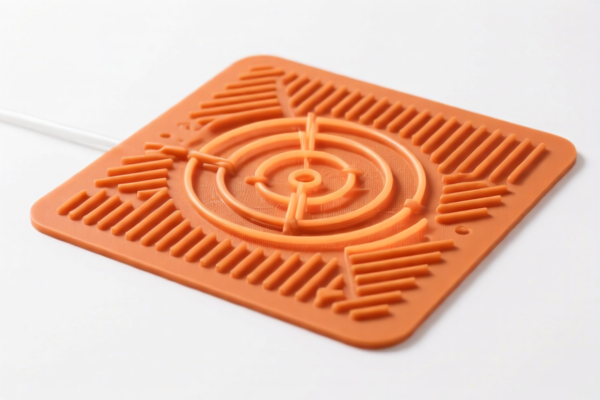
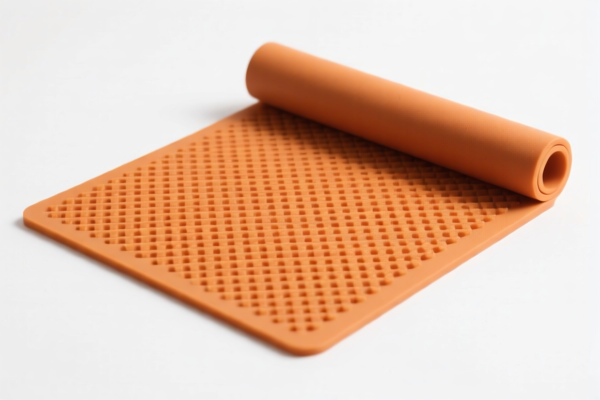
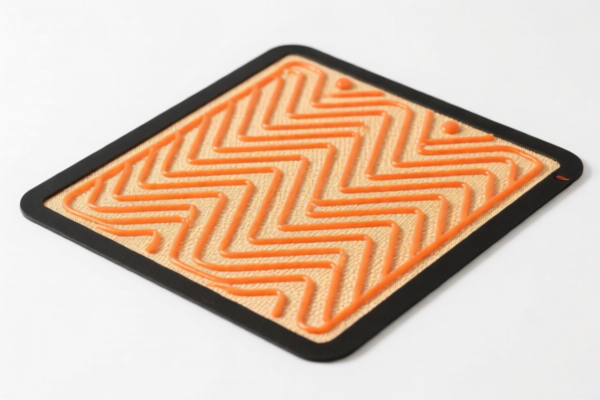

AI Analysis
🍵 Heating Cup Mat (Cup Warmer/Mat)
🌐 HS Code Reference & Customs Clearance Guide | 2026 Latest Tariff Analysis | Professional Entry Strategy
📌 I. Product Definition & Classification: Do You Really Understand a "Cup Warmer"?
A Heating Cup Mat is a small household appliance designed to maintain the temperature of beverages (coffee, tea, milk) in cups or mugs. It typically consists of a heating element (resistor wire), a thermal insulation layer, and a decorative outer cover (plastic, silicone, or fabric).
In international trade, it is often misunderstood as a simple "home accessory" or "electronic component," leading to significant classification errors. The core determination depends on its primary function (electrical heating vs. structural/pre-fabricated part) and material composition.
⚠️ Key Distinction Points:
- If it functions as a standalone electrical appliance for heating liquids → It falls under Chapter 85 (Electrical Machinery).
- If it is merely a decorative mat without active heating components (e.g., thermal wax) → It falls under Chapter 39 (Plastics) or Chapter 63 (Textiles).
- CRITICAL WARNING: Some classifications in the provided data incorrectly categorize it as a "Prefabricated Building Part" (HS 9406). This is a high-risk error that can lead to massive tariffs due to Section 301 and Section 232/201 additional duties.
📦 II. HS Code Classification Matrix (2026 Tariff Data Analysis)
Based on the provided data, here is the breakdown of potential HS Codes, their logical basis, and associated tax risks. Note that HS 9406 appears twice with high tax rates, likely due to misclassification of the "base" or "mounting" aspect.
| HS Code | Product Description | Logical Basis from Data | Tax Risk Level |
|---|---|---|---|
| 8516.29.00.90 | Electric Soil/Medium Heater (Other) | Classifies as an electrical heating appliance. The "soil/medium" interpretation extends to heating any medium (including air/liquid via cup). | 🟡 Medium (High Additional Duties) |
| 8516.80.80.00 | Electric Heating Resistor (Other) | Focuses on the core heating element. Interprets the mat as a device generating heat via electrical resistance. | 🟡 Medium (Lower Base Duty) |
| 3926.90.99.89 | Other Plastic Articles | Classifies based on material (plastic housing/insulation). Ignores the electrical function, treating it as a plastic good. | 🟢 Low (Lowest Total Tax) |
| 9406.90.01.90 | Prefabricated Buildings (Other) | ⚠️ HIGH RISK: Incorrectly interprets the mat as a non-metallic building component. | 🔴 CRITICAL (Highest Tax) |
| 9406.90.01.30 | Prefabricated Buildings (Metal) | ⚠️ HIGH RISK: Incorrectly interprets metal heating elements as building material. | 🔴 CRITICAL (Highest Tax + Metal Duties) |
💰 III. 2026 Latest Tariff Rate Detail (US Market, Chinese Origin)
✅ Applicable Country: United States (US)
✅ Origin: China (CN)
✅ Effective Time: 2025/2026 (Current Trade War Context)
The tax detail provided in the data includes Base Tariff, Section 301 Additional Duty (25%), IEEPA 10%, and Section 232 (Steel/Aluminum/Copper) 50% (where applicable).
🎯 1. 9406.90.01.90 & 9406.90.01.30 — Prefabricated Buildings (High Risk Misclassification)
- Base Tariff: 2.9%
- Section 301 Duty: 25.0%
- IEEPA Duty: 10.0%
- Section 232/Other Duty: 50.0% (Applies specifically to HS 9406.90.01.30 if metal is involved)
- Total Effective Tax Rate: 87.9%
- Calculation: CIF Value × 87.9%
- De Minimis Waiver: ❌ No (Highly likely denied due to high duty rate and section 301/232 status).
📌 Explanation:
- These codes are for construction materials. A cup warmer is not a building part.
- Misclassifying a cup warmer here triggers the highest possible penalties.
- The 50% additional duty for metals (HS 9406.90.01.30) makes this classification financially devastating if the heating wire is detected.
- Verdict: AVOID THIS CODE UNLESS IT IS ACTUALLY A BUILDING COMPONENT.
🎯 2. 8516.29.00.90 — Electric Heating Appliance (Other)
- Base Tariff: 3.7%
- Section 301 Duty: 25.0%
- IEEPA Duty: 10.0%
- Total Effective Tax Rate: 38.7%
- Calculation: CIF Value × 38.7%
- De Minimis Waiver: ❌ No (Section 301 goods generally exempt from de minimis).
📌 Explanation:
- This is the most functionally accurate classification for an electrical cup warmer.
- It falls under "Electric heaters other than those of heading 85.16... for space heating or soil heating."
- While 38.7% is high, it is significantly lower than the 87.9% building code error.
🎯 3. 8516.80.80.00 — Electric Heating Resistor (Other)
- Base Tariff: 0.0%
- Section 301 Duty: 25.0%
- IEEPA Duty: 10.0%
- Total Effective Tax Rate: 35.0%
- Calculation: CIF Value × 35.0%
- De Minimis Waiver: ❌ No
📌 Explanation:
- This code is often used for heating elements or devices not specifically listed elsewhere in 8516.
- It offers the lowest total tax rate (35%) among the electrical classifications.
- CBP may accept this if the product is deemed primarily a heating element assembly.
🎯 4. 3926.90.99.89 — Other Plastic Articles
- Base Tariff: 5.3%
- Section 301 Duty: 7.5%
- IEEPA Duty: 10.0%
- Total Effective Tax Rate: 22.8%
- Calculation: CIF Value × 22.8%
- De Minimis Waiver: ❌ No (Section 301 applies to Chinese plastics).
📌 Explanation:
- This classification ignores the electrical function and focuses on the material (plastic).
- It has the lowest tax burden (22.8%).
- Risk: CBP may reject this if the electrical component is deemed the essential character. However, if the product is simple and lightweight, this is a defensible strategy.
🛠️ IV. Customs Clearance Practical Advice (Proactive Pitfall Avoidance)
✅ 1. Document Preparation Checklist
| Document | Required? | Notes |
|---|---|---|
| Product Specifications | ✅ | Must explicitly state "Electric Cup Warmer," voltage, wattage, and material (plastic/metal). |
| Circuit Diagram | ✅ | Proves the presence of heating resistors. Essential for distinguishing from non-electrical mats. |
| Product Photos | ✅ | Show the plug, switch, and heating surface. |
| FCC Certificate | ✅ | Required for electrical devices in the US. |
| UL/ETL Report | ✅ | Highly recommended for safety compliance and smoother clearance. |
| Commercial Invoice | ✅ | Describe as "Electric Ceramic Cup Warmer" or "Electric Heating Mat for Beverages." |
✅ 2. Declaration Strategy & Tips
🔥 Golden Rule: "Function First, Material Second, Avoid Building Codes!"
| Scenario | Recommended HS Code | Why? |
|---|---|---|
| Standard Electric Cup Warmer | 8516.80.80.00 (35%) |
Lowest risk among electrical codes. Avoids the 50% metal penalty. |
| Simplified/Plastic-Heavy Warmer | 3926.90.99.89 (22.8%) |
Lowest tax rate. Defensible if the plastic casing is substantial. |
| High-Temperature Industrial Warmer | 8516.29.00.90 (38.7%) |
If it heats soil/media specifically, use this. |
| Non-Electric Thermal Mat (Wax) | 3926.90.99.89 |
No electricity = Not Chapter 85. |
🚫 NEVER USE:
-9406.90.01.90or9406.90.01.30
- Reason: These are for prefabricated buildings. Using them for a cup warmer is customs fraud or gross negligence. The 87.9% tax rate will destroy your margin, and you risk audits for misdeclaration.
✅ 3. Special Handling
| Situation | Action |
|---|---|
| OEM/White Label | Ensure the invoice matches the brand but specifies the technical function clearly. |
| Metal Heating Plate | Avoid 9406.90.01.30. Use 8516.80.80.00 instead. The 50% additional duty for metals in Chapter 94 is a trap. |
| Set with Mug | If sold with a mug, the set is usually classified by the essential character (the warmer). The mug may be exempt or taxed separately depending on packaging. |
🌍 V. Global Market Comparison (2026)
| Market | Recommended HS Code | Est. Tariff (China Origin) | Key Certification |
|---|---|---|---|
| 🇺🇸 USA | 8516.80.80.00 |
35.0% (incl. Sec 301/IEEPA) | FCC, UL/ETL |
| 🇺🇸 USA | 3926.90.99.89 |
22.8% (incl. Sec 301/IEEPA) | FTC (if plastic) |
| 🇪🇺 EU | 8516.80.80.00 |
4.0% (No Sec 301) | CE, RoHS, WEEE |
| 🇨🇳 China | 8516.80.80.00 |
4.0% (Import Duty) | CCC (if applicable) |
| 🇯🇵 Japan | 8516.80.80.00 |
5.0% | PSE (Electric) |
📌 Conclusion:
- The US market is the most expensive due to Section 301 (25%) and IEEPA (10%) tariffs.
- The EU and Japan do not have these punitive additional tariffs, making them more profitable for Chinese exports.
- In the US, the difference between 22.8% (Plastic) and 35% (Electrical) is significant. Choose based on compliance risk vs. cost.
📌 VI. Common Errors & Pitfalls (Lessons Learned)
❌ Error 1: Classifying under 9406 (Building Parts) to avoid electrical certification.
👉 Consequence: 87.9% tax rate. Immediate seizure or massive duty assessment. CBP easily identifies electrical components via X-ray or inspection.
❌ Error 2: Classifying as 3926 (Plastic) for a heavy-metal heating base.
👉 Consequence: CBP may reclassify to 8516 and assess the 25% Section 301 duty retroactively, plus penalties for underreporting.
❌ Error 3: Omitting the "Heating" function in the description.
👉 Consequence: Customs holds the shipment for "Unknown Electrical Device." Delays of 2-4 weeks.
✅ Correct Description Example:
"Electric Ceramic Cup Warmer, Model XYZ, 15W, 110V, Plastic Base with Ceramic Top Plate, FCC Certified"
🎯 VII. Conclusion: Precision Saves Money!
🎯 Key Takeaways:
🔹 Avoid HS 9406 at all costs. It is for buildings, not appliances.
🔹 Best Balance:8516.80.80.00(35%) is safe and functionally accurate.
🔹 Lowest Cost:3926.90.99.89(22.8%) is aggressive but possible if the plastic content is dominant and electrical parts are minimal.
🔹 Certifications: Always have FCC and UL/ETL ready. Without them, clearance is impossible in the US.
📌 Pro Tip:
If you are exporting to the US, consider pre-classification rulings from CBP if the product is unique. This provides legal protection against retroactive duty changes.
📣 Immediate Action:
📞 Verify with your broker: Ask if they support
8516.80.80.00for cup warmers.
📄 Prepare Documentation: Gather FCC certificates and technical specs.
💰 Calculate Landed Cost: Include the 35% or 22.8% tariff in your pricing model. Do not forget the 25% Sec 301 duty!
✨ Professional Clearance Starts with Accurate Classification!
💼 Don't let a 65% tax difference eat your profit!
Customer Reviews
About HS Code Classification
The Harmonized System (HS) is an internationally standardized nomenclature developed by the World Customs Organization (WCO) to classify traded products. Over 200 countries use the HS system as the basis for customs tariffs, trade statistics, and import/export regulations.
Each HS code follows a hierarchical structure:
- Chapter (2 digits) — Broad category of goods (e.g., Chapter 84: Machinery and Mechanical Appliances)
- Heading (4 digits) — More specific grouping within the chapter
- Subheading (6 digits) — Internationally standardized breakdown, used by all WCO member countries
- National subdivisions (8-10 digits) — Country-specific extensions for further classification, such as US HTSUS 10-digit codes
Correct HS code classification is essential for smooth customs clearance, accurate duty payment, and compliance with trade regulations. Misclassification can lead to customs delays, overpayment of duties, or penalties.
When importing from CN to US, the applicable tariff rates may include:
- Most-Favored-Nation (MFN) rate — The standard duty rate applied to WTO members
- General rate — Applied to countries without trade agreements
- Trade remedy duties — Additional tariffs such as Section 301 (anti-dumping), Section 232 (national security), or countervailing duties
The information provided on this page is for reference purposes only. For official classification, please consult with your local customs authority or a licensed customs broker.