Heating Tools
CN → US| HS Code | Tariff Rate | Origin | Destination | Doc |
|---|---|---|---|---|
| 8416200080 | 17.5% | CN | US | Official Doc |
| 8416200040 | 17.5% | CN | US | Official Doc |
| 8479899599 | 87.5% | CN | US | Official Doc |
| 8479896500 | 20.3% | CN | US | Official Doc |
| 8467290090 | 17.5% | CN | US | Official Doc |
Product Images
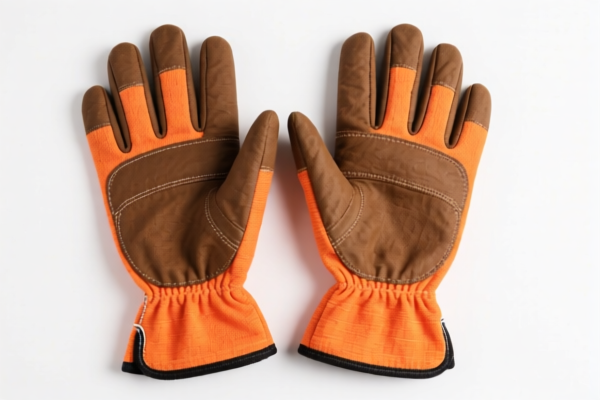


AI Analysis
🔥 Heating Tools (Flame Heating Equipment)
🌐 HS Code Reference & Customs Clearance Guide | 2026 Latest Tariff Analysis | Professional Entry Strategy
📌 I. Product Definition & Classification: What Exactly Are "Heating Tools"?
"Heating Tools" (specifically flame heating equipment) is a broad category that varies significantly based on its power source, portability, and intended industrial application. In international trade, classification depends on whether the device is a standalone burner, a powered handheld tool, or a general mechanical apparatus.
⚠️ Key Distinction Points:
- Is it a standalone burner for industrial furnaces? → Chapter 84 (Boilers/Burners).
- Is it a handheld tool with an electric motor or battery? → Chapter 84 (Hand Tools).
- Is it a general mechanical device with a specific function? → Chapter 84 (Other Machinery).
📦 II. HS Code Classification Details (2026 Latest Tariff Authority)
| HS Code | Product Description | Application Scenario | Classification Logic |
|---|---|---|---|
8416.20.00.80 |
Flame heating tool; falls under Burners for boilers/furnaces | Industrial heating systems, furnace burners | Classified as "Other burners for liquid, powdered or gaseous fuel" |
8416.20.00.40 |
Flame heating tool; gas/fuel-based burner for heating purposes | Gas heaters, industrial flame equipment | Classified as "Burners for liquid, powdered or gaseous fuel" |
8479.89.95.99 |
Flame heating tool; independent-function mechanical appliance | General-purpose flame heating machines | Classified as "Machines and mechanical appliances having individual functions, specified or not elsewhere specified" |
8479.89.65.00 |
Flame heating tool; specific electrical/mechanical apparatus | Specialized flame-heating machinery | Classified as "Other machines and mechanical appliances having individual functions" |
8467.29.00.90 |
Flame heating tool; Hand-held tool with self-contained electric motor or drive | Portable flame tools, powered heating devices | Classified as "Hand-held tools with self-contained electric or non-electric motor" |
🔍 Critical Note:
- Portability Matters: If the tool is hand-held and has an integrated power source (electric/motor), it likely falls under 8467.
- Industrial Burners: If it is part of a larger heating system or furnace, it falls under 8416.
- General Machinery: If it doesn't fit specific subheadings, it falls under 8479 (residual category).
💰 III. 2026 Latest Tariff Rate Breakdown (Including Additional Taxes & Policies)
✅ Applicable Country: United States (US)
✅ Origin: China (CN)
✅ Effective Date: Post-November 2025 (Subject to ongoing trade policies)
🎯 1. 8416.20.00.80 & 8416.20.00.40 — Industrial Burners
| Item | Detail |
|---|---|
| Base Duty | 0.0% |
| Additional Duty (Sec. 301) | +7.5% |
| Section 301 (List 122) | +10% |
| Total Effective Rate | 17.5% |
| Tax Calculation | CIF Value × 17.5% |
| De Minimis Eligibility | ❌ Not Eligible |
| Legal Basis Path | USITC:8416.20.00 → Sec301:7.5% → 122Clause:10% |
📌 Explanation:
- These codes are classified as burners for liquid, powdered, or gaseous fuel.
- They benefit from a 0% base tariff but are subject to Section 301 additional duties (7.5%) and List 122 tariffs (10%), totaling 17.5%.
🎯 2. 8479.89.95.99 — General Mechanical Appliances (High Risk)
| Item | Detail |
|---|---|
| Base Duty | 2.5% |
| Additional Duty (Sec. 301) | +25.0% |
| Section 301 (List 122) | +10% |
| Steel/Aluminum/Copper Surcharge | +50% (if made of steel/aluminum/copper) |
| Total Effective Rate | 87.5% (Standard) / 137.5% (Metal Components) |
| Tax Calculation | CIF Value × Total Rate |
| De Minimis Eligibility | ❌ Not Eligible |
| Legal Basis Path | USITC:8479.89.95 → Sec301:25% → 122Clause:10% → MetalSurcharge:50% |
📌 Warning:
- This is a residual category ("Other machinery").
- If the heating tool is constructed from steel, aluminum, or copper, an additional 50% surcharge may apply under Section 232 or related metal tariffs.
- Total tax can exceed 80%, making this a high-cost classification.
🎯 3. 8479.89.65.00 — Specific Electrical/Mechanical Apparatus
| Item | Detail |
|---|---|
| Base Duty | 2.8% |
| Additional Duty (Sec. 301) | +7.5% |
| Section 301 (List 122) | +10% |
| Total Effective Rate | 20.3% |
| Tax Calculation | CIF Value × 20.3% |
| De Minimis Eligibility | ❌ Not Eligible |
| Legal Basis Path | USITC:8479.89.65 → Sec301:7.5% → 122Clause:10% |
📌 Note:
- Lower than8479.89.95.99due to a lower base rate and potentially different Section 301 applicability.
- Still subject to standard additional duties.
🎯 4. 8467.29.00.90 — Hand-Held Tools with Electric Motor
| Item | Detail |
|---|---|
| Base Duty | 0.0% |
| Additional Duty (Sec. 301) | +7.5% |
| Section 301 (List 122) | +10% |
| Total Effective Rate | 17.5% |
| Tax Calculation | CIF Value × 17.5% |
| De Minimis Eligibility | ❌ Not Eligible |
| Legal Basis Path | USITC:8467.29.00 → Sec301:7.5% → 122Clause:10% |
📌 Explanation:
- If the heating tool is hand-held and has a self-contained electric motor, it is classified as a powered hand tool.
- Base rate is 0%, but subject to 17.5% total additional duties.
🛠️ IV. Customs Clearance Practical Advice (Real-World Pitfall Avoidance)
✅ 1. Document Checklist (Non-Negotiable)
| Document | Required | Notes |
|---|---|---|
| ✅ Product Specification Sheet | ✔️ | Must detail power source (electric/gas), heating method (flame), and portability. |
| ✅ Technical Diagrams | ✔️ | Show internal components to distinguish between "burner" and "hand tool." |
| ✅ Product Photos (Labeled) | ✔️ | Must clearly show if it is handheld, wall-mounted, or industrial. |
| ✅ Bill of Lading / Invoice | ✔️ | Clearly describe as "Flame Heating Tool" or "Industrial Burner," not vague terms. |
| ✅ Certifications | ✔️ | UL, CE, or other safety certifications if applicable. |
✅ 2. Declaration Tips (Golden Rules)
🔥 "Describe by Function, Declare by Power!"
| Scenario | Correct Declaration | Wrong Declaration | Consequence |
|---|---|---|---|
| Handheld Electric Heater | 8467.29.00.90 - "Hand-held heating tool with electric motor" |
"Heating Element" | Misclassification → 87.5% tax |
| Industrial Gas Burner | 8416.20.00.40 - "Gas-fired burner for furnaces" |
"Heating Tool" | Ambiguity → Delayed clearance |
| General Flame Machine | 8479.89.65.00 - "Mechanical flame heating apparatus" |
"Machinery" | Too vague → Audits |
| Metal-Body Heater | 8479.89.95.99 - "Other mechanical appliance" |
"Steel Product" | Triggers +50% metal surcharge |
✅ 3. Special Cases Handling
| Situation | Recommendation |
|---|---|
| Is it a Part or a Whole? | If it’s a component of a larger furnace, declare as part (8416.90). If standalone, declare as whole. |
| Gas vs. Electric | Gas burners (8416) vs. Electric hand tools (8467) have different base rates. Clarify power source. |
| Origin Declaration | Ensure Certificate of Origin clearly states China to apply correct Section 301 rates. |
🌍 V. Global Market Comparison (2026 Latest)
| Country/Region | Recommended HS Code | Base Tariff | Additional Duties | Notes |
|---|---|---|---|---|
| 🇺🇸 USA | 8416.20.00.40 |
0% | +17.5% | High total cost due to Section 301 |
| 🇪🇺 EU | 8416.20.00.00 |
3.7% | 0% | No Section 301 equivalents |
| 🇨🇳 China | 8416.20.00.00 |
0% | 0% | Favorable for import into China |
| 🇯🇵 Japan | 8416.20.00.00 |
0% | 0% | Free trade agreement benefits |
📌 Conclusion:
- USA is the most challenging market due to 17.5%–87.5% total tariffs.
- EU/JP/CN offer significantly lower barriers for heating equipment.
📌 VI. Common Errors & Pitfalls (Lessons Learned)
❌ Error 1: Declaring an electric hand-held heater as a gas burner (8416)
👉 Consequence:海关质疑电源属性,导致清关延误。
❌ Error 2: Ignoring metal content in general machinery (8479.89.95.99)
👉 Consequence: Unexpected +50% surcharge on steel/aluminum components.
❌ Error 3: Using vague terms like "Heater" without specifying portability
👉 Consequence: Customs may assign the highest residual code (8479.89.95.99) → 87.5% tax.
✅ Correct Approach:
"Hand-held Flame Heating Tool, Electric Motor, Model XYZ, UL Certified, CIF Value $10,000"
🎯 VII. Conclusion: Precision in Classification, Savings in Cost
🎯 Remember the Rules:
🔹 "Handheld + Electric = 8467 (17.5%)"
🔹 "Gas Burner = 8416 (17.5%)"
🔹 "General Machine = 8479 (Up to 87.5%!)"
🔹 "Metal Body = Extra 50% Risk!"
📌 Pro Tip:
If your heating tool is not made in China, you may avoid Section 301 and List 122 tariffs. Consider supply chain diversification to Vietnam, Mexico, or Thailand for US-bound goods.
📣 Immediate Action:
📞 Consult a licensed customs broker
📄 Prepare technical specs and photos
🚀 Ensure accurate HS Code classification to avoid 87.5% penalties!
✨ Professional clearance starts with precise classification!
💼 Every percentage point saved is pure profit!
Customer Reviews
About HS Code Classification
The Harmonized System (HS) is an internationally standardized nomenclature developed by the World Customs Organization (WCO) to classify traded products. Over 200 countries use the HS system as the basis for customs tariffs, trade statistics, and import/export regulations.
Each HS code follows a hierarchical structure:
- Chapter (2 digits) — Broad category of goods (e.g., Chapter 84: Machinery and Mechanical Appliances)
- Heading (4 digits) — More specific grouping within the chapter
- Subheading (6 digits) — Internationally standardized breakdown, used by all WCO member countries
- National subdivisions (8-10 digits) — Country-specific extensions for further classification, such as US HTSUS 10-digit codes
Correct HS code classification is essential for smooth customs clearance, accurate duty payment, and compliance with trade regulations. Misclassification can lead to customs delays, overpayment of duties, or penalties.
When importing from CN to US, the applicable tariff rates may include:
- Most-Favored-Nation (MFN) rate — The standard duty rate applied to WTO members
- General rate — Applied to countries without trade agreements
- Trade remedy duties — Additional tariffs such as Section 301 (anti-dumping), Section 232 (national security), or countervailing duties
The information provided on this page is for reference purposes only. For official classification, please consult with your local customs authority or a licensed customs broker.