Heavy Duty Conveyor Belts with Predominantly Vegetable Fiber Components
CN → US| HS Code | Tariff Rate | Origin | Destination | Doc |
|---|---|---|---|---|
| 5911320080 | 38.8% | CN | US | Official Doc |
| 5911900080 | 38.8% | CN | US | Official Doc |
| 8431390010 | 35.0% | CN | US | Official Doc |
| 8431390080 | 35.0% | CN | US | Official Doc |
Product Images
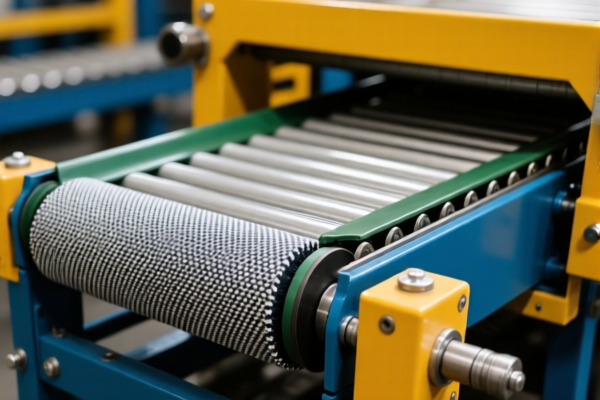
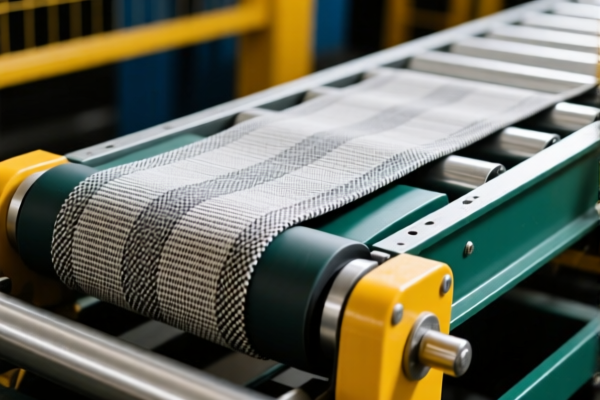
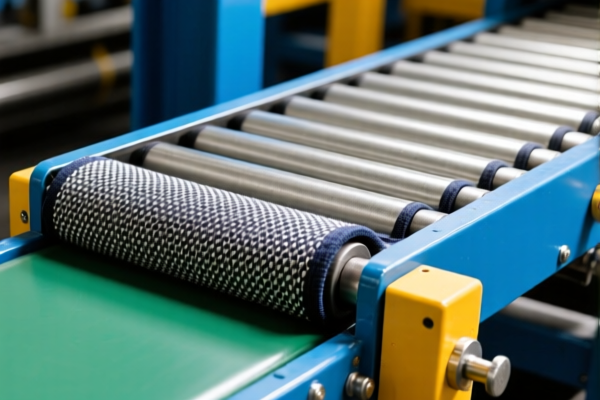
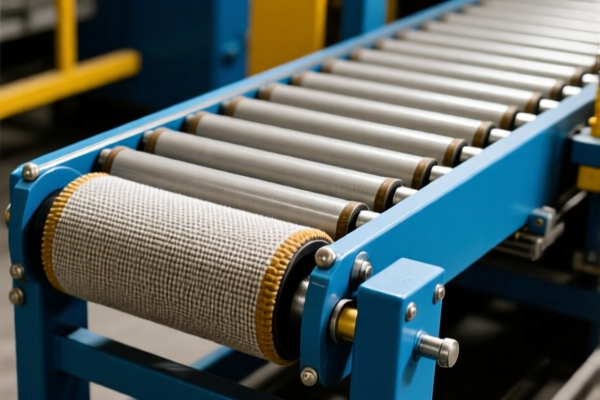
AI Analysis
🚛 Heavy Duty Conveyor Belts with Predominantly Vegetable Fiber Components
🌐 HS Code Reference & Clearance Guide | 2026 Latest Tariff Analysis | Professional Clearance Strategy
📌 I. Product Definition & Classification: What Are "Vegetable Fiber Conveyor Belts"?
Heavy duty conveyor belts with predominantly vegetable fiber components are industrial textiles used for transporting bulk materials (coal, ore, grain, etc.). Unlike synthetic rubber or PVC belts, these belts use plant-based fibers (like cotton, jute, or sisal) as the main tensile reinforcement, often coated or impregnated with rubber, plastic, or other materials for durability.
In international trade, the classification depends heavily on whether the belt is considered a "textile product" (Chapter 59) or a "machine part" (Chapter 84).
⚠️ Key Distinction Point:
- If the product is primarily defined by its fabric/textile structure (woven, felt, or similar technical textile) →归入 Chapter 59
- If the product is primarily defined by its function as a spare part for machinery →归入 Chapter 84
📦 II. HS Code Classification Details (2026 Latest Tariff Authority Comparison)
Based on the provided data, there are four possible HS Codes. Here is the detailed breakdown:
| HS Code | Product Description | Application Scenario | Classification Logic |
|---|---|---|---|
5911.32.00.80 |
Heavy duty conveyor belt containing vegetable fiber, meeting characteristics of high-weight industrial fabric or felt | High-load industrial transport, mining, agriculture | ✅ Technical Textile: Classified under "Textile products for technical uses" |
5911.90.00.80 |
Heavy duty conveyor belt containing vegetable fiber, classified as other technical textile products | General industrial applications, non-specified technical uses | ✅ Other Technical Textile: Catch-all for technical textiles not specified elsewhere |
8431.39.00.10 |
Heavy duty conveyor belt as a part of conveying equipment, made of vegetable fiber | Spare parts for existing conveyor systems | ✅ Machine Part: Classified as a spare part for machines of Chapter 84 |
8431.39.00.80 |
Conveyor belt component for conveyors, containing vegetable fiber with no specific exclusion | General conveyor spare parts | ✅ Other Machine Parts: Catch-all for spare parts of machinery |
🔍 Important Reminder:
- The same physical product can be classified differently depending on the declaration intent and primary characteristic.
- Chapter 59 focuses on the material (textile/fabric).
- Chapter 84 focuses on the function (spare part).
- Misclassification Risk: Declaring a textile belt as a machine part may lead to customs audits if the textile nature is dominant.
💰 III. 2026 Latest Tariff Rate Details (Including Surcharges & Policy Add-ons)
✅ Applicable Country: China (CN) Export
✅ Target Market: United States (US) [Implied by 122 Clause & Section 301 rates]
✅ Effective Time: Current rates apply (Section 301 & 122 Clauses active)
🎯 1. 5911.32.00.80 & 5911.90.00.80 —— Technical Textiles (Chapter 59)
These two codes share the same tariff structure in the provided data, as both are classified under "Other technical textile products" or "Industrial fabrics."
| Item | Content |
|---|---|
| Base Tariff Rate | 3.8% (Ad Valorem) |
| Section 301 Surcharge | +25.0% (US Trade Law Section 301) |
| 122 Clause Tariff | +10.0% (Specific clause for certain industrial goods/textiles) |
| Total Tariff Rate | 38.8% |
| Tax Calculation | CIF Value × 38.8% |
| De Minimis Exemption | ❌ Not Applicable (Industrial textiles are generally excluded from de minimis) |
| Legal Basis Path | HTS:5911 → USITC:301 → 122 Clause |
📌 Explanation:
- Base Rate (3.8%): Standard Most Favored Nation (MFN) rate for technical textiles.
- Section 301 (25%): Additional tariff imposed on many Chinese goods, including industrial textiles and conveyor belts.
- 122 Clause (10%): Additional surcharge applicable to specific categories of industrial imports.
- Total (38.8%): This is a high-cost category. Importers must account for nearly 40% in tariffs.
🎯 2. 8431.39.00.10 & 8431.39.00.80 —— Machine Parts (Chapter 84)
These codes classify the conveyor belt as a spare part for machinery (conveyors). The base rate is lower, but the surcharges remain the same.
| Item | Content |
|---|---|
| Base Tariff Rate | 0.0% (Ad Valorem) |
| Section 301 Surcharge | +25.0% |
| 122 Clause Tariff | +10.0% |
| Total Tariff Rate | 35.0% |
| Tax Calculation | CIF Value × 35.0% |
| De Minimis Exemption | ❌ Not Applicable |
| Legal Basis Path | HTS:8431 → USITC:301 → 122 Clause |
📌 Explanation:
- Base Rate (0.0%): Many machine parts have a 0% base MFN rate.
- Section 301 (25%) & 122 Clause (10%): These surcharges still apply to Chinese-origin machine parts.
- Total (35.0%): This is 3.8% cheaper than the textile classification (5911).
- Strategic Note: If customs allows classification as a "machine part" rather than a "textile," you can save 3.8% on the total cost. However, this requires strong justification that the item is a "part" rather than a "good."
🛠️ IV. Clearance Practical Advice (Battle-Tested Pitfall Avoidance)
✅ 1. Document Checklist (None Missing)
| Document | Required | Description |
|---|---|---|
| ✅ Product Specification Sheet | ✔️ | Must detail fiber content (e.g., "100% Cotton," "Jute Blend"), weight (gsm), and dimensions. |
| ✅ Material Composition Certificate | ✔️ | Proof of "Predominantly Vegetable Fiber" to support Chapter 59 classification. |
| ✅ Product Photos (Clear) | ✔️ | Show cross-section, surface texture, and any branding/model numbers. |
| ✅ Commercial Invoice | ✔️ | Must clearly state: "Heavy Duty Conveyor Belt, Vegetable Fiber Reinforced" |
| ✅ Packing List | ✔️ | List net/gross weights, number of rolls, and pallet count. |
| ✅ Certificate of Origin (CO) | ✔️ | Required for proving China origin and applying surcharges. |
| ✅ Usage Declaration | ✔️ | State whether it is a "new belt" or "spare part for existing machinery." |
✅ 2. Declaration Strategy (Key Mantra)
🔥 “Material Defines Textile, Function Defines Part; Choose Wisely, Save 3.8%!”
| Scenario | Correct Declaration | Risk of Error |
|---|---|---|
| New Belts for Manufacturing Lines | 5911.32.00.80 or 5911.90.00.80 |
Low risk if labeled as "industrial fabric." |
| Spare Parts for Existing Equipment | 8431.39.00.10 or 8431.39.00.80 |
High risk if customs argues it's a "textile good" first. |
| Mixed Content (Synthetic + Vegetable) | Must declare exact % | Misstating fiber content → Penalty & Re-classification. |
| Unidentified "Belts" | Use 8431.39.00.80 as fallback |
Avoids immediate rejection but may trigger audit. |
📌 Strategic Tip:
- If the belt is strictly textile (no mechanical integration), Chapter 59 is safer.
- If the belt is sold specifically as a replacement part for a known machine model, Chapter 84 may be defensible and cheaper (35% vs 38.8%).
✅ 3. Special Case Handling
| Scenario | Handling Advice |
|---|---|
| OEM Custom Belts | Provide customer PO + specs. Show it's tailored for a specific machine → Supports 8431. |
| Vegetable Fiber + Rubber Coating | Clearly state coating material. If coating is minor, still 5911. If coating is substantial, may shift classification. |
| Sample Shipments | Declare as "Samples for Testing," but still subject to tariff. |
| Returned Goods | If previously exported and returned, apply for duty drawback. |
🌍 V. Global Market Clearance Comparison (2026)
| Country/Region | Recommended HS Code | Tariff Rate (China Origin) | Certification Requirements | Notes |
|---|---|---|---|---|
| 🇺🇸 USA | 8431.39.00.80 |
35.0% | None specific, but accurate description critical | Highest surcharges apply. Section 301 + 122 Clause. |
| 🇪🇺 EU | 5911.32 or 5911.90 |
4.0% - 6.5% | CE (if machinery part), REACH | No Section 301. Base rate applies. |
| 🇨🇳 China | 5911.32 |
3.8% - 13% | CCC (if applicable) | Import duties may vary. |
| 🇯🇵 Japan | 8431.39 |
0% - 14% | None | Depends on FTAs. |
📌 Conclusion:
- USA is the most expensive market due to Section 301 and 122 Clause surcharges.
- EU/Japan have significantly lower tariffs for similar goods.
- Diversification Strategy: Consider sourcing from Vietnam or Thailand to avoid US surcharges (if applicable under FTAs).
📌 VI. Common Errors & Pitfall Guide (Blood Lessons)
❌ Error 1: Declaring as "Textile Fabric" when it's clearly a "Machine Part"
👉 Consequence: Customs may reclassify to 8431, but if you already paid higher rates, no refund is easy. Or, if you declared 8431 but it's a generic textile, they may penalize for false declaration.
❌ Error 2: Ignoring the 122 Clause
👉 Consequence: Underpayment of 10% → Back taxes + Interest + Penalties.
❌ Error 3: Vague Description ("Conveyor Belt")
👉 Consequence: Customs may assign a random HS code with higher duties. Always specify "Vegetable Fiber" and "Heavy Duty."
❌ Error 4: Misstating Fiber Content
👉 Consequence: If actual content is 60% synthetic, but declared as 100% vegetable, it may fall under different subheadings → Risk of Fraud Charges.
✅ Correct Practice:
"Heavy Duty Conveyor Belt, Reinforced with 100% Cotton Vegetable Fiber, Rubber Coated, for Industrial Mining Equipment, Model XYZ"
🎯 VII. Conclusion: Professional Declaration, Cost Optimization!
🎯 Remember the Mantra:
🔹 "Textile or Part? Choose based on Primary Use."
🔹 "38.8% for Fabric, 35.0% for Parts."
🔹 "Section 301 and 122 Clause are Non-Negotiable."
📌 Pro Tip:
If your conveyor belts are originating from Vietnam, Mexico, or Thailand, check for preferential tariff rates under USMCA or other FTAs.
Always request a Pre-Ruling (Advance Ruling) from US Customs (CBP) for large shipments to confirm if8431is acceptable.
📣 Immediate Action:
📞 Contact a licensed customs broker + Provide product photos + Request CBP Pre-Ruling
🚀 Ensure your heavy duty belts clear smoothly, avoid delays, and minimize costs!
✨ Professional Clearance Starts with Accurate Classification!
💼 Your Cost Savings Are Worth the Detail!
Customer Reviews
About HS Code Classification
The Harmonized System (HS) is an internationally standardized nomenclature developed by the World Customs Organization (WCO) to classify traded products. Over 200 countries use the HS system as the basis for customs tariffs, trade statistics, and import/export regulations.
Each HS code follows a hierarchical structure:
- Chapter (2 digits) — Broad category of goods (e.g., Chapter 84: Machinery and Mechanical Appliances)
- Heading (4 digits) — More specific grouping within the chapter
- Subheading (6 digits) — Internationally standardized breakdown, used by all WCO member countries
- National subdivisions (8-10 digits) — Country-specific extensions for further classification, such as US HTSUS 10-digit codes
Correct HS code classification is essential for smooth customs clearance, accurate duty payment, and compliance with trade regulations. Misclassification can lead to customs delays, overpayment of duties, or penalties.
When importing from CN to US, the applicable tariff rates may include:
- Most-Favored-Nation (MFN) rate — The standard duty rate applied to WTO members
- General rate — Applied to countries without trade agreements
- Trade remedy duties — Additional tariffs such as Section 301 (anti-dumping), Section 232 (national security), or countervailing duties
The information provided on this page is for reference purposes only. For official classification, please consult with your local customs authority or a licensed customs broker.