Heavy Duty Textile Plastic Composite
CN → US| HS Code | Tariff Rate | Origin | Destination | Doc |
|---|---|---|---|---|
| 5911900080 | 38.8% | CN | US | Official Doc |
| 3920992000 | 39.2% | CN | US | Official Doc |
| 3920995000 | 40.8% | CN | US | Official Doc |
| 3926905900 | 37.4% | CN | US | Official Doc |
| 3926905700 | 41.5% | CN | US | Official Doc |
Product Images
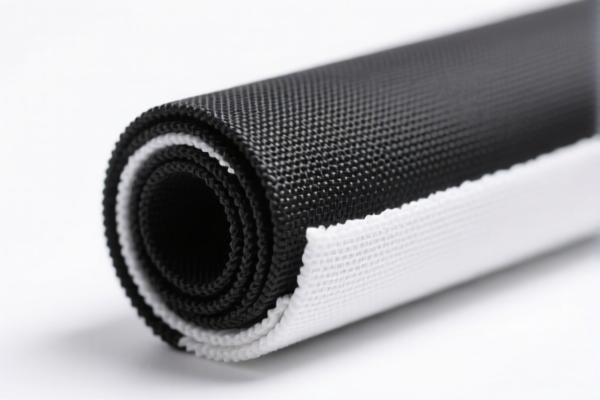
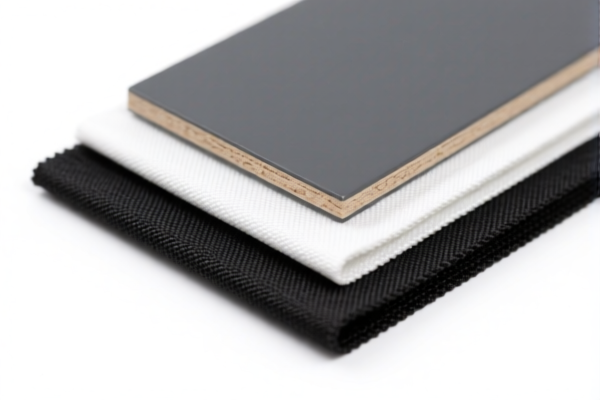
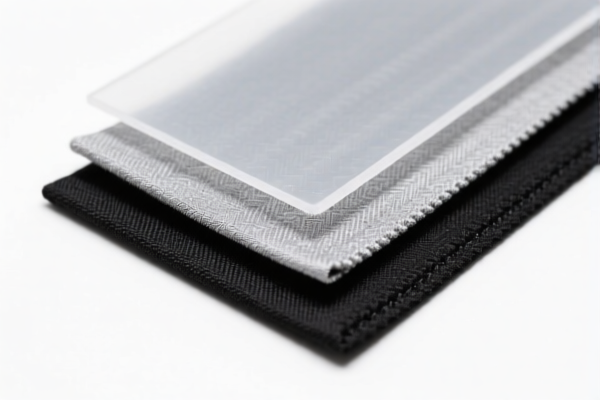
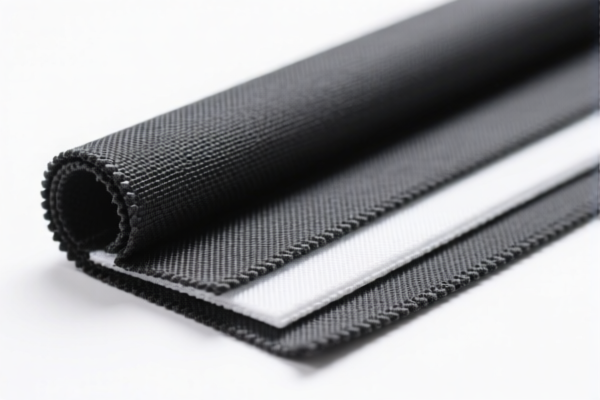
AI Analysis
🏗️ Heavy Duty Textile Plastic Composite (Textile-Reinforced Plastic Sheets)
🌐 HS Code Reference & Customs Clearance Guide | 2026 Latest Tariff Analysis | Professional Compliance Strategy
📌 I. Product Definition: What Exactly Is "Heavy Duty Textile Plastic Composite"?
This product is a specialized industrial material combining high-strength textile fibers with plastic matrices. In international trade, its classification depends heavily on whether it is defined primarily by its textile function or its plastic material characteristics. The key distinction lies in the "essential character" of the composite:
Textile-Centric Products (Chapter 59): Materials where the fabric structure provides the primary mechanical strength and the plastic acts primarily as a coating or binder for technical use.
Plastic-Centric Products (Chapter 39): Solid sheets or plates where the plastic matrix is dominant, and the textile reinforcement is secondary or embedded within.
⚠️ Critical Distinction Point:
- If the product is essentially a coated fabric used for filtration, separation, or technical textile applications → Likely Chapter 59.
- If the product is a rigid or semi-rigid sheet/plate used for construction, packaging, or general plastic applications → Likely Chapter 39.
📦 II. HS Code Classification Details (2026 Latest Tariff Authority Comparison)
Based on the provided data, here are the five potential classifications and the rationale for each:
| HS Code | Product Description | Application Scenario | Rationale for Classification |
|---|---|---|---|
5911.90.00.80 |
Textile Technical Articles: Heavy-duty plastic sheet, plastic material, sheet form. | Technical textile products, filtration media, specialized industrial fabrics. | Classified as a "technical textile product." The textile nature is considered dominant, even with plastic coating. |
3920.99.20.00 |
Plastic Sheets: Heavy-duty textile plastic sheet, plastic material, fits other categories inferred. | General purpose plastic sheets, intermediate goods, non-specific plastic applications. | Categorized under "Other plates, sheets, film, foil and strip, of plastics." Inferred as a general plastic sheet due to lack of specific textile function proof. |
3920.99.50.00 |
Plastic Sheets: Heavy-duty textile plastic sheet, plastic material, possesses sheet characteristics. | Construction materials, industrial linings, general plastic sheeting. | Emphasizes the "sheet" characteristic. The textile reinforcement is secondary to the plastic sheet form. |
3926.90.59.00 |
Other Plastic Articles: Heavy-duty textile plastic sheet, contains textile fibers, classified as other plastic articles. | Decorative panels, general purpose composite boards, non-technical plastic items. | Classified as "Other articles of plastics." The presence of textile fibers does not elevate it to Chapter 59 because it lacks a specific technical textile function. |
3926.90.57.00 |
Other Plastic Articles: Heavy-duty textile plastic sheet, plastic material, sheet form, fits intermediate goods characteristics. | Intermediate manufacturing components, semi-finished plastic goods. | Classified as an "intermediate good." The textile content is deemed insufficient to classify as a textile product, and it serves as a component for further processing. |
🔍 Key Reminder:
- If the product is flexible, fabric-like, and used for technical purposes (e.g., filtration, conveyance belts), 5911.90.00.80 is the most accurate.
- If the product is rigid, sheet-like, and used for general construction or packaging, 3920 or 3926 codes are more appropriate.
- Misclassification can lead to significant tariff differences (from 37.4% to 41.5%).
💰 III. 2026 Latest Tariff Rate Details (Including Surtaxes, Policy Add-ons)
✅ Applicable Country: United States (US)
✅ Origin: China (CN)
✅ Effective Time: 2025/2026 (Current Trade Policy)
🎯 1. 5911.90.00.80 —— Technical Textile Product (Textile-Dominant)
| Item | Content |
|---|---|
| Base Tariff | 3.8% (ad valorem) |
| Section 301 Surtax | +25.0% |
| Section 122 Tariff | +10.0% |
| Total Tariff Rate | 38.8% |
| Tax Calculation | CIF Value × 38.8% |
| De Minimis Exemption | ❌ Not Applicable (High tariff risk) |
| Legal Basis Path | USITC:5911.90.00.80 → Section301:25% → Section122:10% |
📌 Explanation:
- This code offers the lowest total tariff (38.8%) among the options.
- It is classified under Chapter 59, which often has lower base rates but is subject to additional surtaxes.
- Crucial: Must provide evidence that the product is a "technical textile" (e.g., specifications showing fabric structure, permeability, or technical function).
🎯 2. 3920.99.20.00 —— Other Plastic Sheets (Inferred Category)
| Item | Content |
|---|---|
| Base Tariff | 4.2% |
| Section 301 Surtax | +25.0% |
| Section 122 Tariff | +10.0% |
| Total Tariff Rate | 39.2% |
| Tax Calculation | CIF Value × 39.2% |
| De Minimis Exemption | ❌ Not Applicable |
| Legal Basis Path | USITC:3920.99.20.00 → Section301:25% → Section122:10% |
📌 Note:
- Slightly higher than 5911 due to a higher base rate (4.2% vs 3.8%).
- Suitable if the product is primarily a plastic sheet with textile reinforcement but lacks specific technical textile characteristics.
🎯 3. 3920.99.50.00 —— Other Plastic Sheets (Sheet Characteristic)
| Item | Content |
|---|---|
| Base Tariff | 5.8% |
| Section 301 Surtax | +25.0% |
| Section 122 Tariff | +10.0% |
| Total Tariff Rate | 40.8% |
| Tax Calculation | CIF Value × 40.8% |
| De Minimis Exemption | ❌ Not Applicable |
| Legal Basis Path | USITC:3920.99.50.00 → Section301:25% → Section122:10% |
📌 Note:
- Higher base rate (5.8%) makes this more expensive.
- Use this only if the product is clearly a plastic sheet and does not fit other 3920 subcategories.
🎯 4. 3926.90.59.00 —— Other Plastic Articles (Non-Technical)
| Item | Content |
|---|---|
| Base Tariff | 2.4% |
| Section 301 Surtax | +25.0% |
| Section 122 Tariff | +10.0% |
| Total Tariff Rate | 37.4% |
| Tax Calculation | CIF Value × 37.4% |
| De Minimis Exemption | ❌ Not Applicable |
| Legal Basis Path | USITC:3926.90.59.00 → Section301:25% → Section122:10% |
📌 Note:
- Lowest Total Tariff (37.4%) due to the lowest base rate (2.4%).
- Risk: This code is for "other plastic articles" without specific textile function. If customs authorities determine the product is actually a technical textile, they may reclassify it to 5911 or 3920, leading to penalties.
- Only use if the product is a finished plastic article (e.g., a decorative panel) and not a raw material or technical fabric.
🎯 5. 3926.90.57.00 —— Other Plastic Articles (Intermediate Goods)
| Item | Content |
|---|---|
| Base Tariff | 6.5% |
| Section 301 Surtax | +25.0% |
| Section 122 Tariff | +10.0% |
| Total Tariff Rate | 41.5% |
| Tax Calculation | CIF Value × 41.5% |
| De Minimis Exemption | ❌ Not Applicable |
| Legal Basis Path | USITC:3926.90.57.00 → Section301:25% → Section122:10% |
📌 Note:
- Highest Total Tariff (41.5%) due to the highest base rate (6.5%).
- Use only if the product is clearly an intermediate good and fits the specific definition of this subcategory. Avoid if possible due to high cost.
🛠️ IV. Customs Clearance Practical Advice (Battle-Tested Pitfall Avoidance)
✅ 1. Preparation Checklist (Non-Negotiable)
| Document | Required | Description |
|---|---|---|
| ✅ Product Specification Sheet | ✔️ | Must detail material composition (plastic %, textile type), dimensions, weight, and intended use. |
| ✅ Technical Data Sheet | ✔️ | Explain the "essential character." Is it a fabric (5911) or a sheet (3920)? |
| ✅ Photos (Clear & Detailed) | ✔️ | Show cross-sections, surface texture, and any logos/labels. |
| ✅ Third-Party Test Report | ✔️ | Permeability tests (for 5911) or tensile strength tests (for 3920). |
| ✅ Commercial Invoice | ✔️ | Clearly describe the product as "Textile-Reinforced Plastic Sheet" or "Technical Textile Product." |
| ✅ Packing List | ✔️ | Detail quantity, weight, and packaging type. |
✅ 2. Declaration Tips (Key Mnemonics)
🔥 "Function Dictates Code, Not Just Material!"
| Scenario | Correct Declaration | Wrong Action |
|---|---|---|
| Technical Use (Filtration, etc.) | 5911.90.00.80 (38.8%) |
Misdeclare as plastic sheet → Potential 39.2%-41.5% + Penalties |
| General Sheet (Construction, Packaging) | 3920.99.20.00 (39.2%) |
Misdeclare as technical textile → Customs may reclassify to 3926 (41.5%) |
| Finished Article (Decorative Panel) | 3926.90.59.00 (37.4%) |
Misdeclare as raw material → Higher base rate risk |
| Intermediate Good | 3926.90.57.00 (41.5%) |
Only if truly intermediate and no better fit |
✅ 3. Special Case Handling
| Situation | Handling Advice |
|---|---|
| OEM Custom Composite | Provide customer orders and design specs to prove intended use. |
| Flexible vs. Rigid | If flexible, lean towards 5911. If rigid, lean towards 3920/3926. |
| Mixed Use | Declare the primary function. If mixed, choose the code with the lowest tariff that is defensible (3926.90.59.00 at 37.4% if defensible as a non-technical article). |
| Origin Verification | Ensure all components (plastic resin, textile fibers) meet origin rules to avoid country-of-origin disputes. |
🌍 V. Global Market Customs Comparison (2026 Latest)
| Country/Region | Recommended HS Code | Tariff Rate | Certification Requirements | Notes |
|---|---|---|---|---|
| 🇺🇸 USA | 5911.90.00.80 |
38.8% | None specific | High tariffs due to Section 301 & 122. |
| 🇨🇳 China | 5911.90.00.80 |
~5-10% | CCC (if applicable) | Lower tariffs, focus on quality standards. |
| 🇪🇺 EU | 5911.90 |
~6.5% | CE, REACH | No Section 301/122 equivalent. |
| 🇦🇺 Australia | 5911.90 |
~5% | RCM | Moderate tariffs. |
| 🇯🇵 Japan | 5911.90 |
~0-8% | PSE (if applicable) | Variable tariffs based on FTA. |
📌 Conclusion:
- USA is the most challenging market due to high surtaxes.
- Cost Optimization: If the product can be legally classified as3926.90.59.00(37.4%), it saves 1.4% compared to5911.90.00.80. However, this carries higher audit risk if the product is clearly a technical textile.
- Risk Management: Always have technical documentation ready to defend the classification.
📌 VI. Common Mistakes & Pitfalls (Lessons Learned)
❌ Mistake 1: Declaring a technical textile as a general plastic sheet to avoid scrutiny
👉 Consequence: Customs may reclassify to a higher tariff code or impose penalties for misdeclaration.
❌ Mistake 2: Using "Textile" in the name but declaring under 3926 without proof of non-technical use
👉 Consequence: Audit flag, delay in clearance, potential back-tariff.
❌ Mistake 3: Ignoring Section 122 Tariff (10%)
👉 Consequence: Underpayment of duties, leading to fines and late fees.
❌ Mistake 4: Not providing a cross-section photo
👉 Consequence: Customs cannot determine if the textile is structural (5911) or embedded (3920/3926), leading to classification uncertainty.
✅ Correct Approach:
"Heavy-Duty Textile-Reinforced Plastic Composite Sheet, for Industrial Filtration, Plastic Content 40%, Textile Content 60%, Model XYZ, Certified to Technical Standard ABC"
🎯 VII. Conclusion: Precise Classification Saves Money!
🎯 Remember the Mnemonic:
🔹 "Textile Tech = 5911 (38.8%), Plastic Sheet = 3920 (39.2%), Plastic Article = 3926 (37.4%-41.5%).
🔹 "Lowest Tariff is 3926.59 (37.4%), but only if it's NOT a technical textile!
🔹 "Section 301 (+25%) and Section 122 (+10%) apply to ALL!"**
📌 Pro Tip:
If your product is used in non-technical applications (e.g., decoration, general packaging), consider 3926.90.59.00 for the lowest tariff (37.4%). However, ensure you have documentation to prove it is not a "technical textile product" as defined by Chapter 59 Note 1.
For technical applications (filtration, separation, reinforcement), 5911.90.00.80 (38.8%) is the safest and most accurate.
📣 Immediate Action:
📞 Consult with a licensed customs broker + Provide technical datasheet + Apply for Advance Ruling if possible.
🚀 Ensure smooth customs clearance, minimize duty costs, and maximize your profit margin!
✨ Professional Customs Clearance Starts with Accurate Classification!
💼 Every Percent of Tariff Matters!
Customer Reviews
About HS Code Classification
The Harmonized System (HS) is an internationally standardized nomenclature developed by the World Customs Organization (WCO) to classify traded products. Over 200 countries use the HS system as the basis for customs tariffs, trade statistics, and import/export regulations.
Each HS code follows a hierarchical structure:
- Chapter (2 digits) — Broad category of goods (e.g., Chapter 84: Machinery and Mechanical Appliances)
- Heading (4 digits) — More specific grouping within the chapter
- Subheading (6 digits) — Internationally standardized breakdown, used by all WCO member countries
- National subdivisions (8-10 digits) — Country-specific extensions for further classification, such as US HTSUS 10-digit codes
Correct HS code classification is essential for smooth customs clearance, accurate duty payment, and compliance with trade regulations. Misclassification can lead to customs delays, overpayment of duties, or penalties.
When importing from CN to US, the applicable tariff rates may include:
- Most-Favored-Nation (MFN) rate — The standard duty rate applied to WTO members
- General rate — Applied to countries without trade agreements
- Trade remedy duties — Additional tariffs such as Section 301 (anti-dumping), Section 232 (national security), or countervailing duties
The information provided on this page is for reference purposes only. For official classification, please consult with your local customs authority or a licensed customs broker.