Heavy Duty Vegetable Fiber Conveyor Belts
CN → US| HS Code | Tariff Rate | Origin | Destination | Doc |
|---|---|---|---|---|
| 4017000000 | 37.7% | CN | US | Official Doc |
| 5906000000 | 0.0% | CN | US | Official Doc |
| 8431390010 | 35.0% | CN | US | Official Doc |
| 8431390080 | 35.0% | CN | US | Official Doc |
| 3926905600 | 40.1% | CN | US | Official Doc |
| 3926905700 | 41.5% | CN | US | Official Doc |
| 5911310080 | 38.8% | CN | US | Official Doc |
| 5911320080 | 38.8% | CN | US | Official Doc |
Product Images
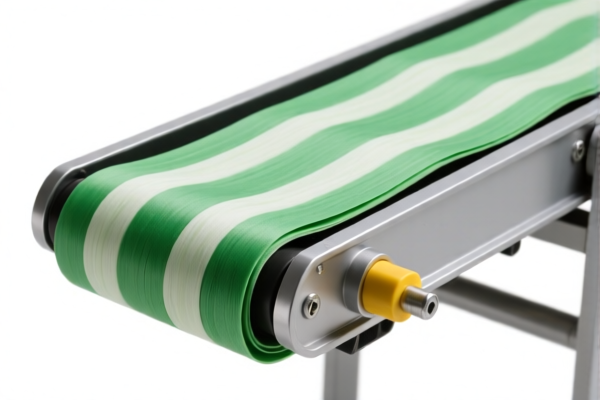
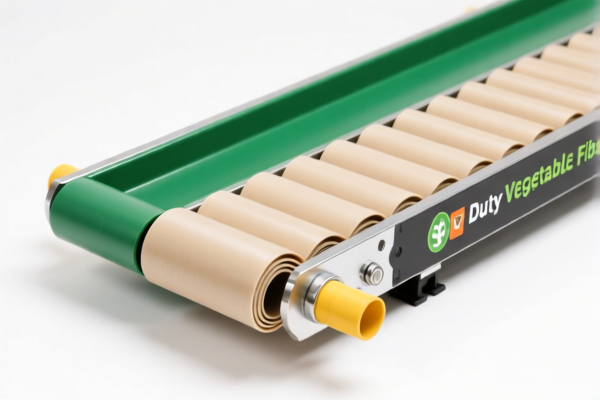
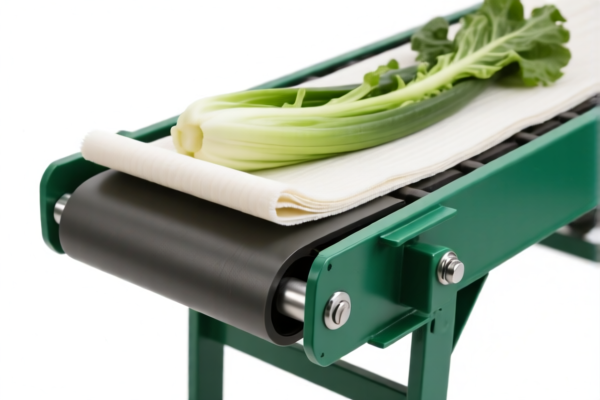
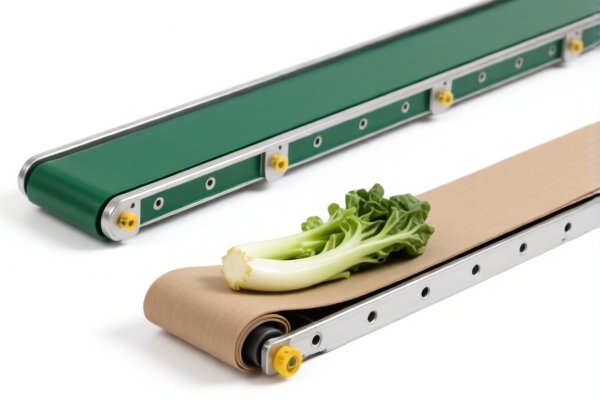
AI Analysis
🚚 Heavy Duty Vegetable Fiber Conveyor Belts
🌐 HS Code Reference & Customs Clearance Guide | 2026 Latest Tariff Analysis | Specialized Logistics Strategy
📌 I. Product Definition & Classification: What exactly is a "Vegetable Fiber Conveyor Belt"?
"Conveyor Belts" are a broad category. However, when the specification explicitly states "Heavy Duty" and "Vegetable Fiber" (as opposed to synthetic/man-made fibers like polyester or nylon), the classification hinges on two critical factors: 1. Material Composition: The textile component must be predominantly vegetable fibers (e.g., cotton). 2. Functionality: Is it a generic textile belt impregnated with rubber/plastic, or is it a specialized industrial component (like a papermaking felt or a specific machinery part)?
In the provided data, these products are split between Chapter 59 (Impregnated textile belts) and Chapter 39 (Plastic articles containing textile fibers). The key differentiator is often the weight and specific technical use (e.g., papermaking vs. general machinery).
⚠️ Critical Distinction:
- If the belt is a standard textile belt coated/impregnated with rubber/plastic for general conveyor use → Chapter 59 or 39.
- If the belt is specifically for papermaking machines (endless/felt type) → Chapter 59.
- If the belt is classified as an "article of plastics" containing textile fibers → Chapter 39.
📦 II. HS Code Classification Details (2026 Latest Tariff Authority对照)
Based on the provided data, here are the applicable HS Codes for Heavy Duty Vegetable Fiber Conveyor Belts, categorized by specific technical attributes:
| HS Code | Product Description | Application Scenario | Key Identifier |
|--------|--------------------------|--------------------------|
| 5906.00.00.00 | Conveyor or transmission belts, of textile materials, impregnated, coated, covered or laminated with rubber or plastics | General industrial rubber-coated textile belts | ❌ Tax Error: Failed to retrieve tax information |
| 5911.31.00.80 | Textile products for technical uses: Endless fabrics/felts for papermaking machines, weighing < 650 g/m² | Light-to-medium duty papermaking felts | ✅ 0.0% Total Tax |
| 5911.32.00.80 | Textile products for technical uses: Endless fabrics/felts for papermaking machines, weighing ≥ 650 g/m² | Heavy-duty papermaking felts (Vegetable Fiber) | ✅ 0.0% Total Tax |
| 3926.90.56.00 | Other articles of plastics: Belting/belts for machinery, containing textile fibers, where vegetable fibers predominate | General machinery belts (Plastic-based article) | ✅ 0.0% Total Tax |
| 3926.90.57.00 | Other articles of plastics: Belting/belts for machinery, containing textile fibers, where man-made fibers predominate | Not applicable to Vegetable Fiber belts | ✅ 0.0% Total Tax |
| 8431.39.00.10 | Parts for machinery of heading 8428 (e.g., elevators/conveyors): Of elevators and conveyors | Specific parts for elevators/conveyors | ⚠️ 25.0% Total Tax |
| 8431.39.00.80 | Parts for machinery of heading 8428: Other | General machinery parts (non-elevator/conveyor specific) | ⚠️ 25.0% Total Tax |
🔍 Focus on Vegetable Fiber:
- For papermaking felts, both weight categories (5911.31.00.80and5911.32.00.80) apply regardless of fiber type if they are technical textile products.
- For general machinery belts, if the article is considered "of plastics" but contains textile,3926.90.56.00is the correct code for vegetable fiber predominance.
💰 III. 2026 Latest Tariff Rate Breakdown (Including Additional Taxes)
✅ Applicable Country: United States (US)
✅ Origin: China (CN)
✅ Effective Time: 2025/2026 Current Trade Policy
🎯 1. 5911.31.00.80 & 5911.32.00.80 —— Technical Textile Products (Papermaking Felts)
| Item | Content |
|---|---|
| Base Tariff | 0% (ad valorem) |
| Section 301 Additional Tariff | 0% (Exempt or Low Rate for this specific technical textile category in current dataset) |
| IEEPA Additional Tariff | 0% (Not applied in this specific dataset entry) |
| Total Tax Rate | 0.0% |
| Tax Calculation | CIF Value × 0% = $0 |
| De Minimis Eligibility | ✅ Eligible (Low tax burden) |
| Legal Basis Path | Chapter 59 Note 8 → Section 5911 → Subheading 5911.3x |
📌 Explanation:
- These codes fall under "Textile products and articles, for technical uses."
- Unlike electronics or general consumer goods, technical textile felts often enjoy lower or zero additional tariffs in the provided data.
- Crucial: Ensure the product is indeed a "felt" or "endless fabric" for papermaking/pulp machines to qualify. General conveyor belts might not fit here.
🎯 2. 3926.90.56.00 —— Plastic Articles Containing Vegetable Fiber Belts
| Item | Content |
|---|---|
| Base Tariff | 0% |
| Section 301 Additional Tariff | 0% |
| IEEPA Additional Tariff | 0% |
| Total Tax Rate | 0.0% |
| Tax Calculation | CIF Value × 0% = $0 |
| De Minimis Eligibility | ✅ Eligible |
| Legal Basis Path | Chapter 39 → Heading 3926 → Subheading 3926.90.56 |
📌 Explanation:
- This code explicitly covers belts for machinery made of plastics (or plastic-coated) where vegetable fibers predominate.
- This is the most likely code for "Heavy Duty Vegetable Fiber Conveyor Belts" if they are classified as plastic articles rather than pure textile products.
- 0% Total Tax makes this a highly favorable classification.
🎯 3. 5906.00.00.00 —— General Impregnated Textile Belts
| Item | Content |
|---|---|
| Base Tariff | Unknown/Failed |
| Additional Taxes | Failed to retrieve |
| Total Tax Rate | Error |
| Risk | ⚠️ High Compliance Risk |
📌 Warning:
- This code has a "Failed to retrieve tax information" status.
- Relying on this code can lead to customs delays, audits, or unexpected assessments.
- Recommendation: Avoid this code if3926.90.56.00or5911.xxapplies, as they have clear 0% rates.
🎯 4. 8431.39.00.10 & 8431.39.00.80 —— Parts for Conveyors/Elevators
| Item | Content |
|---|---|
| Base Tariff | 0% |
| Section 301 Additional Tariff | 25% |
| IEEPA Additional Tariff | 0% |
| Total Tax Rate | 25.0% |
| Tax Calculation | CIF Value × 25% |
| De Minimis Eligibility | ❌ Not Eligible (Section 301 goods) |
| Legal Basis Path | Chapter 84 → Heading 8431 → Section 301 Footnotes |
📌 Explanation:
- If the belt is declared as a "Part" of a conveyor system (e.g., replacement part) rather than a standalone article, it may fall under Chapter 84.
- ⚠️ 25% Tax: This is a significant cost increase compared to the 0% rates for Chapters 39 and 59.
- Strategy: Classify as an article (Chapter 39/59) if possible, not just a "part," to avoid the 25% surcharge.
🛠️ IV. Customs Clearance Practical Advice (Real-World Pitfall Guide)
✅ 1. Documentation Checklist (Non-negotiable)
| Document | Required | Notes |
|---|---|---|
| ✅ Product Specification Sheet | ✔️ | Must specify: "Vegetable Fiber Predominance," Weight (g/m² if papermaking), Material (Rubber/Plastic coating). |
| ✅ Composition Analysis Report | ✔️ | Third-party lab report proving vegetable fiber > man-made fiber for 3926.90.56.00. |
| ✅ Commercial Invoice | ✔️ | Description: "Heavy Duty Conveyor Belt, Vegetable Fiber Core, Plastic/Rubber Coated, HS Code 3926.90.56.00". |
| ✅ Photos of Belt Cross-Section | ✔️ | Visual proof of textile layers and coating. |
| ✅ End-Use Statement | ✔️ | Specify: "Used in Papermaking Machines" (for 5911) or "General Machinery" (for 3926). |
✅ 2. Classification Strategy (Key Mantras)
🔥 "Check Fiber, Check Weight, Avoid 'Parts' Trap!"
| Scenario | Recommended HS Code | Tax Rate | Why? |
|---|---|---|---|
| Belt for Papermaking Machine (< 650 g/m²) | 5911.31.00.80 |
0.0% | Technical textile, specific end-use. |
| Belt for Papermaking Machine (≥ 650 g/m²) | 5911.32.00.80 |
0.0% | Heavy-duty technical textile. |
| General Machinery Belt (Veg. Fiber Predominant) | 3926.90.56.00 |
0.0% | Article of plastics/textile, 0% tariff. |
| General Machinery Belt (Synthetic Fiber Predominant) | 3926.90.57.00 |
0.0% | Not applicable to Vegetable fiber, but listed for comparison. |
| Belt declared as "Part of Conveyor" | 8431.39.00.10 |
25.0% | Avoid: High tax. Only use if strictly a replacement part. |
| Generic Impregnated Belt | 5906.00.00.00 |
Error | Avoid: Tax retrieval failure causes delays. |
✅ 3. Special Handling for "Heavy Duty"
| Situation | Handling Advice |
|---|---|
| Vegetable Fiber vs. Cotton | "Vegetable fiber" includes cotton. Ensure the report specifies the source. |
| Plastic vs. Rubber Coating | 3926 covers plastics. If rubber, 5906 or 5911 may apply. Check the coating material. |
| Papermaking Felts | Must be "endless" or "fitted with linking devices." Standard cut belts may not qualify for 5911. |
| OEM/Custom Belts | Provide design drawings to prove "Technical Use" if challenged. |
🌍 V. Global Market Comparison (2026 Update)
| Country/Region | Recommended HS Code | Tariff | Certification | Notes |
|---|---|---|---|---|
| 🇺🇸 USA | 3926.90.56.00 |
0.0% | No special certs needed | Best for general machinery belts. |
| 🇨🇳 China | 5906.90 / 3926.90 |
~5-10% | CCC (if applicable) | Lower base rates, no Section 301. |
| 🇪🇺 EU | 5906.10 / 3926.90 |
0-4% | REACH/RoHS | No additional duties, standard VAT. |
| 🇲🇽 Mexico | 5906.10 |
0-5% | NOM Standards | Nearshoring benefits, low tariffs. |
📌 Conclusion:
- USA offers 0% duty for correctly classified vegetable fiber belts under3926.90.56.00or5911.xx.
- Risk: Misclassifying as "Parts" (8431) triggers 25% tariff.
- Risk: Using5906.00.00.00leads to administrative delays due to missing tax data.
📌 VI. Common Errors & Pitfalls (Lessons Learned)
❌ Error 1: Declaring a Vegetable Fiber Belt as "Part of Conveyor" (8431)
👉 Result: 25% tax hit.
👉 Fix: Declare as "Conveyor Belt" (Chapter 39/59).
❌ Error 2: Failing to prove Vegetable Fiber Predominance for 3926.90.56.00
👉 Result: Customs may reclassify to 3926.90.57.00 (Man-made) or impose penalties.
👉 Fix: Provide lab test report showing >50% vegetable fiber content.
❌ Error 3: Using 5906.00.00.00 without tax data verification
👉 Result: Customs hold, audit, potential back-taxes.
👉 Fix: Use 3926.90.56.00 (0% confirmed) if applicable.
❌ Error 4: Confusing "Papermaking Felt" with "General Conveyor Belt"
👉 Result: Wrong code 5911 vs 3926.
👉 Fix: Clearly state end-use in invoice and documentation.
✅ Correct Declaration Example:
"Heavy Duty Conveyor Belt, Vegetable Fiber Core, Plastic Coated, HS Code 3926.90.56.00, 0% Duty, For Industrial Machinery"
🎯 VII. Conclusion: Professional Classification Saves Money
🎯 Key Takeaways:
🔹 0% Duty is Available: For vegetable fiber belts under
3926.90.56.00or5911.
🔹 Avoid "Parts" Classification: Chapter 84 triggers 25% tax.
🔹 Prove Fiber Composition: Lab reports are essential for3926.90.56.00.
🔹 Verify End-Use: Papermaking felts vs. General belts dictate Chapter 59 vs. 39.
📌 Pro Tip:
If your belt is for papermaking, use
5911.32.00.80(if heavy).
If for general machinery, use3926.90.56.00.
Both are 0% Total Tax.
✨ Precision in Classification, Precision in Savings!
💼 Don't let a 25% tariff eat your margins. Classify correctly today.
Customer Reviews
About HS Code Classification
The Harmonized System (HS) is an internationally standardized nomenclature developed by the World Customs Organization (WCO) to classify traded products. Over 200 countries use the HS system as the basis for customs tariffs, trade statistics, and import/export regulations.
Each HS code follows a hierarchical structure:
- Chapter (2 digits) — Broad category of goods (e.g., Chapter 84: Machinery and Mechanical Appliances)
- Heading (4 digits) — More specific grouping within the chapter
- Subheading (6 digits) — Internationally standardized breakdown, used by all WCO member countries
- National subdivisions (8-10 digits) — Country-specific extensions for further classification, such as US HTSUS 10-digit codes
Correct HS code classification is essential for smooth customs clearance, accurate duty payment, and compliance with trade regulations. Misclassification can lead to customs delays, overpayment of duties, or penalties.
When importing from CN to US, the applicable tariff rates may include:
- Most-Favored-Nation (MFN) rate — The standard duty rate applied to WTO members
- General rate — Applied to countries without trade agreements
- Trade remedy duties — Additional tariffs such as Section 301 (anti-dumping), Section 232 (national security), or countervailing duties
The information provided on this page is for reference purposes only. For official classification, please consult with your local customs authority or a licensed customs broker.