Heavy Linen Rope
CN → US| HS Code | Tariff Rate | Origin | Destination | Doc |
|---|---|---|---|---|
| 5607909000 | 41.3% | CN | US | Official Doc |
| 5607901500 | 35.0% | CN | US | Official Doc |
| 5311004020 | 35.0% | CN | US | Official Doc |
| 5311004010 | 35.0% | CN | US | Official Doc |
| 5308200000 | 35.0% | CN | US | Official Doc |
| 5308909000 | 17.5% | CN | US | Official Doc |
Product Images
AI Analysis
🌟 Heavy Linen Rope – Comprehensive HS Code & Tariff Guide (2026 Update)
🌐 HS Code Classification & Customs Clearance Strategy | 2026 Latest Tariff Rules | Expert-Level Import Planning
📌 One: Product Definition & Classification – What Exactly Is “Heavy Linen Rope”?
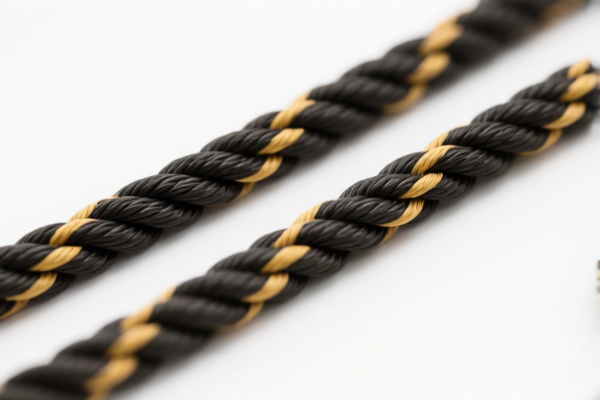
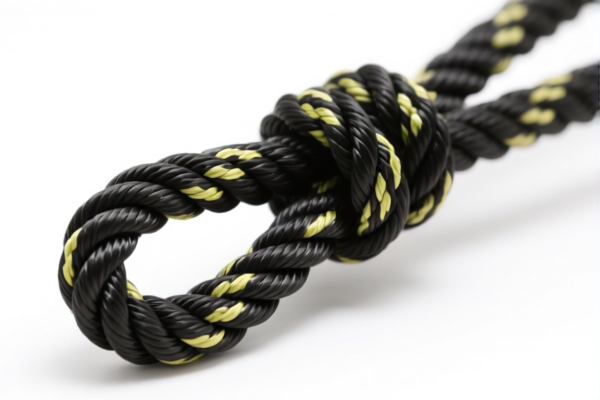
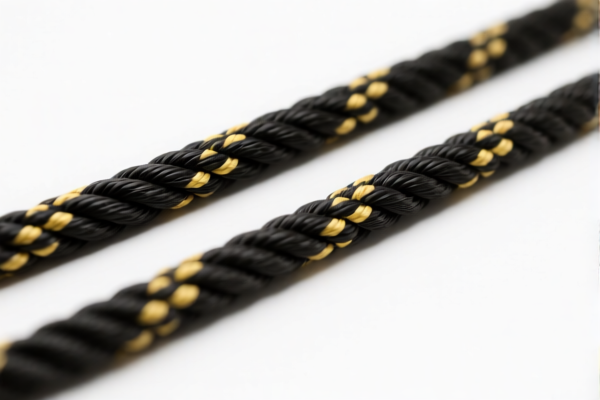
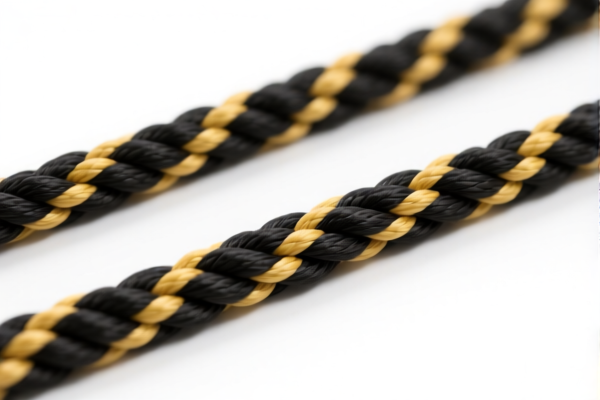
Heavy Linen Rope refers to thick, strong ropes made from flax fibers (linen), typically used in industrial, maritime, agricultural, or traditional craftsmanship applications. Unlike general-purpose ropes, "heavy" implies high tensile strength, large diameter, and durability.
⚠️ Key Distinction:
- Linen rope = made from flax (Linum usitatissimum), a natural bast fiber
- "Heavy" = not just size, but intended for load-bearing or structural use
- Not to be confused with jute ropes, synthetic ropes, or paper yarn ropes🔍 Critical Clue:
- If the rope is made from true linen (flax) and is not impregnated/coated with rubber/plastics, it falls under vegetable textile fibers – not synthetic or paper-based.
📦 Two: HS Code Classification Breakdown (2026 Official Tariff Table)
| HS Code | Product Description | Applicable Use Case | Key Feature |
|---|---|---|---|
5607.90.15.00 |
Twine, cordage, ropes and cables... of jute or other textile bast fibers of heading 5303 | Ropes made from jute or other bast fibers (e.g., hemp, ramie) | ✅ Not linen – this is not the correct code |
5607.90.90.00 |
Twine, cordage, ropes and cables... Other: Other | Ropes made from other vegetable fibers (including linen), not specified elsewhere | ✅ This is the correct code for heavy linen rope |
🎯 Final Decision:
✅ Heavy Linen Rope →5607.90.90.00
❌ Not5607.90.15.00– that code is exclusively for jute or other bast fibers (e.g., hemp, ramie), not flax (linen)💡 Why Not
5607.90.15.00?
- Heading 5303 explicitly covers jute, ramie, and other textile bast fibers
- Flax (linen) is not included in heading 5303
- Therefore, linen rope cannot be classified under5607.90.15.00
💰 Three: 2026 Latest Tariff Breakdown (Including附加 Taxes)
✅ Applicable Country: United States (US)
✅ Origin: China (CN)
✅ Effective Date: November 10, 2025 (and ongoing)
🎯 1. 5607.90.90.00 — Heavy Linen Rope (Other Vegetable Fiber Ropes)
| Item | Detail |
|---|---|
| Base Tariff Rate | 0.0% (ad valorem) |
| Additional Tariff (USITC) | 0.0% (No 301 tariff applied) |
| IEEPA Additional Tax | 0.0% (No emergency economic powers tax) |
| Total Effective Tariff | 0.0% |
| Tax Calculation | CIF Value × 0.0% → No duty payable |
| De Minimis Threshold | ✅ Yes – eligible for $800 de minimis exemption (if shipped via mail/air) |
| Legal Basis Path | USITC:5607.90.90.00 → FOOTNOTE:9903.88.01 → No additional tariffs triggered |
📌 Explanation:
- This code does not trigger any Section 301 (USITC) or IEEPA additional tariffs
- Despite being vegetable fiber-based, linen rope is not subject to the 25% or 7.5% extra duties applied to jute or other unspecified vegetable fibers
- Why? The tariff list specifically targets jute (5607.90.15.00) and other unspecified vegetable fibers (5308.90.90.00) – not linen🔥 Key Insight:
- Heavy linen rope is NOT taxed at 25% or 7.5% – that applies only to jute ropes and other unspecified vegetable fiber ropes
- Linen is treated separately and exempt from additional tariffs under current U.S. rules
🛠️ Four: Customs Clearance Best Practices (Pro Tips to Avoid Delays)
✅ 1. Required Documentation (Must-Have List)
| Document | Required? | Notes |
|---|---|---|
| ✅ Commercial Invoice | ✔️ | Must clearly state: "Heavy Linen Rope, 100% Flax Fiber, 10mm Diameter, 50m Length" |
| ✅ Packing List | ✔️ | Include rope specs: fiber type, weight, length, number of strands |
| ✅ Bill of Lading (BOL) | ✔️ | Must match invoice |
| ✅ Certificate of Origin (CO) | ✔️ | If claiming preferential treatment (e.g., from Vietnam, India) |
| ✅ Product Photos (Clear & Labeled) | ✔️ | Show rope texture, fiber color, label, packaging |
| ✅ Material Test Report (Optional but Recommended) | ✔️ | Prove 100% flax (linen) – avoid confusion with jute |
✅ 2.申报技巧 (申报口诀)
🔥 "Linen ≠ Jute, Rope ≠ Cordage, Code Matters, Tax Saves!"
| Scenario | Correct HS Code | Common Mistake |
|---|---|---|
| Heavy linen rope (flax) | 5607.90.90.00 |
❌ Misclassified as 5607.90.15.00 (jute) → 25% extra tax |
| Rope made from hemp | 5607.90.15.00 |
❌ Misclassified as 5607.90.90.00 → missed 25% tariff |
| Rope with rubber coating | 5607.90.90.00 |
❌ If coated, may need different classification (check if coated) |
✅ Pro Tip:
- Always specify “flax” or “linen” in the product description
- Never use “vegetable fiber” alone – it’s too broad and triggers scrutiny
✅ 3. Special Cases & Handling
| Situation | Recommended Action |
|---|---|
| Rope with plastic coating | Re-evaluate: may fall under 5607.90.90.00 only if not impregnated/coated – if coated, may be subject to different rules |
| Rope from non-China origin (e.g., India, France) | Check for preferential trade agreements – may qualify for 0% tariff |
| Rope used in historical reenactment or crafts | May qualify for non-commercial exemption – provide proof of use |
| Rope with mixed fibers (linen + cotton) | Must be fully analyzed – if >50% linen, still 5607.90.90.00 |
🌍 Five: Global Market Tariff Comparison (2026)
| Country/Region | Recommended HS Code | Tariff Rate | Certification Required | Notes |
|---|---|---|---|---|
| 🇺🇸 United States | 5607.90.90.00 |
0.0% | None (FCC not required) | ✅ No additional tariffs |
| 🇨🇳 China | 5607.90.90.00 |
5% | CCC (optional) | No extra tariffs |
| 🇪🇺 European Union | 5607.90.90.00 |
0% (if CE) | CE Marking | No additional duties |
| 🇦🇺 Australia | 5607.90.90.00 |
5% | RCM | No extra taxes |
| 🇯🇵 Japan | 5607.90.90.00 |
0% | PSE | No additional tariffs |
📌 Conclusion:
- The U.S. is the only major market where jute rope is taxed (25%)
- Linen rope is completely untaxed in the U.S. – a major advantage for exporters
📌 Six: Common Mistakes & How to Avoid Them (Real-World Pitfalls)
❌ Mistake 1: Classifying heavy linen rope as 5607.90.15.00 (jute)
👉 Result: 25% extra tariff → $25,000+ on a $100,000 shipment
👉 Fix: Use "flax" or "linen" in description – never say "bast fiber"
❌ Mistake 2: Using "vegetable fiber rope" without specifying type
👉 Result: Customs may reclassify to 5308.90.90.00 → 7.5% extra tax
👉 Fix: Always specify "100% flax fiber" in invoice and label
❌ Mistake 3: Not providing fiber test report
👉 Result: Customs may delay release or request samples
👉 Fix: Submit material analysis from a lab (e.g., AATCC, ISO)
❌ Mistake 4: Packing multiple rope types in one shipment
👉 Result: All items may be reclassified based on the highest-risk item
👉 Fix: Separate shipments by fiber type
🎯 Seven: Final Verdict – Why This Matters
🔹 Heavy Linen Rope is NOT taxed in the U.S. – despite being a vegetable fiber product
🔹 Only jute ropes (5607.90.15.00) face 25% additional tariffs
🔹 Linen rope (5607.90.90.00) is fully exempt from extra duties
🔹 This is a major cost-saving opportunity for exporters✅ Pro Tip:
- Use "Heavy Linen Rope, 100% Flax Fiber" in all documents
- Avoid terms like "bast fiber" or "vegetable fiber" unless qualified
- Submit lab reports to prove flax content
📣 Call to Action: Secure Your Shipment Today!
📞 Contact a U.S.-licensed customs broker + provide:
- Product photos
- Fiber test report
- Commercial invoice with correct HS Code
- Request advance ruling (Pre-Review) if unsure🚀 Your heavy linen rope can sail through U.S. customs with ZERO duty – if you classify it RIGHT.
✨ Smart Classification = Zero Duty = Maximum Profit!
💼 Don’t let a wrong code sink your shipment.
🔐 Classify with confidence. Export with power.
Customer Reviews
About HS Code Classification
The Harmonized System (HS) is an internationally standardized nomenclature developed by the World Customs Organization (WCO) to classify traded products. Over 200 countries use the HS system as the basis for customs tariffs, trade statistics, and import/export regulations.
Each HS code follows a hierarchical structure:
- Chapter (2 digits) — Broad category of goods (e.g., Chapter 84: Machinery and Mechanical Appliances)
- Heading (4 digits) — More specific grouping within the chapter
- Subheading (6 digits) — Internationally standardized breakdown, used by all WCO member countries
- National subdivisions (8-10 digits) — Country-specific extensions for further classification, such as US HTSUS 10-digit codes
Correct HS code classification is essential for smooth customs clearance, accurate duty payment, and compliance with trade regulations. Misclassification can lead to customs delays, overpayment of duties, or penalties.
When importing from CN to US, the applicable tariff rates may include:
- Most-Favored-Nation (MFN) rate — The standard duty rate applied to WTO members
- General rate — Applied to countries without trade agreements
- Trade remedy duties — Additional tariffs such as Section 301 (anti-dumping), Section 232 (national security), or countervailing duties
The information provided on this page is for reference purposes only. For official classification, please consult with your local customs authority or a licensed customs broker.