Heavy duty Coniferous Wood Railway Sleepers
CN → US| HS Code | Tariff Rate | Origin | Destination | Doc |
|---|---|---|---|---|
| 4407190056 | 35.0% | CN | US | Official Doc |
| 4407190055 | 35.0% | CN | US | Official Doc |
| 4407110002 | 35.0% | CN | US | Official Doc |
| 4418999195 | 38.2% | CN | US | Official Doc |
| 4418300100 | 38.2% | CN | US | Official Doc |
Product Images
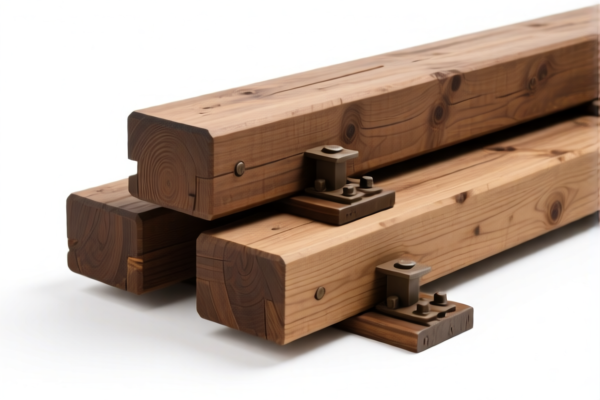
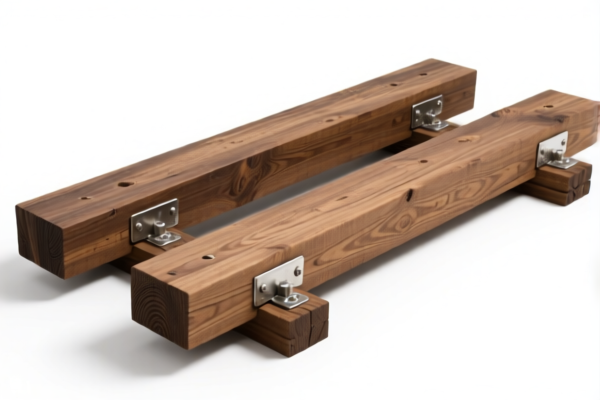
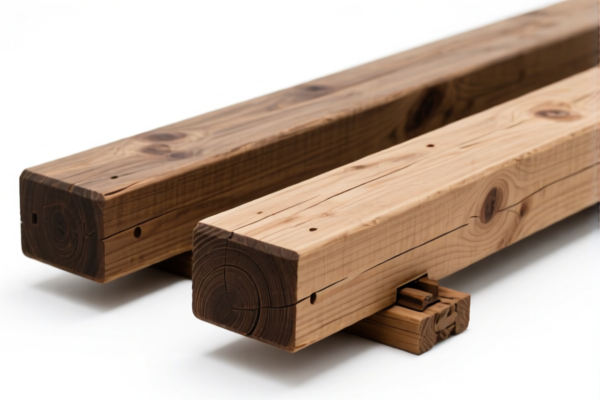
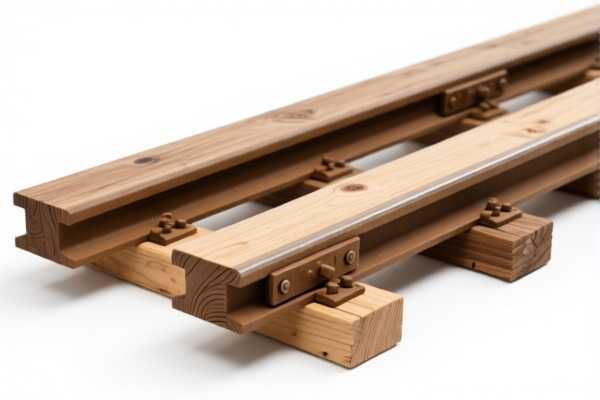
AI Analysis
🚂 Railway Sleepers (Heavy Duty Coniferous Wood)
🌐 HS Code Reference & Customs Clearance Guide | 2026 Latest Tariff Analysis | Professional Strategy for Wooden Sleepers
📌 I. Product Definition & Classification: What Exactly Are "Railway Sleepers"?
Heavy-duty coniferous wood railway sleepers are critical infrastructure components used to support railway tracks, maintain gauge, and distribute loads to the ballast. In international trade, these are classified as processed timber products. The key distinction lies in the treatment status and shape:
- Treated Railway Sleepers: Wood (usually coniferous, e.g., Pine) that has been pressure-treated with preservatives to resist rot, insects, and weathering. This specific treatment often pushes the classification into Chapter 44 headings for "other worked wood."
- Raw/Unprocessed Timber: If the wood is merely sawn to size but not chemically treated for railway use, it may fall under general timber headings (e.g., 4407).
⚠️ Key Distinction Point:
- If the product is explicitly a "Railway Tie/Sleeper" and is preservative-treated → It aligns with specific subheadings for worked/coniferous wood intended for construction/industrial use (e.g.,4407.11.00.02).
- If the product is raw/coniferous lumber without specific railway treatment or shaping → It may fall under4407.19.00.55/56(Other worked coniferous wood).
- If classified as a general construction timber product (not specifically "sleeper" in HS description) → It might fall under4418(Wooden construction articles).
📦 II. HS Code Classification Details (2026 Latest Tariff Authority Comparison)
Based on the provided data, here are the potential HS Codes for Heavy Duty Coniferous Wood Railway Sleepers, ranked by likelihood and specificity:
| HS Code | Product Description | Matching Basis | Total Tax Rate (CN Origin to US) |
|---|---|---|---|
4407.11.00.02 |
Processed Coniferous Wood (Preservative Treated) | Highest Match: Explicitly matches "Pine" (Coniferous) and "Railway Sleeper" (Treated wood article). Explanation notes: "Matches material 'Pine'; Shape: Railway sleeper (processed wood article); Use: Matches 'preservative-treated' feature." | 35.0% |
4407.19.00.55 |
Other Worked Coniferous Wood | Strong Match: Material is wood/coniferous; Form is processed timber. Explanation: "Material is wood, form is processed timber, matches coniferous wood characteristics... reasonable inference as wood processing product." | 35.0% |
4407.19.00.56 |
Other Worked Coniferous Wood | Similar to Above: Material "Wooden", form "Longitudinally sawn/Rough". Explanation: "Material 'Wooden', form fits 'Timber (longitudinally sawn/rough)'... inferred as Coniferous/Broadleaf." | 35.0% |
4418.30.01.00 |
Other Wooden Construction Articles | Alternative Match: Material "Pine"; Form "Sleeper/Beam" (Construction component). Explanation: "Material 'Pine'; Form 'Sleeper' (Wooden construction/component product)... matches wooden construction jointing parts." | 38.2% |
4418.99.91.95 |
Other Wooden Construction Articles | Broad Category: Material "Pine"; Form fits "Building/Engineering wooden product", not floor/truss. Explanation: "Material 'Pine'; Form fits Building/Engineering wooden products... fits 'Other wooden construction articles'." | 38.2% |
🔍 Critical Insight:
-4407.11.00.02is the most precise fit if the sleepers are pressure-treated (standard for heavy-duty railway use). The explanation explicitly cites "Railway sleeper" and "Preservative treated."
-4418.30.01.00and4418.99.91.95are higher-tax alternatives if customs deems the product as a general "construction wooden article" rather than processed timber slabs.
-4407.19.00.55/56are intermediate options for non-treated or lightly processed coniferous wood beams/sleepers.
💰 III. 2026 Latest Tariff Rate Breakdown (Including Additional Taxes)
✅ Applicable Country: United States (US)
✅ Origin: China (CN)
✅ Effective Date: Post-November 2025 (Current Rates)
🎯 1. HS Code 4407.11.00.02 —— Processed Coniferous Wood (Treated)
| Item | Content |
|---|---|
| Base Duty Rate | 0% (ad valorem) |
| USITC Additional Duty (Section 301) | +25% |
| IEEPA Additional Duty | +10% (China/HK products) |
| Total Effective Rate | 35.0% |
| Tax Calculation | CIF Value × 35% |
| De Minimis Exemption? | ❌ NO (High risk of audit) |
| Legal Basis Path | USITC:4407.11.00.02 → FOOTNOTE:301 → IEEPA:9903.01.24 |
📌 Explanation:
- This is the preferred classification for treated railway sleepers.
- Total tariff is 35%, which is lower than the 38.2% applied to general construction wood articles.
- Must provide proof of treatment (TMT certificate, chemical usage records) to justify this code over4418.
🎯 2. HS Code 4407.19.00.55 / 4407.19.00.56 —— Other Worked Coniferous Wood
| Item | Content |
|---|---|
| Base Duty Rate | 0% |
| USITC Additional Duty | +25% |
| IEEPA Additional Duty | +10% |
| Total Effective Rate | 35.0% |
| Tax Calculation | CIF Value × 35% |
| De Minimis Exemption? | ❌ NO |
| Legal Basis Path | USITC:4407.19.00.55/56 → FOOTNOTE:301 → IEEPA:9903.01.24 |
📌 Note:
- Same tax rate as above.
- Use this if the sleepers are not chemically treated but are still shaped/sawn to railway specifications.
🎯 3. HS Code 4418.30.01.00 / 4418.99.91.95 —— Wooden Construction Articles
| Item | Content |
|---|---|
| Base Duty Rate | 3.2% |
| USITC Additional Duty | +25% |
| IEEPA Additional Duty | +10% |
| Total Effective Rate | 38.2% |
| Tax Calculation | CIF Value × 38.2% |
| De Minimis Exemption? | ❌ NO |
| Legal Basis Path | USITC:4418.* → FOOTNOTE:301 → IEEPA:9903.01.24 |
📌 Warning:
- This is the highest tax bracket among the options.
- Customs may apply this if they view sleepers as general construction materials rather than processed timber.
- Cost Impact: 3.2% more expensive than the4407codes. Every $10,000 CIF value results in $320 extra cost.
🛠️ IV. Customs Clearance Practical Advice (Real-World Pitfall Avoidance)
✅ 1. Documentation Checklist (Non-Negotiable)
| Document | Required | Description |
|---|---|---|
| ✅ Treated Wood Certificate (TMT) | ✔️ | Proof of preservative treatment (e.g., CCA, ACQ). Essential for 4407.11.00.02. |
| ✅ Product Specification Sheet | ✔️ | Dimensions, weight, wood species (e.g., Southern Pine, Radiata Pine), treatment level. |
| ✅ Commercial Invoice | ✔️ | Clearly state: "Railway Sleepers, Treated Coniferous Wood, HS Code 4407.11.00.02". Avoid vague terms like "Wood Blocks". |
| ✅ Packing List | ✔️ | Detail palletization, weight per bundle, total pieces. |
| ✅ ISPM 15 Phytosanitary Mark | ✔️ | If not heat-treated (HT) or fumigated, wood may be rejected. Check if treatment replaces ISPM 15. |
| ✅ Manufacturer’s Declaration | ✔️ | Confirm no prohibited species (e.g., endangered hardwoods) are mixed in. |
✅ 2. Declaration Tips (Key Mantra)
🔥 “Treat & Declare, Code 4407, Not 4418! Precision Saves 3.2%!”
| Scenario | Correct Declaration | Incorrect Declaration |
|---|---|---|
| Treated Railway Sleepers | 4407.11.00.02 (35%) |
4418.30.01.00 (38.2%) → Overpay! |
| Untreated/Sawn Timber | 4407.19.00.55 (35%) |
4407.11.00.02 → Misclassification Risk |
| General Wooden Beams | 4418.99.91.95 (38.2%) |
4407.11.00.02 → Audit Trigger |
| Mixed Load (Wood + Metal) | Separate HS Codes | Single HS Code → Rejection |
✅ 3. Special Considerations
| Issue | Handling Advice |
|---|---|
| Wood Species | Must specify "Coniferous" (e.g., Pine, Spruce). If "Broadleaf" (e.g., Oak), HS Code changes to 4407.2x. |
| Treatment Chemicals | Some preservatives may require EPA/State Dept. compliance. Declare chemical type clearly. |
| Pallets vs. Sleepers | If sleepers are shipped on wooden pallets, ensure pallets are ISPM 15 compliant or crating is excluded from duty base if separable. |
| Third-Country Transshipment | If shipped via Vietnam/Malaysia, Rules of Origin must still be China. Direct shipping is safer for documentation. |
🌍 V. Global Market Comparison (2026)
| Country/Region | Recommended HS Code | Duty Rate (China Origin) | Key Requirement | Notes |
|---|---|---|---|---|
| 🇺🇸 USA | 4407.11.00.02 |
35.0% (Total) | TMT Certificate, ISPM 15 | High tariff due to Section 301 + IEEPA. |
| 🇨🇳 China | 4407.11.00.02 |
0-5% (Imported) | Phytosanitary Certificate | Low duty for imported wood. |
| 🇪🇺 EU | 4407.11.00 |
0-3% (if EUTR compliant) | EUTR Due Diligence | No additional tariffs, but strict environmental checks. |
| 🇬🇧 UK | 4407.11.00 |
0-3% | UK Wood Policy Group Compliance | Post-Brexit rules apply. |
| 🇦🇺 Australia | 4407.11.00 |
5% | Biosecurity Import Permit | Strict biosecurity, not just tariff. |
📌 Conclusion:
- USA is the most tariff-sensitive market for Chinese wood products.
- Accuracy is critical: Choosing4418over4407costs an extra 3.2%.
- Documentation must prove "Treatment" to secure the lower 35% rate instead of 38.2%.
📌 VI. Common Mistakes & Pitfalls (Lessons Learned)
❌ Mistake 1: Declaring sleepers as "Raw Lumber" when they are Pressure-Treated.
👉 Consequence: Customs may reject due to lack of phytosanitary proof or misclassification → Delays + Fines.
❌ Mistake 2: Using vague terms like "Wooden Blocks" or "Timber Pieces".
👉 Consequence: Customs assigns default higher duty codes (e.g., 4418) → Higher Tax.
❌ Mistake 3: Ignoring ISPM 15 marking for raw wood shipments.
👉 Consequence: Cargo Quarantined or Returned at US port.
❌ Mistake 4: Failing to separate Pallets from the cargo value.
👉 Consequence: Duty calculated on pallets too if not declared separately.
✅ Correct Practice:
"Railway Sleepers, Southern Pine, Pressure-Treated (CCA), Dimensions 2600x200x150mm, ISPM 15 Certified, HS Code 4407.11.00.02"
🎯 VII. Conclusion: Precision in Declaration, Profit in Clearance
🎯 Remember the Mantra:
🔹 “Treated Sleepers = 4407.11.00.02 (35%)”
🔹 “Untreated/General = 4407.19 or 4418 (35-38.2%)”
🔹 “Vague Description = Audit Risk + Higher Tax”
📌 Pro Tip:
- Pre-clearance: Submit TMT certificates and product specs to your customs broker before shipment.
- Value Chain: If possible, source from non-China origins (e.g., Vietnam, Malaysia) for IEEPA exemptions (if applicable rules allow).
- Contract Clauses: Ensure contracts specify HS Code responsibility to avoid disputes over tax differences.
📣 Immediate Action:
📞 Consult a Licensed Customs Broker to validate the "Treatment Certificate" matches the declared HS Code.
🚀 Ensure Clear Product Descriptions in all shipping documents.
💼 Your Sleepers Should Move Smoothly, Not Get Stuck in Customs!
✨ Professional Clearance Starts with Precise Classification!
💼 Every 0.1% of Duty Counts!
Customer Reviews
About HS Code Classification
The Harmonized System (HS) is an internationally standardized nomenclature developed by the World Customs Organization (WCO) to classify traded products. Over 200 countries use the HS system as the basis for customs tariffs, trade statistics, and import/export regulations.
Each HS code follows a hierarchical structure:
- Chapter (2 digits) — Broad category of goods (e.g., Chapter 84: Machinery and Mechanical Appliances)
- Heading (4 digits) — More specific grouping within the chapter
- Subheading (6 digits) — Internationally standardized breakdown, used by all WCO member countries
- National subdivisions (8-10 digits) — Country-specific extensions for further classification, such as US HTSUS 10-digit codes
Correct HS code classification is essential for smooth customs clearance, accurate duty payment, and compliance with trade regulations. Misclassification can lead to customs delays, overpayment of duties, or penalties.
When importing from CN to US, the applicable tariff rates may include:
- Most-Favored-Nation (MFN) rate — The standard duty rate applied to WTO members
- General rate — Applied to countries without trade agreements
- Trade remedy duties — Additional tariffs such as Section 301 (anti-dumping), Section 232 (national security), or countervailing duties
The information provided on this page is for reference purposes only. For official classification, please consult with your local customs authority or a licensed customs broker.