Heavy duty Textile Plastic Tarp
CN → US| HS Code | Tariff Rate | Origin | Destination | Doc |
|---|---|---|---|---|
| 5911900080 | 38.8% | CN | US | Official Doc |
| 3920992000 | 39.2% | CN | US | Official Doc |
| 3920995000 | 40.8% | CN | US | Official Doc |
| 3926905900 | 37.4% | CN | US | Official Doc |
| 3926905700 | 41.5% | CN | US | Official Doc |
Product Images
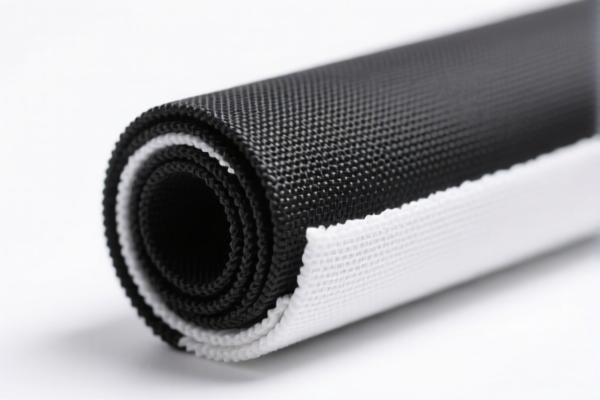
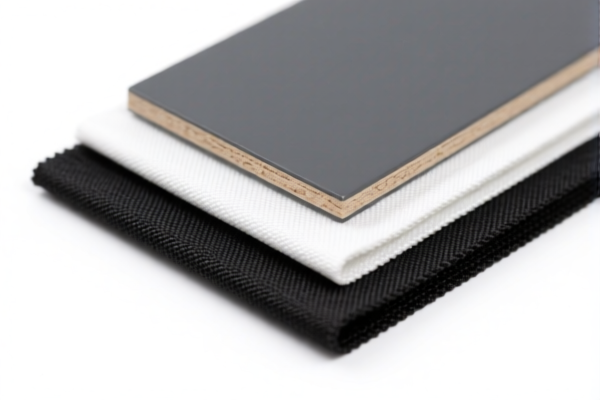
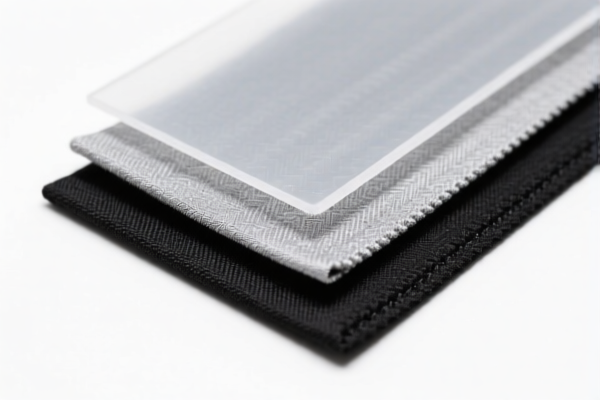
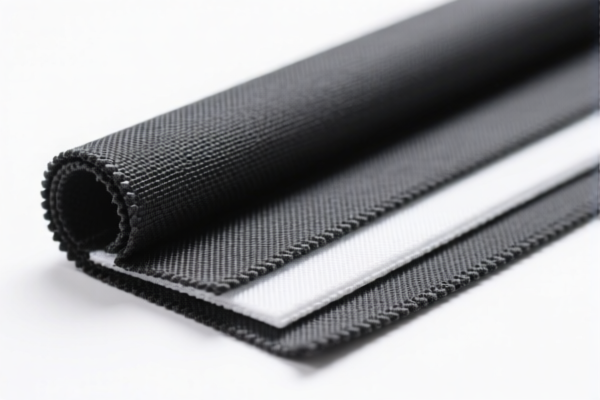
AI Analysis
🛡️ Heavy Duty Textile Plastic Tarp (Industrial Tarps)
🌐 HS Code Reference & Customs Clearance Guide | 2026 Latest Tariff Analysis | Professional Clearance Strategy
📌 Part 1: Product Definition & Classification: Do You Really Understand "Textile Plastic Tarps"?
Heavy Duty Textile Plastic Tarp, commonly referred to as industrial tarps, PVC-coated fabrics, or reinforced plastic sheets, are composite materials used for protection, covering, and lining in construction, agriculture, and logistics. In international trade, the classification is complex because these products sit at the intersection of Plastics and Textiles.
The core distinction lies in the primary characteristic of the product: * Textile-Plastic Composite (Chapter 59): If the textile fabric provides the structural integrity and the plastic is merely a coating for water resistance, it often falls under Chapter 59. * Pure Plastic Sheet (Chapter 39): If the product is essentially a plastic sheet with a textile reinforcement that doesn't change its fundamental nature, it may be classified under Chapter 39 (Other Plastic Products).
⚠️ Key Distinction Point: - If the base material is a woven fabric (e.g., polyester, polypropylene) coated/laminated with plastic → Likely Chapter 59. - If the product is a homogeneous plastic sheet with embedded fibers or is primarily defined as a "plastic plate/sheet" → Likely Chapter 39.
📦 Part 2: HS Code Classification Details (2026 Latest Tariff Authority Mapping)
Based on the provided data, here are the 5 potential HS Codes for "Heavy Duty Textile Plastic Tarp":
| HS Code | Product Description | Applicable Scenario | Total Tax Rate (CN-US) |
|---|---|---|---|
5911.90.00.80 |
Heavy Duty Textile Plastic Sheet, Plastic Material, Sheet Form, Technical Textile Product | Primary Classification: Technical textiles, reinforced fabrics, industrial filter cloths, or protective coverings where the textile structure is dominant. | 38.8% |
3920.99.20.00 |
Heavy Duty Textile Plastic Sheet, Plastic Material, Sheet Form, Inferred Under Other Categories | Alternative Classification: Plastic plates, sheets, film, foil, and strip, not cellular, other. Used when the plastic content dominates. | 39.2% |
3920.99.50.00 |
Heavy Duty Textile Plastic Sheet, Plastic Material, Sheet Form, Exhibiting Sheet Characteristics | Alternative Classification: Similar to above, specific sub-category for plastic sheets. | 40.8% |
3926.90.59.00 |
Heavy Duty Textile Plastic Sheet, Plastic Material, Contains Textile Fibers, Other Category | Alternative Classification: Other articles of plastics and articles of other materials of heading 39.26. Often used for finished tarpaulins or specific plastic articles. | 37.4% |
3926.90.57.00 |
Heavy Duty Textile Plastic Sheet, Plastic Material, Sheet Form, Intermediate Goods Characteristics | Alternative Classification: Intermediate plastic products, semi-finished goods. | 41.5% |
🔍 Key Insight: -
5911.90.00.80is the most logical fit for "Textile Plastic" products, as it specifically addresses technical textile products. -3920and3926classifications are risks if the product is deemed more "plastic" than "textile." - Tax rates vary from 37.4% to 41.5% due to different base tariffs and additional duties.
💰 Part 3: 2026 Latest Tariff Rate Breakdown (Including Surtaxes & Policy Add-ons)
✅ Applicable Country: USA (US)
✅ Country of Origin: China (CN)
✅ Effective Date: November 10, 2025 onwards (and subsequent imports)
The total tax rate is composed of three parts: 1. Base Tariff (MFN Rate): Standard customs duty. 2. Section 301 Additional Duty: 25% surcharge for Chinese goods. 3. Section 122 (IEEPA) Duty: 10% surcharge under the International Emergency Economic Powers Act.
🎯 1. 5911.90.00.80 —— Technical Textile Products (Recommended)
| Item | Content |
|---|---|
| Base Tariff | 3.8% |
| Section 301 Surtax | +25.0% |
| Section 122 Duty | +10.0% |
| Total Tax Rate | 38.8% |
| Tax Calculation | CIF Value × 38.8% |
| De Minimis Exemption | ❌ Not Available (Denied) |
| Legal Basis Path | Base Tariff: 3.8% → Section 301: 25% → Section 122: 10% |
📌 Explanation:
- This is the lowest tax rate among the 5 options. - Classifying under Chapter 59 leverages the lower base tariff (3.8% vs 4.2%-6.5%). - Crucial: You must prove the product is a "technical textile" (e.g., reinforced fabric) rather than just a plastic sheet.
🎯 2. 3920.99.20.00 —— Other Plastic Sheets
| Item | Content |
|---|---|
| Base Tariff | 4.2% |
| Section 301 Surtax | +25.0% |
| Section 122 Duty | +10.0% |
| Total Tax Rate | 39.2% |
| Tax Calculation | CIF Value × 39.2% |
| De Minimis Exemption | ❌ Not Available |
🎯 3. 3920.99.50.00 —— Plastic Sheets (Specific Sub-category)
| Item | Content |
|---|---|
| Base Tariff | 5.8% |
| Section 301 Surtax | +25.0% |
| Section 122 Duty | +10.0% |
| Total Tax Rate | 40.8% |
| Tax Calculation | CIF Value × 40.8% |
| De Minimis Exemption | ❌ Not Available |
🎯 4. 3926.90.59.00 —— Other Plastic Articles
| Item | Content |
|---|---|
| Base Tariff | 2.4% |
| Section 301 Surtax | +25.0% |
| Section 122 Duty | +10.0% |
| Total Tax Rate | 37.4% |
| Tax Calculation | CIF Value × 37.4% |
| De Minimis Exemption | ❌ Not Available |
| Legal Basis Path | Base Tariff: 2.4% → Section 301: 25% → Section 122: 10% |
📌 Note:
- Although the total rate (37.4%) is lower than5911.90.00.80, the risk of misclassification is higher. Chapter 39.26 is a "catch-all" for plastic articles. If the CBP (Customs and Border Protection) determines the product is primarily textile, they may reassess to Chapter 59, leading to penalties.
🎯 5. 3926.90.57.00 —— Intermediate Plastic Goods
| Item | Content |
|---|---|
| Base Tariff | 6.5% |
| Section 301 Surtax | +25.0% |
| Section 122 Duty | +10.0% |
| Total Tax Rate | 41.5% |
| Tax Calculation | CIF Value × 41.5% |
| De Minimis Exemption | ❌ Not Available |
📌 Note:
- This is the highest tax rate (41.5%). Only use this if the product is strictly an intermediate, semi-finished plastic good, which is rare for finished tarps.
🛠️ Part 4: Customs Clearance Practical Advice (Pitfall Avoidance Guide)
✅ 1. Documentation Checklist (Essential)
| Document | Required | Description |
|---|---|---|
| ✅ Product Specification Sheet | ✔️ | Must detail material composition (e.g., "100% Polyester woven fabric coated with PVC"). |
| ✅ Product Photos | ✔️ | Clear images showing texture, coating, reinforcement mesh (if any). |
| ✅ Bill of Lading | ✔️ | Accurate description: "Textile-Reinforced Plastic Tarpaulin" or "PVC Coated Polyester Fabric." |
| ✅ Commercial Invoice | ✔️ | Must match HS Code description exactly. |
| ✅ Certificate of Origin | ✔️ | To prove CN origin (triggers Section 301/122 duties). |
| ✅ Test Report | ✔️ | Optional but helpful: Fabric strength, water resistance, coating adhesion test. |
✅ 2. Declaration Strategy (Key Rules)
🔥 "Describe the Base, Not Just the Function"
| Scenario | Correct Declaration | Incorrect Declaration | Risk |
|---|---|---|---|
| Reinforced Fabric | "Polyester Woven Fabric, PVC Coated, for Industrial Use" | "Plastic Tarp" | High risk of misclassification to 39.20/39.26. |
| Finished Tarp | "Heavy Duty Tarpaulin, Textile-Reinforced Plastic" | "Plastic Sheet" | May be classified under 39.20 (higher base tariff). |
| Technical Textile | "Technical Textile Product, Chapter 59, Plastic Coated" | "Covering Material" | Vague description may lead to CBP inquiry. |
📌 Recommendation: - Use HS Code
5911.90.00.80if the product is a woven fabric with plastic coating/lamination. This is the most accurate for "Textile Plastic" products. - If the product is a homogeneous plastic sheet with fibers embedded, use3920.99.20.00or3920.99.50.00. - Avoid3926.90.57.00unless it is clearly an intermediate good.
✅ 3. Special Cases
| Situation | Handling Advice |
|---|---|
| OEM Custom Tarp | Provide design specs to prove it's a textile product. |
| Mixed Materials | If >50% of weight is plastic, CBP may prefer Chapter 39. Document weight ratio. |
| Used vs. New | New tarps are classified under 5911/3920. Used tarps may have different rules. |
🌍 Part 5: Global Market Clearance Comparison (2026 Latest)
| Country/Region | Recommended HS Code | Tariff Rate (China Origin) | Certification | Notes |
|---|---|---|---|---|
| 🇺🇸 USA | 5911.90.00.80 |
38.8% (Total) | No special cert needed | High tariff due to Section 301 + 122. |
| 🇨🇳 China | 5911.90.00.80 |
~5-10% (Import Tariff) | N/A | Low import tariff. |
| 🇪🇺 EU | 5911.90.00 |
~6.5% | CE (if applicable) | No Section 301/122 duties. |
| 🇯🇵 Japan | 5911.90.00 |
~6.1% | N/A | Stable tariff. |
| 🇦🇺 Australia | 5911.90.00 |
~5% | N/A | Low tariff. |
📌 Conclusion: - The USA market is the most challenging due to additional duties (35% total surcharge). - Chapter 59 is generally the most favorable for "Textile-Plastic" composites in terms of technical accuracy, even with high surcharges. - For other markets, the base tariff is much lower, so classification is less critical for cost, but still important for compliance.
📌 Part 6: Common Mistakes & Pitfall Guide (Lessons Learned)
❌ Mistake 1: Classifying "PVC-Coated Polyester Fabric" as "Plastic Sheet" (3920)
👉 Consequence: Incorrect description, potential CBP audit. If deemed textile, you may face penalties for misdeclaration.
❌ Mistake 2: Using "Tarp" as the HS Code Description
👉 Consequence: "Tarp" is not a HS Code. CBP requires specific material description (e.g., "Plastic Sheet, PVC-Coated").
❌ Mistake 3: Ignoring Section 122 (10% Duty)
👉 Consequence: Unexpected tax bill at customs. All imports from China are subject to this since Nov 2025.
❌ Mistake 4: Assuming De Minimis (800 USD) Exemption Applies
👉 Consequence: De Minimis is DENIED for these goods. Even small shipments are subject to full duty.
✅ Correct Practice:
"Heavy Duty Tarpaulin, 100% Polyester Woven Fabric, PVC Coated, 1000D, for Industrial Covering, Model XYZ"
🎯 Part 7: Conclusion: Precision Classification Saves Money!
🎯 Remember the Rules:
🔹 "Textile Base = Chapter 59 (38.8%)"
🔹 "Plastic Sheet = Chapter 39 (37.4%-41.5%)"
🔹 "Always Pay the 35% Surcharge (301+122)"
🔹 "De Minimis is a Myth for China Goods"
📌 Tip:
If your product is not primarily textile but a plastic sheet with some reinforcement, 3926.90.59.00 (37.4%) offers the lowest total rate. However, this carries a high risk of misclassification.
For technical textiles (reinforced fabrics), 5911.90.00.80 (38.8%) is the safest and most accurate classification.
📞 Contact Professional Customs Broker + Provide Material Composition Report + Apply for HS Code Advance Ruling
🚀 Let Your Tarps Clear Smoothly, Efficiently, and Cost-Effectively!
✨ Professional Clearance Starts with Accurate Classification!
💼 Every Percent of Duty Saved is Pure Profit!
Customer Reviews
About HS Code Classification
The Harmonized System (HS) is an internationally standardized nomenclature developed by the World Customs Organization (WCO) to classify traded products. Over 200 countries use the HS system as the basis for customs tariffs, trade statistics, and import/export regulations.
Each HS code follows a hierarchical structure:
- Chapter (2 digits) — Broad category of goods (e.g., Chapter 84: Machinery and Mechanical Appliances)
- Heading (4 digits) — More specific grouping within the chapter
- Subheading (6 digits) — Internationally standardized breakdown, used by all WCO member countries
- National subdivisions (8-10 digits) — Country-specific extensions for further classification, such as US HTSUS 10-digit codes
Correct HS code classification is essential for smooth customs clearance, accurate duty payment, and compliance with trade regulations. Misclassification can lead to customs delays, overpayment of duties, or penalties.
When importing from CN to US, the applicable tariff rates may include:
- Most-Favored-Nation (MFN) rate — The standard duty rate applied to WTO members
- General rate — Applied to countries without trade agreements
- Trade remedy duties — Additional tariffs such as Section 301 (anti-dumping), Section 232 (national security), or countervailing duties
The information provided on this page is for reference purposes only. For official classification, please consult with your local customs authority or a licensed customs broker.